
A blade that performs well in one shipment and fails in the next is not a product issue alone - it is a supplier issue. That is why choosing an OEM diamond tool manufacturer requires more than checking a catalog, comparing prices, or asking for a sample. For distributors, importers, contractors, and procurement teams, the real question is whether a manufacturer can deliver the same cutting speed, bond consistency, weld strength, and supply reliability across repeated orders.
In industrial diamond tools, inconsistency is expensive. It slows jobsite output, creates complaints from end users, increases warranty pressure, and weakens distributor confidence. A serious OEM partner is expected to control production, understand application requirements, and support long-term purchasing with dependable quality.
What an OEM diamond tool manufacturer actually provides
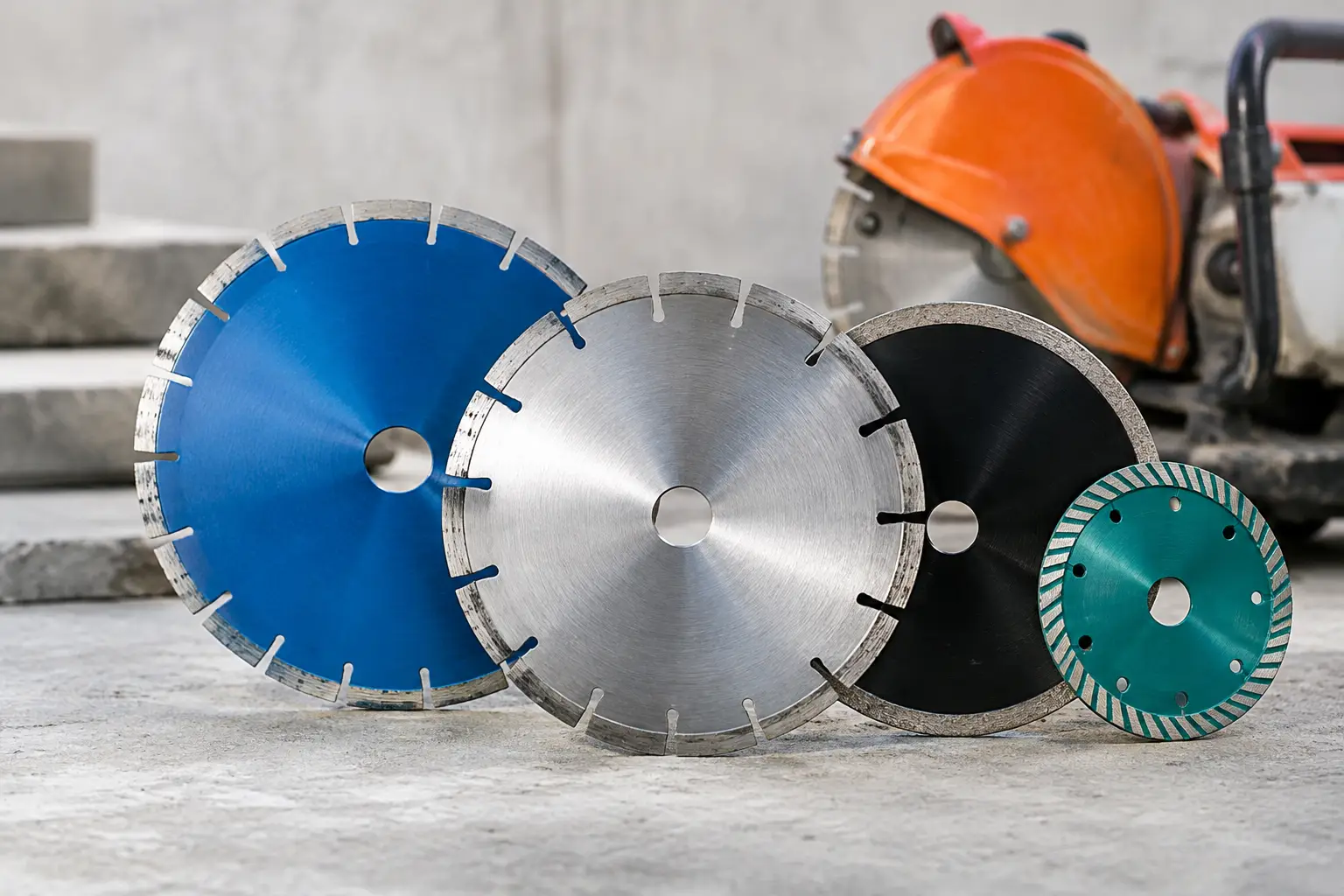
An OEM diamond tool manufacturer does more than place a private label on a standard blade. In the proper B2B sense, OEM support means the factory can produce tools to defined performance and specification targets. That may include segment formula adjustment, blade diameter and arbor customization, segment height changes, packaging requirements, branding, and application-specific design for concrete, granite, ceramic, asphalt, Dekton, or reinforced materials.
This matters because diamond tools are not interchangeable across every market. A distributor serving masonry contractors in Saudi Arabia may need a different balance of cutting speed and life than a buyer supplying tile professionals in the US. A fabricator processing dense sintered stone has different requirements than a road contractor cutting green concrete. The right manufacturer should understand those differences and build accordingly.
The OEM model also helps buyers create product consistency under their own brand. That is especially useful for wholesalers and regional distributors that want to establish pricing control, stronger market recognition, and repeat business without depending on generic open-market supply.
How to evaluate an OEM diamond tool manufacturer
The first test is production credibility. Many suppliers present themselves as manufacturers, but some are primarily trading companies that outsource production. That is not always a problem, but it changes the risk profile. If you need private label control, technical adjustments, and stable repeat orders, direct manufacturing capability usually gives better control over process, quality, and lead times.
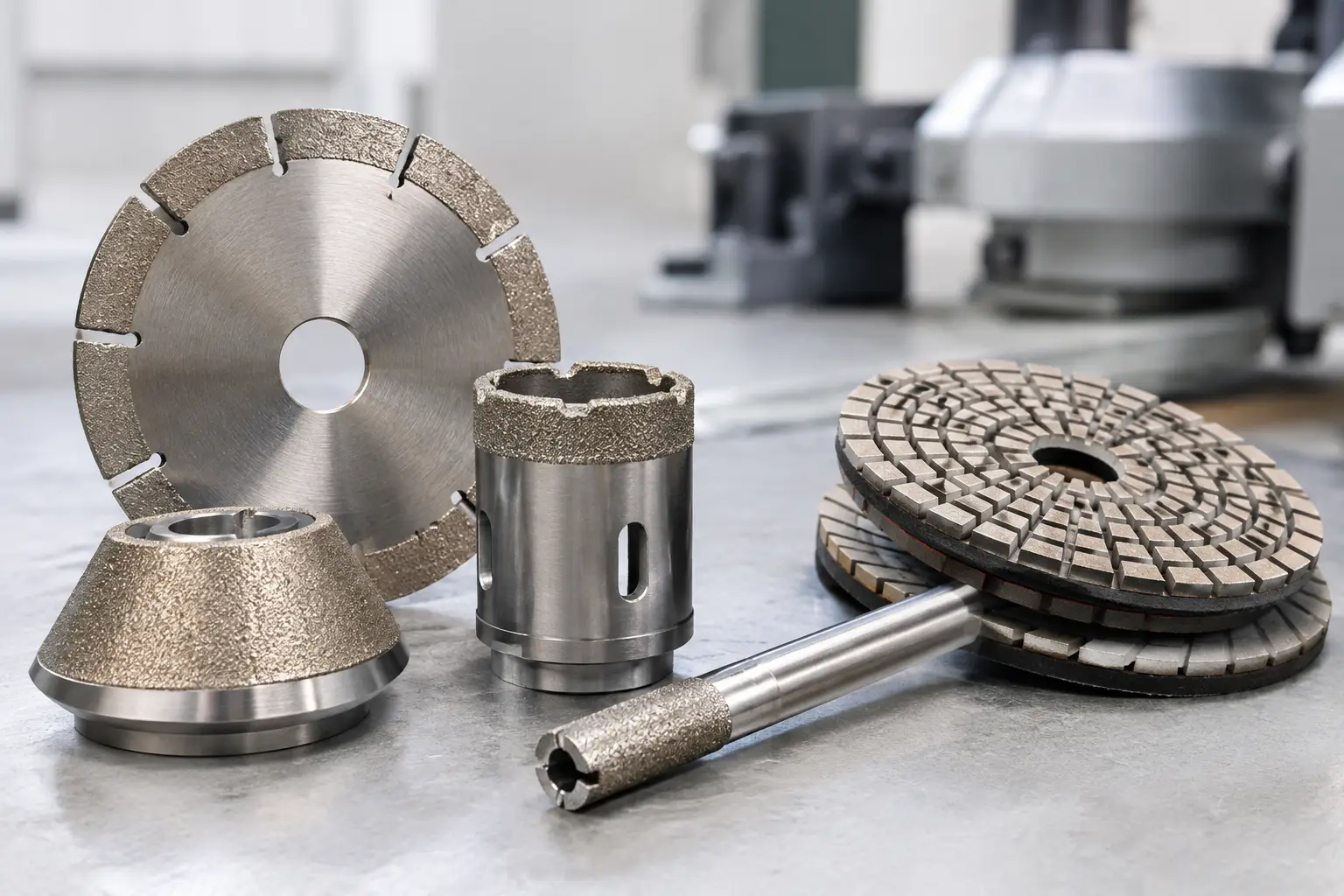
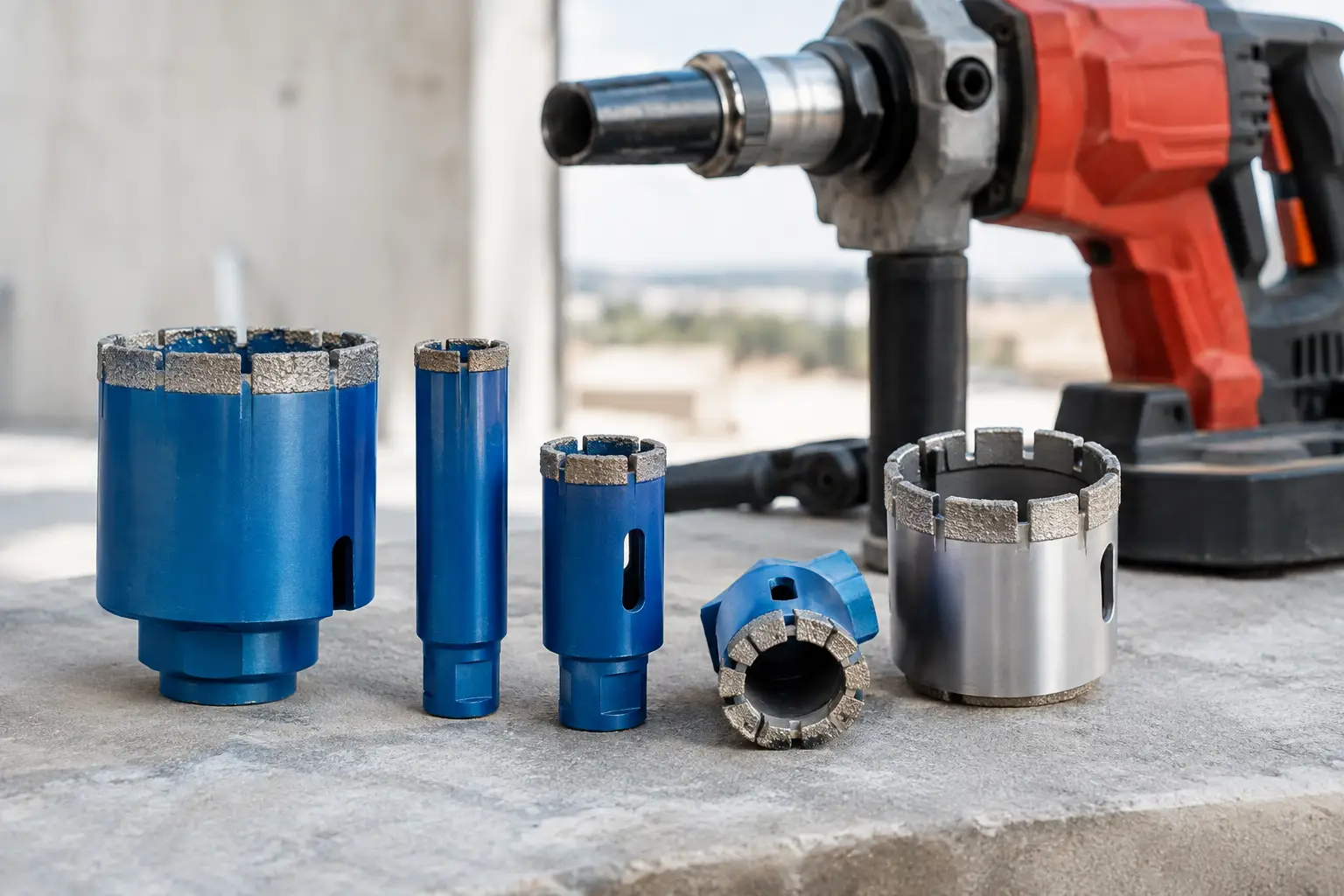
Ask practical questions. What product categories are made in-house? Which welding methods are used? Can the supplier support laser-welded blades, vacuum brazed products, floor grinding tools, core bits, hole openers, and segmented solutions for multiple materials? How are formulations managed when a product needs to perform in a hot climate, on hard aggregate, or in heavy-duty commercial cutting?
The second test is quality control discipline. A capable factory should be able to explain raw material inspection, segment consistency checks, weld inspection, balancing, dimensional control, and final performance testing. Buyers should not accept vague answers such as “high quality” or “strict inspection” without process detail. Quality control is not a slogan. It is a repeatable system.
The third test is application knowledge. Diamond tools fail for many reasons, and not all failures come from poor manufacturing. Bond hardness, feed rate, machine power, operator method, cooling conditions, and material density all affect performance. A dependable manufacturer should be able to discuss these variables clearly and recommend the right product design instead of pushing one universal option for every application.
Why product stability matters more than the lowest quote
In bulk purchasing, unit price gets attention first. That is normal. But for diamond tools, the lowest quote often hides the highest operational cost. A cheaper blade that cuts slower, wears unevenly, or loses segments early may cost more in labor, downtime, and replacement than a higher-priced tool with stable performance.
This is particularly relevant for distributors. If your market buys based on trust and repeat field results, unstable quality can damage sales far beyond one shipment. End users remember a blade that wobbled, glazed, burned the edge of ceramic, or underperformed on reinforced concrete. Once confidence is lost, price discounts alone rarely recover it.
A disciplined OEM supplier focuses on consistency from batch to batch. That includes stable diamond concentration, controlled bond formulation, accurate segment placement, and reliable weld integrity. The goal is not only to make a tool that works once. It is to make the same tool work again on the next order, and the order after that.
Key signs of a reliable OEM diamond tool manufacturer
A reliable OEM diamond tool manufacturer usually shows strength in four areas: process control, technical communication, customization capability, and supply stability.
Process control shows up in the factory’s ability to maintain consistent specifications over time. Technical communication shows up when the supplier asks the right questions about the material, machine type, use frequency, and performance target before recommending a product. Customization capability matters when you need your own dimensions, package format, branding, or application-specific performance. Supply stability matters when your business depends on repeat availability, especially for wholesale, distributor, or project-driven purchasing.
There are also smaller indicators that experienced buyers pay attention to. Does the supplier provide clear tolerance details? Are samples representative of mass production quality? Does the supplier respond directly to technical issues, or avoid specifics? Can they explain when a vacuum brazed tool is the better fit and when a laser-welded blade is the better choice? Those details often reveal whether you are dealing with a factory partner or just a sales layer.
OEM diamond tool manufacturer support for different applications
Not every buyer needs the same manufacturing partner. The right fit depends on your market and product mix.
If your customers work in concrete and road cutting, blade cooling behavior, segment retention, and speed under heavy load matter more than appearance. If your customers are in tile and stone fabrication, edge quality, chip control, and material-specific bond design become more important. If you serve flooring contractors, grinding block consistency and wear rate are central. If you sell to installers working with sintered stone and ultra-compact surfaces, tool design must account for dense, heat-sensitive materials that punish standard blades.
That is why application range is important. A manufacturer serving multiple industrial sectors usually has broader formulation experience and a better understanding of how to adapt product design. This does not mean the biggest catalog is always best. It means the supplier should be able to support the categories you actually sell and the field conditions your customers face.
For many B2B buyers, this is where Ryhyoma’s model fits well - product categories are broad, the manufacturing focus is industrial, and OEM or ODM support is positioned around repeated commercial supply rather than one-off trading.
Questions procurement teams should ask before placing bulk orders
Before moving from sample approval to bulk purchasing, procurement teams should verify how the supplier handles change control. If raw material inputs shift, how is product consistency protected? If an order needs revised packaging, mixed sizes, or market-specific labeling, can the manufacturer manage it without delaying production? If there is a field complaint, who reviews it and how quickly?
Lead time should also be discussed in realistic terms. Fast production is useful, but predictable production is better. A manufacturer that consistently ships in the agreed window is often more valuable than one that promises very short lead times and misses them.
MOQ flexibility matters too, but it depends on your business model. A mature distributor may prefer large runs for pricing efficiency. A growing importer may need smaller custom batches to test demand. The right factory will be clear about what is practical and where cost trade-offs begin.
Documentation is another point buyers should not overlook. Label accuracy, carton marking, product coding, and export packing standards all affect warehouse handling and market presentation. In international trade, small documentation mistakes can create avoidable delays.
The long-term value of the right manufacturing partner
When buyers change suppliers too often, they usually create the same problem they are trying to solve: unstable quality. A long-term relationship with a capable OEM manufacturer gives more room for product refinement, better forecasting, improved packaging control, and clearer feedback from real applications.
That does not mean every buyer should commit immediately. Testing is still necessary. Samples should be checked under actual working conditions, not just brief workshop trials. Initial orders should confirm whether sample quality matches mass production. Performance data should be reviewed honestly, especially where local material conditions are demanding.
Still, the strongest supplier relationships are built on more than price negotiation. They are built on process transparency, technical accuracy, and repeat performance. In industrial supply, those are the factors that protect your margin and your reputation at the same time.
If you are evaluating manufacturers for private label or bulk supply, treat the decision like an operations choice, not just a sourcing task. The right partner should make your product line easier to scale, easier to trust, and easier to sell.