
A blade that begins to discolor, wander through the cut, or lose cutting speed is already operating outside its efficient range. To avoid diamond blade overheating, contractors and fabrication teams must control more than water flow. Blade specification, machine RPM, operator feed rate, material condition, and segment exposure all affect the temperature at the cutting edge.
Overheating is not simply a blade-life issue. Excess heat can soften or glaze the bond, damage diamond exposure, warp the steel core, create poor cut quality, and increase the chance of segment loss. On commercial jobs, these failures also mean slower production, unplanned blade replacement, and inconsistent results across crews.
Why Diamond Blades Overheat
Diamond blades cut by grinding away material with exposed diamond grit. That process creates friction, and friction produces heat. A properly matched blade dissipates that heat through the material, the blade core, and, where applicable, the cooling water. When cutting conditions exceed the blade's design range, heat builds faster than it can be released.
The most common cause is using a blade with the wrong bond or segment design for the material. A hard-bond blade used on hard, dense concrete or abrasive stone may fail to release worn diamonds quickly enough. The cutting edge becomes smooth, or glazed, and the operator applies more pressure to force progress. Friction rises, cutting speed drops, and the blade gets hotter.
The reverse situation also creates problems. A soft-bond blade used on highly abrasive material can wear too quickly and lose segment height before the job is complete. The correct specification is always a balance between cutting speed, blade life, material abrasiveness, and the machine being used.
Select the Blade for the Actual Material
Material names alone are not enough for blade selection. Concrete may be green or fully cured, plain or heavily reinforced, soft aggregate or hard aggregate. Granite varies in density and mineral composition. Porcelain, ceramic, Dekton, asphalt, pavers, and engineered stone each produce heat differently during cutting.
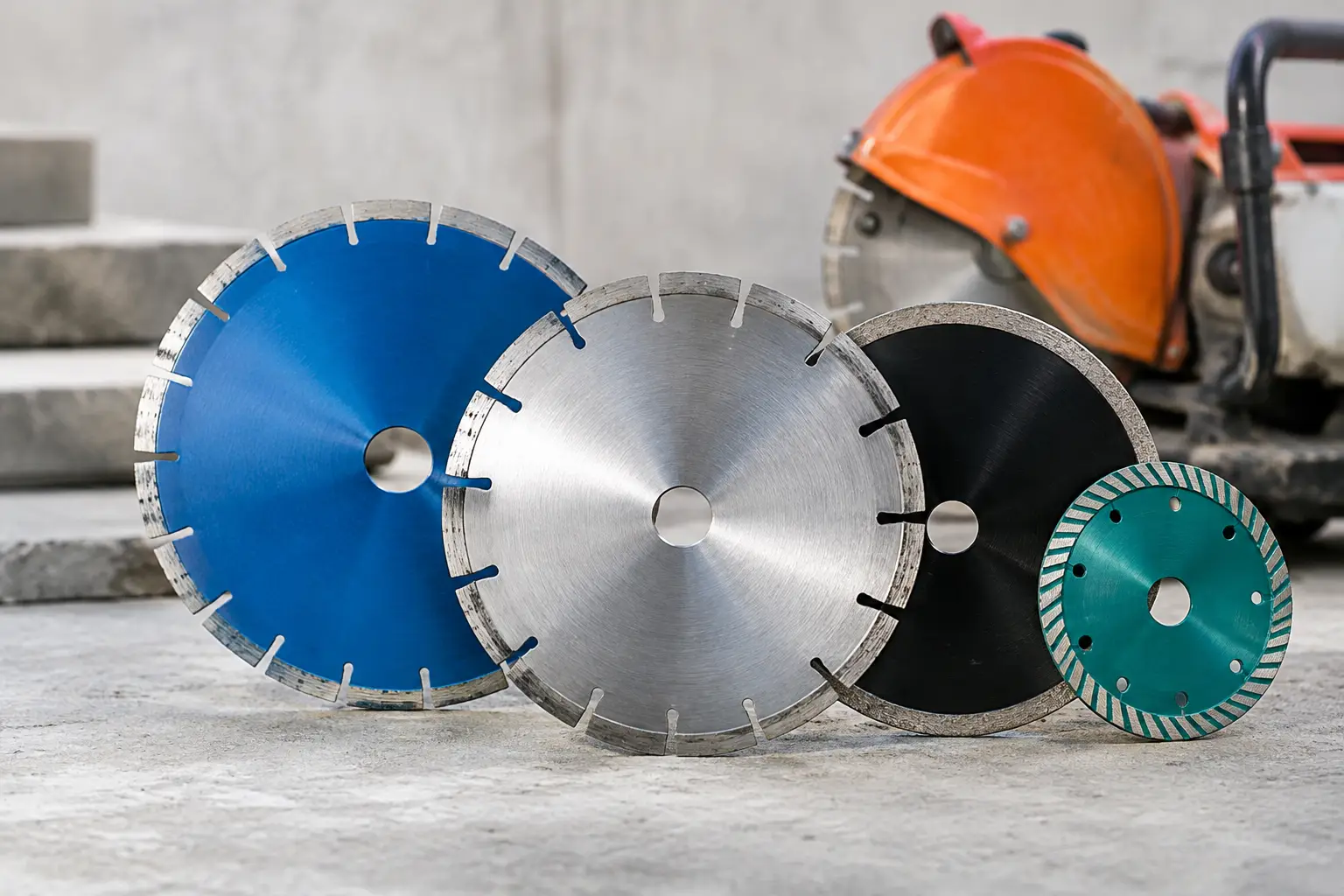
For hard materials, a blade generally needs a bond that releases fresh diamond grit at the proper rate. For abrasive materials such as asphalt or green concrete, the bond must retain diamonds long enough to prevent rapid wear. Segment shape, diamond concentration, segment height, and core design also influence operating temperature.
A universal blade can be practical for mixed, occasional work. It is rarely the best choice for repeated production cutting of a specific material. For distributors and procurement managers, this is why application details should be defined before placing bulk orders. A stable blade program starts with the material, saw type, blade diameter, cutting method, and expected daily output.
Match the Blade to Wet or Dry Cutting
Water is the most effective way to control heat, suppress dust, and clear slurry from the kerf. Wet-cutting blades should receive a consistent water supply on both sides of the blade, directed close to the cutting zone. A weak or misaligned water flow leaves one side hotter than the other, which can contribute to blade distortion and uneven segment wear.
Dry-cutting blades require a different operating method. Their cores and segment configurations are designed to move air, but they are not intended for continuous deep cutting without relief. Use a sequence of short cuts or periodic shallow passes to allow airflow around the blade. If the blade is producing excessive sparks, a burning smell, or visible discoloration, stop cutting and let it cool naturally. Do not cool a hot blade by spraying it suddenly with water unless the blade is specifically intended for wet use.
Use Correct RPM and Feed Pressure
A diamond blade must operate within the manufacturer’s stated RPM range. Running above the maximum RPM creates a safety risk and raises peripheral speed beyond the blade’s intended operating condition. Running far below the recommended speed can also cause poor cutting action, vibration, and increased friction.
Before installation, verify that the saw spindle speed is suitable for the blade diameter. A blade designed for a high-speed masonry saw should not be transferred to equipment with incompatible RPM simply because the arbor fits. Check that flanges are clean, flat, and correctly sized, since poor clamping can create runout and localized heat.
Feed pressure should be firm but controlled. Forcing the blade into the material does not make an unsuitable blade cut faster. It increases load at the segment, reduces cooling at the kerf, and can flex the core. Let the diamonds perform the cutting. If progress becomes slow under normal feed pressure, investigate the blade condition or material match rather than asking the operator to push harder.
Long, deep cuts deserve particular attention. Cutting at full depth in one pass may be efficient on the right saw and material, but it can overload a blade in dense concrete, reinforced slabs, or thick stone. Multiple passes reduce load and give the blade a better opportunity to clear debris and manage heat. The trade-off is more handling time, but it is often less costly than burning through blades or damaging a saw.
Keep the Cutting Zone Clear
Heat often begins with poor debris removal. Fine dust, slurry, metal particles, and broken aggregate can pack into the kerf. Instead of cutting cleanly, the blade rubs against trapped material. This increases friction and makes the cut less stable.
For wet cutting, confirm that water reaches the full cutting path and that slurry is not recirculating into the kerf. For dry cutting, use proper dust extraction where the equipment allows it and avoid cutting positions that trap dust around the blade. A straight, properly supported workpiece also matters. Pinching from a closing kerf can rapidly overheat a blade and may cause binding or kickback.
On floor saws, inspect the machine’s tracking and handle alignment. On bridge saws and tile saws, make sure the table or carriage moves smoothly. On handheld saws, avoid twisting the blade in the cut. Side pressure is especially damaging because diamond blades are designed for radial cutting, not grinding sideways.
Inspect for Glazing, Wear, and Core Damage
Routine inspection prevents small performance changes from becoming expensive failures. A blade should be removed from service if the steel core is cracked, badly warped, excessively discolored, or missing a segment. Never continue cutting with a damaged core in an attempt to recover the remaining segment life.
Watch for these operating signs:
- A polished, smooth segment surface that indicates glazing
- Blue or dark discoloration on the steel core from excessive heat
- Slower cutting despite normal saw speed and feed pressure
- Vibration, wandering cuts, or abnormal noise
- Uneven segment wear caused by poor alignment or one-sided cooling
A glazed blade can sometimes be restored by dressing it on an appropriate abrasive material. Dressing exposes fresh diamond grit by wearing away a small amount of bond. The dressing material must suit the blade type and application. It is a corrective action, not a substitute for selecting the correct blade specification.
Train Operators Around Blade Feedback
Experienced operators recognize performance changes early. They listen for changes in cutting sound, feel increased resistance through the saw, and watch the color and flow of slurry or dust. These signals should be part of standard jobsite training, particularly where several operators share the same equipment.
Set clear rules for stopping work. Operators should stop if the blade binds, if water supply fails during wet cutting, if the core shows heat color, or if the cut slows sharply without an obvious material change. Continuing for another few minutes can turn a recoverable glazing issue into permanent core damage.
For larger contractors and distributors, documenting blade performance by material can improve future purchasing decisions. Track blade diameter, bond type, machine, material, cutting method, and approximate footage achieved. This information helps identify whether a recurring overheating issue comes from the blade specification, machine condition, or jobsite practice.
Build Blade Specifications Around Real Production Conditions
The lowest purchase price is not always the lowest cutting cost. A blade that cuts slowly, overheats often, or varies from batch to batch creates labor loss and equipment downtime that exceed its initial savings. Industrial buyers should evaluate consistency of segment welding, core tensioning, diamond distribution, and batch-level quality control alongside quoted unit price.
OEM and private-label programs should also account for local material conditions. Aggregate hardness, reinforcement levels, water availability, typical saw models, and operator habits differ by market. A blade that performs well in one application may need a different bond or segment configuration for another.
Ryhyoma supports this approach by aligning diamond tool specifications with the intended material, equipment, and production requirement rather than treating every cutting application as identical.
The practical standard is simple: a diamond blade should cut steadily without excessive force, maintain a clean kerf, and run within its designed temperature range. When those conditions are built into blade selection, machine setup, and operator practice, overheating becomes an exception instead of a routine jobsite cost.