
A private label blade launch example is most useful when it shows the decisions behind a successful first order, not just a logo printed on a blade. For a distributor, the objective is to introduce a dependable product line that contractors can reorder with confidence, while protecting margin and avoiding costly claims caused by inconsistent cutting performance.
A private-label launch for diamond blades should begin with a narrow, tested range. Starting with too many diameters, bond types, or application claims can tie up inventory and make quality control harder. The better approach is to choose the products already aligned with the distributor’s main customer base, validate them under local working conditions, and expand only after repeat demand is established.
Private Label Blade Launch Example: A Practical Scenario
Consider a building-materials distributor serving concrete contractors, rental businesses, and small fabrication shops. The company wants to introduce its own branded diamond blade range in the United States, with a first purchase designed to cover fast-moving applications rather than every possible material.
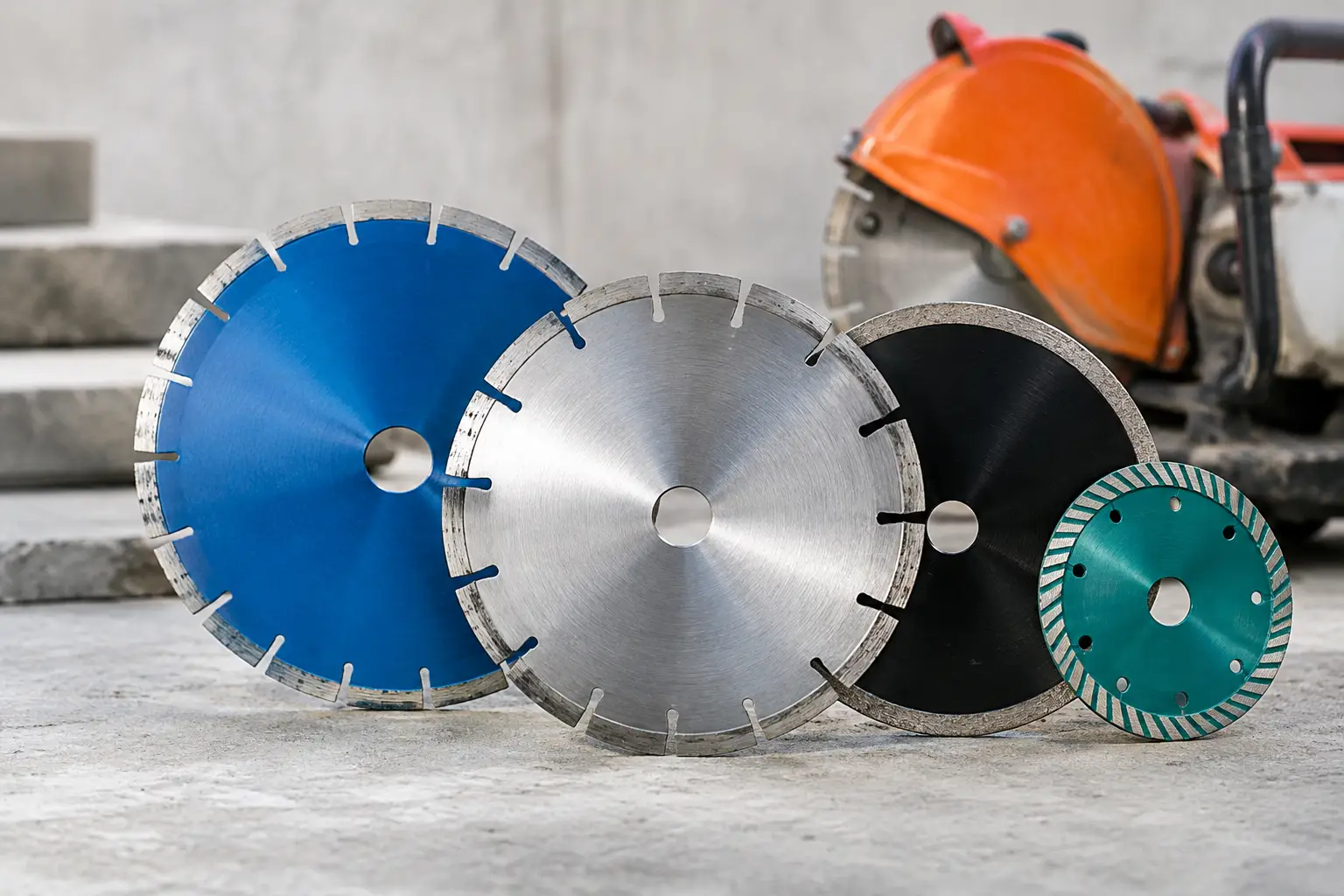
Its initial program includes a 14-inch laser-welded concrete blade for walk-behind saws, a 4.5-inch turbo rim blade for masonry and block, and a continuous-rim porcelain blade for tile contractors. These three products serve different buying patterns, but they share one commercial advantage: each has a clear application, familiar machine compatibility, and an easy sales message.
The distributor does not market the 14-inch blade as suitable for every hard material. It is positioned specifically for concrete, reinforced concrete within its tested capability, and general construction cutting. The porcelain blade is sold for clean cuts in ceramic and porcelain tile, not as a universal masonry disc. Accurate claims reduce returns and help sales teams recommend the right product without overpromising.
The launch order might be divided as follows: the highest volume goes to the 14-inch concrete blade, a moderate quantity to the 4.5-inch turbo blade, and a controlled quantity to the porcelain blade. This allocation reflects likely jobsite consumption rather than equal purchasing across all SKUs. A distributor with strong tile accounts may reverse the mix. The correct order quantity depends on actual customer demand, warehouse capacity, lead time, and the cash tied up in inventory.
Define the Product Before Designing the Label
A private label is only credible if the underlying blade specification is stable. Before approving artwork, the buyer and manufacturer should agree on the technical construction of each item. For a diamond saw blade, this normally includes diameter, arbor size, segment height, segment thickness, rim style, welding method, bond formulation, and intended materials.
For the 14-inch concrete blade in this example, the specification may call for laser-welded segments, a standard arbor configuration, a segmented rim for debris removal, and a bond engineered for general cured concrete. If the distributor sells heavily into hard aggregate markets, the bond may need adjustment to maintain cutting speed. If the primary work involves green concrete or abrasive block, a different balance between diamond exposure and wear resistance may be appropriate.
This is where private-label buyers should avoid selecting solely by the lowest unit price. A cheaper blade can look competitive on a catalog page but become expensive when contractors report slow cutting, excessive segment wear, blade wobble, or inconsistent life between shipments. Stable performance matters more than a single test result because distributors need confidence across repeated batches.
The same discipline applies to packaging claims. Do not print “cuts everything” or publish a life expectation without defined test conditions. Instead, state the core application, compatible machine class, safety markings, and relevant operating guidance. Clear positioning gives the product a professional market identity and reduces misuse.
Sample Approval Must Reflect Real Work
Pre-production samples should be evaluated on the materials and equipment common in the target market. A blade tested only in a factory may behave differently on a jobsite where operators use varying saw power, feed pressure, water supply, and cutting depth.
For the concrete blade, the distributor can compare samples against an established benchmark on cured concrete with representative aggregate. The review should look beyond total meters cut. Cutting speed, segment retention, heat behavior, core flatness, noise, and operator feedback all matter. A blade that lasts longer but cuts too slowly may not be the right commercial product for a contractor-focused line.
For the porcelain blade, chip control and edge finish are critical. For the turbo rim blade, buyers may prioritize quick starts in block and pavers, although dust control and safe operating practices remain essential. The manufacturer should document the approved sample specification so production follows the tested configuration rather than a similar-looking substitute.
Build Packaging for the Sales Channel
Private-label packaging should help a warehouse team, counter salesperson, and end user identify the blade quickly. It does not need excessive graphics. It needs accurate information in the right place.
The front of the package should clearly show blade diameter, application, rim type, and the distributor’s brand. The reverse side can carry operating instructions, safety symbols, maximum RPM, arbor details, material guidance, and batch or lot traceability. For trade counter sales, color coding by application can help distinguish concrete, tile, asphalt, and general-purpose products at a glance.
Packaging choices also affect freight cost and damage rates. A heavy-duty printed color box may suit premium retail presentation, while a protective sleeve with a branded label can be more practical for high-volume contractor supply. Neither format is automatically better. The right selection depends on where and how the product will be sold.
For export programs or mixed-container shipments, carton marks should identify the SKU, quantity, gross weight, country-of-origin requirements where applicable, and handling information. Clear outer-carton control prevents receiving errors that can delay a distributor’s launch.
Set Quality Controls That Can Be Repeated
The main private-label risk is not a poor first sample. It is a later shipment that does not match the approved product. A launch plan should therefore establish measurable controls before the purchase order is released.
For diamond blades, this can include incoming steel core inspection, dimensional checks, segment placement verification, welding inspection, balance checks, visual inspection of paint and print, RPM marking verification, packaging inspection, and final random sampling. The exact inspection plan should match the blade category and order volume, but it should be defined rather than assumed.
Laser-welded construction deserves particular attention for construction blades because segment attachment directly affects safety and field reliability. Manufacturing discipline also includes consistent diamond concentration, bond materials, sintering conditions, and core selection. These variables cannot be judged from appearance alone.
The buyer should retain the approved sample, technical sheet, packaging artwork, and inspection criteria as the reference package for future orders. When a new factory lot is produced, both parties have a clear standard for acceptance. Ryhyoma supports this type of OEM and ODM process by aligning blade specifications, branding requirements, and production control before bulk supply begins.
Plan the Commercial Rollout, Not Just the Shipment
Once goods arrive, the launch still depends on distributor execution. Sales representatives need short, practical product guidance: what the blade cuts, what equipment it fits, where it performs best, and where another blade should be recommended. A product line fails when the counter team treats every diamond blade as interchangeable.
Start by placing the initial range with accounts that already buy the relevant consumables. Concrete contractors can trial the 14-inch blade; tile installers can assess the porcelain blade; masonry yards and rental counters can evaluate the turbo rim product. Ask for specific feedback on speed, life, cut quality, and comparison with the tools they currently use.
Track claims by SKU and production batch. One complaint may be operator error or an unsuitable application. Several similar complaints can indicate a specification issue, a packaging misunderstanding, or a production variance. Fast, factual feedback is more valuable than broad statements that a blade is “good” or “bad.”
A practical launch also includes replenishment planning. If the concrete blade becomes the leading seller, do not wait until stock is almost exhausted before placing the next order. Production schedules, packaging lead times, and ocean or domestic freight must be considered. A private label gains trust when customers can buy the same blade again, not when the first shipment sells out and is replaced with a different specification.
Expand Only After the First Range Is Proven
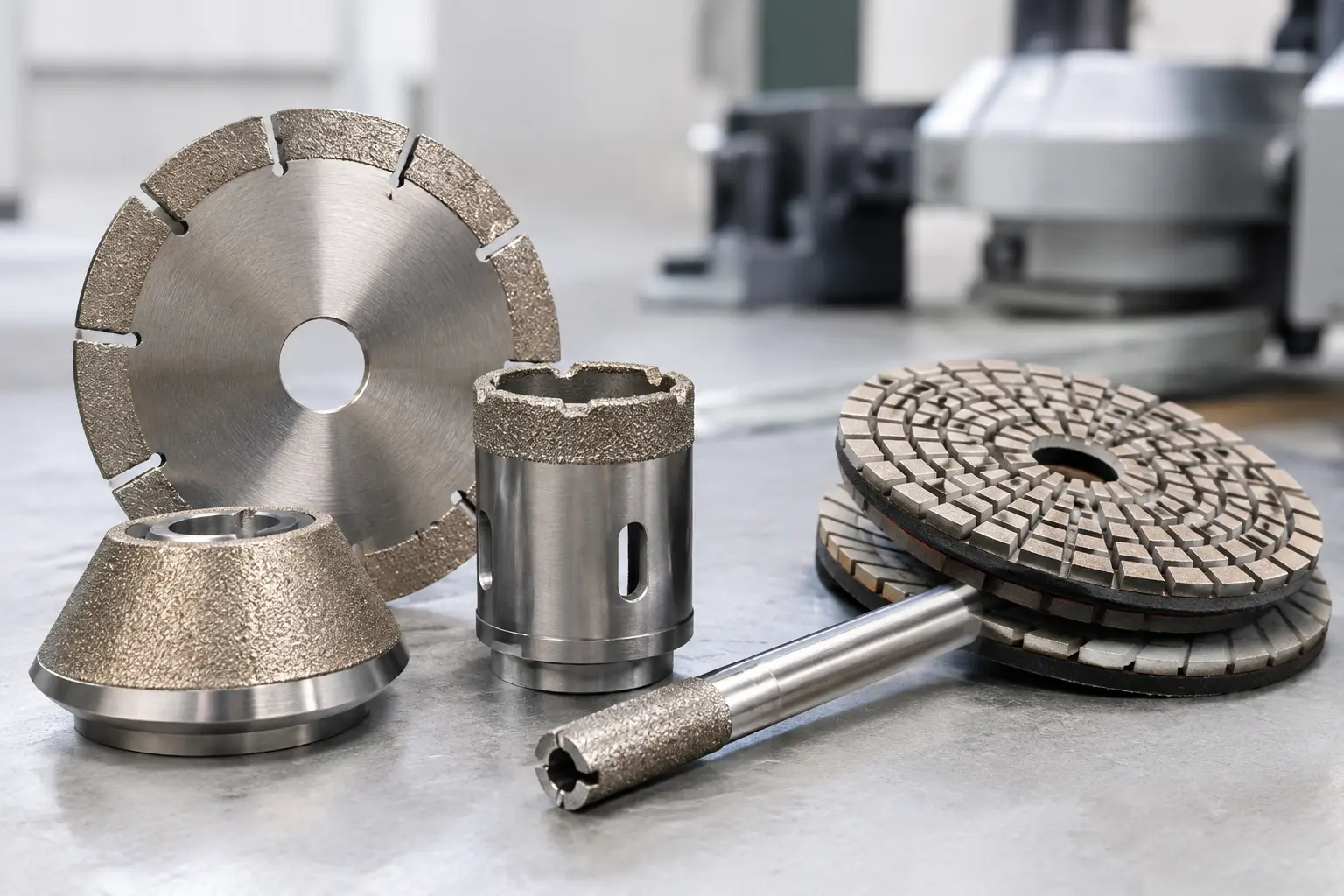
After several months of documented sales and field feedback, the distributor can add targeted products such as asphalt blades, premium reinforced-concrete blades, granite cutting blades, or vacuum-brazed tools for specialty applications. Expansion should follow demonstrated customer demand and the distributor’s ability to explain each product clearly.
The strongest private-label programs are built through controlled repetition: approved specifications, consistent production, practical packaging, and inventory discipline. Start with the blade applications your customers use every week, measure the result in the field, and let proven demand determine the next SKU.