A blade that turns blue, glazes over, wanders through the cut, or loses segments is usually giving the operator a clear warning: heat is no longer under control. To prevent blade overheating, contractors and fabrication teams need to look beyond the blade itself. Material hardness, saw power, feed pressure, cooling, blade specification, and operator technique all affect cutting temperature.
For distributors and procurement managers, overheating complaints also carry a commercial cost. Premature wear, segment loss, poor cut quality, and warranty claims can all result when a blade is mismatched to the application or used outside its intended operating conditions. A reliable diamond blade must be correctly manufactured, but stable performance also depends on correct selection and jobsite use.
Why diamond blades overheat
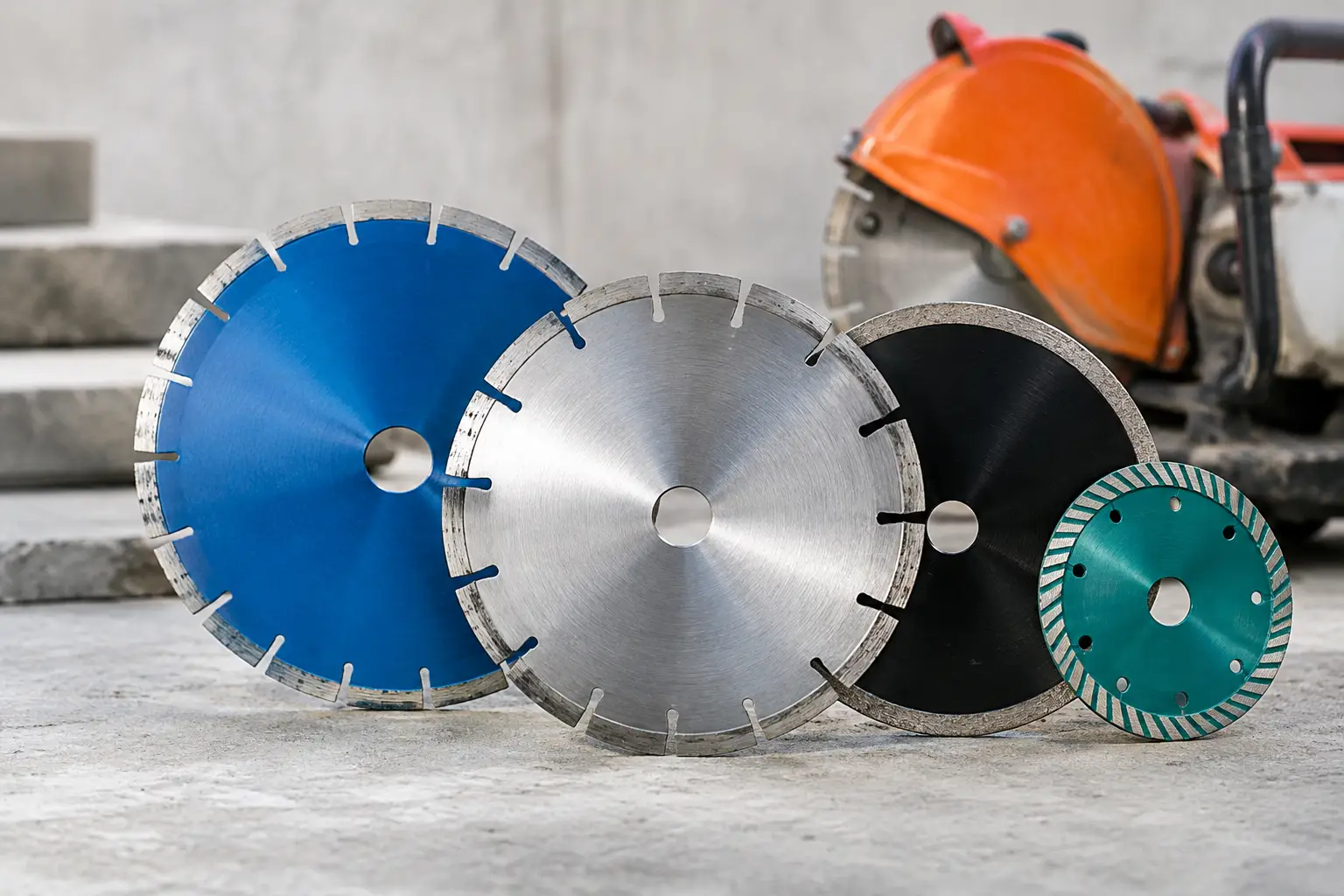
Diamond blades cut by exposing diamond particles at the rim or segment. As the diamonds wear, the metal bond should erode at a controlled rate and reveal new diamond. This balance is central to blade performance. If the bond is too hard for the material, diamonds remain buried and the cutting edge becomes smooth or glazed. The blade then rubs instead of cutting, creating friction and heat.
Overheating can also occur when a blade is pushed too hard. Excessive feed pressure does not always increase production. On hard concrete, reinforced concrete, granite, porcelain, or engineered stone, forcing the blade can reduce cutting speed, distort the steel core, and overload the machine motor. The operator may see sparks, smoke, discoloration, or a cut that begins to drift.
Dry cutting creates an additional heat load. Dry-cut blades are designed with cooling slots, specialized cores, and segment formulas that tolerate intermittent dry operation. Even so, they are not designed for continuous, aggressive cutting without pauses. Wet-cut blades need a consistent water supply to remove slurry and carry heat away from the cutting edge.
Start with the correct blade specification
The most effective way to prevent blade overheating is to select the blade for the material, machine, and cutting method before work begins. A general-purpose blade may be suitable for mixed light-duty work, but it is rarely the best option for repeated commercial cutting in demanding materials.
Concrete blades should be matched to the aggregate, curing condition, and reinforcement level. Harder materials generally require a softer bond so fresh diamonds can be exposed. More abrasive materials often require a harder bond to hold diamonds longer. This can seem backward at first, but it is the basic rule of diamond tool selection: hard material needs a softer bond, while abrasive material needs a harder bond.
Stone and tile applications require the same discipline. Granite, quartz, porcelain, ceramic, marble, and Dekton-type surfaces have very different cutting characteristics. A blade intended for abrasive concrete can wear too quickly on dense porcelain. A blade designed for granite may glaze when used on another hard, non-abrasive surface if the bond and diamond pattern are not suitable.
Machine compatibility matters as much as material compatibility. Confirm the blade diameter, arbor size, maximum RPM, and machine horsepower. A blade operating above its rated speed is a safety risk. A blade fitted to an underpowered saw may cut slowly, encouraging the operator to force it. For high-production work, a laser-welded blade with the appropriate segment design generally provides better stability and durability than a blade selected only by diameter or price.
Control feed pressure and cutting depth
A properly matched blade should advance through the material with steady, controlled pressure. The operator should guide the saw rather than drive it into the cut. When the saw motor slows significantly, the blade begins to discolor, or cutting dust becomes unusually hot, reduce feed pressure immediately.
Deep cuts are a common source of excess heat, particularly in reinforced concrete, thick pavers, granite slabs, and dense masonry. Instead of attempting a full-depth pass, make several controlled passes. Step cutting reduces side friction, lowers the load on the segment, and gives the blade more opportunity to clear dust or slurry.
Straight alignment is equally important. Side pressure is damaging because diamond blades are designed to cut at the rim, not grind on their steel cores. Do not twist the saw in the kerf to correct a line. If the cut begins to close, bind, or wander, stop and inspect the setup. Common causes include inadequate material support, a warped flange, worn bearings, an unstable guide, or a blade that has already been damaged by heat.
For hand-held equipment, let the blade reach full operating speed before contacting the workpiece. For table saws and bridge saws, ensure the work is supported and fed squarely into the blade. A stable setup produces a straighter cut and reduces the heat created by lateral loading.
Use water correctly for wet cutting
Water is not an optional accessory in wet-cut applications. It cools the blade, flushes abrasive slurry from the kerf, reduces dust, and helps preserve cut quality. A wet blade run with insufficient water can overheat very quickly, even if the operator is using reasonable feed pressure.
Check that water reaches both sides of the blade rim. A blocked nozzle, poorly positioned hose, low pump output, or contaminated recirculation system can leave one side of the blade inadequately cooled. This may lead to uneven wear, core tension problems, or visible discoloration on one side.
Water flow should be continuous before the blade enters the material and throughout the cut. The required volume depends on blade diameter, material thickness, machine speed, and cutting rate. There is no single flow setting for every operation, but the operator should see water actively carrying slurry away from the kerf. If slurry accumulates or the blade begins to squeal, pause work and correct the cooling condition.
Wet cutting is particularly valuable for dense stone, porcelain, ceramic, and large-format engineered surfaces, where heat can damage both the blade and the finished edge. In fabrication environments, consistent water management is part of process control, not just housekeeping.
Manage dry cutting cycles
Dry cutting is often necessary on construction sites, especially when using hand-held saws for concrete, block, brick, or pavers. The correct approach is intermittent cutting. Make a controlled cut for a short period, then ease the blade out of the kerf and allow it to spin freely in the air. This helps air move through the cooling slots and lowers rim temperature.
The exact cycle depends on the blade, material, ambient temperature, cut depth, and machine. Hot weather and enclosed work areas require more conservative operation. A blade that performs acceptably in short outdoor cuts may overheat when used continuously inside a deep wall chase or trench.
Do not use water on a blade unless both the blade and the saw are approved for wet operation. Electrical safety, machine design, and manufacturer instructions must be followed. The solution to a dry-cut blade overheating is not automatically to add water. It may be to use a wet-cut system, reduce cut depth, change the blade specification, or adjust the work cycle.
Inspect the blade, saw, and cutting edge
Routine inspection prevents a small operating issue from becoming a failed blade. Before each shift, check the blade for cracks, missing segments, excessive wear, steel-core discoloration, damaged cooling slots, and uneven segment height. Never continue using a blade with a cracked core or loose, missing, or damaged segments.
Inspect flanges as well. They should be clean, flat, equal in diameter where required, and tightened correctly. Dirt, hardened slurry, or damage between the flange and blade can create runout. Even a quality blade cannot cut efficiently when it is not clamped squarely.
If the blade is glazed, dress it using an appropriate abrasive dressing material. Dressing removes the smooth bond layer and exposes fresh diamond. This is often effective when a blade has been used on a material that is harder or less abrasive than its intended application. However, repeated glazing is not just a dressing issue. It is evidence that the bond, blade type, or operating method should be reviewed.
Also inspect the saw's bearings, spindle, belt condition, guards, water delivery system, and motor performance. Blade overheating is sometimes blamed on consumables when the real cause is machine vibration, poor alignment, or a loss of RPM under load.
Build overheating prevention into purchasing standards
For fleet operators, distributors, and project buyers, consistent performance starts at the specification stage. Define the primary material, typical depth of cut, wet or dry method, saw type, operating RPM, and expected production volume. These details allow a supplier to recommend the correct bond, segment configuration, core style, and welding method.
Buying only on unit price can create higher cost per cut when blades glaze, lose speed, or require frequent replacement. The better measure is stable cutting performance across the real range of job conditions. For private-label and bulk programs, suppliers such as Ryhyoma can support application-specific blade specifications, helping distributors build a range that is appropriate for their target market rather than relying on one blade for every material.
A blade should run hot enough to cut efficiently, but never so hot that its core, segments, or cutting accuracy are compromised. When the blade, machine, cooling method, and operator technique are working together, production stays predictable and the tool delivers the service life it was designed to provide.