A diamond blade that slows down, glazes over, or loses segments is often being blamed for a problem created by heat. The right blade cooling methods control cutting temperature, clear abrasive slurry or dust from the kerf, and keep diamond segments exposed to the material. For contractors, fabricators, and distributors, cooling is not a minor operating detail. It directly affects blade life, cut quality, operator safety, and cost per linear foot.
Cooling requirements depend on the material, blade construction, machine speed, and whether the operation is wet or dry. A method that works well for a tile saw may be unsuitable for a high-powered concrete cutter, while a dry-cut blade can fail quickly if it is forced through dense stone without recovery intervals.
Why Heat Damages Diamond Blades
Diamond tools cut by exposing diamonds in a bonded segment or rim. As the blade passes through concrete, granite, ceramic, asphalt, or engineered stone, friction produces heat at the cutting edge and in the steel core. Some heat is expected. Excessive heat changes the operating conditions of the blade.
When temperatures rise too far, the metal bond can soften or wear at an uncontrolled rate. Diamonds may pull out before they have completed useful work, or the bond may smear over the diamonds and stop them from cutting. This condition is commonly described as glazing. The operator then pushes harder, which increases heat further and can lead to segment damage, core distortion, poor tracking, or a rough cut edge.
Heat also affects the workpiece. Ceramic and porcelain can chip at the edge when a hot blade is forced through the material. Dense natural stone may show burn marks. In reinforced concrete, slow cutting can cause the operator to dwell in one area, increasing load on both the blade and the saw.
Effective cooling does two jobs at once: it removes heat and carries away cutting debris. The second function matters because a packed kerf increases friction even when the blade is technically receiving water.
Blade Cooling Methods: Wet, Dry, and Air-Assisted Cutting
The most suitable cooling method starts with the blade specification. A wet-cut blade should be operated with a stable water supply. A dry-cut blade is designed with a segment, bond, core, and slot pattern that allow it to shed heat in open air, but it still has limits. Using the wrong method for the blade is a direct route to inconsistent performance.
Wet Cutting With Continuous Water Flow
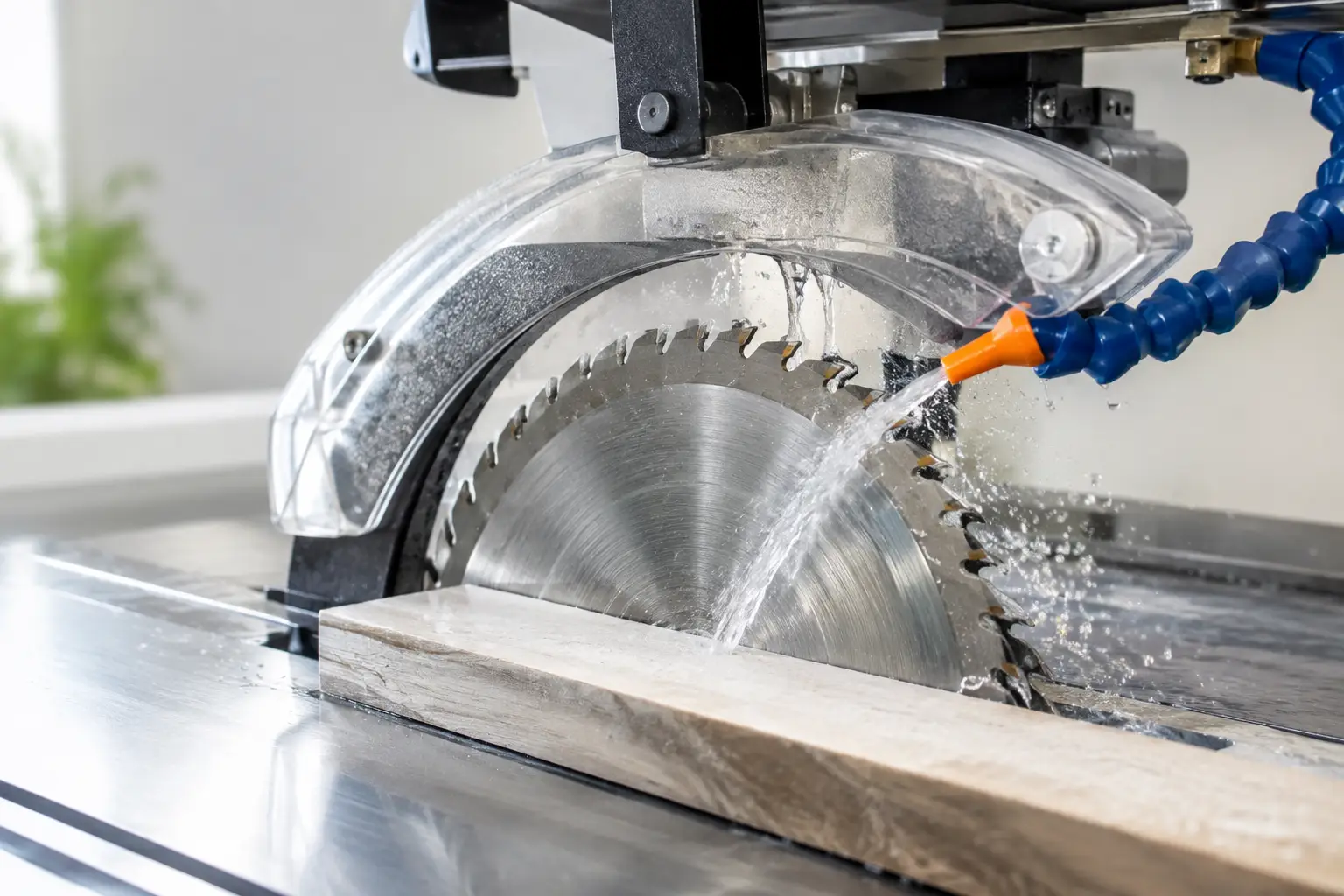
Wet cutting is the preferred approach for many high-production operations involving concrete, reinforced concrete, granite, marble, porcelain, and dense masonry. Water is directed at both sides of the blade near the point where it enters the cut. This reduces blade temperature, flushes fines from the kerf, and suppresses airborne silica dust.
The water flow does not need to be excessive, but it must be continuous and correctly aimed. Water sprayed behind the blade after it has left the cut provides far less benefit than water reaching the cutting zone. On bridge saws, table saws, core drilling systems, and walk-behind concrete saws, inspect nozzles routinely for blockage, misalignment, and unequal flow.
Too little water often creates polished segments, discoloration on the core, and a noticeable drop in cutting speed. Too much water is rarely harmful to the blade itself, but uncontrolled runoff can create handling, cleanup, and site-safety issues. The practical target is enough flow to keep the cut zone clean and prevent visible overheating.
For production buyers, wet-cut performance should be evaluated as a system. Blade quality, water delivery, machine horsepower, and feed rate must be aligned. A premium laser-welded blade cannot compensate for a saw with blocked water ports or an operator forcing a cut beyond the machine's capacity.
Dry Cutting With Recovery Intervals
Dry cutting is common where water is unavailable, cleanup must be limited, or the work requires a portable hand-held saw. Dry-cut diamond blades use ventilation slots, gullets, and core designs intended to release heat during rotation. That design does not mean the blade can run continuously at maximum load.
The correct practice is to make a controlled cut, then allow the blade to spin freely outside the material for a short recovery period. This airflow helps reduce temperature before the next pass. The exact interval depends on blade diameter, material hardness, depth of cut, and saw power. Dense cured concrete, hard brick, and thick stone require more frequent recovery than softer block or asphalt.
Avoid twisting the blade in the cut or using side pressure to widen a kerf. Side loading generates heat quickly and can damage the core even if the blade is otherwise suitable for dry operation. If the blade begins to slow, produces a burning smell, or shows blueing on the steel core, stop cutting and correct the operating conditions.
Dry cutting also requires effective dust control. Dust extraction does not cool a blade like water, but it can help remove debris from the cutting area and improve visibility. It must be matched to the saw and application, particularly when cutting silica-bearing materials.
Air-Assisted Cooling for Specialized Setups
Compressed air is sometimes used in fabrication or controlled industrial cutting environments where water is not practical. Air can remove dust and provide limited cooling, especially on thinner materials or light-duty operations. However, it is not a substitute for water on deep, high-load cuts through concrete, granite, or heavily reinforced materials.
Air-assisted systems require careful setup. Poorly directed air can simply move dust into the operator's work area, while excessive pressure may interfere with collection equipment. For most construction cutting applications, air should be treated as a supplementary measure rather than the primary cooling method.
Match Cooling to the Material and Blade Type
Material behavior determines how aggressively heat must be managed. Hard, dense materials generate friction quickly and generally benefit from wet cutting. Softer abrasive materials may naturally expose fresh diamonds, but they can still overheat a blade when the cut is deep or the feed rate is excessive.
Concrete blades used on green concrete, cured concrete, and reinforced concrete do not always require the same operating approach. Green concrete is abrasive and may wear a bond rapidly. Cured concrete can be harder and may require steady water flow to preserve cutting speed. Reinforcement adds intermittent high load as the blade transitions between concrete and steel.
Porcelain and ceramic cutting discs need cooling and stability for a different reason: edge quality. A continuous-rim blade with water support helps reduce chipping, especially on polished or brittle tile. Granite and Dekton applications demand precise material-specific blade selection because the wrong bond can either wear too fast or glaze before the cut is complete.
Asphalt blades are often designed with undercut protection and bonds suited to abrasive aggregate. Water use may be restricted by site conditions or material behavior, so operators should follow the blade's intended wet or dry rating rather than applying a general rule from concrete cutting.
Machine Setup Has as Much Impact as Water
Blade cooling cannot correct an unsuitable machine. Check that the saw arbor is clean, flanges are the correct size and in good condition, and the blade is mounted in the specified rotation direction. A blade that runs out of true will rub in the kerf, creating friction and heat that no amount of water can fully offset.
Correct RPM is equally important. Operating above the blade's maximum safe speed is unsafe and can accelerate heat-related damage. Running too slowly can reduce cutting efficiency and encourage operators to force the blade. Machine power, blade diameter, and feed pressure should produce a steady cutting action rather than repeated stalling or aggressive pushing.
For wet systems, verify flow before every shift. For dry systems, plan cuts to avoid long, continuous full-depth passes when the material or blade diameter makes heat buildup likely. A staged cut is often more productive than a single overloaded pass because it protects the blade and reduces unplanned downtime.
Signs Your Cooling Practice Needs Correction
A blade does not need to fail completely before cooling practices should be reviewed. Slow cutting, increased operator force, smoke, a burning odor, core discoloration, unusual vibration, and chipped edges are early warnings. Inspect the segment or rim as well. A shiny, smooth surface may indicate glazing, while excessive segment wear can signal an overly abrasive application, poor blade match, or inadequate water at the cut.
When glazing occurs, do not immediately assume the blade is defective. First confirm the material, saw RPM, water supply, and feed pressure. In some cases, a brief cut through a suitable abrasive dressing material can reopen the segment and expose fresh diamonds. This should be done only when appropriate for the blade and application, not as a substitute for correcting the root cause.
For distributors and procurement teams, recurring field complaints should be documented by material, machine type, blade diameter, operating method, and failure pattern. This information makes it possible to distinguish a specification issue from an operating issue and improves future blade selection.
Build Cooling Into Your Blade Specification
For bulk purchasing, blade cooling requirements should be part of the specification discussion, not an afterthought once product reaches the jobsite. Define whether the blade will be used wet, dry, or in mixed conditions; identify the material and expected cut depth; and confirm the machine class and available water or dust-control setup. These details influence bond selection, segment design, core thickness, welding method, and packaging guidance.
Ryhyoma supports industrial buyers with application-based blade specifications so distributors and contractors can supply tools matched to real cutting conditions. A stable cooling practice, paired with a blade built for the material, is one of the simplest ways to protect cutting speed and achieve dependable service life.