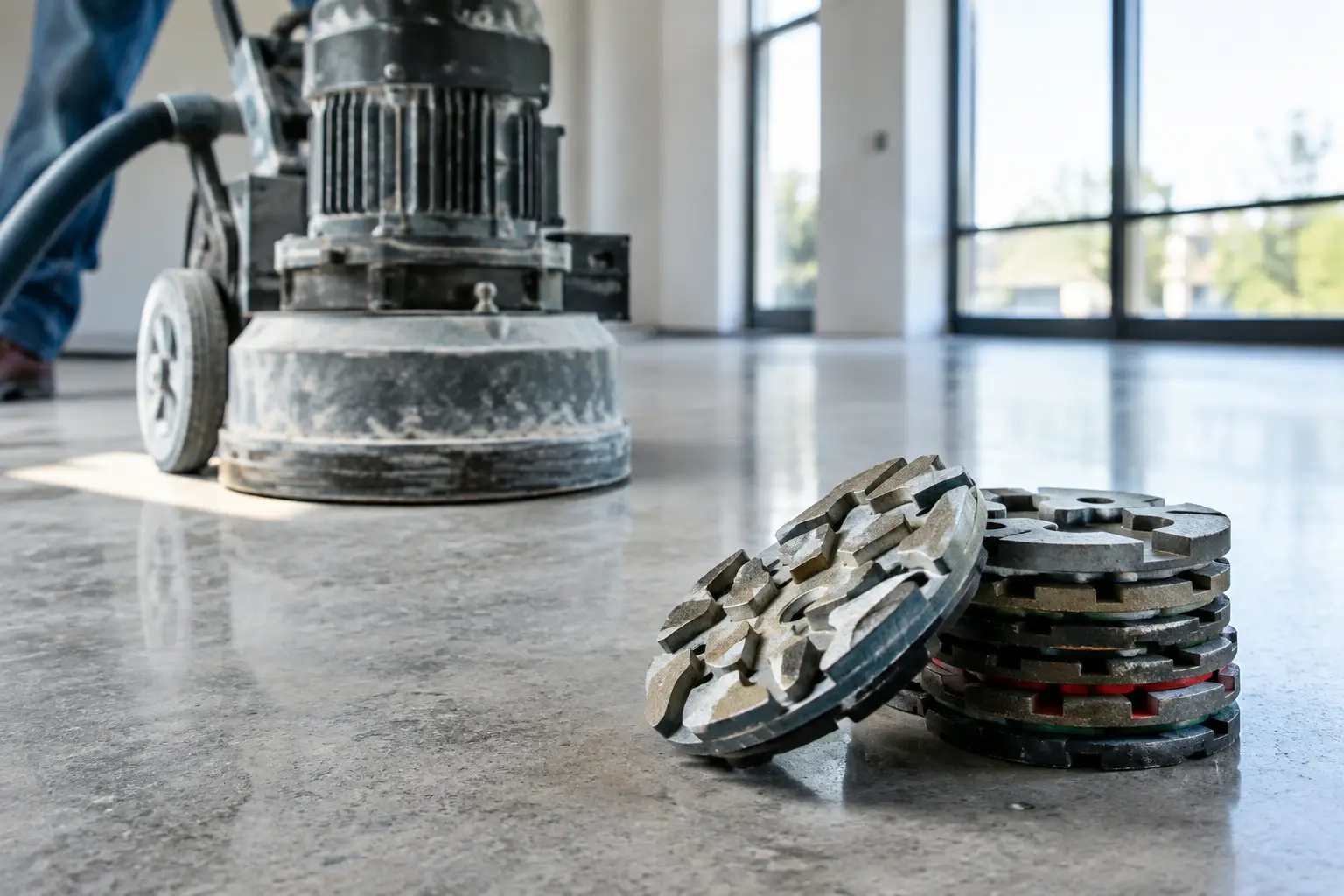
A floor grinder can still be running while its tooling is already costing the project money. Knowing when to replace grinding blocks is not simply a matter of waiting until the segments disappear. On commercial concrete floors, worn or poorly matched blocks reduce production rates, create inconsistent scratch patterns, increase machine load, and make crews spend more time correcting the surface.
For contractors, fleet managers, and tool distributors, the replacement decision should be based on measurable operating signs: cutting performance, segment condition, heat, floor finish, and the material being ground. A disciplined inspection routine prevents premature tool disposal while avoiding the larger cost of running grinding blocks past their effective working life.
When to Replace Grinding Blocks: The Main Signs
Grinding blocks should be replaced when they no longer remove material at an acceptable rate, cannot maintain the required floor profile, or show physical damage that affects safe operation. Segment height alone is useful, but it is not the only indicator. A block with visible diamond segment remaining may still be ineffective if it has glazed over, worn unevenly, or lost its bond integrity.
The most practical sign is a noticeable decline in production. If the same grinder, operator, and floor area now require significantly more passes than before, inspect the tooling first. Do not assume the concrete has simply become harder. Concrete conditions can change across a slab, but a sudden broad reduction in cutting speed often indicates that the diamond segments are dull, loaded, or near the end of their usable depth.
Surface finish is another direct signal. When blocks begin leaving irregular scratch marks, ridges, swirl patterns, or unground patches, replacement may be necessary. In some cases, the cause is uneven block wear rather than complete wear. Either condition reduces finish consistency and can create extra steps before coating, polishing, or overlay installation.
Segment Height Is a Limit, Not a Complete Answer
Every grinding block should be removed before the segment wears down to the steel body or mounting plate. Running a block to this point risks damaging the machine holder, scratching the floor with exposed metal, and creating unsafe imbalance. Suppliers and contractors should establish a minimum remaining segment height based on the block design and application.
However, replacing blocks solely by visual height can waste usable tooling. A segment with moderate remaining height may still perform well if diamonds are properly exposed and the bond continues to release at the correct rate. Conversely, a tall segment can stop cutting effectively when the bond becomes too hard for the concrete being processed.
The best practice is to combine visual segment inspection with production data. Track square footage per set, average grinding time, amperage behavior, and finish quality. For recurring projects, these records provide a more reliable replacement threshold than a fixed number of operating hours.
Watch for Glazing, Loading, and Slow Cutting
Glazing occurs when the metal bond holds the diamonds too tightly and the exposed cutting points become dull. The block may look intact, but it skates across the concrete instead of grinding it efficiently. Operators may push the machine harder, make repeated passes, or add unnecessary weight, all of which can increase wear on equipment without restoring productivity.
Loading is different. It happens when concrete dust, adhesive residue, coatings, or soft material pack into the diamond surface and prevent the segments from cutting. Loaded blocks often generate heat and leave a smeared or polished appearance rather than a clean ground profile.
Before discarding blocks affected by glazing or loading, assess whether they can be dressed. Running briefly on an abrasive dressing surface or a compatible abrasive material can expose fresh diamonds. This is often worthwhile when segments have sufficient height and no structural damage. If dressing does not restore cutting speed, replacement is the efficient choice.
Tool selection matters here. A hard-bond grinding block may last longer on highly abrasive concrete but can glaze on hard, dense floors. A softer bond exposes diamonds more quickly and may cut hard concrete aggressively, though it can wear faster on abrasive slabs. There is no universal replacement interval because bond selection, diamond concentration, machine weight, and concrete condition all affect service life.
Replace Blocks That Wear Unevenly
Uneven wear is one of the most common reasons a usable-looking set of grinding blocks should be removed from service. A grinder depends on balanced contact between all tooling positions. When one or more blocks wear substantially faster than the rest, the machine can produce inconsistent results and place excessive load on individual heads.
Check each block when changing grits, moving between areas, or completing a shift. Compare segment height across the full set, not just the most visible blocks. If several blocks are significantly lower, replace the set or rebalance it according to the machine configuration. Mixing severely worn blocks with new blocks may seem economical, but it often creates uneven cutting and reduces the useful performance of the new tools.
Uneven wear can also point to an operating problem. Common causes include an unlevel machine head, worn tool holders, incorrect pressure, poor dust extraction, or an operator spending too much time on one side of the pass. Replacing blocks without correcting the cause will repeat the problem on the next set.
Inspect for Damage Before Every Shift
Grinding blocks are consumable tools, but they are also high-load components. Cracked segments, missing diamond sections, loose mounting plates, damaged clips, and distorted bodies require immediate replacement. Continuing to run damaged blocks can harm the grinder, compromise the floor finish, and create a safety risk for the operator.
Pay close attention to segment separation. If a segment has cracked or detached from the block, do not attempt field repair. Segment retention depends on controlled manufacturing processes, including welding quality and bond design. A replacement block is the appropriate response.
Heat discoloration around the steel body or segment base is another warning sign. Excessive heat may result from insufficient dust control, a loaded tool, excessive downward pressure, or a mismatch between block specification and floor hardness. Heat does not always mean the block must be discarded, but it requires inspection before the tool returns to service.
Use Production Cost, Not Just Tool Price
For procurement teams, the lowest purchase price per block does not necessarily produce the lowest grinding cost. The meaningful calculation is cost per square foot or cost per square meter at the required finish level. A lower-priced block that slows production, requires frequent changes, or creates rework can be more expensive than a stable, higher-performing option.
Replacement timing directly affects this calculation. Changing blocks too early increases consumable cost. Changing them too late increases labor time, machine wear, power consumption, and the risk of failed surface preparation. The right point is when the remaining tool life no longer supports the required production rate or finish standard.
Distributors supplying grinding tools to contractors should help customers define this point by application. A block used for aggressive coating removal has a different replacement threshold from a block used for light concrete profiling or final surface refinement. Private-label and OEM programs can also specify segment height, bond hardness, diamond pattern, and mounting type to match local concrete conditions and common grinder platforms.
Build a Replacement Standard for Each Application
A practical replacement standard begins with documenting the job conditions: concrete hardness, aggregate exposure, coating thickness, machine type, desired profile, dust extraction setup, and expected daily output. Then record the performance of each grinding block specification across several comparable jobs.
The goal is not to force every project into the same schedule. It is to create a repeatable decision process. If a block consistently slows below the crew's acceptable production rate after a known area, or if its remaining segment height reaches the established minimum, the replacement decision becomes clear. This supports more accurate ordering, fewer emergency shortages, and better control of bulk inventory.
For high-volume contractors and distributors, consistent block quality is essential to making these records useful. Ryhyoma supports industrial buyers with grinding block specifications designed for stable wear behavior and repeatable production performance across commercial applications.
Before the next floor grinding project begins, set the replacement criteria with the crew, not after production has already fallen. A simple inspection of segment condition, cutting speed, and finish quality at each shift change protects both the grinder and the project margin.