
A chipped edge on Dekton is usually not a machine problem first. More often, it is a blade selection problem. If you are sourcing for fabrication shops, distributors, or contractors, choosing the best blade for Dekton means looking beyond basic diameter and arbor size. The material is dense, abrasive, heat-sensitive during cutting, and unforgiving when the blade specification is wrong.
Dekton behaves differently from standard porcelain and differently again from natural stone. That is why buyers who treat it like a general ceramic application often see short blade life, slow feed rates, edge breakout, or inconsistent results between slabs. For commercial users, that translates into wasted labor, rejected pieces, and avoidable replacement cost.
What makes the best blade for Dekton different
Dekton is an ultracompact surface made under high pressure and heat, with a composition that gives it very high hardness and abrasion resistance. In practical cutting terms, that means the blade has to do two jobs at the same time. It must stay sharp enough to keep cutting efficiently, and it must also run stable enough to protect the finished edge.
A blade that is too hard in bond may glaze over and stop cutting freely. A blade that is too aggressive may cut faster at first but leave edge damage, vibration marks, or premature segment wear. The best blade for Dekton is usually a purpose-built diamond blade with a rim and bond engineered specifically for ultracompact surfaces rather than a general tile or granite blade.
For B2B buyers, the key point is consistency. One acceptable test cut is not enough. The right blade should deliver stable performance across repeated jobs, different slab thicknesses, and multiple machines in actual shop conditions.
Start with rim design, not just diameter
When buyers compare blades for Dekton, diameter is often the first specification discussed because it must match the machine. That matters, but it does not tell you whether the blade is suitable for the material. Rim design is the better starting point.
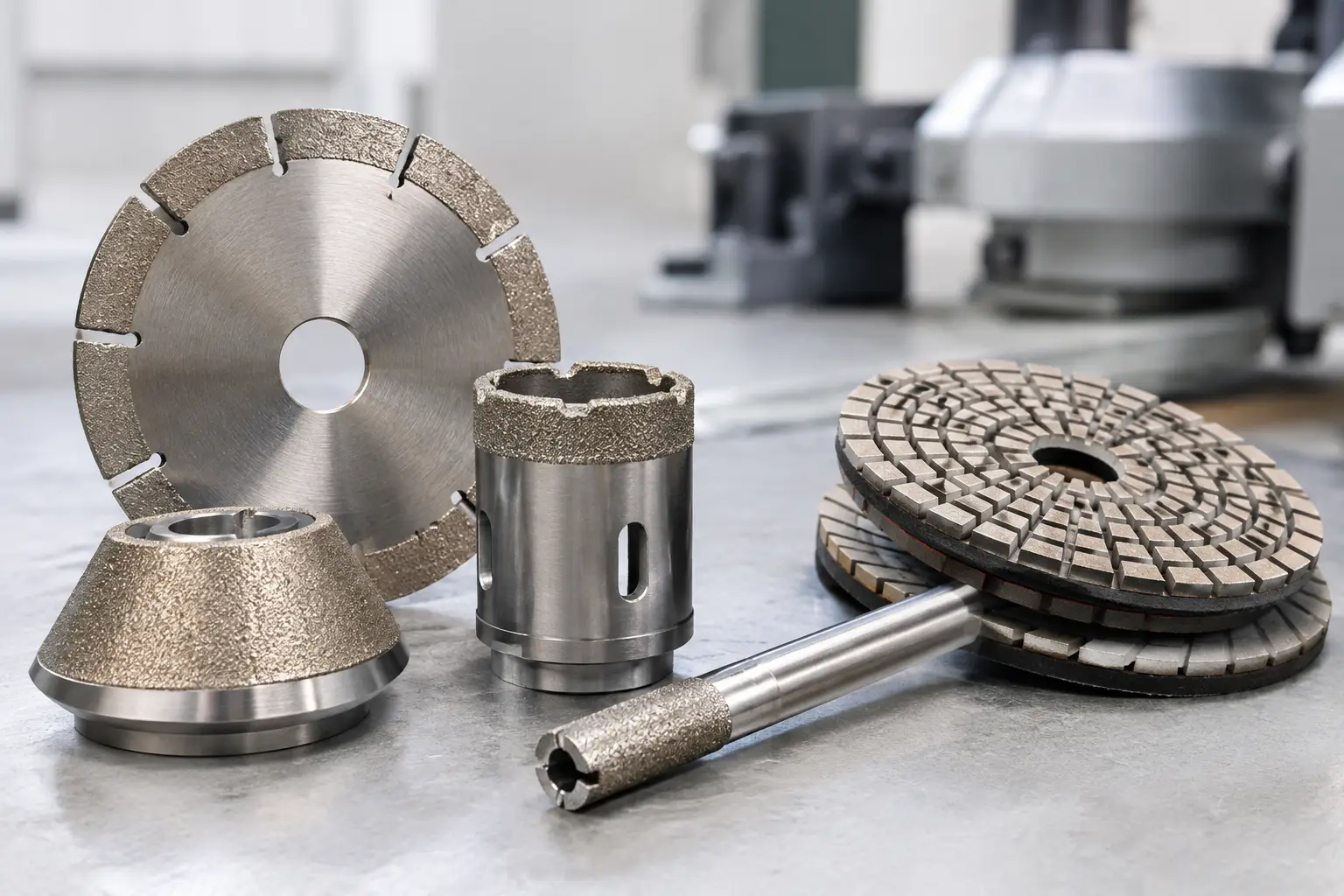
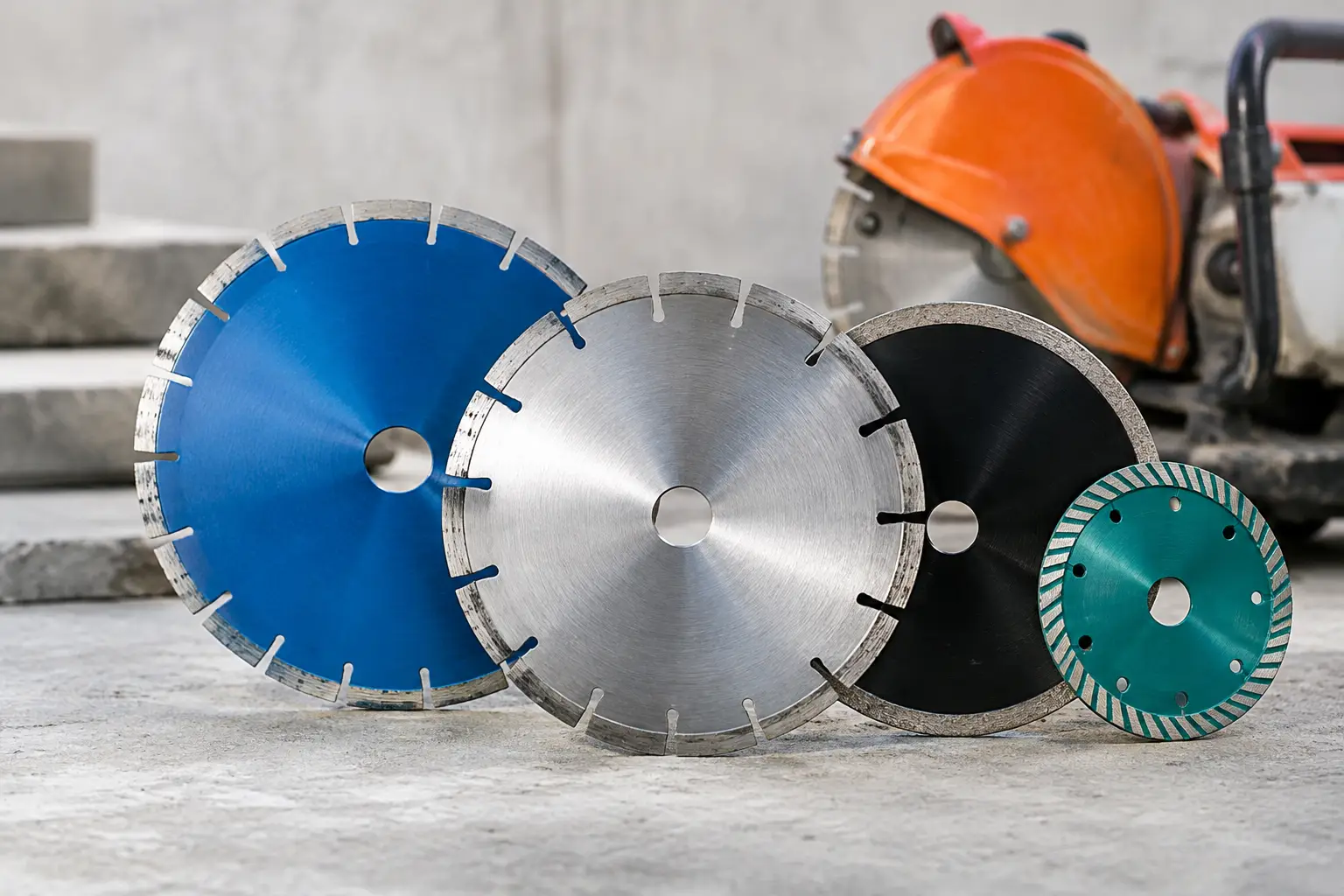
A continuous rim blade is typically preferred for Dekton because it provides a smoother, cleaner cut with less chance of chipping. Segmented blades can improve cooling and debris removal in some materials, but for ultracompact surfaces they often increase the risk of edge damage. Turbo rims can be useful in some setups, especially where a balance between cut speed and finish is needed, but the exact pattern and segment geometry still matter.
For high-finish fabrication work such as countertops, vanities, wall panels, and visible edges, a fine continuous rim is usually the safer choice. For rougher production environments, the decision can depend on whether speed or finish quality has higher priority. That trade-off should be clear before the order is placed.
Bond hardness matters more than many buyers expect
The bond controls how the blade wears and how fresh diamond remains exposed during cutting. Dekton is highly abrasive, so a bond that works well on softer stone may become inefficient quickly. If the bond is too hard, the blade can polish over instead of self-dressing. Cutting slows down, heat rises, and the operator often pushes harder to compensate. That is when edge defects and blade stress begin.
If the bond is too soft, the blade may cut freely but wear too fast for commercial use. That can be acceptable for occasional specialty work, but not for distributors or contractors trying to control cost per cut.
A Dekton-specific blade should have a bond formulated to maintain exposure of the diamond under abrasive conditions while preserving rim stability. This is where supplier quality control becomes a major factor. Two blades may look similar on paper, but actual bond consistency can be very different.
Diamond quality and concentration affect more than blade life
Some buyers reduce blade evaluation to service life alone. That is understandable in procurement, but it is incomplete. Diamond quality and concentration also affect cutting smoothness, feed pressure, heat generation, and finish quality.
Higher-grade synthetic diamond with controlled sizing generally supports more predictable cutting. Balanced concentration helps the blade maintain cutting action without becoming either too dull or too fragile. In Dekton applications, poor diamond distribution often shows up as uneven wear, inconsistent speed, and variable edge quality from one batch to the next.
For wholesale and distribution buyers, batch consistency is as important as performance. If one shipment cuts cleanly and the next does not, the problem is not just the blade. It becomes a service issue with your own customers.
Wet cutting is usually the safer commercial choice
Dekton can be cut dry in some cases, depending on the machine, blade design, and jobsite conditions. Even so, wet cutting is generally the better option when surface finish, blade life, and process stability matter.
Water controls heat, supports cleaner cutting, and helps reduce the risk of micro-chipping along the edge. It also limits the thermal stress that can affect both the blade and the material. In fabrication shops and commercial processing lines, wet cutting usually delivers a more reliable result and a lower total operating cost.
Dry cutting can still have a place where mobility or site conditions do not allow water. But the blade must be rated for it, and expectations should be realistic. Feed rate often needs to be reduced, and blade life may be shorter. If your end users are contractors working under mixed site conditions, this is worth discussing before finalizing product specifications.
Machine stability changes blade performance
Even the best blade for Dekton will underperform on an unstable machine. Buyers sometimes blame the blade when the real issue is spindle wobble, poor flange condition, inconsistent water flow, or operator feed pressure.
This matters in B2B sales because a blade is part of a cutting system, not an isolated item. A high-quality Dekton blade should be tested under realistic machine conditions, including bridge saws, table saws, hand-held saws, or CNC setups depending on the target market. The same blade can perform differently across those platforms.
If you supply multiple customer segments, it may not be practical to offer one universal Dekton blade. A distributor serving fabrication shops may need a premium finish-oriented option, while a contractor channel may prefer a blade designed for more varied field conditions. Product matching often works better than trying to force one blade into every application.
How to evaluate a Dekton blade before bulk purchase
For commercial buying, specification sheets are necessary but not sufficient. A blade should be evaluated on real cutting behavior. The most useful test is not maximum speed. It is stable performance over repeated cuts.
Look at whether the blade tracks straight, whether the edge remains clean on entry and exit, whether feed pressure stays reasonable, and whether cutting speed remains consistent after multiple passes. Also check if the blade starts glazing before expected life is reached. If the blade requires frequent dressing to recover performance, the bond may not be optimal for Dekton.
Noise and vibration should not be ignored. Excess vibration often leads to lower finish quality and greater operator fatigue. In a production environment, that affects throughput as much as blade wear does.
Questions serious buyers should ask suppliers
A capable supplier should be able to explain whether the blade is designed specifically for Dekton and similar ultracompact surfaces, what cutting mode it supports, and what machine types it suits best. They should also be able to discuss bond design, rim structure, recommended operating parameters, and expected trade-offs between finish quality and cutting speed.
For OEM and wholesale buyers, production control is equally important. Ask about consistency between batches, quality inspection standards, and whether custom specifications are available for your market. If a supplier cannot discuss manufacturing controls in clear terms, there is risk behind the quotation.
This is where an experienced manufacturing partner such as Ryhyoma can add value. The blade itself matters, but so does the ability to maintain repeatable quality across volume orders and support application-specific adjustments when your customers need them.
Common buying mistakes
The most common mistake is choosing by price alone. Dekton cutting is demanding enough that a low-cost blade can become the most expensive option once labor loss, edge rejection, and replacement frequency are included.
The second mistake is using a blade designed for porcelain and assuming the result will be close enough. In some cases it may work for limited tasks, but performance usually falls short in durability or edge quality.
The third mistake is ignoring the end user’s machine setup. A premium blade sold into unsuitable operating conditions will not protect your reputation. Matching blade design to the actual equipment base is part of smart product selection.
What the right blade should deliver
A well-selected Dekton blade should cut with controlled speed, maintain a clean edge, resist glazing, and deliver predictable life under commercial use. It should not force the operator to choose between productivity and finish quality on every job. Most importantly for B2B buyers, it should perform consistently from batch to batch.
That is the real standard when deciding on the best blade for Dekton. Not the lowest price, not the most aggressive marketing claim, and not one successful sample cut. The right choice is the blade that keeps your customers productive without surprises, because reliable cutting performance is what turns a product line into a long-term supply relationship.
If you are buying for resale or repeated project use, the smartest next step is to test for consistency, not just initial speed. That is usually where the real difference shows.