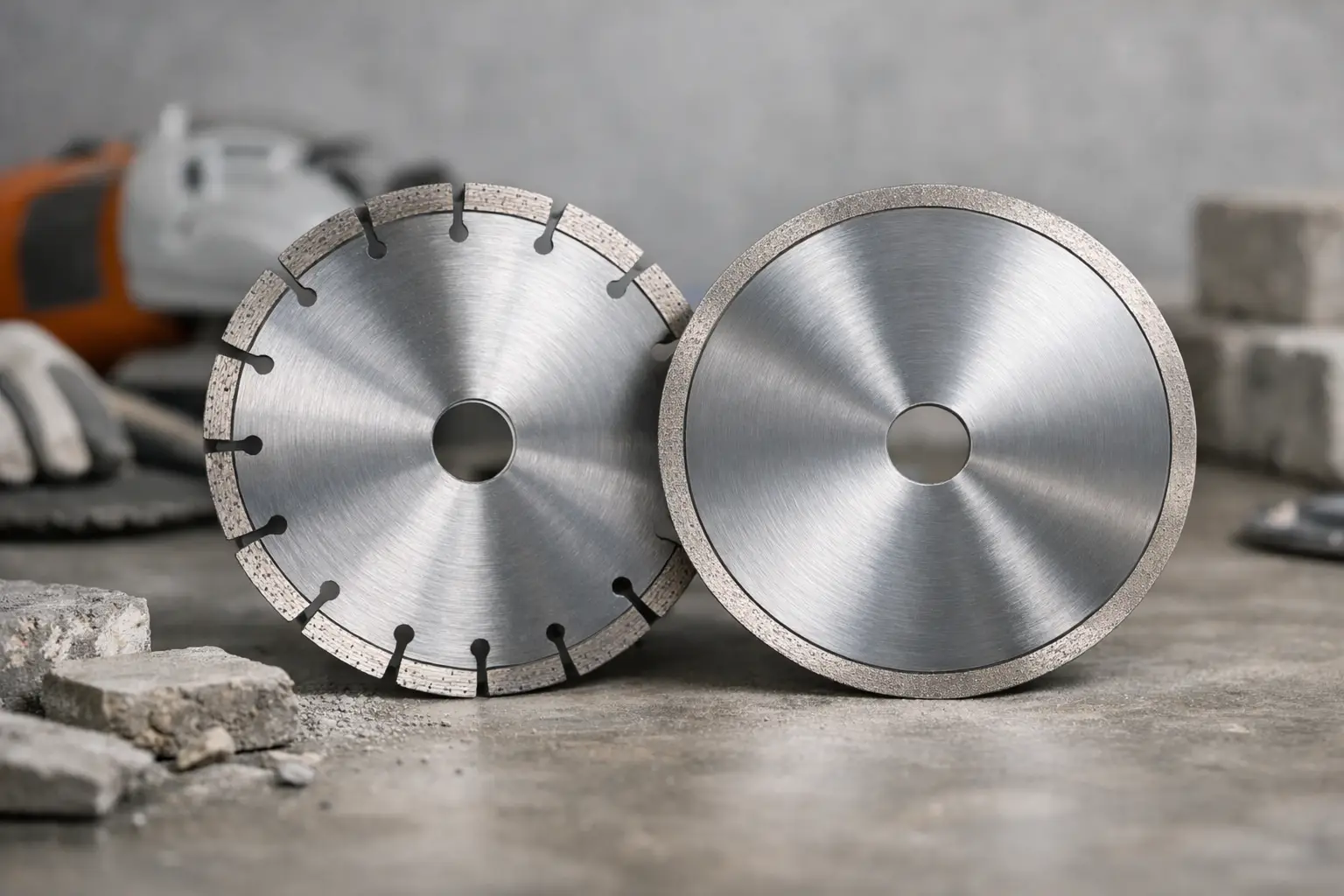

A diamond segments supplier can look qualified on paper and still create expensive problems in production. For importers, distributors, and tool brands, the real test is not whether a factory can make segments once. It is whether that supplier can keep bond performance, cutting speed, wear rate, and delivery timing consistent across repeat orders.
Diamond segments sit at the center of blade performance. If segment quality shifts, the entire tool line becomes harder to sell, harder to predict, and more likely to generate complaints in the field. That is why supplier selection should be treated as a technical and commercial decision at the same time.
What a diamond segments supplier actually affects
A segment is not just a consumable part. It determines how a blade enters the material, how fast it cuts, how well it holds diamonds during wear, and how long the tool remains usable under load. In practical terms, your supplier affects operator efficiency, machine strain, finish quality, and replacement frequency.
For buyers serving construction, stone fabrication, road work, and flooring markets, these details matter because end users compare results quickly. If one batch cuts reinforced concrete well and the next batch glazes or wears too fast, confidence drops immediately. A reliable diamond segments supplier helps protect your product reputation before the blade ever reaches the jobsite.
The first question is material application
Not all segments should be evaluated by the same standard. A segment designed for granite behaves differently from one made for asphalt, green concrete, cured concrete, ceramic, or engineered stone. Bond hardness, diamond concentration, segment shape, and manufacturing method all need to match the material and working conditions.
This is where many sourcing mistakes begin. Buyers sometimes compare prices between products that are not technically equivalent. A low-cost segment may look acceptable by dimension, but if the bond is wrong for the target material, cutting speed drops or segment life collapses. The result is not savings. It is warranty risk and lost customer trust.
A capable supplier should ask detailed questions before quoting. They should want to know blade diameter, horsepower range, cutting method, target material, expected feed rate, and whether the tool is for dry or wet use. If those questions never come up, the offer is probably based on generic production rather than application fit.
How to evaluate diamond segments supplier quality
The strongest suppliers are disciplined manufacturers, not simple traders moving products between factories. That difference shows up in consistency.
A dependable diamond segments supplier should be able to explain how raw materials are controlled, how bonds are formulated, how sintering parameters are managed, and how batches are checked before shipment. This matters because segment performance is affected by small production changes. Metal powder ratios, diamond grade, pressing pressure, and temperature control all influence wear behavior.
You do not need every formula disclosed, but you should expect clear answers on process control. Ask how the supplier verifies segment hardness, dimensional accuracy, and bonding strength. Ask whether they test in actual cutting conditions or only inspect finished appearance. Segments can look clean and still fail under load.
Consistency across repeat orders is usually a better indicator than one strong sample batch. A supplier who performs well during sampling but cannot maintain the same quality in volume is not ready for long-term business.
Production capability matters more than catalog size
A large product catalog can be useful, but it is not proof of manufacturing strength. In B2B supply, what matters more is whether the supplier can produce your specifications on schedule and keep quality stable as volume increases.
For diamond segments, that means checking whether the factory can support standard lines, custom formulas, and OEM or ODM work without losing control of lead time. If you serve different markets, you may need separate segment profiles for price-sensitive distribution, premium contractor use, or material-specific cutting. A supplier should be able to support that segmentation without turning every order into a development project.
This is especially important for buyers building private label programs. A manufacturing partner should understand that repeatability is part of your brand value. The segment dimensions, welding compatibility, cutting feel, and service life should remain within a predictable range order after order.
OEM and customization are useful, but only with process discipline
Customization sounds attractive, and in many cases it is necessary. Different markets have different machine setups, user habits, and price expectations. A GCC distributor may need one performance balance, while another export market may require a different wear profile or packaging standard.
Still, customization only adds value when the supplier has enough engineering control to reproduce it reliably. If a factory offers unlimited customization but cannot document testing, trial results, and approval standards, you may end up solving the same problem every time you reorder.
A practical approach is to start with a defined application target and measurable expectations. That may include cutting speed, life span, segment height, compatibility with laser-welded or silver-welded blades, and target price range. The right supplier will translate those requirements into a controlled specification, not just a verbal promise.
Service reliability is part of product quality
In industrial supply, product quality and service quality are tied together. A technically good segment is still a poor supply choice if lead times slip, communication is slow, or claims are handled without urgency.
A serious diamond segments supplier should respond with commercial clarity. Quotations should be specific. Production lead times should be realistic. Packaging and labeling should match export requirements. If batch issues appear, the supplier should investigate with data rather than deflecting responsibility.
For distributors and importers, this is not a soft factor. It directly affects inventory planning, customer commitments, and cash flow. A delayed shipment can leave a sales channel empty. A vague answer on technical complaints can turn one field issue into a broader account problem.
This is one reason many buyers prefer working with manufacturers that already serve bulk export markets. They tend to understand documentation, production scheduling, and the operational discipline required for wholesale business.
Warning signs during supplier selection
The easiest supplier to approve is often the hardest one to scale with. Early warning signs usually appear before the first container order.
Be cautious if the supplier gives the same recommendation for every material, avoids performance discussions, or changes pricing sharply without explaining the specification difference. Another common issue is overpromising on lead times to secure the order. That usually creates pressure later in production, which can affect quality control.
Sample inconsistency is another red flag. If samples from the same quoted specification produce noticeably different cutting behavior, the process is not stable yet. It is better to identify that early than after private label packaging has already reached the market.
What experienced buyers should ask before approving a supplier
The best commercial conversations are specific. Ask which materials the segment was designed for and what machine conditions it was tested under. Ask whether the bond is optimized for speed, life, or a balance of both. Ask what tolerance controls are used for size and weight consistency. Ask how the supplier handles batch traceability if there is a field complaint.
It is also worth asking how they support scaling. A supplier that can deliver 5,000 pieces reliably may not be ready for 50,000. Procurement teams should confirm monthly capacity, normal lead times, and whether raw material sourcing is stable enough for repeat planning.
If private label or custom specifications are part of the program, request a clear approval process. That should include sample validation, specification confirmation, packaging sign-off, and repeat-order controls.
Choosing a supplier for long-term commercial value
The right supplier is rarely the cheapest on the first quote. In many cases, the better choice is the manufacturer that keeps your product line stable, reduces claims, supports technical adjustments when needed, and delivers on schedule without repeated escalation.
For that reason, supplier selection should be based on total commercial performance. Price matters, but so do batch consistency, process control, communication, export readiness, and willingness to support your market with practical technical input. Companies such as Ryhyoma compete on that level because industrial buyers need more than access to segments. They need predictable supply.
When you evaluate a diamond segments supplier this way, the decision becomes clearer. You are not only buying a component. You are choosing how much risk you want in your tool line, your customer relationships, and your next order cycle. The better partner is the one that makes those risks smaller with every shipment.