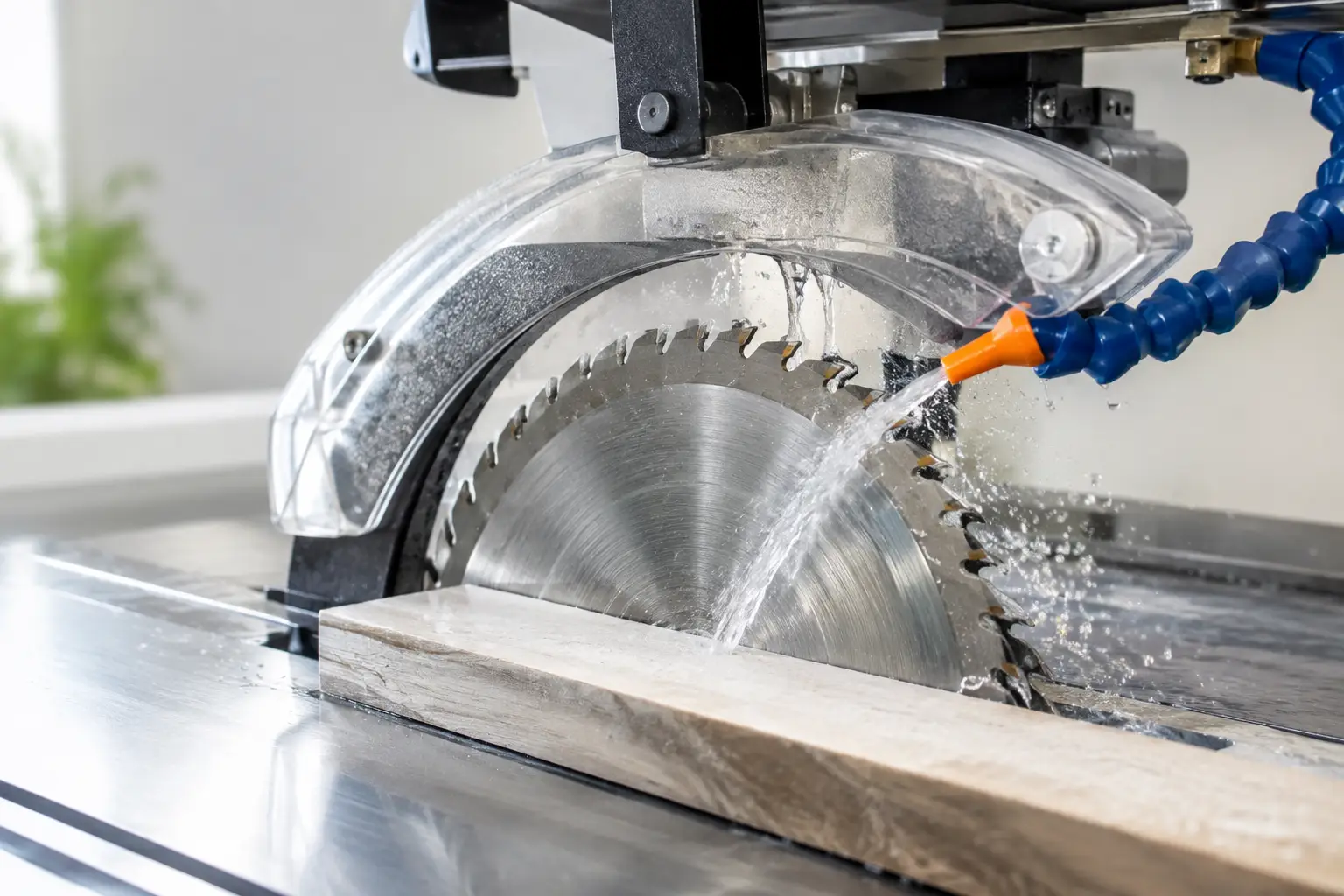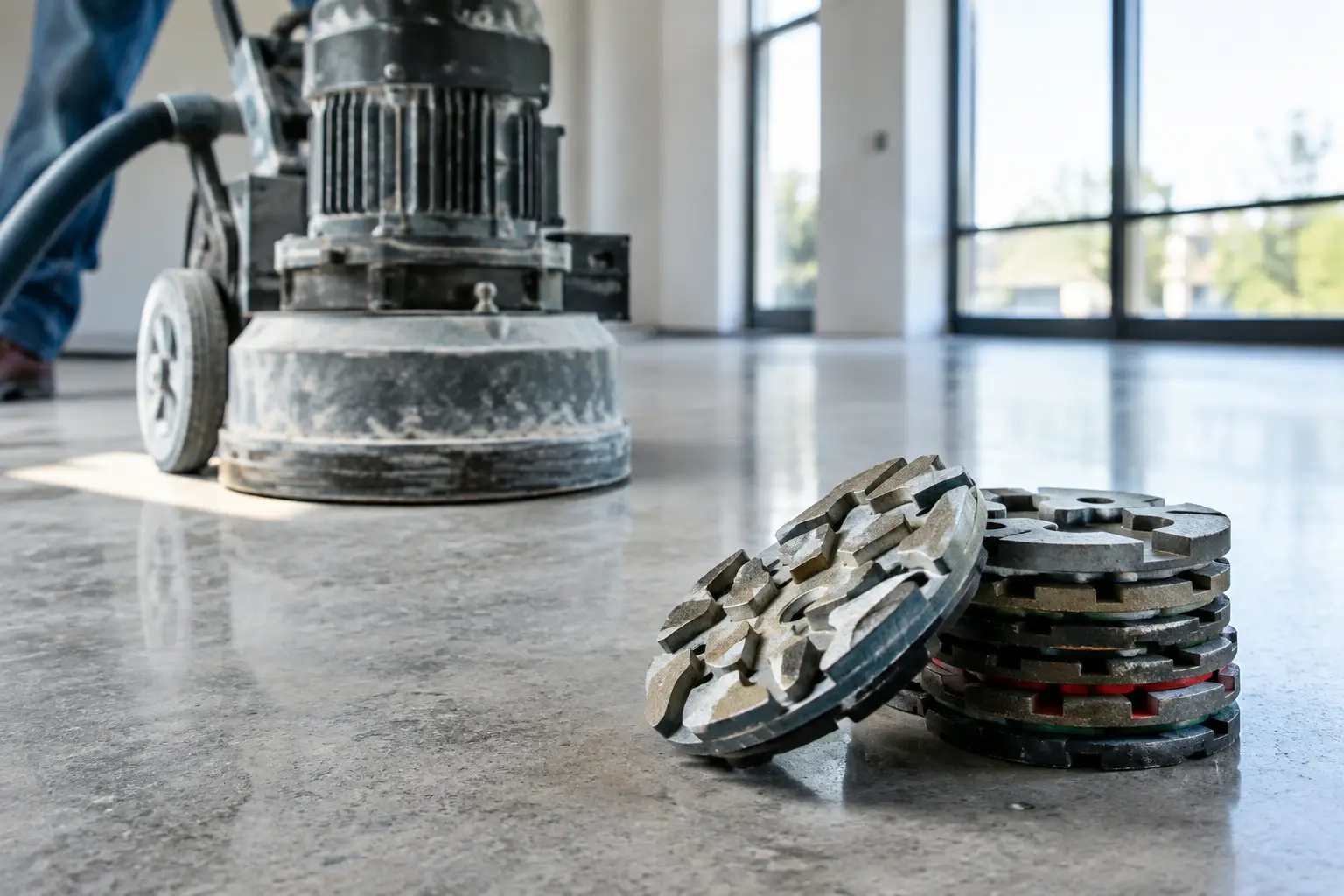

A failed blade in the middle of a commercial cut does more than stop production. It affects labor efficiency, jobsite timelines, finish quality, and your credibility with the customer. That is why selecting the right diamond tools manufacturer is not a purchasing formality. For distributors, contractors, and importers, it is a supply-chain decision that directly affects margin, repeat business, and operational risk.
In industrial cutting, grinding, and drilling, performance problems rarely come from one obvious cause. A blade may wear too fast because the bond is wrong for the material. A core bit may lose segments because welding quality is inconsistent. A grinding block may cut aggressively at first but fade quickly because the segment formula is unstable across batches. Buyers who work at volume know this. The real question is not who can offer a low unit price. The question is who can deliver dependable results across repeated orders.
What a diamond tools manufacturer should actually control
A serious manufacturer is not just assembling a catalog of common items. The value is in process control. That includes raw material selection, segment formulation, welding consistency, balance, concentricity, dimensional accuracy, and final inspection. If those controls are weak, even a competitively priced product can become expensive once field failures, customer complaints, and replacement costs are considered.
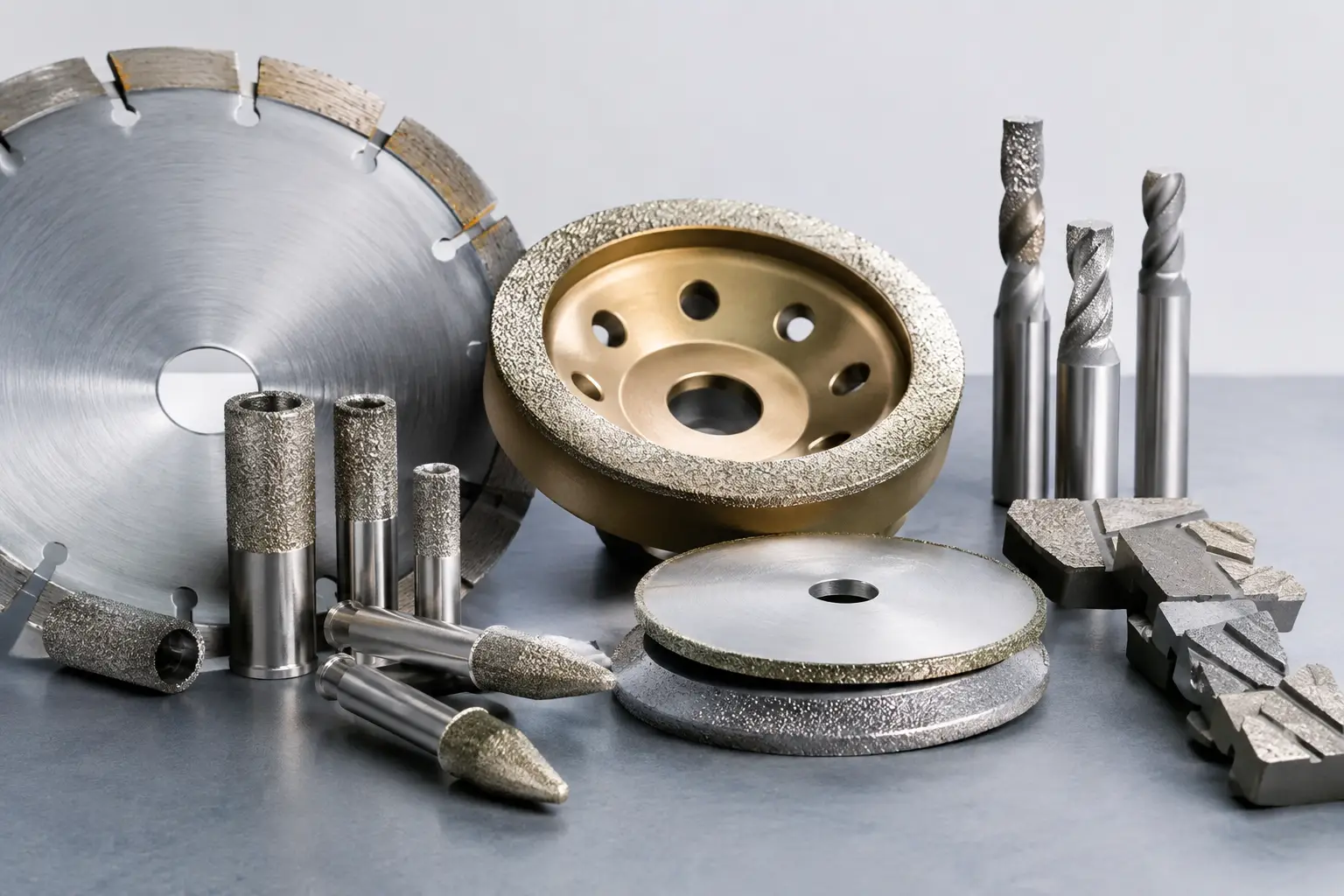
For industrial buyers, the manufacturing method matters because it shapes real-world performance. Vacuum brazed tools may offer fast cutting and strong exposure of diamond particles in specific applications. Laser-welded blades are often preferred where segment retention and safety under demanding conditions are critical. The point is not that one technology is always better. It depends on the material, machine, operator behavior, and expected duty cycle. A capable supplier should be able to explain those trade-offs clearly instead of pushing one answer for every job.
This is where many sourcing conversations go wrong. Buyers ask for a blade diameter, arbor size, and segment height, then assume equivalent specifications mean equivalent performance. They do not. Two blades with the same visible dimensions can behave very differently because of bond design, diamond concentration, welding quality, and manufacturing discipline.
How to evaluate a diamond tools manufacturer for B2B supply
The most reliable way to assess a supplier is to look beyond the sample itself and examine whether the manufacturer can repeat that result at scale. A strong sample proves potential. Stable batch production proves capability.
Start with quality control. Ask how the manufacturer manages incoming materials, in-process inspection, and final testing. Industrial buyers should expect clear answers, not vague assurances. If the supplier cannot explain how consistency is maintained from order to order, that uncertainty will eventually show up in the field.
Next, evaluate product range in relation to your market. A manufacturer serving concrete, ceramic, stone, flooring, and specialty materials usually has broader application knowledge than a seller focused on one generic line. That matters for distributors and wholesalers because your customers do not buy one tool for one material forever. They need a supplier that can support concrete saw blades, ceramic cutting discs, granite saw blades, floor grinding blocks, hole openers, core bits, and specialty products such as Dekton blades without lowering standards across categories.
Responsiveness is another practical indicator. B2B buyers often need adjustments in specification, packaging, branding, or shipping schedules. A manufacturer that can support OEM and ODM work is generally better prepared for long-term distributor relationships than a trader offering only fixed items. Custom label support, segment formula adjustments, package changes, and application-based recommendations are not extras in wholesale business. They are part of how growth is built.
Why consistency matters more than headline performance
Some diamond tools test very well in short demonstrations. They cut fast, leave a clean edge, and look competitive on paper. But industrial procurement is not based on one test cut. It is based on consistent output across crews, machines, materials, and shipment cycles.
A tool with slightly lower cutting speed but dependable wear life may create better economics over time. A blade that runs predictably across mixed concrete conditions can be more valuable than one that performs exceptionally in ideal conditions but becomes unstable on reinforced sections. Procurement managers understand this balance. The best supplier relationships are built around stable performance, not exaggerated claims.
This is especially relevant in export markets and distributor channels. If a shipment arrives with performance variation between batches, the importer absorbs the problem first. The downstream contractor does not care whether the issue came from powder quality, sintering control, or welding inconsistency. They care that the tool did not perform as promised. That is why disciplined manufacturing and batch control are central to supplier evaluation.
Manufacturing support for different applications
Industrial buyers rarely need a one-size-fits-all tool line. Material type, cutting method, machine power, cooling conditions, and finish requirements all influence product selection.
For concrete and reinforced concrete, blade design must balance speed, segment retention, and wear resistance. In ceramic and porcelain, edge quality and chipping control become more important. In granite and engineered surfaces, tool life, feed stability, and thermal behavior can decide whether the product works commercially. For flooring applications, grinding blocks must hold a predictable wear profile so crews can move through grit sequences efficiently without uneven removal.
A capable manufacturer should be able to discuss these conditions in commercial terms. Buyers do not need theory for its own sake. They need to know which specification will reduce recuts, lower breakage, improve usable life, and fit the machine base already in the market.
Specialty materials are a good test of supplier depth. Products for dense engineered surfaces such as Dekton require more than a generic stone blade with a new label. If a manufacturer understands the cutting behavior of difficult materials and adjusts design accordingly, that usually reflects stronger technical control across the wider product portfolio.
OEM, ODM, and private label are not just branding services
For distributors and importers, private label support is often treated as a packaging question. In practice, it goes further. The right manufacturing partner can help align the product itself with the needs of your market.
That may include adjusting segment hardness for local aggregate conditions, changing blade configuration for common machine sizes, or refining the balance between cutting speed and life based on contractor feedback. In other cases, it may mean upgrading packaging for retail durability or preparing multilingual labeling for export compliance. A manufacturer that supports OEM and ODM effectively is helping the buyer build a stronger commercial offer, not simply printing a different box.
This is one reason many professional buyers prefer working directly with a manufacturing partner instead of a general reseller. The closer the connection to production and technical support, the easier it is to solve recurring field issues and scale successful product lines.
Supply reliability is part of product quality
Procurement teams often separate product quality from delivery reliability, but in wholesale trade they are closely connected. A dependable tool line is not useful if lead times are unstable or repeat orders cannot be produced consistently.
A qualified diamond tools manufacturer should be able to support bulk ordering with clear production planning and communication. This matters even more in markets where distributors must maintain stock for construction cycles, infrastructure work, and fabrication demand. Delays can force buyers into emergency substitutions, and those substitutions often create customer dissatisfaction that is harder to repair than a late shipment itself.
For GCC buyers and other export markets, communication discipline is equally important. Quotation speed, specification confirmation, packaging accuracy, and shipment coordination all affect purchasing confidence. Manufacturers that are structured for global supply usually handle these details with fewer errors because export support is part of their daily process, not an occasional exception.
What experienced buyers should ask before placing a volume order
The best supplier conversations are specific. Ask how the product was designed for the intended material. Ask what manufacturing method is used and why. Ask how consistency is checked between batches. Ask whether custom specifications are possible and what order volumes are required. Ask what changes can be made for your brand, your packaging, and your market.
Also ask where the product may not be the best fit. A credible manufacturer will acknowledge limitations. If a blade is optimized for speed rather than maximum life, or for dry cutting rather than long wet-cut cycles, that should be stated clearly. Straight answers save money.
Ryhyoma operates in that manufacturing-first model, with emphasis on quality control, stable performance, and OEM or ODM support for industrial buyers who need repeatable results rather than one-time samples.
When you are sourcing for repeated commercial use, the strongest purchasing decision is usually the least dramatic one. Choose the supplier that can explain the product, control the process, and deliver the same standard again on the next order.