A laser blade review should start where commercial tool failures usually start: at the connection between the diamond segment and the steel core. For contractors and distributors, a blade may look acceptable in a catalog yet fail under heat, vibration, or reinforced material. Laser-welded diamond blades are specified for demanding cutting because the weld is designed to retain segments under higher operating stress than many conventional bonding methods.
The correct evaluation is not simply whether a blade cuts fast on its first pass. Professional buyers need to assess segment retention, core stability, cutting speed over the full service life, material suitability, and consistency from one production batch to the next. Those factors determine jobsite safety, labor efficiency, warranty exposure, and repeat-order confidence.
What a Laser Blade Review Should Measure
A laser-welded blade uses a focused laser process to join diamond segments to the steel core. The objective is a strong, controlled bond that withstands the heat and mechanical load created in dry cutting, heavy-duty wet cutting, and intermittent contact with steel reinforcement.
This is especially relevant for concrete contractors, roadwork crews, rental fleets, and distributors supplying professional users. A segment that separates from the core is not a minor performance issue. It is a serious safety incident, a replacement cost, and a direct risk to supplier reputation.
A useful laser blade review therefore separates three issues that are often confused: weld integrity, diamond segment performance, and blade body design. A strong weld cannot compensate for an unsuitable diamond bond. Likewise, high-quality segments cannot deliver stable cuts if the core is too thin, poorly tensioned, or inadequately designed for heat dissipation.
Weld strength under real cutting conditions
Laser welding is valued because it provides high segment retention with controlled heat input during production. However, procurement teams should avoid treating the term “laser-welded” as a complete quality guarantee. Welding parameters, core preparation, segment geometry, and process inspection all affect the finished result.
The best indication of weld quality is stable performance under the intended application. For a concrete blade, this may include dry cutting cured concrete, reinforced concrete, pavers, and masonry. For asphalt work, the blade must also manage the abrasive, heat-generating nature of the material without premature segment loss or excessive core wear.
Buyers should ask whether the supplier conducts segment pull testing, visual weld inspection, runout checks, and trial cutting. These controls are more meaningful than a broad claim about advanced technology. They demonstrate whether the manufacturing process is repeatable.
Cutting speed and blade life must be balanced
Fast cutting is valuable, but it is not the only performance measure. A very soft diamond bond can expose diamonds quickly and produce an aggressive initial cut. On highly abrasive concrete or asphalt, it may also wear too rapidly. A hard bond may provide longer segment life in abrasive material but can cut slowly or glaze when the material is hard and less abrasive.
The correct specification depends on the aggregate, reinforcement level, machine power, operating method, and production target. A contractor cutting green concrete has different requirements from a fabrication shop cutting dense cured concrete. A distributor building a general-purpose range may need a balanced blade, while a specialist buyer may require separate specifications for concrete, asphalt, granite, ceramic, or engineered stone.
For this reason, a reliable review compares productivity rather than relying only on blade life. The relevant commercial question is how much usable work the blade completes per dollar while maintaining safe, predictable operation. Faster cutting can reduce labor and machine time. Longer life can reduce blade changes and inventory consumption. The right balance depends on the application.
Laser Blade Review: Core Design and Segment Configuration
The steel core is the structural foundation of a diamond blade. Even with secure laser welds, a poorly engineered core can cause vibration, wandering cuts, excessive noise, or heat-related distortion. These issues reduce cut quality and increase operator fatigue.
Professional buyers should inspect core thickness, flatness, tensioning, arbor accuracy, and cooling-slot design. A blade intended for heavy-duty floor saws requires a different core structure from a small handheld saw blade. Using the wrong blade on the wrong machine can create performance problems that are incorrectly blamed on the segment or weld.
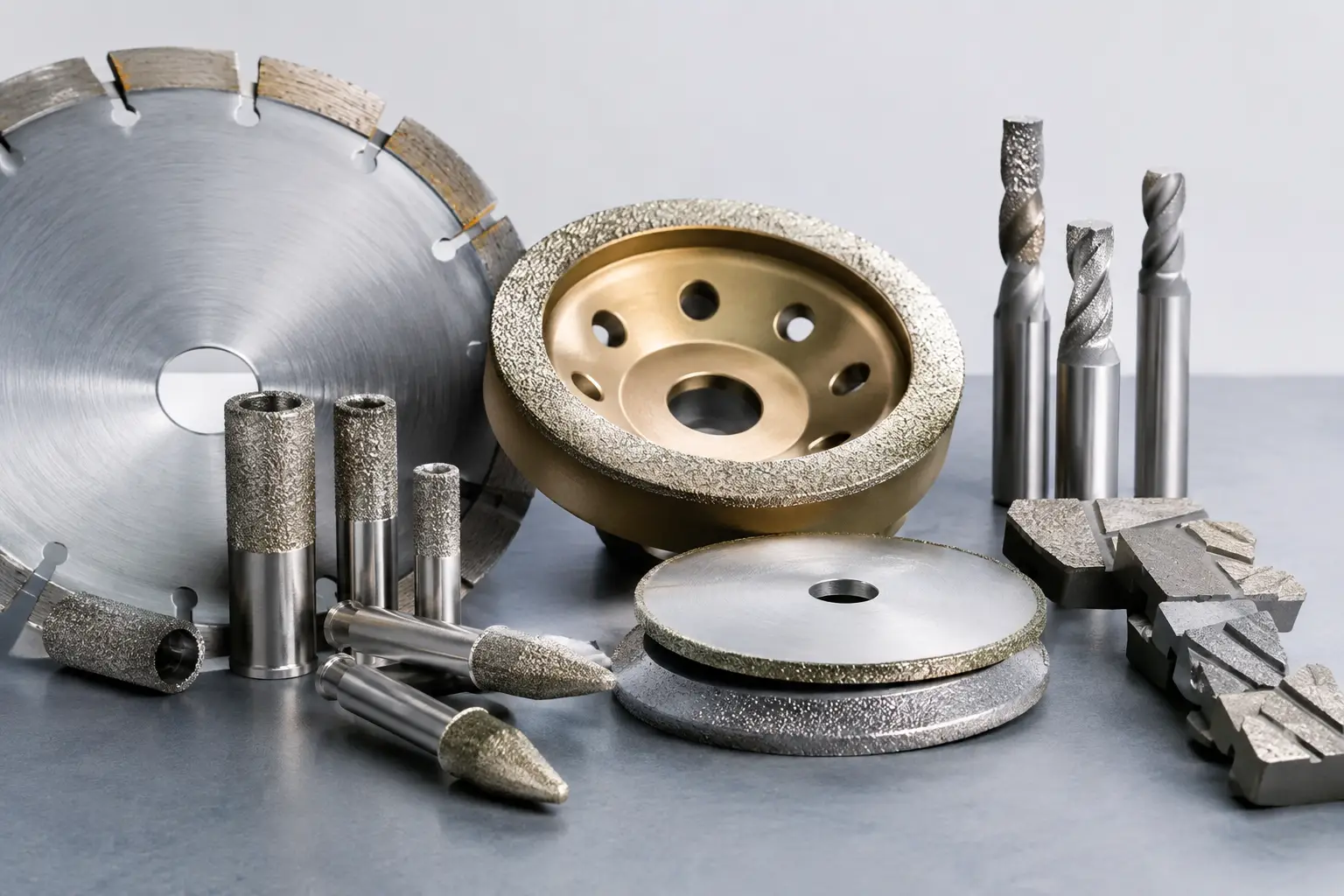
Segment shape also matters. Turbo segments can support faster, smoother cutting in many masonry and concrete applications. Segmented rims provide better cooling and debris removal in demanding dry-cut conditions. Continuous rims are generally selected for cleaner cuts in tile and brittle materials, but they are not the standard choice for heavy reinforced concrete work.
For high-production concrete cutting, segment height and concentration should be evaluated alongside weld quality. More segment height can extend service life, but it does not automatically make a blade more productive. If diamond exposure, bond hardness, or segment spacing is unsuitable, the added height may not translate into useful cutting output.
Dry cutting versus wet cutting
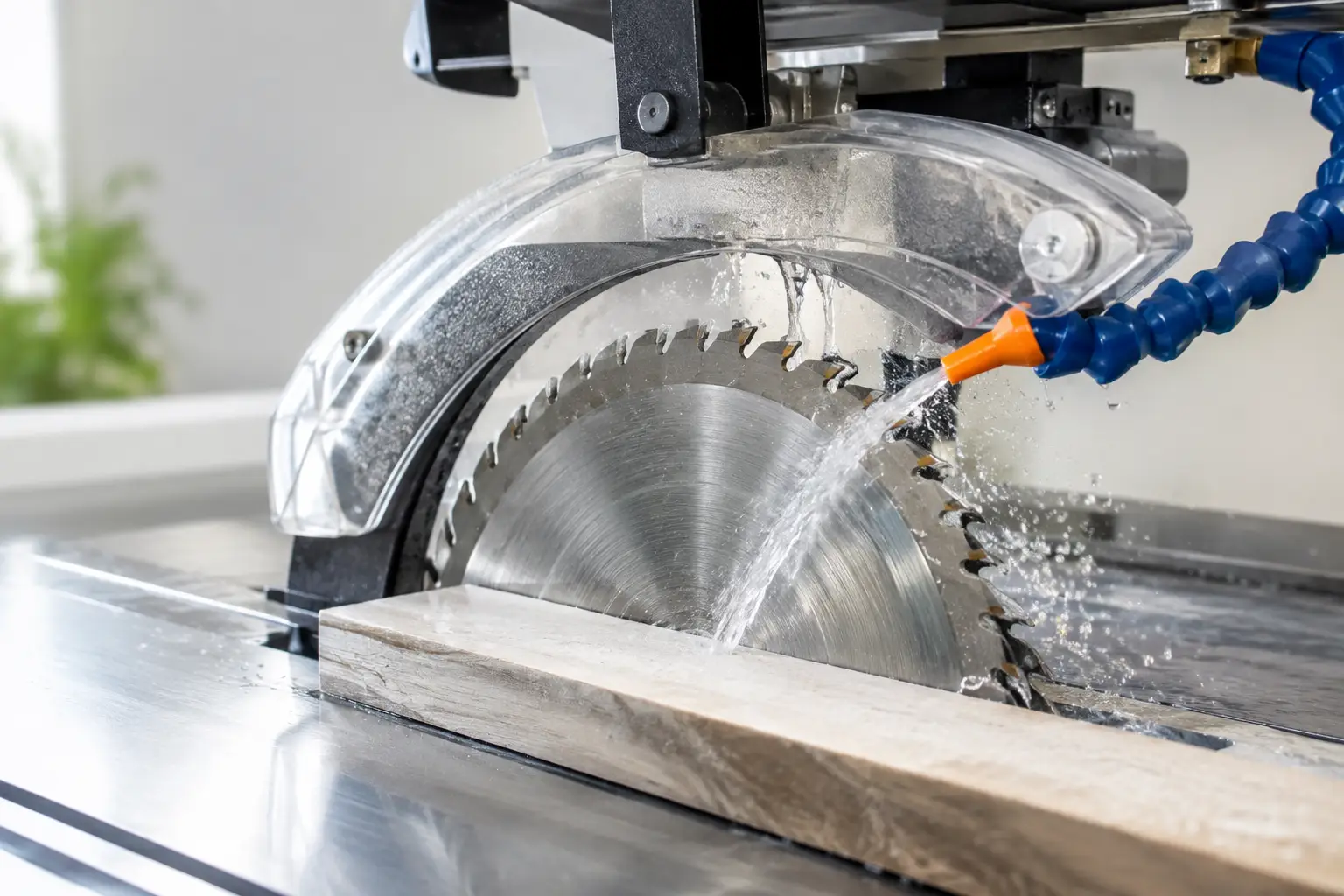
Many laser-welded blades are specified for dry cutting because the weld provides strong resistance to heat-related segment loss. That does not mean dry cutting is always the preferred operating method. Wet cutting controls dust, cools the blade, improves visibility in some applications, and can extend blade life.
Dry cutting remains common where water supply is impractical or where portable saws are used. In those cases, operators should use proper cutting intervals and allow the blade to run freely between passes when required. Forcing a blade continuously through dense material generates excess heat, accelerates bond wear, and can damage the core regardless of welding quality.
A supplier should state clearly whether a blade is designed for dry use, wet use, or both. Ambiguous application guidance creates avoidable claims and poor field results.
Application Matching Determines the Result
No serious blade evaluation is complete without matching the tool to the material. Concrete varies widely by compressive strength, aggregate hardness, abrasive content, and reinforcement. A blade that performs well on standard cured concrete may behave differently on hard aggregate concrete or heavily reinforced slabs.
The same principle applies across other materials. Asphalt blades typically need undercut protection because abrasive slurry can wear the steel core beneath the segments. Granite blades require a specification suited to hard natural stone. Ceramic and porcelain need clean-cut designs that minimize edge chipping. Dekton and similar ultra-compact surfaces require controlled cutting parameters and purpose-built tooling to protect both the material and the blade.
For distributors, application segmentation is often more profitable than offering one blade as a solution for everything. A clear product range reduces misapplication, simplifies technical support, and helps customers select by machine, material, and cutting method.
What B2B Buyers Should Ask Before Ordering
Before placing a bulk order, procurement teams should request the operating specifications rather than comparing only diameter and unit price. The necessary details include the blade diameter, arbor size, segment height, segment thickness, core thickness, recommended equipment, intended materials, and dry or wet cutting suitability.
Buyers should also confirm minimum order quantities, production lead times, packaging requirements, labeling options, and inspection standards. For private-label programs, consistent artwork and packaging are important, but technical consistency is more important. A distributor cannot build repeat sales around a product whose cutting behavior changes from one shipment to the next.
Sample testing is advisable when introducing a new blade line or moving to a new supplier. Test blades on the actual materials and machines used by the target customer base. Record cutting speed, wear rate, vibration, segment condition, and operator feedback. One short trial can reveal whether a blade is merely competitive in appearance or genuinely suitable for commercial use.
The Supply Standard Behind a Dependable Blade
A laser-welded blade should be treated as an engineered consumable, not a commodity purchase. Its value comes from controlled manufacturing: suitable steel cores, consistent diamond segment formulation, stable laser-welding parameters, and inspection before shipment.
Ryhyoma supports professional buyers with laser-welded diamond blade specifications designed around material, equipment, and commercial supply requirements. For distributors and contractors, the practical goal is not the lowest initial blade cost. It is a stable cutting tool that protects operator safety, maintains productivity, and performs consistently across repeat orders.
The strongest buying decision comes from matching the blade to the work, validating it under real conditions, and choosing a supplier that can reproduce the same standard when the next container or bulk shipment is required.