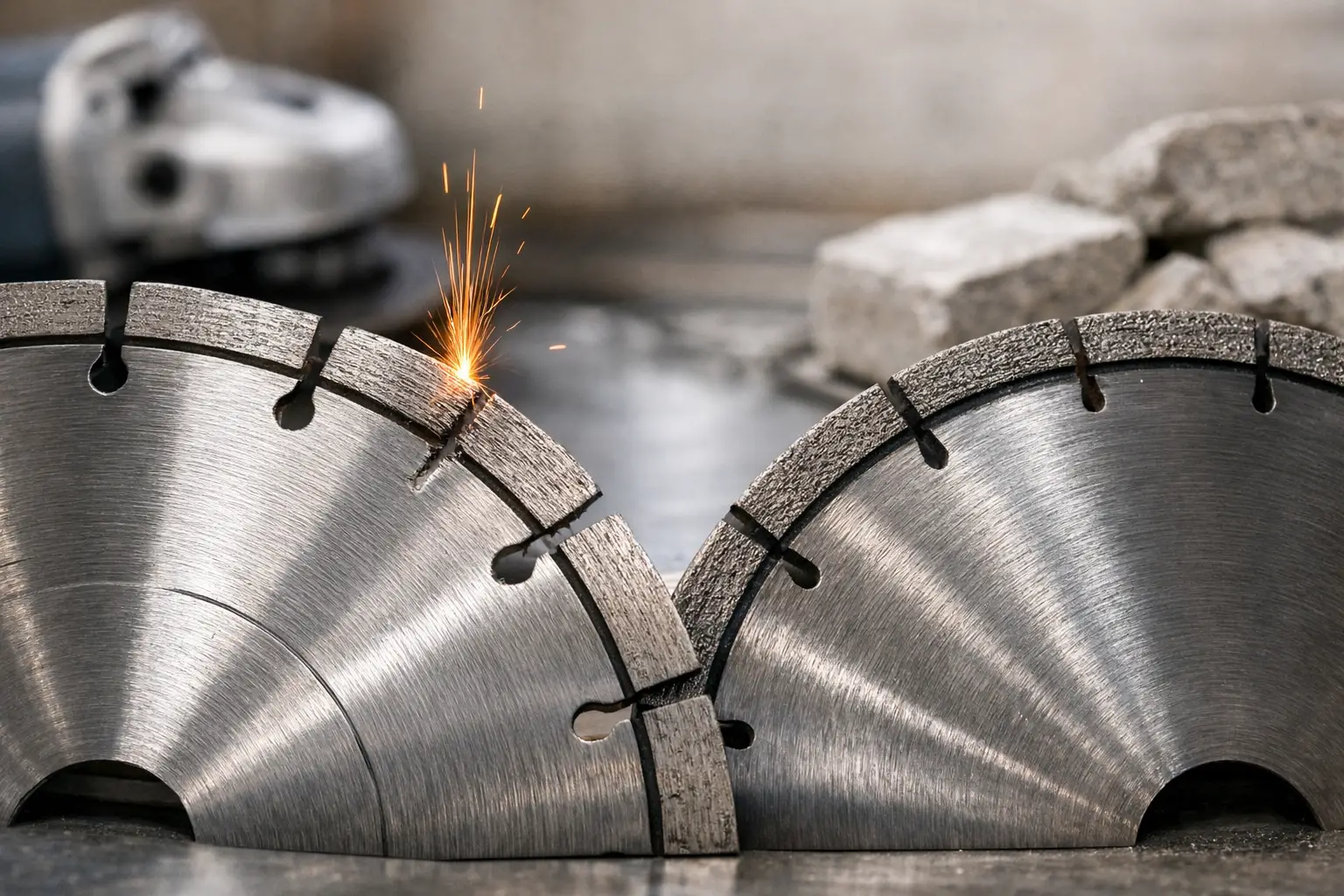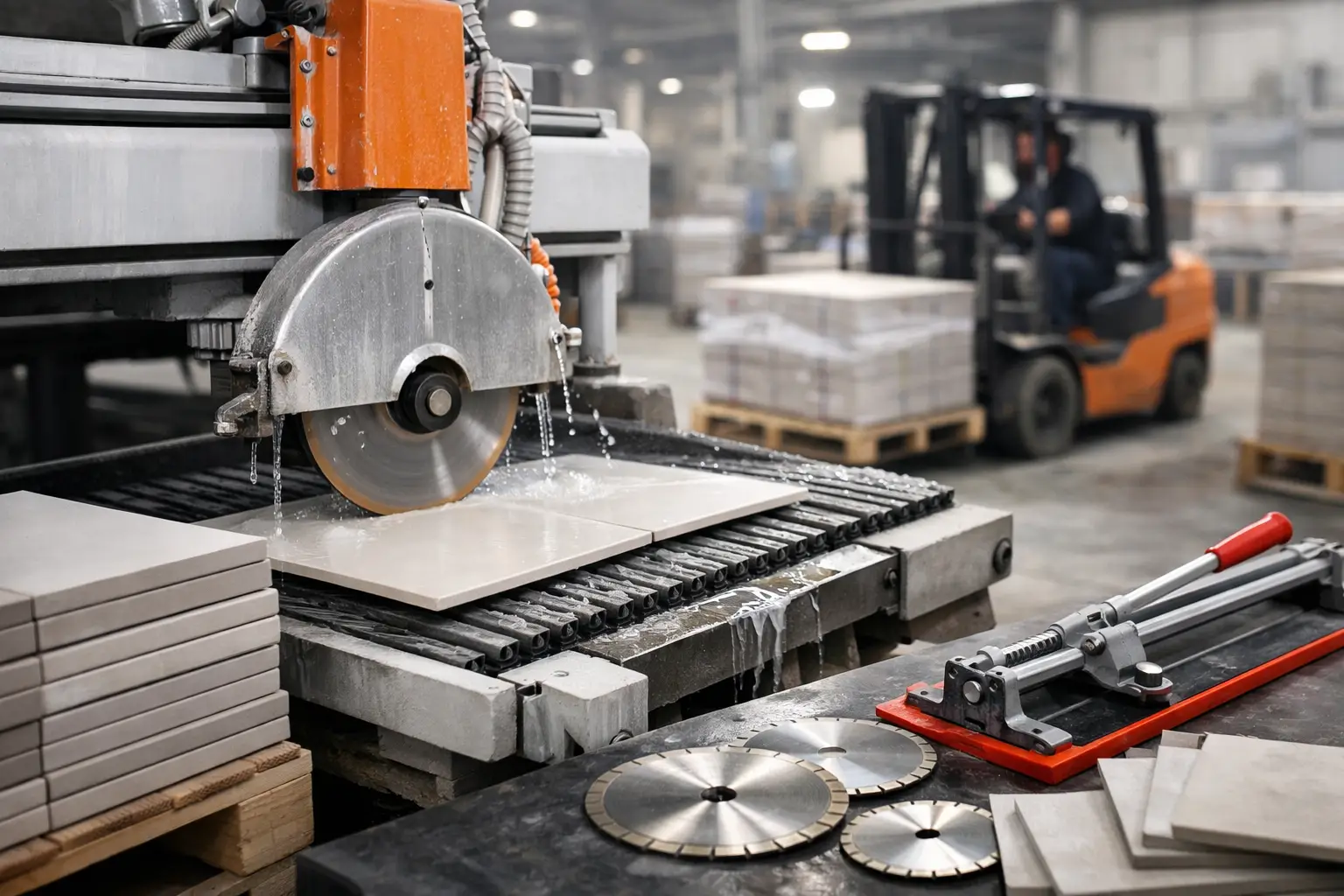

A Dekton slab can turn a routine cutting job into a batch of claims if the blade is wrong. For distributors, fabricators, and procurement teams, choosing a dekton saw blade supplier is not a minor sourcing decision. It affects cutting speed, edge quality, blade life, operator confidence, and whether your customers reorder or start looking elsewhere.
Dekton is a demanding material. Its density and hardness put real pressure on diamond exposure, segment design, core stability, and heat control. A blade that performs acceptably on porcelain or other ultra-compact surfaces may still chip, deflect, or glaze when pushed on Dekton. That is why buyers who treat this category like a standard ceramic blade purchase often run into inconsistent field results.
Why a specialized dekton saw blade supplier matters
At the distributor and contractor level, the issue is not simply whether a blade can cut Dekton. Many blades can cut it once. The real question is whether the blade can do it repeatedly, across different machine setups, operators, and production environments, without unstable wear or avoidable breakage.
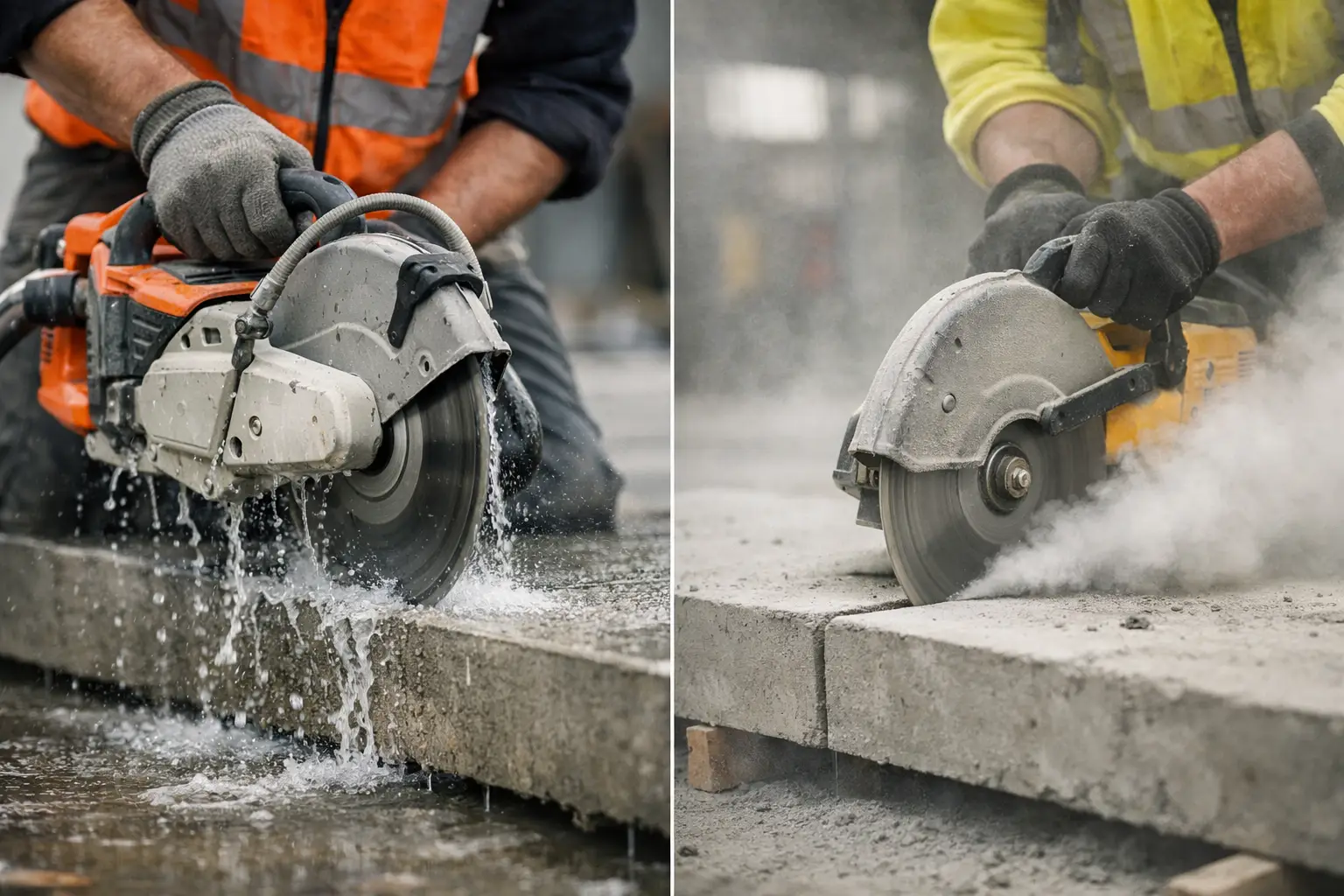
A specialized dekton saw blade supplier should understand the application beyond catalog labeling. That includes dry versus wet cutting conditions, bridge saw versus hand-held machine use, feed rate behavior, edge finish expectations, and the trade-off between fast cutting and clean finishing. If a supplier cannot discuss those variables clearly, there is a good chance the product has not been developed with real field conditions in mind.
This matters even more for wholesale buyers. One poor batch does not just affect one jobsite. It can affect multiple customers, create returns, and damage your reputation in a market where repeat orders depend on consistency.
Dekton cutting performance starts with blade design
When buyers compare suppliers, they often focus first on price and diameter range. Those are valid concerns, but they should come after the blade design itself. Dekton cutting requires a balanced combination of diamond concentration, bond hardness, segment geometry, and steel core stability.
If the bond is too hard, the blade may glaze and lose cutting speed. If it is too soft, segment wear can become excessive and cost per cut rises quickly. A thin kerf may improve cutting smoothness on some setups, but if the core lacks stability, it can increase vibration or deviation under load. A supplier with real manufacturing capability should be able to explain how its blade is tuned for these trade-offs instead of offering generic claims.
For B2B buyers, this is where supplier quality becomes measurable. You are not only buying a finished blade. You are buying process control - segment consistency, welding quality, tensioning accuracy, and repeatable production standards.
The difference between a trading company and a manufacturing partner
Not every supplier in this category controls production. Some are resellers working from broad source networks. That model can work for commodity tools, but Dekton blades are less forgiving. Small variations in segment formulation or welding quality can show up quickly in the field.
A manufacturing partner is usually better positioned to maintain consistency, adjust specifications, and support OEM or private label programs. This is especially relevant if you sell into markets with different machine preferences or operator habits. GCC buyers, for example, may need tools that hold stable performance under heavy commercial use and high-temperature conditions, not just sample-level performance in a controlled environment.
If you are sourcing for distribution, ask direct questions about production responsibility. Who makes the segment? Who controls welding? Who handles quality inspection? If those answers are vague, the supply chain may be too fragmented for a specialty blade category.
What B2B buyers should check before placing an order
A reliable dekton saw blade supplier should give you more than a specification sheet. The supplier should provide enough technical and commercial clarity to reduce risk before you commit to volume.
Start with application fit. Dekton blades are not one-size-fits-all. Some are built for bridge saws and wet cutting, where stability and finish are the priority. Others are designed for portable machines, where control, speed, and heat resistance matter more. If a supplier offers one blade for every machine and every cutting condition, that is usually a warning sign.
Next, look at quality control. Serious suppliers can explain inspection points such as segment uniformity, weld integrity, balance, runout, and blade tension. You do not need a long presentation. You need evidence that quality is monitored in production, not checked only after complaints.
Then review supply capability. A good sample is useful, but B2B performance is proven at batch level. Can the supplier maintain the same standard across repeat orders? Can it support bulk quantities without changing specifications or extending lead times beyond reason? These questions matter as much as the blade itself.
Technical support is part of product quality
When blades underperform, the cause is not always the blade alone. Machine power, flange condition, RPM, feed pressure, cooling, and operator technique all influence results. A dependable supplier recognizes that and helps identify the source of the problem.
This is where technical support becomes commercial protection. If your supplier can review the application and recommend the right blade specification from the start, you reduce trial-and-error costs. If issues appear later, responsive support helps prevent customer dissatisfaction from turning into lost accounts.
For procurement teams, that support should be practical. You want clear recommendations, not marketing language. You want guidance on machine compatibility, cutting method, expected performance range, and when to switch from a fast-cutting blade to a cleaner-finishing option.
Price matters, but cost per cut matters more
Cheap Dekton blades often look competitive on an initial quote. The problem appears later through slower cutting, early wear, edge chipping, or higher replacement frequency. For a distributor, those hidden costs show up in claims and weak repeat sales. For a contractor or fabricator, they show up in labor time and wasted material.
That does not mean the highest-priced blade is automatically the best choice. It means the right supplier should be able to help you evaluate value in operational terms. A blade that costs more but cuts faster, lasts longer, and reduces breakage may be the better commercial decision.
This is especially true when the end user works with premium slabs where material waste is expensive. In those cases, edge quality and blade stability often matter more than the lowest purchase price.
OEM and private label support for growing distributors
Many importers and distributors are not looking for an off-the-shelf product alone. They want a supplier that can support private label programs, custom arbor sizes, packaging adjustments, or blade specifications suited to regional demand. That is where OEM and ODM capability becomes a real advantage.
A supplier with this capacity can help you build a more defensible product line. Instead of competing only on price, you can offer a blade tuned for your market and backed by a consistent production source. That matters when you are building long-term customer accounts rather than moving spot orders.
Ryhyoma works in this manufacturing-focused model, supporting bulk buyers who need stable quality, repeatable production, and customization options rather than generic trading supply.
Signs of a supplier worth developing long term
In this category, credibility is usually visible in how a supplier handles detail. Serious suppliers ask about machine type, cutting method, slab thickness, and performance target before recommending a blade. They speak clearly about production methods such as laser welding or vacuum brazing where relevant. They understand that a distributor needs not only a product but also dependable lead times, documentation, and responsive communication.
Long-term value also depends on consistency in business operations. If quotations change without explanation, lead times move constantly, or technical responses are slow, supply risk increases even if the sample blade looks good. B2B buyers need a supplier that performs reliably both in production and in communication.
The right supplier reduces risk across the whole channel
A strong Dekton blade program supports more than cutting performance. It supports smoother procurement, fewer complaints, better distributor confidence, and stronger repeat business. That is why the right dekton saw blade supplier should be evaluated as a supply partner, not just a unit-price source.
If you are comparing options, look past the catalog photo and ask what will happen after the first shipment. Can the supplier hold quality? Can it support your market with technical clarity? Can it scale with your orders and your branding requirements? Those are the questions that separate a short-term vendor from a supplier you can build around.
For buyers handling commercial volumes, the safest decision is usually the one that brings fewer surprises to the warehouse, the workshop, and the jobsite.