
A granite saw blade manufacturer can look qualified on paper and still create expensive problems in production. Buyers usually find that out after inconsistent cutting speed, edge chipping, segment loss, or delayed repeat orders start affecting jobs and customer delivery schedules. In stone fabrication and industrial supply, the real test is not whether a supplier can ship blades once. It is whether they can deliver the same performance batch after batch.
For distributors, importers, contractors, and procurement teams, granite blades are not a low-risk accessory. They directly affect cut quality, labor efficiency, machine load, and replacement frequency. That means choosing the right manufacturing partner requires more than comparing unit prices or catalog photos.
What a granite saw blade manufacturer should actually control
Granite is dense, abrasive, and variable. Black granite, hard gray granite, and engineered stone-like materials can all behave differently in cutting. A capable granite saw blade manufacturer understands that blade design has to match application conditions, not just material labels.
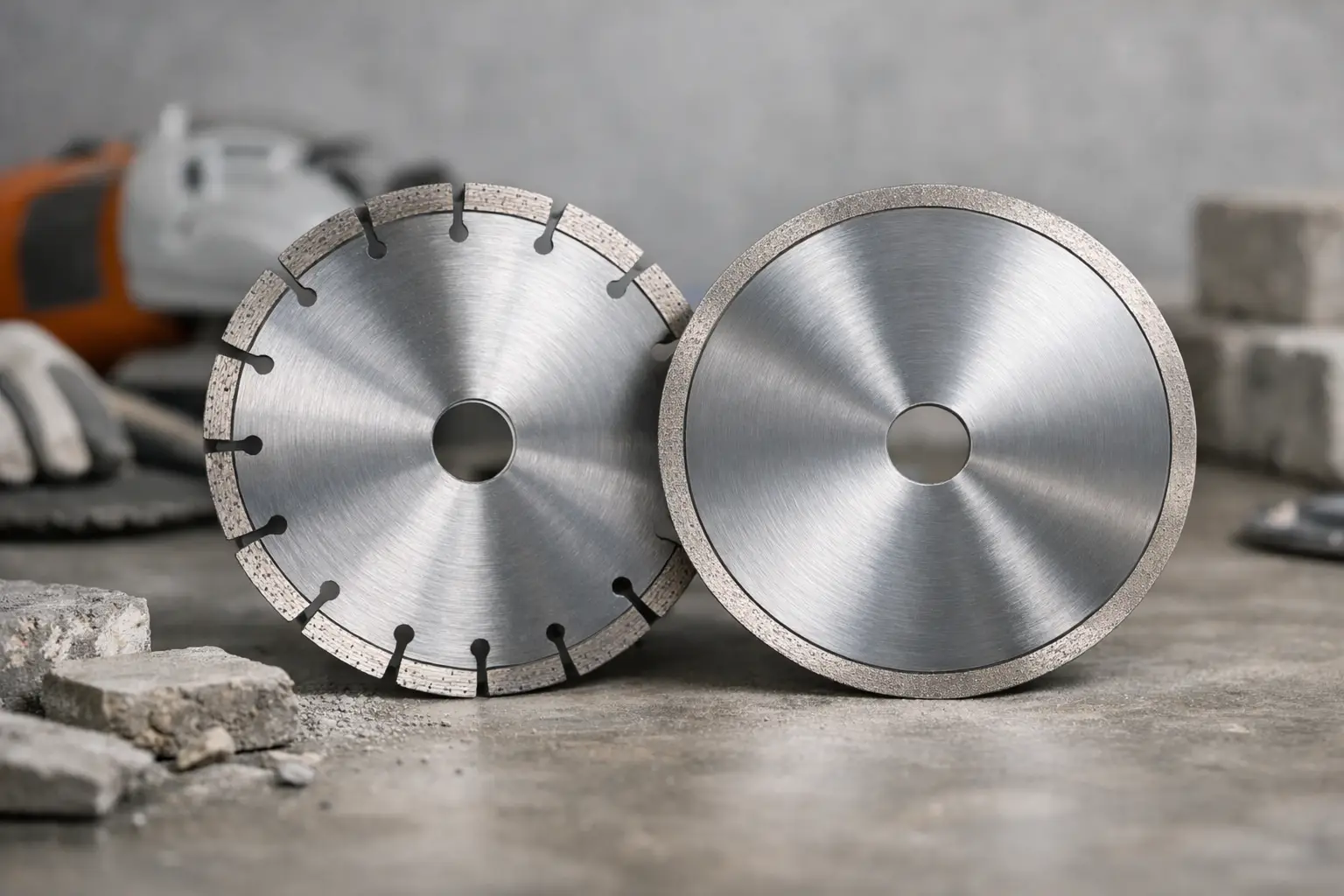
That starts with the segment. Diamond concentration, diamond quality, bond formulation, and segment geometry all influence how the blade opens, how long it maintains cutting speed, and how well it resists glazing. If the bond is too hard for the material and machine setup, the blade may cut slowly and polish over. If it is too soft, segment wear can become excessive and blade life drops fast.
The steel core matters just as much. Core tension, flatness, heat stability, and welding consistency affect running accuracy and safety. In granite cutting, poor core quality often shows up as vibration, wandering cuts, noise, and unstable segment wear. These are not minor defects. They reduce finish quality and create avoidable machine stress.
A serious manufacturer controls both the cutting formula and the structural integrity of the blade. That is the difference between a trading company that sources from multiple unknown factories and a production-focused supplier that can explain why a blade performs the way it does.
How to assess granite saw blade manufacturer capability
A reliable evaluation process is practical. Buyers do not need marketing language. They need proof that the supplier can support commercial use at scale.
Start with application fit, not catalog breadth
A large product range is useful, but it should not distract from the actual question: can the supplier recommend the right blade for your machines, cutting method, and stone profile? Wet cutting bridge saw blades, edge cutting blades, block cutting blades, and hand-held saw blades each require different segment behavior and core design.
If a manufacturer gives the same recommendation for every granite application, that is usually a warning sign. Blade performance depends on diameter, RPM range, feed rate, coolant conditions, machine power, and the hardness of the stone being processed. A technical supplier will ask those questions before quoting.
Review production methods and joining technology
For industrial buyers, manufacturing method is not a detail. It affects safety, consistency, and operating life. Laser-welded blades generally offer stronger segment retention and better heat resistance for demanding cutting conditions. Other production methods may still fit certain applications, but the supplier should be clear about where each blade type belongs.
This is especially important for export buyers who need stable repeat orders. If the manufacturer cannot maintain the same welding quality, segment specification, and steel core standard from batch to batch, the same SKU can behave differently in the field. That creates claims, returns, and lost trust with end users.
Ask how quality control is handled
A dependable granite saw blade manufacturer should be able to explain its quality process in simple operational terms. That includes raw material inspection, segment consistency checks, welding inspection, balance control, dimensional verification, and testing before shipment.
The key point is consistency. Many suppliers can produce a good sample. Fewer can maintain that quality when volume increases or when private label orders are running on a deadline. Procurement teams should pay attention to how the supplier manages standardization, not just how they present samples.
Blade performance is more than cutting speed
Buyers often focus first on whether the blade cuts fast. That matters, but speed alone is not a good purchasing standard. In granite processing, the better measurement is the balance between speed, life, finish quality, and operating stability.
A blade that cuts aggressively for a short time but wears too quickly can raise total cost per cut. A blade that lasts longer but leaves chips or burns on the edge may create rework. A blade that performs well on one machine but becomes unstable on another may not be suitable for distributor inventory serving mixed customer profiles.
This is why test feedback should include several factors: cut smoothness, amp draw or machine load, segment wear pattern, straightness of cut, and total usable life. Strong manufacturers are willing to discuss trade-offs because there is rarely one formula that is best for every buyer.
For example, a fabricator focused on premium finished edges may prefer a smoother, more controlled blade even if feed speed is slightly lower. A contractor cutting rough dimension stone may prioritize output and life over cosmetic finish. The supplier should be able to adjust specification based on that commercial reality.
Why OEM and ODM support matters in B2B supply
For distributors and importers, manufacturing flexibility is often as important as blade quality. A supplier that supports OEM or ODM programs can help standardize product lines, maintain private label consistency, and develop application-specific blades for regional demand.
This is particularly relevant in export markets where granite types, machine preferences, and buyer expectations vary. GCC customers, for example, may require dependable bulk supply under private branding with stable product performance across repeated orders. That is difficult to achieve with a supplier that only offers fixed off-the-shelf options and limited production control.
A manufacturing partner should be able to support specification adjustments, packaging requirements, labeling compliance, and repeatability over time. Ryhyoma’s model fits this need because it is built around industrial supply, quality control discipline, and OEM/ODM support rather than one-off catalog sales.
Common supplier risks buyers overlook
The biggest purchasing mistakes usually happen before the first shipment. One is treating all granite blades as interchangeable. Another is assuming that a low trial price will remain low once quality problems, shorter blade life, and inconsistent batches are factored in.
Buyers also overlook communication quality. If technical questions are answered vaguely during quotation, post-sale support will usually be worse. That becomes a larger issue when a distributor needs claim handling, specification changes, or urgent replenishment.
Lead time stability is another factor. A manufacturer may offer acceptable blades but fail to support forecasted volume, custom packaging, or seasonal demand spikes. For wholesale and distribution buyers, supply continuity is part of product quality.
Questions worth asking before placing a bulk order
The most useful supplier conversations are specific. Ask what granite types the blade was designed for, what machines it is commonly paired with, whether it is optimized for wet or dry use, and what changes can be made for your market. Ask how the factory verifies segment bonding and what quality checks are performed before shipment.
It also helps to ask how the supplier handles repeat-order consistency. Can they lock the specification after approval? Can they support sample validation before full production? Can they maintain the same packaging, marking, and branding for future orders? These questions are basic, but they often reveal whether you are dealing with a manufacturer or just a seller.
The right manufacturer reduces operational noise
A good granite blade should cut predictably. The same is true of the supplier behind it. When the manufacturer has process control, technical understanding, and stable export support, buyers spend less time managing complaints, chasing replacements, or explaining performance changes to their own customers.
That is the real value in selecting the right granite saw blade manufacturer. It is not only about getting a blade that works. It is about building a supply line that stays dependable when order volume grows, specifications tighten, and your customers expect the same result every time.
The better choice is usually the supplier that asks sharper technical questions, gives clearer answers, and treats consistency as part of the product itself.