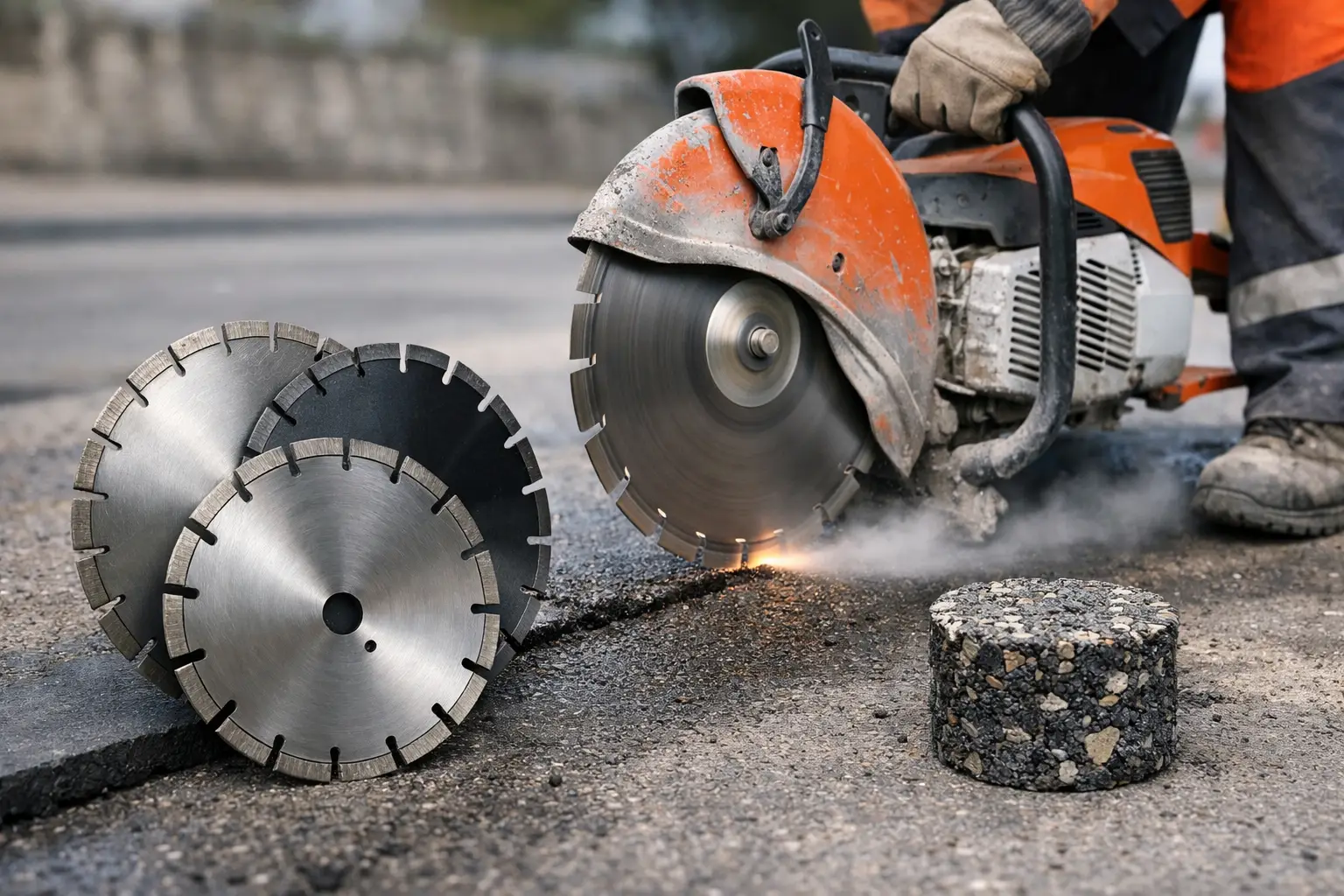
A road crew can lose more time to a glazed or wandering blade than to the cut itself. In demanding asphalt cutting blade applications, blade selection affects cutting speed, joint quality, machine load, and the number of stops required during a shift. For distributors, contractors, and procurement teams, the objective is not simply to buy a blade labeled for asphalt. It is to specify a blade that maintains predictable performance across the job conditions it will actually face.
Asphalt is softer and more abrasive than concrete, but pavement cuts are rarely uniform. Aggregate hardness, asphalt age, ambient temperature, embedded material, cut depth, and equipment horsepower all influence blade behavior. A blade that performs well on fresh blacktop may wear too quickly on aged pavement with hard aggregate, and a general-purpose blade can become inefficient when a job involves frequent cuts through asphalt over concrete.
Where Asphalt Cutting Blades Are Used
Asphalt cutting blades are primarily used with walk-behind saws, road saws, handheld cut-off saws, and specialized joint-cutting equipment. Their applications range from municipal repair work to large-scale utility and paving projects.
Road repair and patch preparation
Before damaged pavement can be removed and replaced, crews need clean perimeter cuts around potholes, failed sections, and surface defects. A straight, full-depth cut helps prevent damage from extending into sound pavement and creates a defined edge for patching material. For this work, operators generally need a blade that cuts quickly in abrasive asphalt without excessive segment wear.
The blade must also withstand repeated short cuts. Patch preparation can be harder on a blade than one long trench because the saw is constantly started, repositioned, and brought back into the material. Stable segment attachment and consistent diamond exposure matter more than a low initial purchase price.
Utility trenching and access cuts
Water, telecom, electrical, drainage, and gas projects require long linear cuts before excavation. These cuts demand good tracking because an off-line cut increases restoration work and can affect the fit of saw-cut pavement sections. A properly selected asphalt blade reduces side pressure, helps the operator hold a straight line, and maintains a usable cutting rate over distance.
Trenching jobs often expose a major selection issue: pavement structure. Asphalt thickness may vary, and the blade may encounter a concrete base, reinforced slab, or hard aggregate layer below the surface. If this condition is expected, a dedicated asphalt blade may not be the best choice. An asphalt-over-concrete blade or a premium general-purpose blade can be the more practical specification, despite a higher unit cost.
Expansion joints, pavement joints, and crack control
Saw cutting is also used to create or widen joints that control cracking, separate slabs, or prepare pavement for sealing. These applications place a premium on cut quality and width control. The blade diameter, arbor configuration, segment width, and saw setup must match the joint specification.
For narrow joints, excessive vibration or blade deflection can create irregular edges that require additional cleaning. Operators should avoid forcing the saw. A blade that is allowed to cut at its designed feed rate produces a cleaner joint and is less likely to overheat.
Asphalt removal and demolition preparation
On resurfacing and demolition projects, asphalt blades are used to divide pavement into manageable sections for removal. The focus is usually production rate rather than finish quality, but the same operating principles apply. Deep cutting, hard aggregate, and possible contact with buried material require a blade with dependable segment retention and a bond designed for abrasive exposure.
When pavement contains wire mesh, rebar, or thick concrete beneath the asphalt, use a blade designed for mixed materials. A standard asphalt blade can cut into these materials, but performance and blade life may decline sharply.
How Blade Design Fits Asphalt Cutting Blade Applications
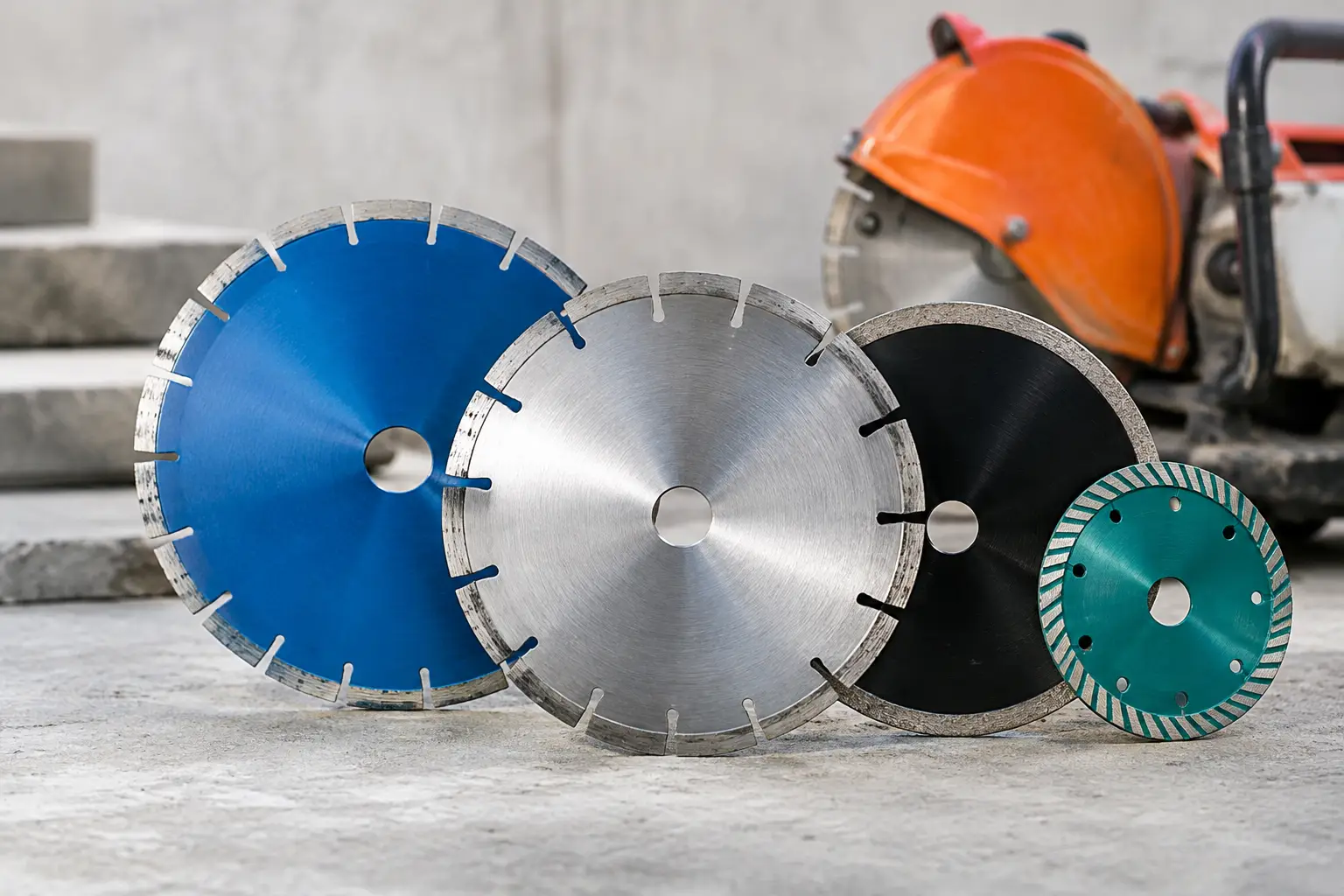
The diamond segment is the working part of the blade, but its performance depends on the full design: diamond quality, bond formulation, segment shape, core tension, weld strength, and cooling features.
A softer bond is commonly used for asphalt because the abrasive material must continuously wear the bond and expose fresh diamond. If the bond is too hard, diamonds remain buried, the segment can glaze, and cutting speed drops. If the bond is too soft, the blade wears away before the diamonds can deliver their intended life. The correct balance depends on asphalt abrasiveness and the possibility of contact with harder base materials.
Wide gullets are common on asphalt blades because they help remove sticky cutting debris from the kerf. Effective debris removal supports cutting speed and reduces heat buildup. Undercut protection is also valuable where loose abrasive material can wear the steel core beneath the segments. Without adequate protection, core erosion can shorten blade life even when the diamond segments still have usable height.
For professional roadwork, laser-welded segments provide a strong connection between the segment and steel core. This is particularly relevant for high-horsepower walk-behind saws, deep cuts, and long duty cycles. Vacuum-brazed blade technology serves other specialized cutting needs, but conventional segmented, laser-welded blades remain the standard choice for most heavy asphalt sawing work.
Match the Blade to the Saw and the Job
Blade specifications should begin with the saw, not the catalog. Confirm the machine's maximum blade diameter, arbor size, RPM range, horsepower, and whether the operation is wet or dry. Installing a blade beyond the saw's rated diameter or RPM is unsafe and can damage both equipment and blade.
Wet cutting is preferred for many walk-behind asphalt saw applications because water controls dust, cools the blade, and helps clear slurry from the cut. However, water volume must be sufficient and directed properly. Too little water allows heat and dust to build up; excessive uncontrolled water can create slurry-management problems on finished surfaces or active roadways.
Dry cutting may be necessary for handheld saw work, remote locations, or short intermittent cuts. In those cases, use a blade rated for dry cutting and allow periodic free-spinning time to cool it. Continuous deep dry cuts generate heat rapidly and can damage the bond, warp the core, or reduce segment life.
Diameter selection is driven by required depth. A larger blade provides greater cutting depth but also requires compatible saw power and proper shaft speed. Forcing a large blade through a shallow repair cut can be less efficient than using a smaller blade that matches the work. Procurement specifications should also account for kerf width, particularly when cuts must meet a restoration or joint-sealing requirement.
Common Performance Problems in the Field
Slow cutting is often blamed on blade quality, but the cause may be a mismatch between blade bond and material. A glazed blade may need dressing by making a few cuts in an abrasive material, provided this is consistent with site practices and safety procedures. If glazing occurs repeatedly, the bond is likely too hard for the asphalt or the operator is using insufficient feed pressure.
Excessive segment wear usually points to highly abrasive pavement, an overly soft bond, poor water control, or contact with unexpected material. Core undercutting is another common issue in loose, abrasive asphalt. It should be treated as a specification problem, not simply normal wear, when it occurs early in blade life.
Blade wandering can result from a damaged saw arbor, worn bearings, incorrect belt tension, a bent blade core, or side loading by the operator. Replacing blades without checking the saw often repeats the same failure. Contractors should inspect flanges, water delivery, shaft condition, and blade rotation direction before putting a new blade into service.
What B2B Buyers Should Specify
For wholesale purchasing and private-label programs, a product request should identify more than diameter and arbor size. Useful details include the intended material, asphalt thickness, aggregate conditions, expected presence of concrete, wet or dry operation, saw type, horsepower range, and expected cutting volume. These details allow a manufacturer to recommend the appropriate bond, segment configuration, and protection level.
Consistency between production batches is equally important. A blade that cuts well during a product trial but varies in segment height, weld quality, core tension, or bond performance in the next shipment creates avoidable warranty exposure for distributors. Reliable quality control, traceable production standards, and application-based technical support are central to a sustainable blade program.
Ryhyoma supports industrial buyers with laser-welded diamond blade options and OEM/ODM specifications designed around recurring commercial use, rather than one-off retail demand.
The best asphalt blade is the one that matches the pavement structure, saw capacity, and working method before the crew reaches the jobsite. A clear application specification gives operators a better chance of making clean, productive cuts and gives buyers a more dependable basis for evaluating long-term blade cost.