A chipped edge on a large-format porcelain tile is not a minor finishing issue. For a fabricator, contractor, or tile-processing distributor, it can mean rejected material, lost installation time, and a damaged reputation with the end customer. Industrial tile cutting solutions must therefore be built around more than cutting speed. They need to control edge quality, heat, blade wear, and operating cost across repeated commercial workloads.
The correct solution depends on the tile body, finish, thickness, machine type, and production volume. A blade that performs well on standard glazed ceramic may cut slowly, wander, or cause edge breakout on dense porcelain. Specialty sintered slabs and engineered surfaces require another level of control. Buyers need a supply partner that understands these application differences and can maintain the same performance from one shipment to the next.
What Industrial Tile Cutting Solutions Must Deliver
Commercial tile cutting is judged by measurable results: clean edges, consistent cutting speed, predictable blade life, and minimal interruption to production. The blade is central to all four. Its diamond concentration, bond formulation, rim design, and core stability determine how efficiently it removes material and how well it controls vibration.
For distributors and bulk purchasers, consistency matters as much as peak performance. A sample blade may produce a clean first cut, but that does not prove it will remain stable through hundreds of cuts or that the next production batch will match it. Quality control should cover the steel core, diamond segment or continuous rim, welding integrity, balance, and dimensional accuracy.
A dependable cutting program also considers the full operating setup. Water delivery, saw condition, feed pressure, flange alignment, and operator technique all affect the final edge. Even a high-quality diamond blade will underperform if it is installed on a machine with worn bearings or used without adequate cooling.
Match the Blade to the Tile Material
Tile is a broad category. Procurement specifications should name the actual material rather than using a general request for a ceramic blade. This is the first step in preventing slow cutting, glazing, excessive chipping, and premature wear.
Ceramic Tile
Standard ceramic tile is generally less dense and more forgiving than porcelain. A continuous-rim diamond blade is commonly selected because it supports a smooth finish on glazed surfaces. The main risk is not usually excessive blade wear but edge chipping caused by poor blade quality, incorrect feed rate, or an unstable saw.
For high-volume ceramic cutting, buyers should prioritize a blade that stays true and maintains a thin, clean kerf. An overly aggressive rim can remove material quickly but may leave a rough edge that requires additional finishing.
Porcelain and Large-Format Tile
Porcelain is dense, hard, and frequently brittle at the glazed surface. Large-format tiles increase the challenge because a small deviation can be highly visible across a long cut. A thin continuous rim with a formulation designed for hard porcelain is generally the appropriate choice.
Cutting speed must be balanced against finish quality. Pushing a blade too quickly through porcelain can create micro-chipping, especially at the exit edge. In production environments, it is often more economical to use a blade that cuts at a controlled, stable rate than one that appears faster but creates a high reject rate.
Natural Stone, Granite, and Marble
Stone tile programs require material-specific planning. Granite is abrasive and hard, demanding a diamond bond that can expose new diamonds as the blade wears. Marble is softer but can be prone to edge damage and staining if water management is poor. A blade developed for granite should not automatically be used for polished marble simply because both materials are sold as stone tile.
The intended finish also matters. A rough construction-grade cut may be acceptable for concealed edges, while visible countertop, wall, or flooring details require a cleaner finish and closer control of feed rate.
Sintered Stone and Specialty Surfaces
Dekton and other sintered surfaces have changed the requirements for tile and slab processing. These materials combine hardness with brittleness, and they can chip if the blade, machine speed, or support method is wrong. Vacuum-brazed and specialized diamond blade technologies may be suitable for certain applications, but testing against the exact material and thickness remains necessary.
Do not rely on a general-purpose blade claim for premium surfaces. Request application data, conduct controlled trials, and inspect the cut edge under the same conditions used in the field or workshop.
Rim Design, Bond, and Blade Core Matter
The visible rim is only one part of blade performance. Industrial buyers should evaluate how the full blade is engineered.
Continuous-rim blades are typically preferred where a clean finish is the priority, particularly for ceramic and porcelain. Turbo-rim designs can improve material removal and cooling, but their more aggressive action may not be appropriate for delicate glazed finishes. Segmented blades are often used on tougher construction materials, though they are usually not the first choice when a polished tile edge is required.
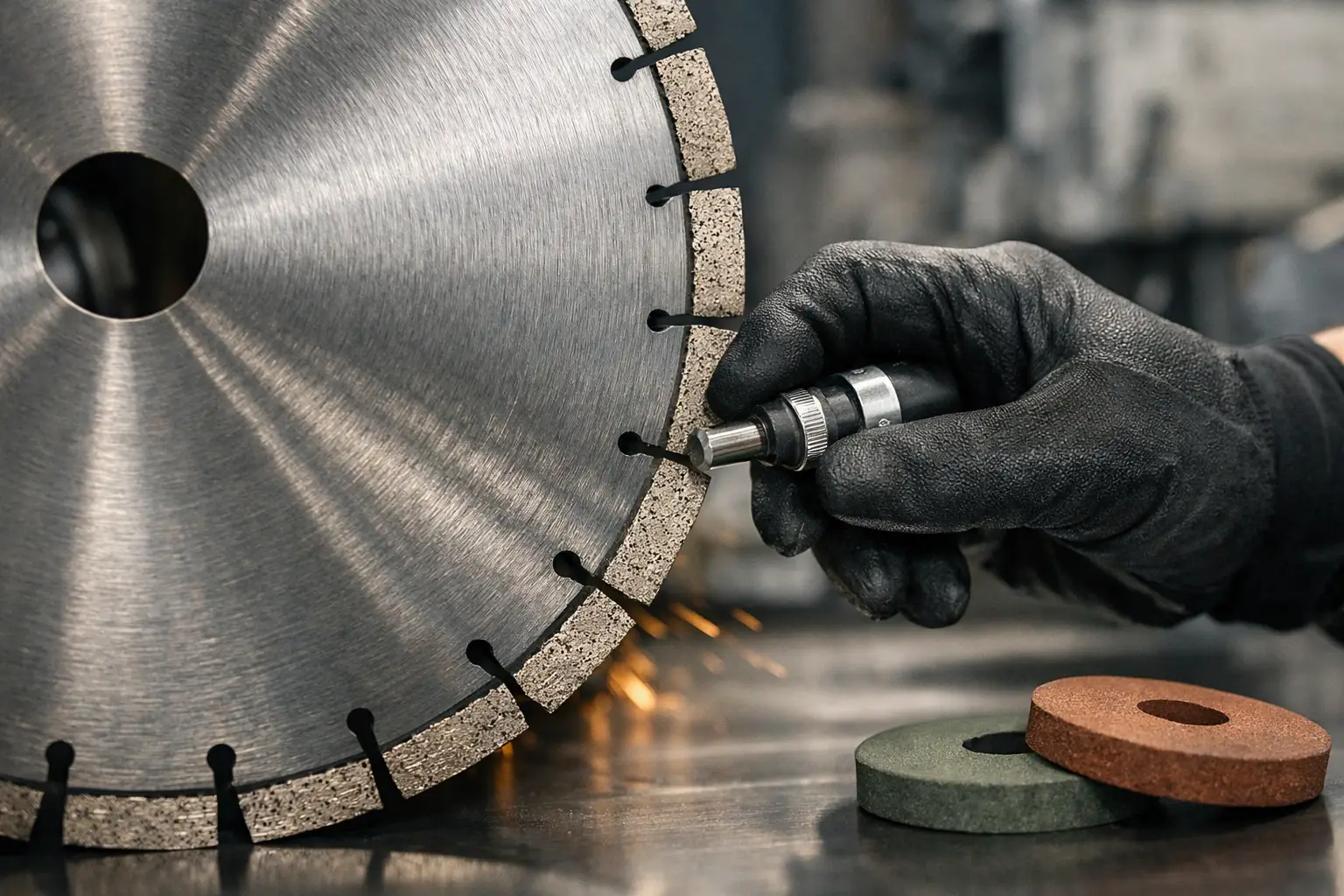
The diamond bond must match the abrasiveness and hardness of the material. If the bond is too hard for the application, diamonds may remain buried and the blade can become glazed, reducing cutting ability. If the bond wears too quickly, the blade loses usable life before delivering acceptable output. This balance is why application-specific manufacturing is more valuable than a one-blade-for-all-materials approach.
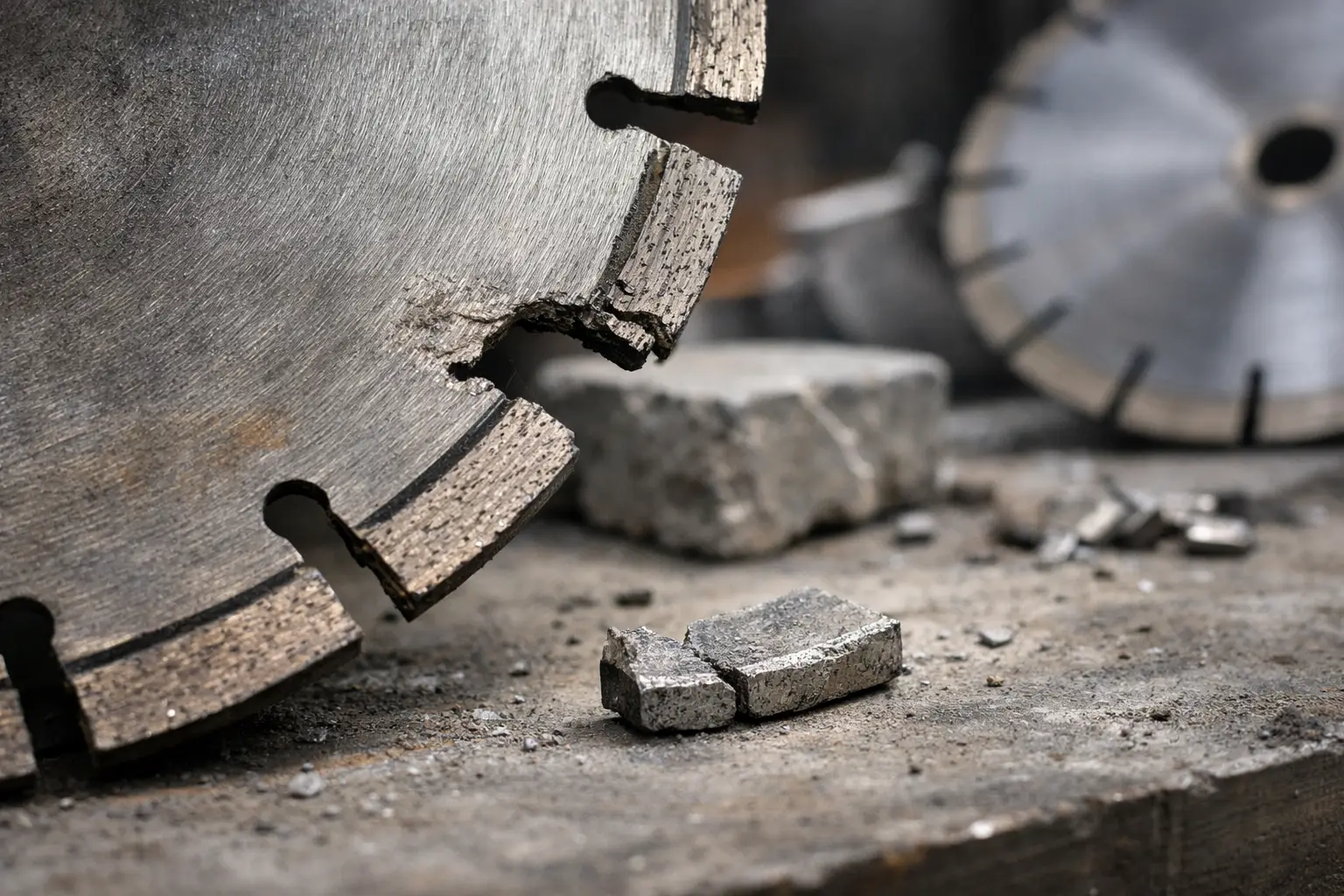
Core stiffness and flatness are equally important. A warped or poorly tensioned core can cause blade wobble, wide cuts, noise, and edge damage. Laser-welded construction provides strong attachment for demanding industrial use, while careful manufacturing control helps maintain stable running behavior at the blade's rated speed.
Choose Equipment for the Required Throughput
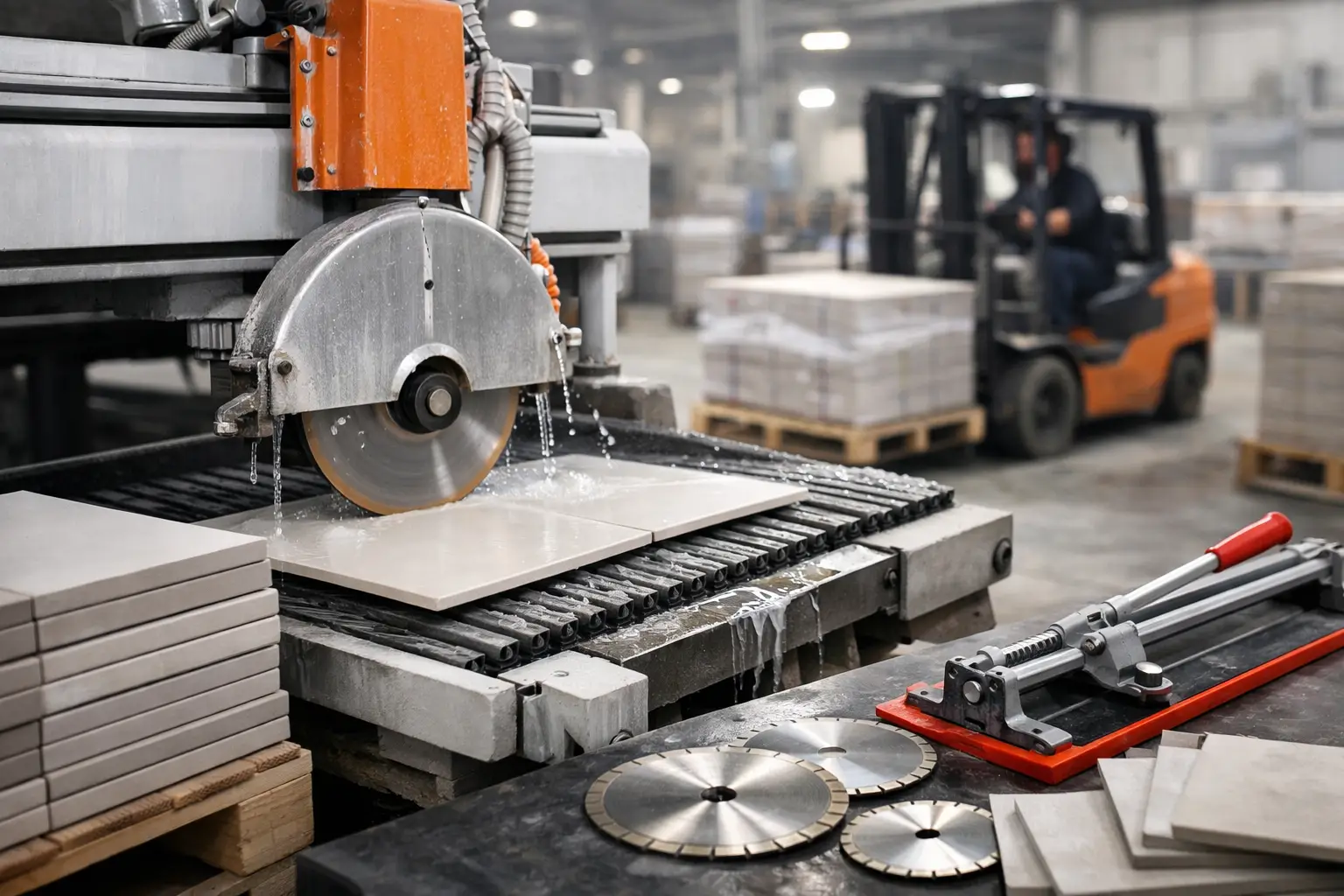
A tile blade cannot compensate for an unsuitable machine. Manual tile saws may be sufficient for occasional site work, but fabrication shops and high-volume processors need equipment that delivers consistent water flow, accurate guidance, and repeatable cutting geometry.
Bridge saws and rail-guided systems provide better control for long or large-format pieces. Table saws remain practical for many tile applications when they are properly maintained and fitted with the correct blade. Portable equipment has a place on installation sites, but operators should use guide systems where accuracy and visible edges are critical.
Before selecting a blade range, confirm the machine arbor size, maximum blade diameter, RPM range, power output, and wet or dry cutting capability. The blade's maximum safe operating speed must never be below the machine's operating speed. This is both a performance requirement and a safety requirement.
Control the Cut, Not Just the Tool Cost
The lowest unit price is rarely the lowest cutting cost. A lower-cost blade that causes chipping, requires frequent changes, or produces inconsistent results can increase labor, scrap, and downtime. The useful comparison is cost per acceptable linear foot or cost per acceptable finished piece.
Track blade life, average cutting time, reject rate, and operator feedback for each material category. This data helps a distributor build a credible product range and allows a contractor or fabricator to standardize purchasing around proven specifications. It also exposes problems that may initially appear to be blade failures but are actually caused by water starvation, improper dressing, or machine misalignment.
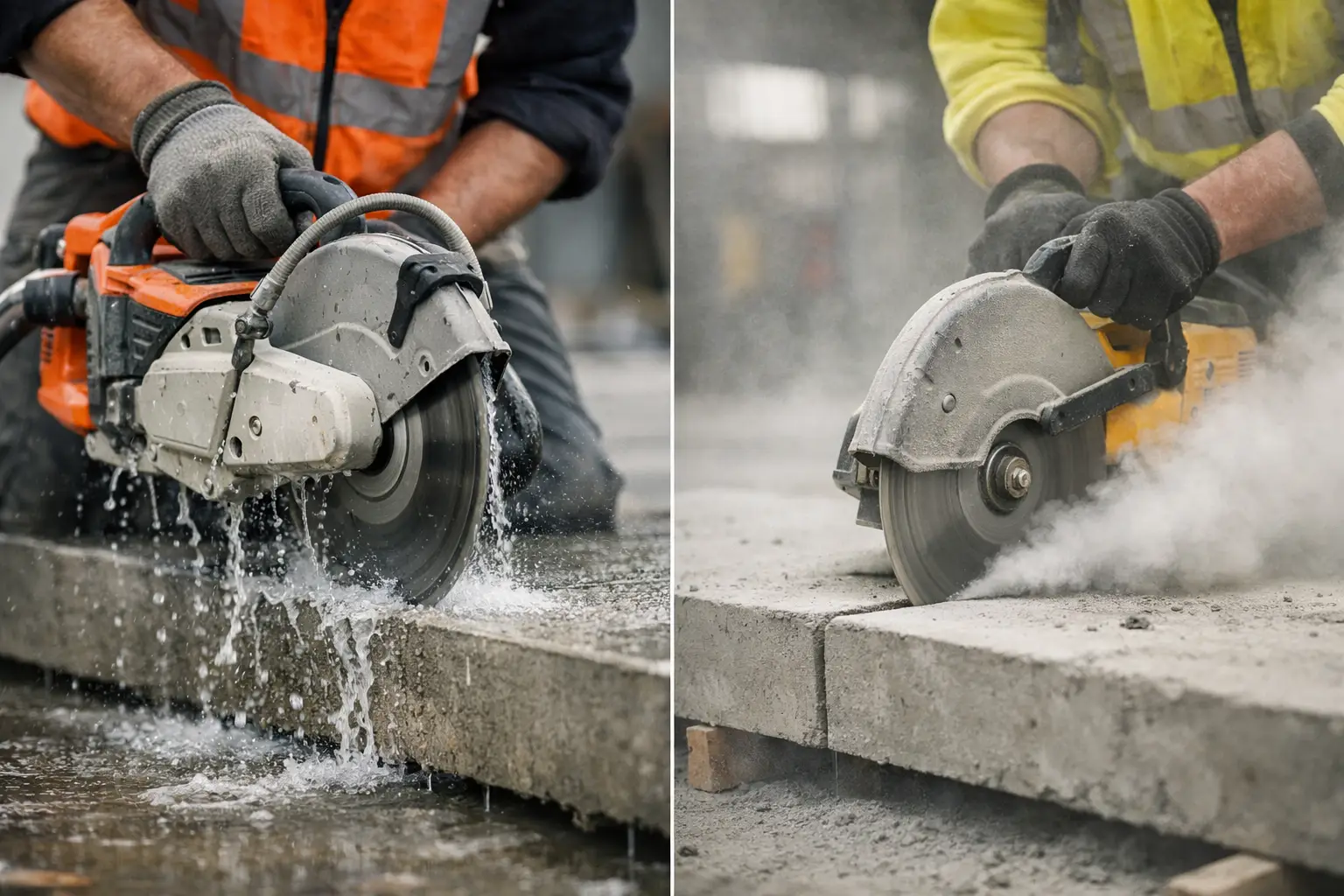
Wet cutting is generally preferred for tile because it reduces heat and dust while supporting a cleaner finish. Water should reach both sides of the cutting zone, not merely spray the blade surface. When dry cutting is required, use a blade rated for that purpose and avoid continuous heavy pressure that overheats the rim.
Build a Reliable Bulk Supply Program
For wholesale buyers, the best industrial tile cutting solutions include a defined supply process. Product specifications should document blade diameter, bore size, rim type, application material, operating conditions, packaging, branding requirements, and expected performance targets. This gives both buyer and manufacturer a clear standard for repeat orders.
OEM and private-label programs are most effective when they begin with application testing rather than packaging alone. A supplier should be able to adjust specifications for regional tile preferences, machine types, and price-performance targets. For example, a distributor serving large porcelain installers may need a premium thin-rim line, while a construction supply buyer may need a broader mixed-material range for routine site work.
Stable production capacity, inspection discipline, and clear communication are essential when inventory supports contractor schedules. Ryhyoma works with B2B buyers that require diamond tool specifications, dependable batch quality, and scalable supply for distributor and project-based demand.
The practical next step is to test blades on the materials your customers cut most often, using their actual machines and operating conditions. A documented trial will provide a stronger purchasing decision than a catalog claim and help establish a tile cutting range that protects both productivity and finished-edge quality.