
A floor preparation job can lose margin quickly when abrasive blocks cut unevenly, glaze over, or wear out before the planned coverage is complete. For contractors, distributors, and procurement teams, abrasive blocks are not a minor consumable. They directly affect production speed, surface profile, labor cost, machine downtime, and the quality of the coating or overlay applied afterward.
The right block depends on the concrete condition, required finish, machine type, and working environment. A product that performs well on hard, cured concrete may wear too aggressively on soft concrete. A coarse block that removes old coatings efficiently may leave a profile that requires additional refinement. Selection should therefore begin with the application, not simply the lowest unit price.
What Abrasive Blocks Do in Floor Grinding
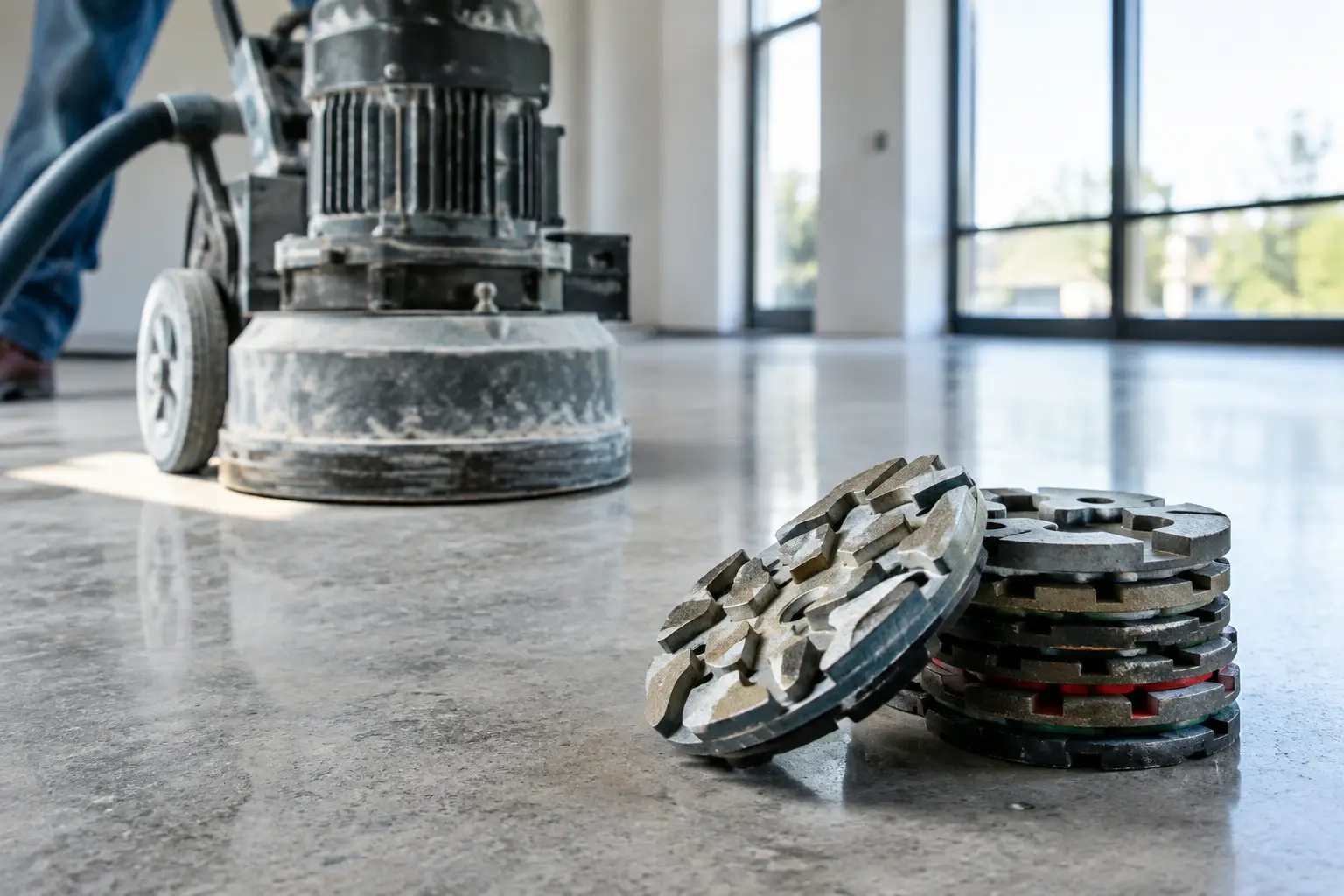
Abrasive blocks are mounted to floor grinders or hand-held grinding equipment to remove material and prepare concrete, terrazzo, stone, and similar surfaces. Depending on the bond, grit, and segment configuration, they can remove laitance, level high spots, open the concrete surface, smooth repairs, strip thin coatings, or refine a floor before densifying, polishing, or applying epoxy.
For commercial floor preparation, consistency matters as much as initial cutting speed. Blocks must maintain contact with the floor, expose fresh abrasive particles at the correct rate, and deliver a predictable scratch pattern across the working life of the tool. When this balance is poor, operators compensate by making extra passes, adding machine weight, or changing tools early. Those actions increase cost without improving the process.
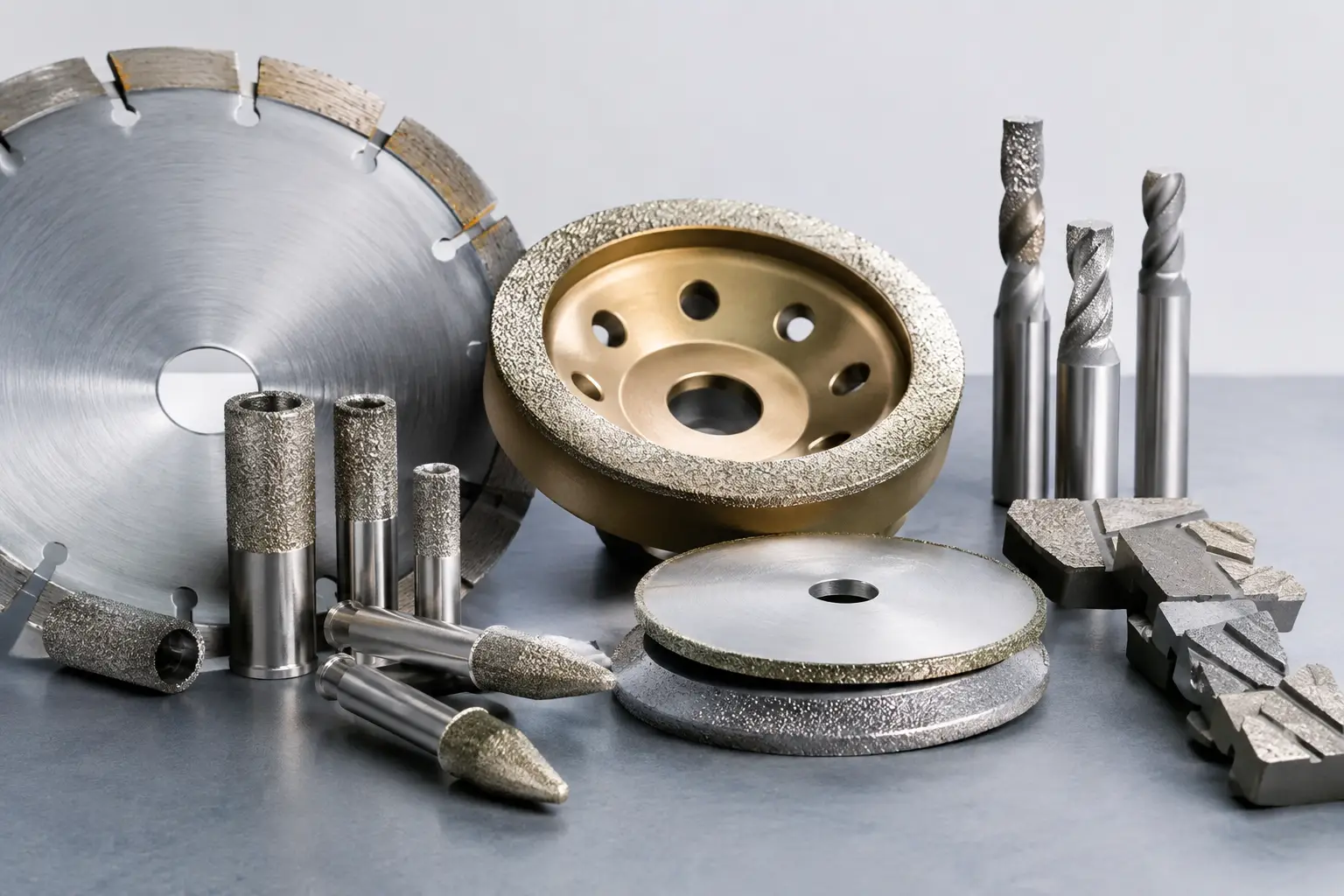
Diamond abrasive blocks are commonly used for demanding concrete grinding because diamond provides the hardness needed to work efficiently on mineral-based surfaces. The diamond itself is only one part of the tool. Bond formulation, diamond concentration, grit size, segment shape, and manufacturing quality determine how the block behaves in actual field conditions.
Choosing Abrasive Blocks by Concrete Hardness
Concrete hardness is one of the most important selection factors. The general rule is straightforward: hard concrete needs a softer bond, while soft or abrasive concrete needs a harder bond.
On hard concrete, a soft bond wears at a controlled rate and releases dull diamond particles so new sharp diamonds can continue cutting. If the bond is too hard, the diamonds become polished and the block begins to glaze. The operator may see reduced production, excessive heat, and a smoother-than-expected surface.
On soft concrete, a hard bond retains the diamonds longer. A soft-bond block can wear away too quickly in this condition, reducing coverage and raising consumable cost. Fresh concrete, weak slabs, and highly abrasive surfaces often require a more durable bond than dense, heavily troweled concrete.
Concrete hardness can vary across the same project, especially in warehouses, repaired industrial floors, or areas exposed to different curing conditions. Procurement specifications should allow for more than one bond option where this variation is expected. Carrying only one universal block may simplify inventory, but it can create avoidable performance problems on site.
The Role of Grit Size
Grit size controls the aggressiveness and surface profile of the grinding operation. Lower grit numbers are coarser and remove material faster. They are appropriate for leveling, coating removal support, rough concrete, and opening a hard surface. Higher grit numbers leave a finer finish and are used for progressive refinement.
A typical preparation sequence may begin with a coarse abrasive block to remove unevenness or contaminants, then move through medium and fine grits as the required finish becomes clearer. Not every floor requires a full progression. A slab receiving a thick coating may only need a clean, open profile, while a polished concrete project requires controlled steps to remove the scratch pattern from the previous grit.
The required coating system should guide the final grit decision. Grinding too fine before applying a coating can reduce mechanical adhesion. Grinding too coarse can leave an excessive profile that consumes more coating material. The coating manufacturer's specification remains the reference point, but the abrasive block supplier should be able to recommend a practical starting configuration.
Segment Design Affects Cutting and Tool Life
Segment design determines how the tool contacts the floor and manages debris. Blocks may use single or double bar segments, round segments, arrow-shaped segments, or other patterns designed for specific removal tasks. Larger contact areas generally provide smoother grinding and longer working life, while more aggressive shapes can improve initial cutting on hard surfaces or thin coatings.
For general concrete preparation, double-segment blocks are often selected for stable, balanced grinding. Single-segment tools can cut more aggressively because pressure is concentrated over a smaller contact area. They can be useful for difficult surfaces, but they may wear faster and leave a more pronounced scratch pattern.
Segment height also matters. A taller segment usually provides more usable diamond material and longer service life, but it does not automatically produce better value. If the bond does not match the concrete, a tall segment can still glaze, wear improperly, or fail to meet the required production rate. Buyers should evaluate coverage, removal rate, and finish quality together rather than comparing segment height alone.
Match the Block to the Machine Mounting System
Abrasive blocks must fit the grinder correctly. Common mounting systems include trapezoid plates, redi-lock style holders, magnetic quick-change plates, and bolt-on configurations. A correct mount supports fast changes and stable tool retention. An incorrect fit can cause vibration, uneven wear, damage to the holder, or a serious safety risk.
Before placing a bulk order, confirm the grinder brand, holder dimensions, locking mechanism, and the number of tool positions on each machine. Machine weight and motor power should also be considered. A light single-head grinder does not load the abrasive in the same way as a heavy planetary machine, even on the same slab.
For distributors, OEM or ODM support can be useful when local customers operate mixed equipment fleets. A supplier that can provide compatible mounting formats, custom labels, and application-specific bond options helps reduce SKU gaps without forcing contractors to adapt their equipment around a limited tool range.
Common Signs That the Specification Is Wrong
Poor grinding results are often blamed on the block when the actual issue is application mismatch. Glazing usually indicates that the bond is too hard for the floor, insufficient machine pressure is being applied, or the surface is contaminated. Excessive wear may indicate soft concrete, an overly soft bond, or grinding conditions that are more abrasive than expected.
Uneven wear across a set of blocks can point to an unlevel machine, worn holders, improper tool installation, or an operator who is consistently loading one side of the grinder. If one block fails while the others remain usable, inspect the mounting plate and machine movement before assuming a manufacturing defect.
Vibration deserves immediate attention. It can result from damaged segments, debris caught behind the block, worn machine components, or incompatible mounting hardware. Continuing to grind under vibration reduces finish quality and can shorten the life of both the tools and the equipment.
What B2B Buyers Should Verify Before Ordering
A reliable abrasive block program is based on repeatable specifications, not sample performance alone. Sample testing is necessary, but buyers should test tools on representative materials and track coverage, removal rate, finish, and wear pattern. A block that performs well during a short demonstration may not deliver the same cost per square foot through a full production run.
When reviewing a supplier, ask how bond formulations are controlled, how diamond segments are inspected, and whether the supplier can maintain the same specification across repeat orders. Stable production is especially important for distributors supplying contractors who expect the same performance from one shipment to the next.
Buyers should also confirm packaging, labeling, batch traceability, and lead-time capacity for bulk supply. These operational details may seem secondary to cutting performance, but they are critical when a distributor is managing inventory across several markets or supporting a time-sensitive project. Ryhyoma supports industrial buyers with abrasive block specifications designed around application requirements, mounting compatibility, and repeat-order consistency.
Use a Test Plan Before Standardizing a Product
The best way to standardize abrasive blocks is to run a structured trial rather than relying on visual inspection or a single operator's preference. Test the same block on the intended machine and concrete type, using a measured area. Record the time required, tool wear, surface condition, and any loading or glazing. Then compare it with the current product under the same conditions.
This process reveals the trade-off between aggressive cutting and total service life. The fastest block is not always the lowest-cost option, and the longest-lasting block is not always the most productive. The right choice is the one that delivers the required floor profile at a predictable cost and without disrupting the crew's workflow.
Abrasive blocks perform best when they are specified as part of the complete grinding process: material condition, machine, dust control, target finish, and downstream coating or polishing work. That discipline gives contractors more consistent floors and gives buyers a tool program they can reorder with confidence.