A blade that cuts quickly on one job can glaze, wander, or wear out early on the next. Material composition, machine power, cooling method, and operator technique all affect performance. This diamond blade selection guide is designed for buyers who need repeatable cutting results across commercial concrete, stone, tile, asphalt, and specialty surface applications.
For distributors, contractors, and procurement teams, the objective is not simply to purchase the lowest-cost blade. It is to match the blade specification to the job so cutting speed, blade life, safety, and operating cost remain predictable. A correct specification also reduces customer complaints, machine downtime, and avoidable inventory duplication.
Start the Diamond Blade Selection Guide With the Material
The material being cut is the first decision point. “Concrete blade” is not a complete specification. Concrete may be green, cured, reinforced, abrasive, hard aggregate, or heavily aged. Stone may be soft limestone, dense granite, engineered quartz, or a sintered slab surface. Each material removes the diamond segment differently.
A basic rule applies: hard materials generally need a softer bond, while abrasive materials generally need a harder bond. A softer bond wears at a controlled rate and exposes fresh diamonds for hard material. A harder bond retains diamonds longer when cutting abrasive material such as asphalt, green concrete, or soft block. Selecting a bond that is too hard for dense material can cause glazing, where the metal bond holds worn diamonds without exposing new cutting points. Selecting one that is too soft can lead to rapid segment loss and poor value per cut.
For reinforced concrete, the blade must handle both mineral aggregate and steel reinforcement. A general-purpose concrete blade may complete occasional rebar cuts, but frequent steel contact requires a segment formulation and weld strength intended for reinforced concrete. Buyers should define the expected rebar frequency rather than treating all concrete as the same application.
Asphalt is another common source of mismatch. It is highly abrasive and can soften in heat, so an asphalt blade typically needs a hard bond and features that reduce undercutting. Using a standard concrete blade on asphalt may produce fast initial cutting but short segment life.
Select the Rim and Segment Design
The rim design controls cutting behavior, finish quality, debris removal, and cooling. It should be selected after the material category is clear.
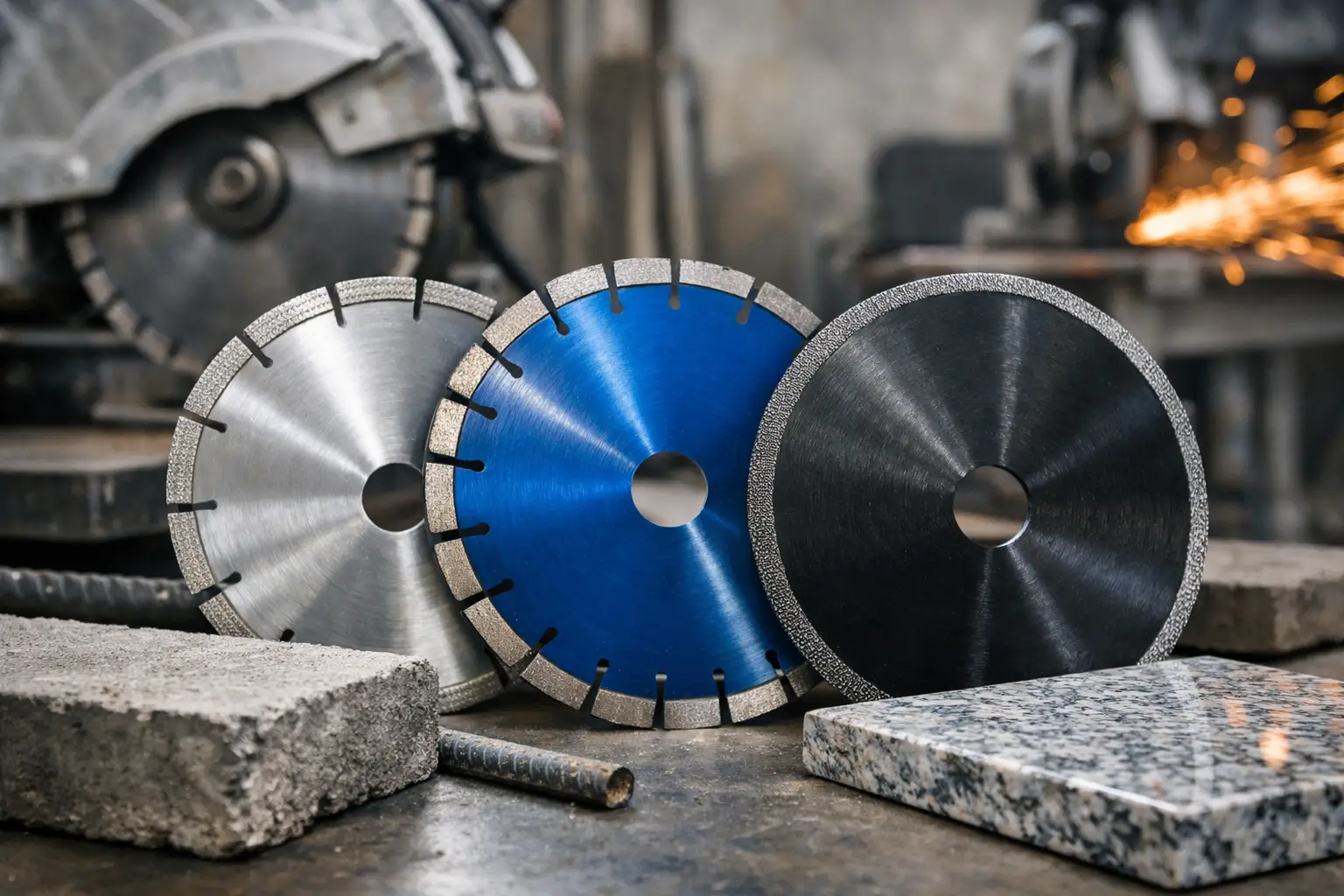
A continuous rim is normally used where a cleaner edge matters, such as ceramic tile, porcelain, marble, and certain decorative stone. Its uninterrupted cutting edge reduces chipping, especially when used with suitable water cooling. The trade-off is slower debris removal and a lower tolerance for aggressive dry cutting.
Turbo rims use a patterned or serrated edge to improve cooling and chip clearance. They are widely used for masonry, brick, concrete, and stone where a balance of speed and finish is required. Rim geometry varies by manufacturer, so buyers should compare actual cutting results rather than relying only on a product label.
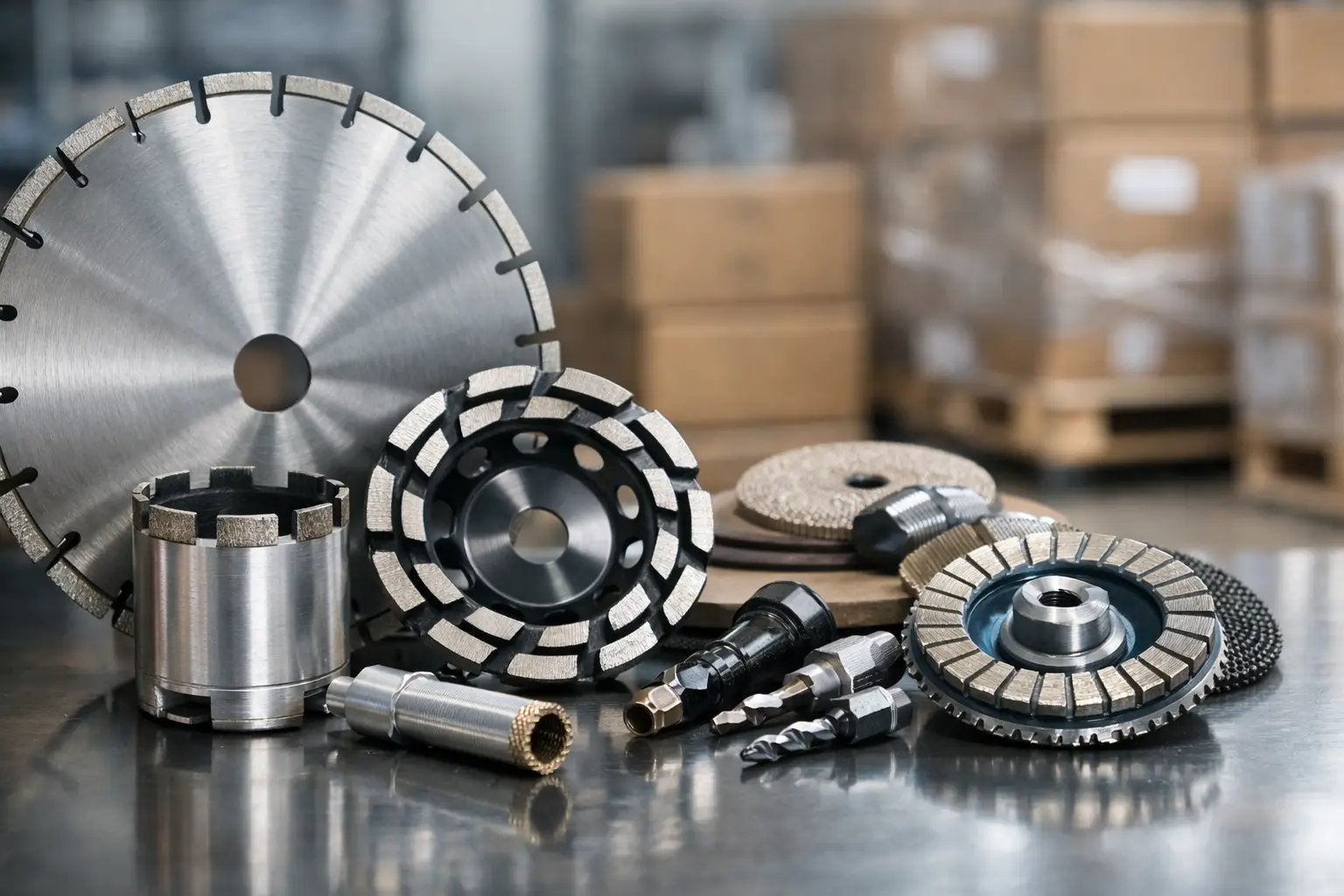
Segmented blades have separated diamond segments with gullets between them. This design supports fast cutting and effective debris evacuation in concrete, reinforced concrete, masonry, and asphalt. The open structure usually produces a rougher cut than a continuous rim, but it handles demanding construction work better.
For dry-cutting applications, segment shape and gullet design deserve close attention. Narrow gullets may limit cooling on deep cuts, while an overly aggressive configuration can increase vibration or cause edge breakout. For high-output saws, laser-welded segments provide strong attachment integrity under heat and stress. This is particularly relevant for professional concrete cutting where the blade is repeatedly pushed to its operating limit.
Match Diameter, Arbor, and Machine Speed
A technically suitable blade is still the wrong choice if it does not match the machine. Blade diameter determines the maximum practical cutting depth, while arbor size must fit the saw correctly. Never force an oversized arbor onto a shaft or use unsuitable reduction rings in an application where the manufacturer does not approve them.
The blade’s maximum RPM must be equal to or higher than the no-load RPM of the machine. This is a safety requirement, not a performance preference. Procurement specifications should record the machine type - angle grinder, handheld cut-off saw, floor saw, table saw, bridge saw, ring saw, or wall saw - along with blade diameter, arbor size, and operating RPM.
Larger blades can achieve deeper cuts, but they also require sufficient machine torque and stable feed control. A 14-inch blade on a cut-off saw behaves differently from a 20-inch blade on a floor saw. If the machine lacks power for the material and depth, operators may force the blade, creating heat, deflection, and uneven wear.
Decide Between Wet and Dry Cutting
Water changes blade performance. Wet cutting cools the rim, suppresses dust, and carries abrasive slurry away from the cut. It is often preferred for dense concrete, stone fabrication, porcelain, and applications where edge quality is critical. It can also extend blade life when the equipment and worksite support proper water delivery.
Dry cutting offers mobility and is common with handheld saws, grinders, and outdoor construction work. However, a dry-rated blade still needs controlled operating conditions. Long uninterrupted cuts can overheat the rim. Operators should use a steady feed rate and allow brief air-cooling intervals where appropriate, rather than twisting or forcing the blade through the material.
A wet-only blade should not be used dry. Conversely, a dry-rated blade may be used wet only when the blade and equipment instructions permit it. For bulk purchasing, clearly separating wet-cut, dry-cut, and dual-use specifications reduces field misuse and simplifies distributor product training.
Evaluate the Application, Not Just the Blade Label
Product names such as “universal,” “premium,” or “fast cut” are not enough for commercial buying. A reliable purchase specification should define the operating environment and the performance target. The following details are especially useful when requesting samples or a bulk quotation:
- Primary and secondary materials, including aggregate hardness and expected reinforcement
- Saw type, motor power, blade diameter, arbor size, and maximum RPM
- Wet or dry operation, target cutting depth, and expected daily cutting volume
- Priority between cutting speed, blade life, finish quality, and cost per linear foot
- Required packaging, private label details, barcodes, and distributor market requirements
This information allows a manufacturer to recommend the correct bond, diamond concentration, segment height, rim configuration, and weld technology. It also prevents a common purchasing mistake: comparing two blades by diameter and unit price alone when their segment height, core design, and intended application are materially different.
Consider Blade Life as Cost Per Cut
The cheapest blade is not automatically the lowest-cost option. A blade with stable segment wear may deliver more linear feet per unit, maintain a more consistent cutting speed, and require fewer blade changes. Those factors matter on production jobs, where labor and equipment downtime often cost more than the blade itself.
Cutting speed and blade life must be balanced. A very aggressive blade can improve initial productivity but may consume segments quickly. A long-life blade may be economical in abrasive materials but feel slow in dense reinforced concrete. The right choice depends on the contractor’s operating model. High-volume cutting crews may prioritize throughput, while distributors serving mixed applications may need a dependable mid-range blade with broad compatibility.
Trial testing should use comparable conditions: the same material, saw, operator approach, cut depth, and cooling method. Measure total linear footage, average cut time, segment wear, edge quality, vibration, and any signs of glazing or core distortion. One short test cut rarely provides enough data for a purchasing decision.
Common Selection Errors That Reduce Performance
Forcing the blade is one of the most frequent causes of failure. Excessive feed pressure generates heat, slows cutting after the rim begins to glaze, and can damage the steel core. The correction is not always a harder push. It may be a better bond match, a more suitable machine, adequate water flow, or a lower feed rate.
Using one blade across every material is another costly practice. A blade that performs well on cured concrete may not be suitable for asphalt, granite, porcelain, or Dekton. Specialty surfaces are especially sensitive. Dense sintered materials and engineered slabs often require a blade designed to control chipping and heat while maintaining edge quality.
Ignoring core condition also creates problems. A warped blade, cracked segment, damaged arbor hole, or excessive vibration should remove the blade from service. Correct blade selection begins with the specification, but safe and consistent results depend on proper inspection, installation, and operating discipline.
Build a More Reliable Supply Specification
For distributors and importers, standardizing blade specifications by application creates a stronger product range than stocking several similar-looking blades with unclear performance differences. Define an entry-level, professional, and application-specific option only when each serves a distinct customer need. Then validate consistency across repeated production batches.
Ryhyoma supports this approach through application-based blade development, strict quality control, and OEM/ODM specifications for bulk supply. Private-label buyers should confirm not only packaging requirements but also the technical construction behind the label, including segment height, welding method, core thickness, bond type, and approved operating conditions.
A well-selected diamond blade should feel predictable in the field: it reaches cutting speed without excessive pressure, wears evenly, remains stable on the machine, and delivers results appropriate to the material. Start with the actual job conditions, verify the machine limits, and test under real production loads before committing to volume orders.