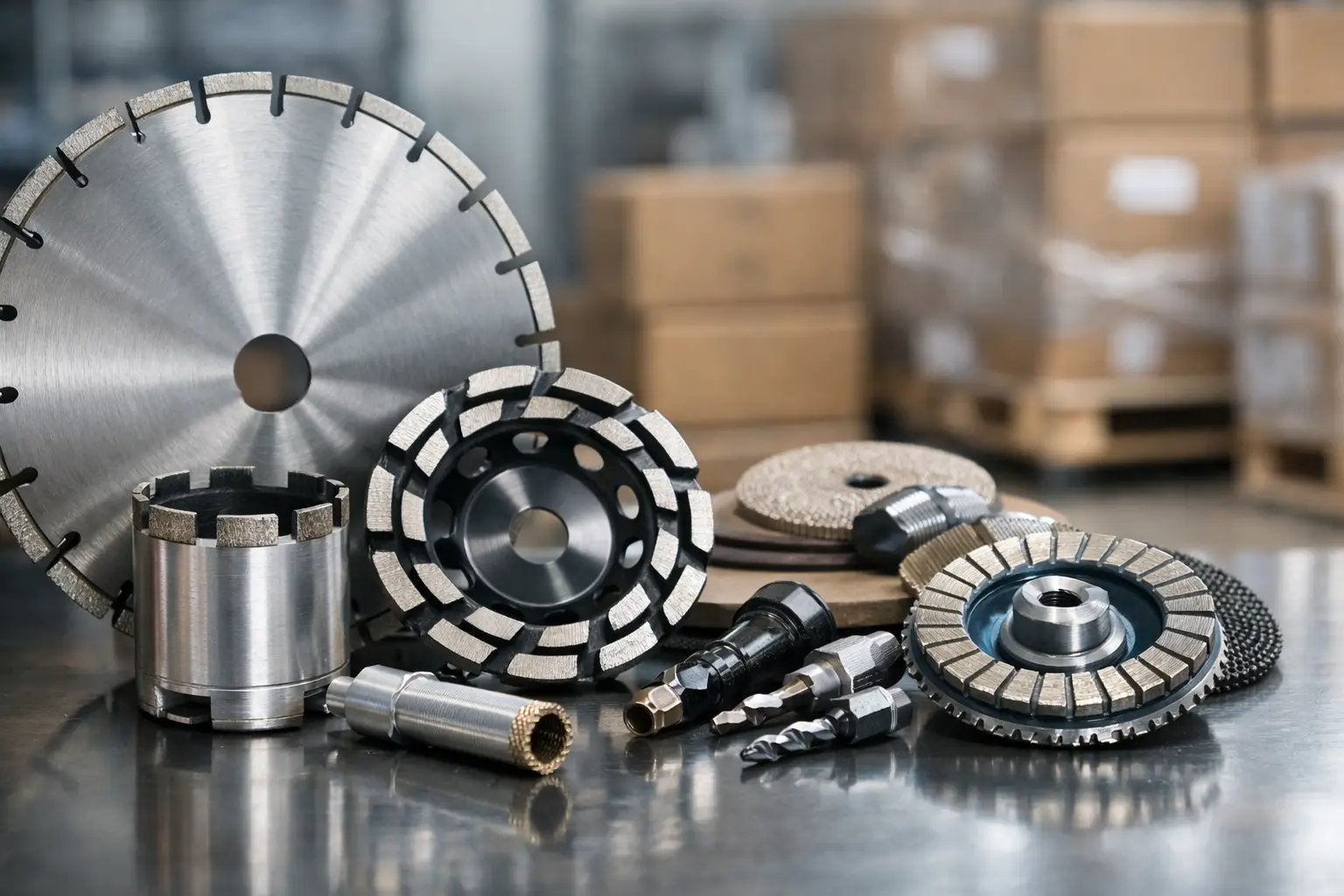
A blade that cuts quickly on Monday but wanders, overheats, or chips material on Thursday creates more than a finishing problem. It disrupts labor planning, raises scrap rates, shortens tool life, and makes it difficult to quote production work with confidence. Knowing how to improve cutting consistency means controlling the complete cutting system, not simply replacing the blade when results decline.
For contractors, fabricators, and distributors supplying industrial users, repeatable cutting depends on a practical relationship between the material, diamond tool, machine, operator, and operating conditions. A high-quality blade is the starting point, but it cannot compensate for an unstable saw, incorrect feed pressure, inadequate water flow, or an application mismatch.
Start With the Material, Not the Blade Label
The material being cut determines the bond, diamond concentration, segment design, and rim configuration required. This sounds basic, but many consistency issues begin when a general-purpose blade is expected to perform across materials with very different hardness and abrasiveness.
Concrete is not one material from a cutting perspective. Cured concrete, green concrete, reinforced concrete, abrasive block, and concrete containing hard aggregate each expose the blade differently. A blade that performs well in relatively abrasive concrete may wear too quickly in a harder, less abrasive slab. Conversely, a blade designed with a harder bond for dense material may glaze when used on softer material because the bond does not release diamonds at the needed rate.
The same principle applies in stone and tile fabrication. Granite, porcelain, ceramic, engineered stone, and Dekton-type surfaces require different cutting behavior. A poor match can produce edge chipping, excessive heat, slow feed rates, segment wear, or an inconsistent finish from one batch to the next.
Procurement teams should define the application before approving a blade specification. Record the material type, thickness, aggregate or reinforcement content, wet or dry condition, machine type, target cutting speed, and acceptable finish. This creates a repeatable baseline for tool selection and makes supplier recommendations more accurate.
Match the Diamond Blade to the Cutting Method
Cutting consistency improves when the blade specification and the machine operating method are treated as one decision. Blade diameter, arbor size, segment height, core thickness, kerf width, and welding method all affect performance, but their value depends on the saw and application.
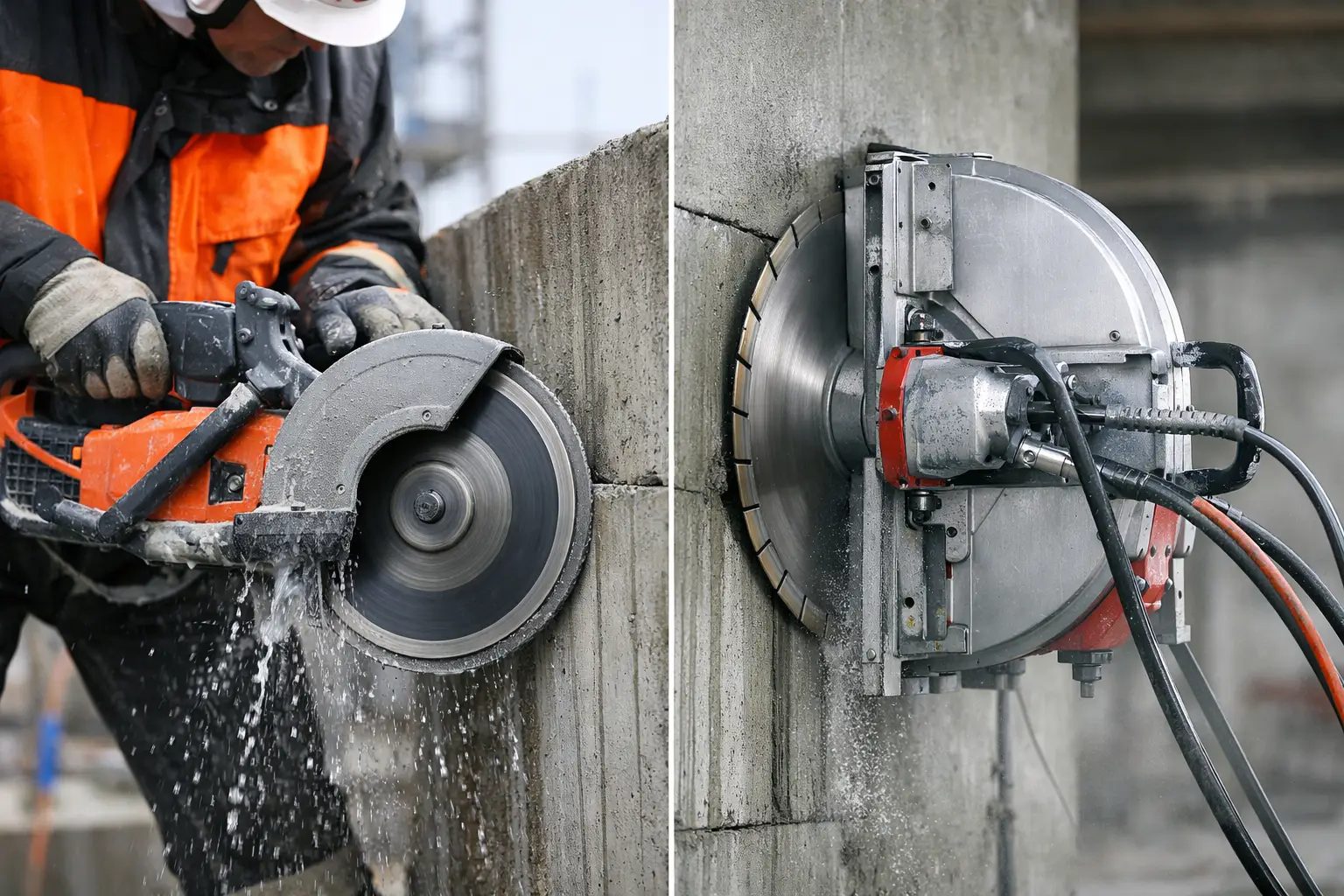
For high-load concrete and asphalt cutting, a laser-welded segmented blade provides the security needed for demanding professional use. Laser welding is particularly relevant where heat, vibration, and long cutting cycles are expected. The blade must also be rated for the saw's operating speed. Using a blade below the machine's RPM requirement is a direct safety risk and can lead to unstable tracking and premature failure.
For clean cutting of ceramic, porcelain, and hard decorative surfaces, continuous-rim or specialized turbo-rim designs may provide better edge quality. The trade-off is that a cleaner finish can require a slower feed rate than a more aggressive construction blade. Pushing a fine-cutting blade as if it were designed for demolition work will reduce consistency quickly.
For specialty materials such as Dekton and dense engineered slabs, blade quality is especially visible at the cut edge. A stable steel core, controlled diamond distribution, and application-specific bond are necessary to reduce vibration and limit micro-chipping. Buyers should avoid selecting solely by diameter or price. Two blades with the same size can have very different cutting behavior because the segment formula and manufacturing control are different.
How to Improve Cutting Consistency Through Machine Control
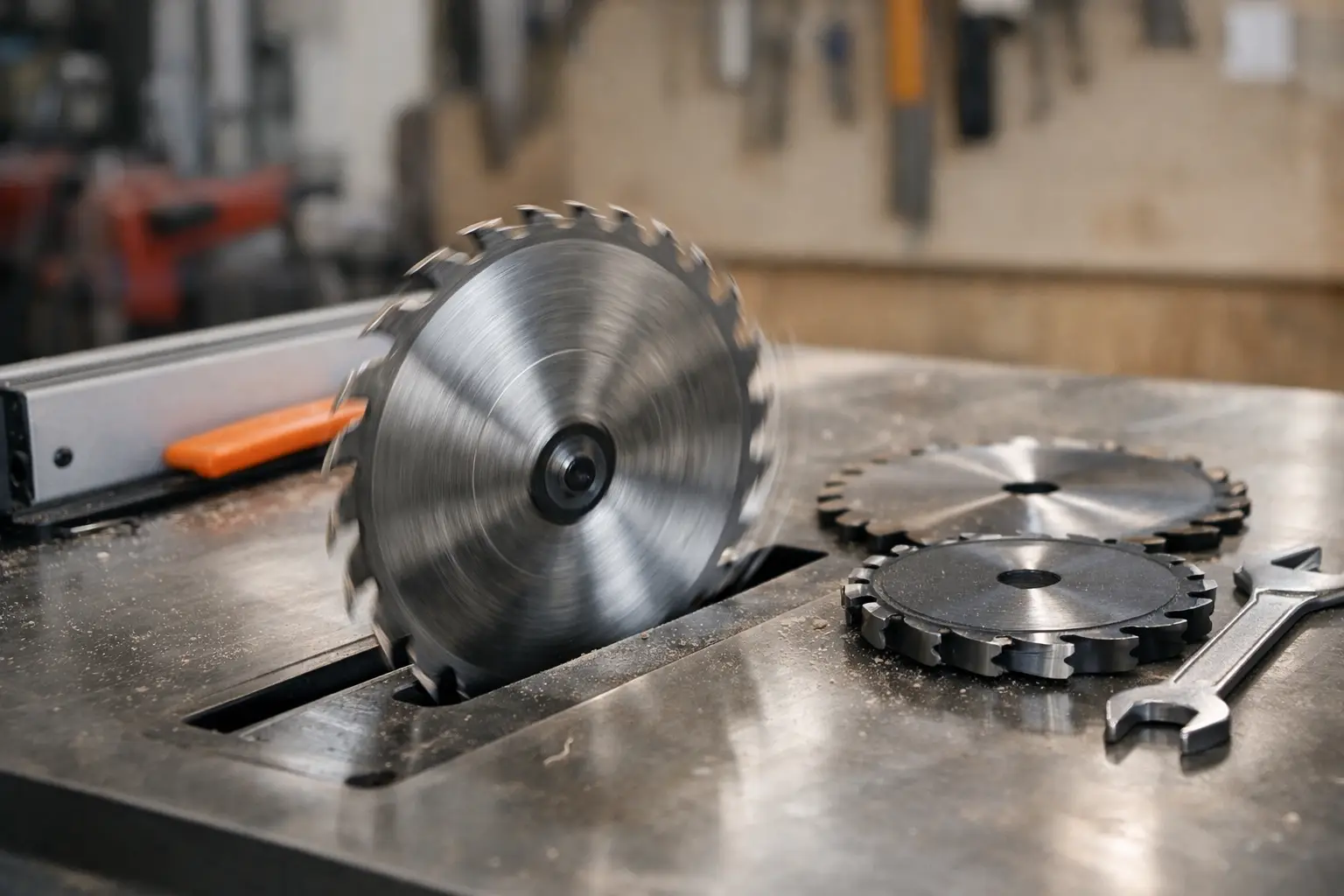
A correctly specified blade cannot run consistently on a poorly maintained machine. Before changing tooling, inspect the saw. Check arbor flanges for wear, dirt, damage, or uneven contact. A blade mounted against contaminated or distorted flanges can wobble even when the blade itself is in good condition.
Arbor condition matters as well. Excessive play in bearings, a bent arbor, loose drive components, or an out-of-true shaft will cause runout. Operators may interpret this as a blade problem because the symptoms appear at the cut: wandering lines, rough edges, vibration, and uneven segment wear. The real cause is often machine alignment.
Use the correct flange diameter and tighten the blade according to the equipment manufacturer's requirement. Overtightening can distort the core, while insufficient tightening allows movement under load. Confirm that the blade rotates in the indicated direction. Segment orientation and directional rim patterns are designed to clear debris and support stable cutting in one direction.
Drive belts, guides, rails, and feed mechanisms should also be inspected on bridge saws, tile saws, floor saws, and fabrication equipment. A small alignment error becomes a large quality problem during long cuts. Establishing a scheduled maintenance inspection is less costly than sorting defective work after production.
Control Feed Rate and Cutting Pressure
Operators influence cutting consistency more than many purchasing specifications acknowledge. The correct feed rate is not simply the fastest possible rate. It is the rate at which the blade removes material efficiently without overheating, deflecting, glazing, or damaging the workpiece.
Too much forward pressure can force the blade off line and create a curved cut. It also increases heat at the rim, especially in dense materials or deep cuts. On segmented diamond blades, excessive pressure can accelerate segment loss or cause uneven wear. On porcelain and engineered surfaces, it can produce visible chips that require rework.
Too little pressure has its own cost. The blade may polish the material instead of cutting it efficiently, leading to glazing. When the diamond particles become dull and the bond does not wear away, cutting slows and heat rises. Operators often respond by pushing harder, which worsens the condition.
A consistent approach is to allow the blade to establish its cutting path, maintain steady forward movement, and reduce feed pressure when the material becomes harder, thicker, or more heavily reinforced. For deep cuts in concrete, staged passes are often more controlled than forcing full depth in one pass. The extra pass may appear slower, but it can reduce tool damage, motor load, and correction work.
Use Water and Dust Control as Performance Controls
Water is not only for dust suppression. In wet cutting, adequate water flow cools the blade, flushes abrasive slurry from the kerf, and helps preserve edge quality. Inadequate flow can create hot spots, core tension problems, and rapid wear. Water should reach both sides of the blade near the cutting zone, not merely spray the outer surface.
The required flow depends on blade diameter, cutting depth, material, and feed rate. Large-diameter concrete saw blades and continuous production cutting need more cooling capacity than light tile work. Verify that nozzles are open, properly aimed, and free from slurry buildup. Recirculated water should be managed carefully because heavy sediment can reduce effective flow and increase abrasion on pumps and components.
Dry cutting requires a different discipline. Use only blades rated for dry cutting, allow the blade to run at the appropriate speed, and use intermittent cuts where the application requires it. Periodic withdrawal from the kerf allows air to cool the rim. Continuous deep dry cutting in dense material can overheat even a quality blade.
Dust extraction also affects visibility and line control. When operators cannot clearly see the mark, blade entry, or cut path, accuracy declines. Effective extraction supports both compliance and cutting repeatability.
Inspect Wear Patterns Before Reordering Tools
A worn blade provides useful diagnostic information. Do not discard it without checking the wear pattern. Uneven segment wear may indicate flange issues, machine runout, side loading, or inconsistent operator technique. A glazed rim may point to a bond that is too hard for the material or insufficient cutting pressure. Rapid segment wear can indicate highly abrasive material, an overly soft bond, excessive water abrasion, or incorrect application selection.
Track blade performance by recording the material, job type, blade model, linear feet cut, operating method, and observed issues. For a distributor or contractor managing multiple crews, this data is more valuable than informal impressions. It identifies whether a performance complaint is tied to a specific material batch, saw model, operator practice, or blade specification.
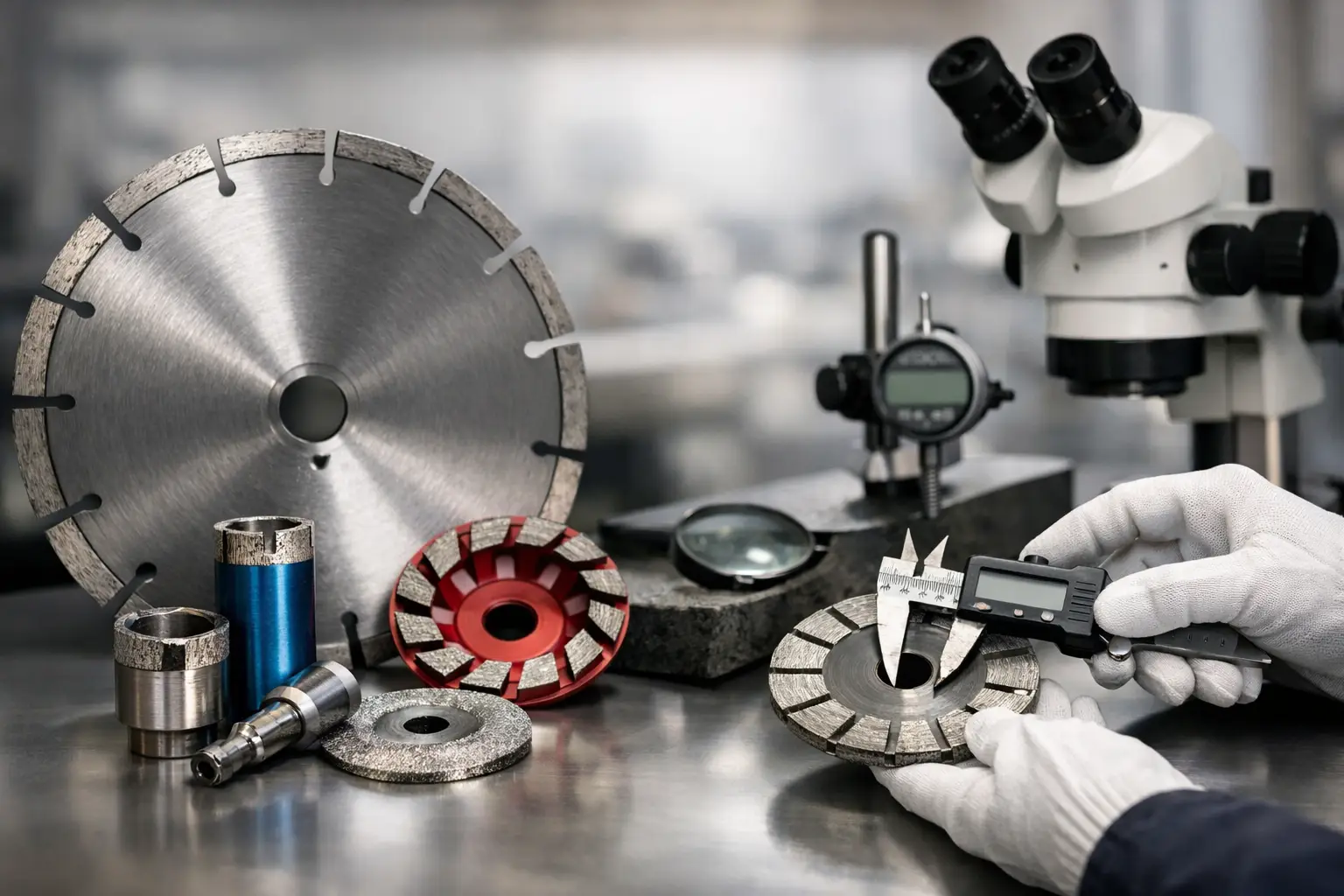
Quality control should also begin before the blade reaches the jobsite. Check blade flatness, weld integrity, segment appearance, labeling, arbor fit, and packaging condition when receiving bulk orders. Consistent manufacturing processes, including controlled diamond placement and reliable welding, reduce variation between production batches. For private-label and OEM programs, approved samples should be retained as a benchmark for future deliveries.
Standardize the Process Across Crews and Sites
The most reliable way to improve results at scale is to standardize the variables that can be controlled. Define approved blades by material and machine category, document target operating ranges, and train crews to recognize overheating, glazing, deflection, and abnormal vibration early.
A short application sheet at the point of use can prevent costly assumptions. It should identify the correct blade, maximum RPM, wet or dry requirement, recommended cutting approach, and the symptoms that require the operator to stop and inspect the setup. This is particularly useful for distributors supporting customers across concrete cutting, stone fabrication, flooring, and tile installation.
Ryhyoma supports industrial buyers with application-focused diamond tool specifications, stable production control, and OEM or ODM options for bulk programs. The best specification is one that reflects actual job conditions rather than a broad product category.
Consistent cuts are built through disciplined choices made before the saw starts: specify for the material, verify the machine, control heat, and let the blade cut at a sustainable rate. When those conditions are repeated, production quality becomes easier to predict, protect, and scale.