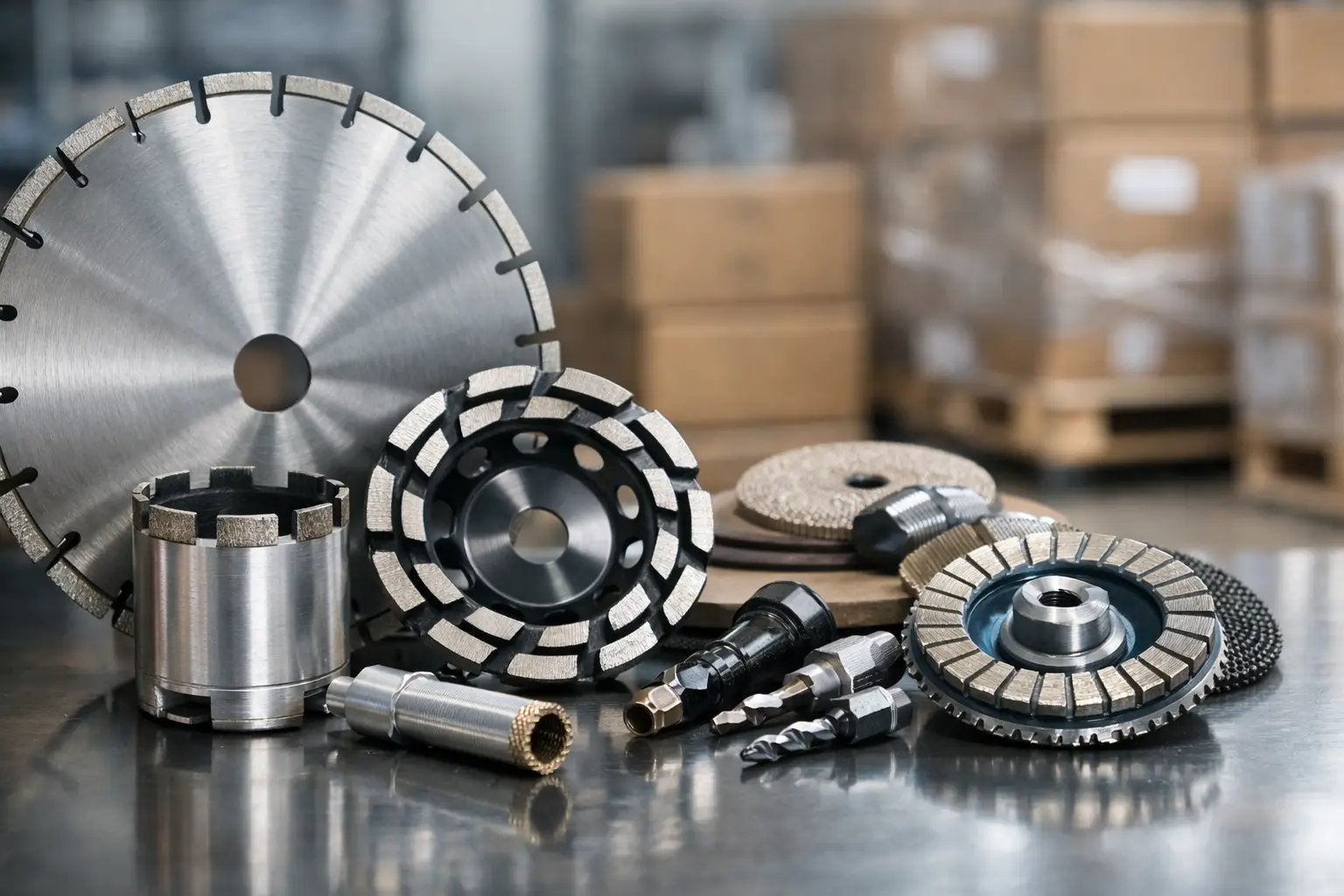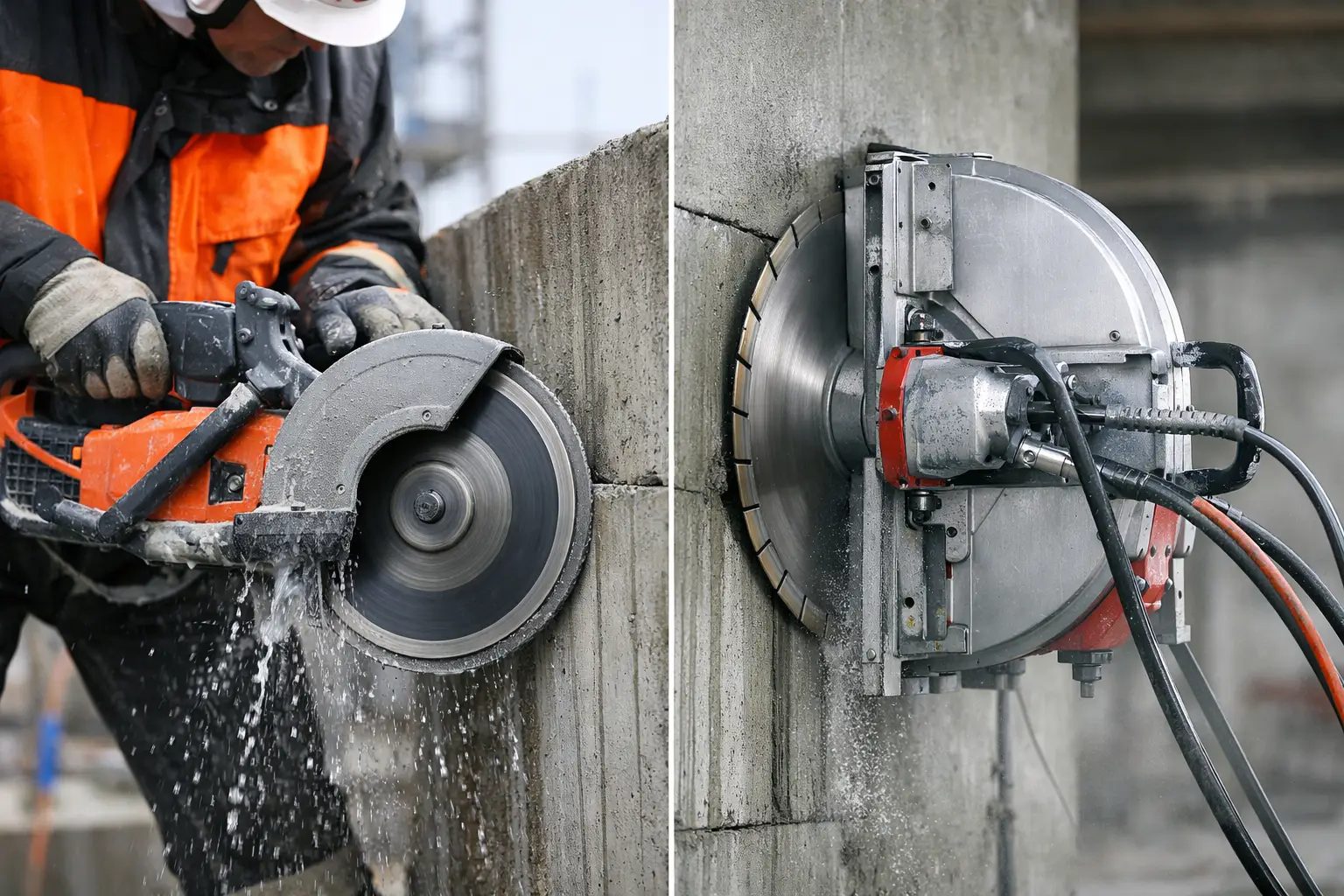
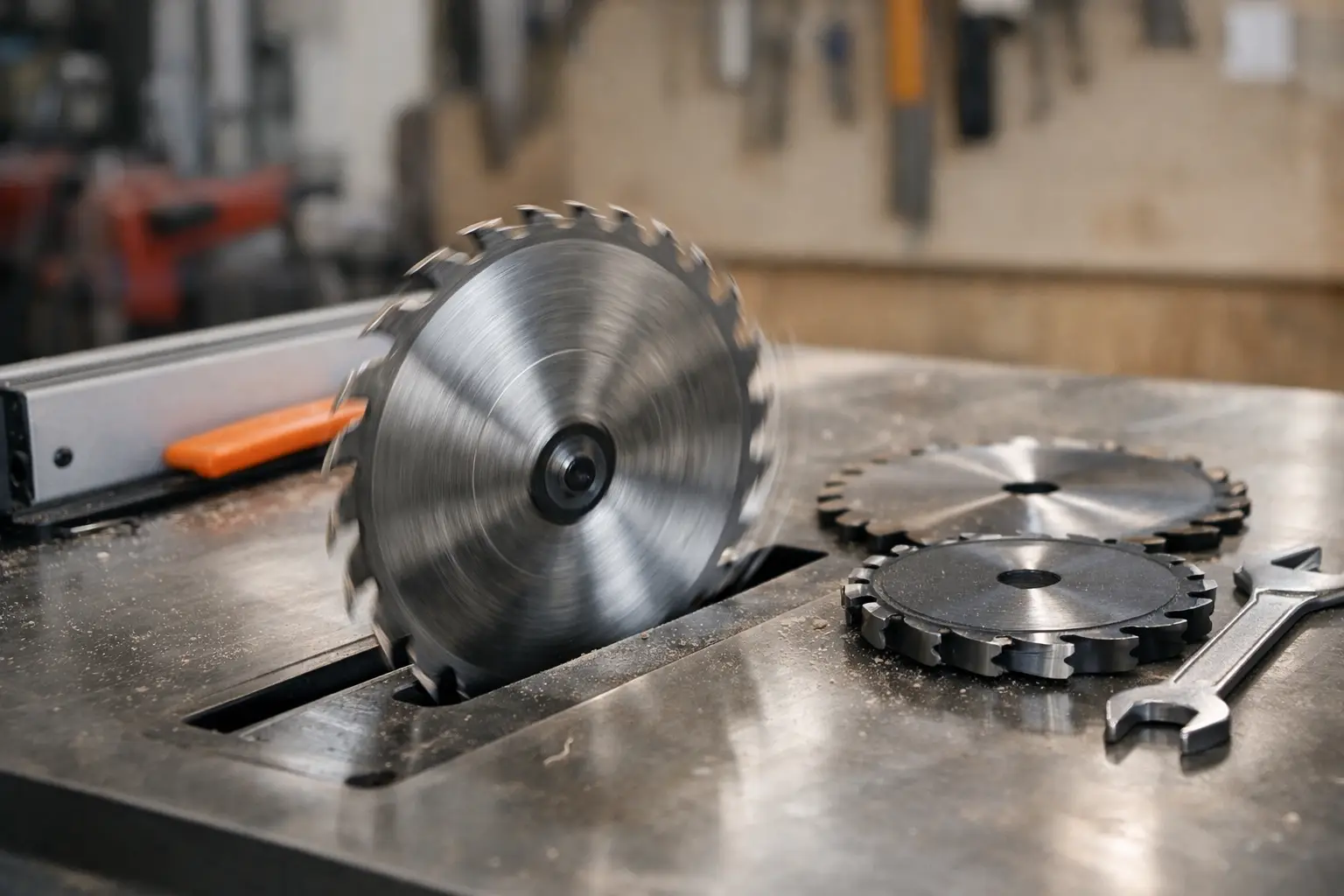
A blade that starts to wander, vibrate, or leave a wide rough kerf is not simply an operator inconvenience. For contractors and fabrication shops, it can mean damaged material, slower production, premature blade wear, and an immediate safety concern. So, why do saw blades wobble? The short answer is that the blade is no longer rotating in one stable plane. The underlying cause may be the blade itself, the mounting system, the saw spindle, or the cutting conditions.
For diamond saw blades used on concrete, stone, ceramic, asphalt, and engineered surfaces, small alignment errors can become obvious quickly. A 14-inch blade rotating at high speed amplifies even minor runout at the arbor, a damaged flange, or uneven stress in the steel core. Identifying the source before replacing components helps reduce downtime and prevents the same failure from repeating.
Why Do Saw Blades Wobble During Cutting?
Saw blade wobble is often described as side-to-side movement. Technically, it can result from lateral runout, axial runout, deflection under load, or a combination of all three. The distinction matters because a blade that visibly wobbles while spinning freely requires a different correction than a blade that runs true until it enters dense reinforced concrete.
A new blade can also appear to wobble when the actual problem is the saw. Conversely, a worn or overheated blade may be blamed on the machine. Industrial users should inspect the full cutting system: blade, arbor hole, flanges, spindle, bearings, drive system, and material support.
A bent, damaged, or tensioned blade core
The steel core must remain flat and correctly tensioned to support the diamond rim. If the core is bent, warped, or distorted, the rim cannot stay in a consistent cutting path. This is common after a blade is dropped, pinched in a cut, forced through material, or run with excessive side pressure.
Heat is another frequent cause. Dry cutting too aggressively, using inadequate water flow on a wet saw, or cutting a material outside the blade specification can overheat the core. Repeated overheating may reduce tension in the blade or create localized distortion. The blade may then run acceptably at low speed but wobble under cutting load.
On diamond blades, inspect the core for discoloration, blue heat marks, cracks around the gullets, damaged segments, and visible flatness issues. Do not attempt to straighten a cracked or severely warped blade for production use. Replacement is the responsible choice.
Worn, dirty, or mismatched flanges
Flanges hold the blade flat against the arbor. When they are worn, cupped, undersized, dirty, or installed incorrectly, they cannot provide even clamping pressure. The result is side runout that may be mistaken for a defective blade.
Concrete slurry, stone dust, rust, and adhesive residue can build up between the flange and blade core. Even a small particle can prevent the blade from seating flat. Clean both flange faces and the blade mounting surfaces before installation. Check that the flanges are the correct diameter for the saw and blade size. Small or damaged flanges provide less support and make blade deflection more likely, particularly on large-diameter blades.
Do not over-tighten the arbor nut. Excessive force can distort the blade core near the arbor hole, especially if the flanges are uneven. Tighten according to the machine manufacturer’s procedure and confirm that the blade rotates freely before starting work.
Arbor hole clearance or incorrect adapters
A blade must fit the arbor correctly. An oversized bore, missing bushing, poorly fitted reducer ring, or worn arbor can allow the blade to shift off center. That movement may appear as wobble at the outer rim, even when the blade core is otherwise sound.
Use only properly sized, secure adapters designed for the blade and saw. Makeshift shims, damaged reducer rings, or stacked washers are not reliable solutions. For distributors and procurement teams, bore size and adapter requirements should be confirmed at the time of blade specification, especially when sourcing blades for mixed fleets of walk-behind saws, handheld cutters, tile saws, and bridge saws.
Spindle, bearing, or drive-system runout
If several blades wobble on the same saw, the machine should be inspected before another blade is installed. A bent spindle, worn bearings, damaged arbor threads, loose pulley, or belt issue can create runout at the mounting point. This type of fault usually becomes more pronounced at operating speed.
With the saw powered off and isolated, check for looseness at the spindle and inspect the arbor flange seating area. A dial indicator is the most reliable way to measure spindle and flange runout. Visual checks can identify obvious damage, but they are not sufficient for a machine used in commercial production.
Replacing blades without correcting spindle or bearing problems wastes tooling and can create an unsafe operating condition. Machine maintenance and blade performance are directly connected.
Cutting Conditions That Make a Blade Deflect
Not all wobble is visible during a no-load spin test. Some blades run straight in the air and drift only after entering the material. This usually points to cutting resistance, incorrect blade selection, or operator technique.
A blade can deflect when it is pushed too quickly through hard concrete, granite, reinforced material, or thick porcelain. The diamond rim is designed to cut through controlled abrasion, not to be forced sideways. Excessive feed pressure bends the blade within the kerf, producing a curved cut and uneven segment wear.
Material movement also matters. Pavers, slabs, pipe, and tile must be supported so they cannot settle or close on the blade. When the kerf closes behind the cut, the material pinches the blade core. Pinching causes vibration, overheating, loss of tension, and in severe cases, core cracking or segment damage.
For wet cutting, insufficient coolant creates additional friction and heat. For dry cutting, continuous long cuts may exceed the blade’s cooling capacity. Follow the blade’s intended wet or dry application and allow intermittent dry-cutting blades time to cool when required. More water is not always the answer, but reliable water delivery is essential for wet-cutting systems.
Blade Selection Has a Direct Effect on Stability
A blade should match the machine power, operating speed, material hardness, aggregate type, and cutting method. Using a general-purpose blade in demanding reinforced concrete or hard natural stone can create slow cutting and excessive side load. The operator may compensate by pushing harder, increasing the chance of deflection.
The opposite problem also occurs. A very soft-bond blade used on abrasive materials can wear rapidly and lose rim stability. A blade with an excessively hard bond for the material may glaze, cut slowly, and overheat. Stable cutting depends on the balance between diamond exposure, bond wear, core design, and application conditions.
For high-production work, blade specifications should include diameter, bore size, segment configuration, core thickness, kerf width, wet or dry use, machine RPM, and material application. Laser-welded diamond blades are commonly selected for demanding concrete and asphalt work because the segment-to-core joint is engineered for high heat and load resistance. However, even a quality laser-welded blade will not correct an unstable spindle or improper mounting.
A Practical Inspection Sequence Before Replacing the Blade
When a blade wobbles, avoid guessing. Start by removing power and inspecting the blade for cracks, missing segments, heat damage, and visible warping. Clean the arbor hole, flanges, and mounting faces. Then reinstall the blade with the correct rotation direction and secure it using the correct flange arrangement.
Run the saw without load and observe the blade from a safe position. If it still shows side movement, test another known-good blade. If both blades show the same issue, inspect the saw spindle, bearings, and flanges. If only one blade wobbles, the blade is likely damaged or out of tension.
If the blade runs true without load but wanders in the cut, review feed rate, material support, cooling, and blade suitability. Check whether the workpiece is pinching the blade or whether the operator is twisting the saw. This approach separates equipment faults from cutting-process faults and reduces unnecessary tool replacement.
Preventing Wobble in Commercial Cutting Operations
Prevention starts with consistent installation and machine maintenance. Keep flange faces clean, replace worn bearings before they damage tooling, store blades vertically or on proper racks, and protect cores from impact during transport. Avoid dropping blades or placing heavy materials on top of them.
For procurement programs, consistency matters as much as initial price. A blade with controlled core flatness, reliable segment welding, correct tensioning, and application-matched bond design will deliver more predictable cutting behavior across multiple job sites. OEM specifications can also help distributors standardize bore options, segment patterns, labeling, and packaging for their end users.
When a saw blade begins to wobble, treat it as an operating signal rather than a minor defect. A careful inspection of the blade, mounting components, saw condition, and cutting method will usually reveal the cause before poor cut quality becomes damaged equipment or a stopped project.