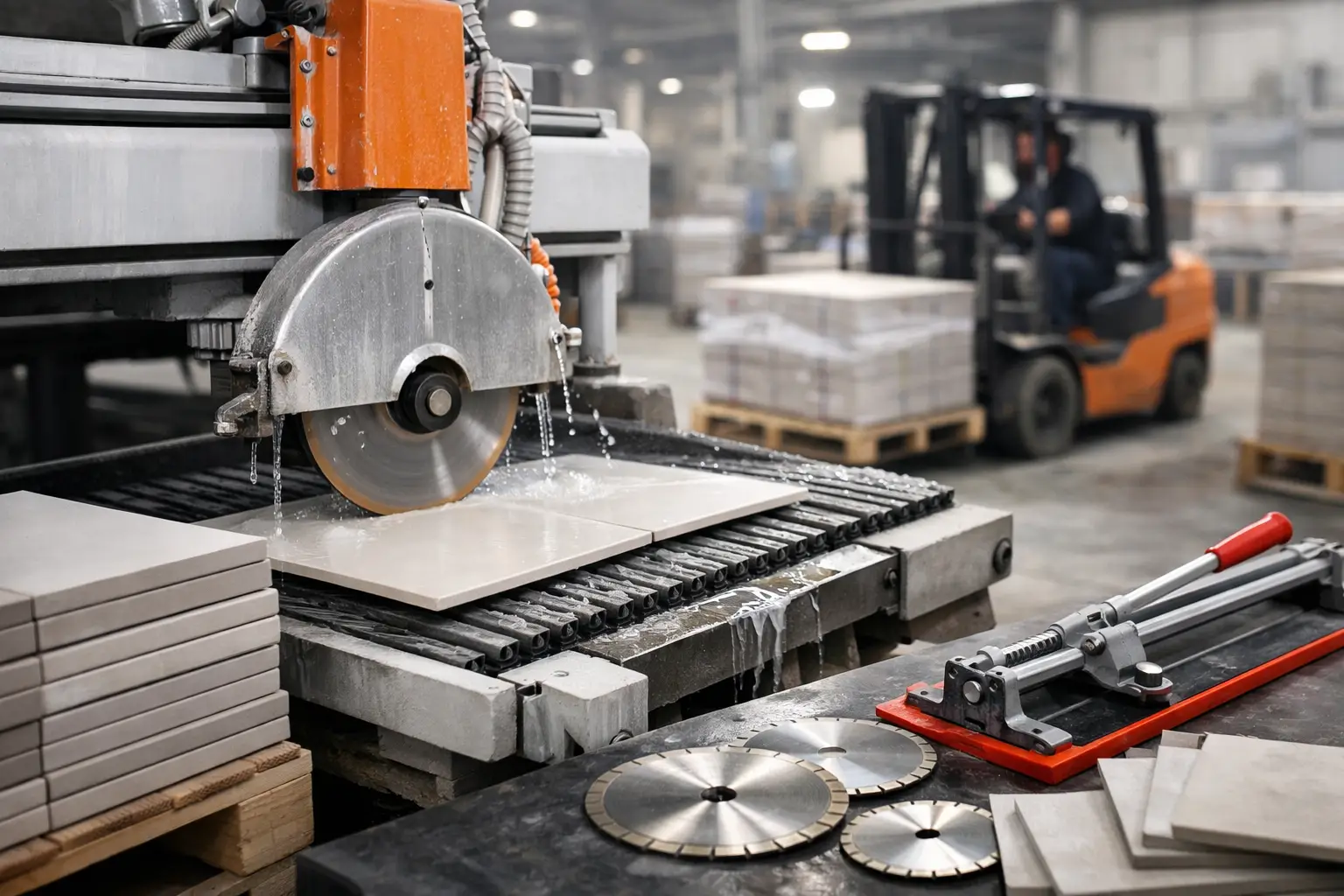
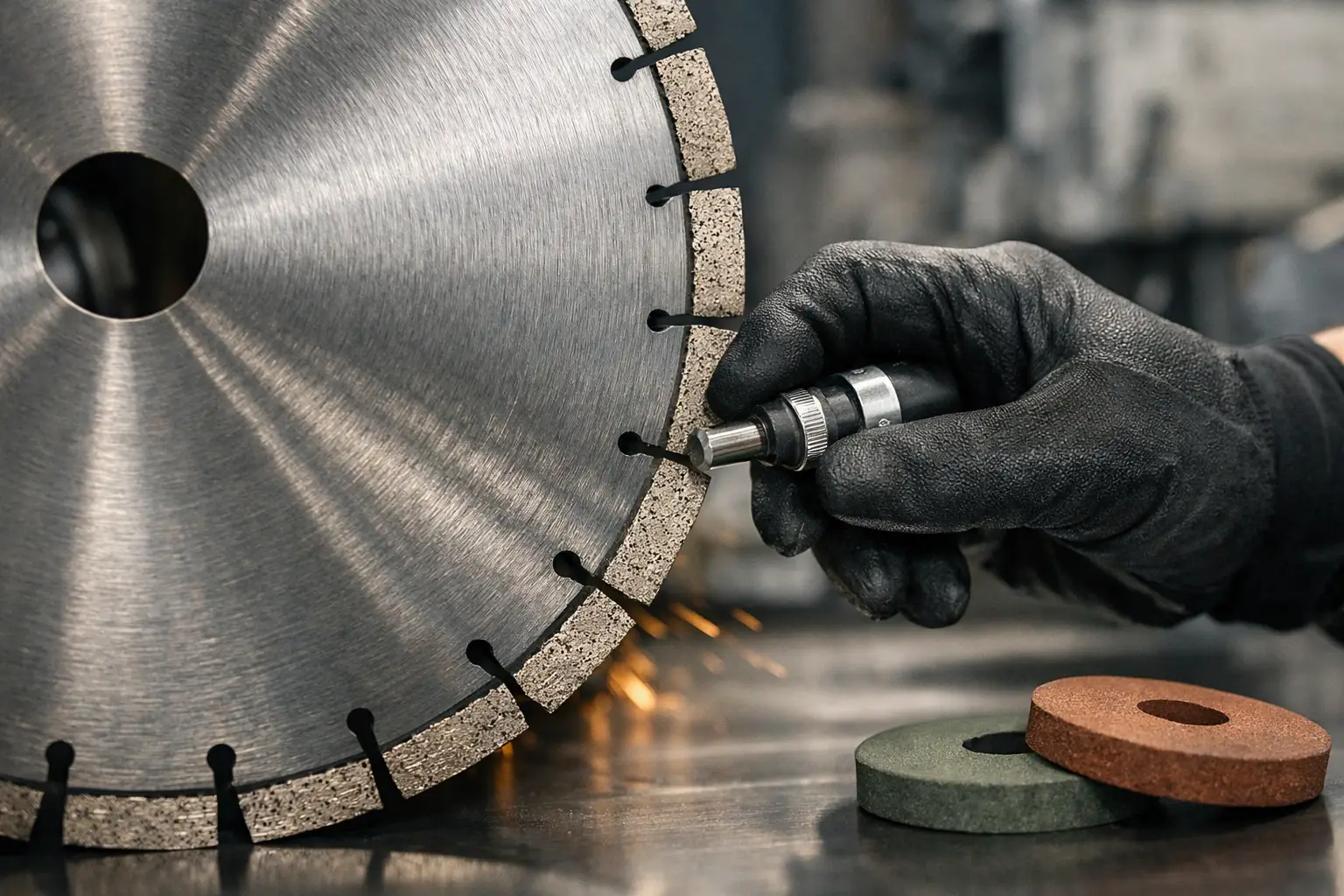
A diamond blade can look correct on paper and still fail quickly in the field. If the rim glazes, the blade stops cutting, or segments disappear before the job is complete, the issue is often the metal bond rather than the diamond grade alone. Knowing how to evaluate blade bond hardness helps buyers select blades that cut consistently, protect equipment, and deliver predictable cost per foot.
For distributors and contractors, the practical question is not whether a bond is simply hard or soft. The question is whether it wears at the right rate for the material, machine, and cutting method. A properly matched bond continuously exposes fresh diamond particles while retaining them long enough to perform useful work.
What blade bond hardness actually means
In a sintered diamond blade segment, the bond is the metal matrix that holds the diamond grit. Its composition may include combinations of iron, cobalt, bronze, nickel, tungsten, and other metal powders. During cutting, this matrix gradually wears away, exposing new diamonds at the segment surface.
Bond hardness describes the matrix's resistance to wear. A hard bond holds diamond particles longer. A soft bond wears more quickly and releases worn diamonds sooner. Neither is universally better. The correct choice depends on how abrasive the workpiece is and how readily it wears the segment.
This creates the basic selection rule: hard bonds are generally used for softer, more abrasive materials, while softer bonds are generally used for harder, less abrasive materials. Soft abrasive concrete, green concrete, asphalt, and some sandstone can wear a segment aggressively, so the blade needs a harder bond to avoid excessive segment loss. Dense cured concrete, hard granite, porcelain tile, and other hard, low-abrasion materials often need a softer bond that exposes new diamond before the cutting edge becomes smooth.
Bond hardness should not be confused with diamond hardness. Diamond is the cutting element. The bond controls diamond exposure, retention, and segment wear. It is also different from the blade core or the laser-welded joint, which affect structural safety and segment attachment rather than cutting behavior at the rim.
How to evaluate blade bond hardness in real cutting conditions
A hardness number alone rarely tells the full story. Manufacturers may use different metal formulations, segment densities, diamond concentrations, and testing methods. Two segments with a similar laboratory hardness can perform very differently because their diamond distribution and matrix structure are not the same.
The most reliable evaluation combines supplier specifications with controlled field testing. Use the same machine type, operator method, cooling condition, and representative material whenever possible. A blade should be assessed by its cutting behavior over a meaningful number of cuts, not by the first few minutes of operation.
Start with the material, not the blade label
Material hardness and abrasiveness are related but not identical. A material can be hard yet abrasive, or comparatively soft but highly abrasive. Aggregate type, reinforcement, moisture, curing time, and the presence of silica can all change blade behavior.
For example, one concrete slab may contain abrasive river sand and soft aggregate, while another uses hard granite aggregate and heavy reinforcement. Both may be described as concrete, but they can require different segment bonds. The same applies to natural stone. Granite varies significantly by quarry, and engineered materials may combine hard mineral content with resins that create heat and loading issues.
Before approving a blade, document the material grade, aggregate, thickness, reinforcement level, wet or dry operation, and expected production volume. This gives the supplier enough information to recommend a bond specification rather than providing a generic blade category.
Watch the cutting edge during a trial
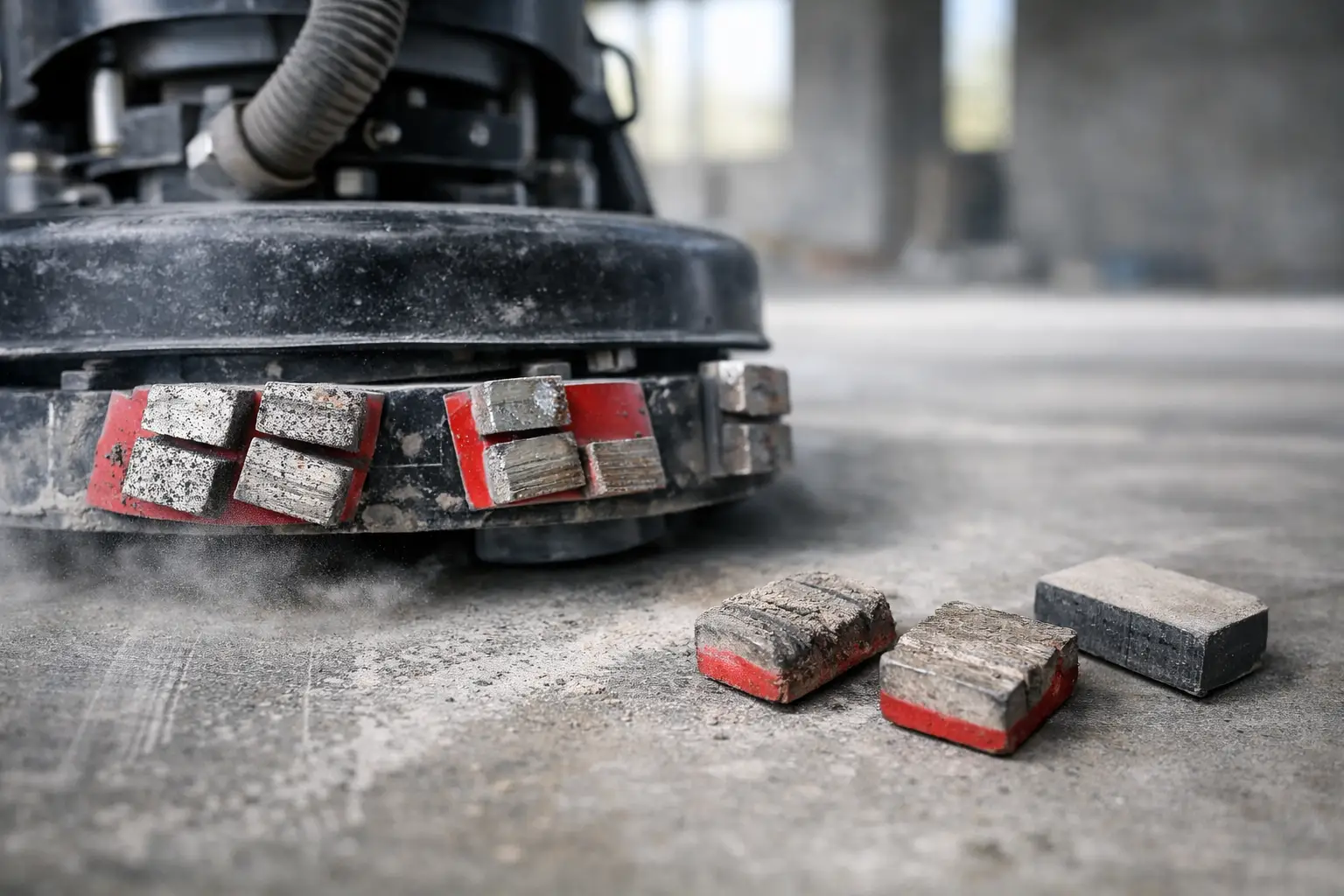
The exposed segment surface provides direct evidence of whether the bond is matched correctly. A hard bond used on hard, nonabrasive material may become glazed. The diamonds polish flat or break down, but the metal matrix does not wear enough to uncover fresh cutting points. The operator will notice slower cutting, increased pressure, heat, and sometimes a bright, smooth segment surface.
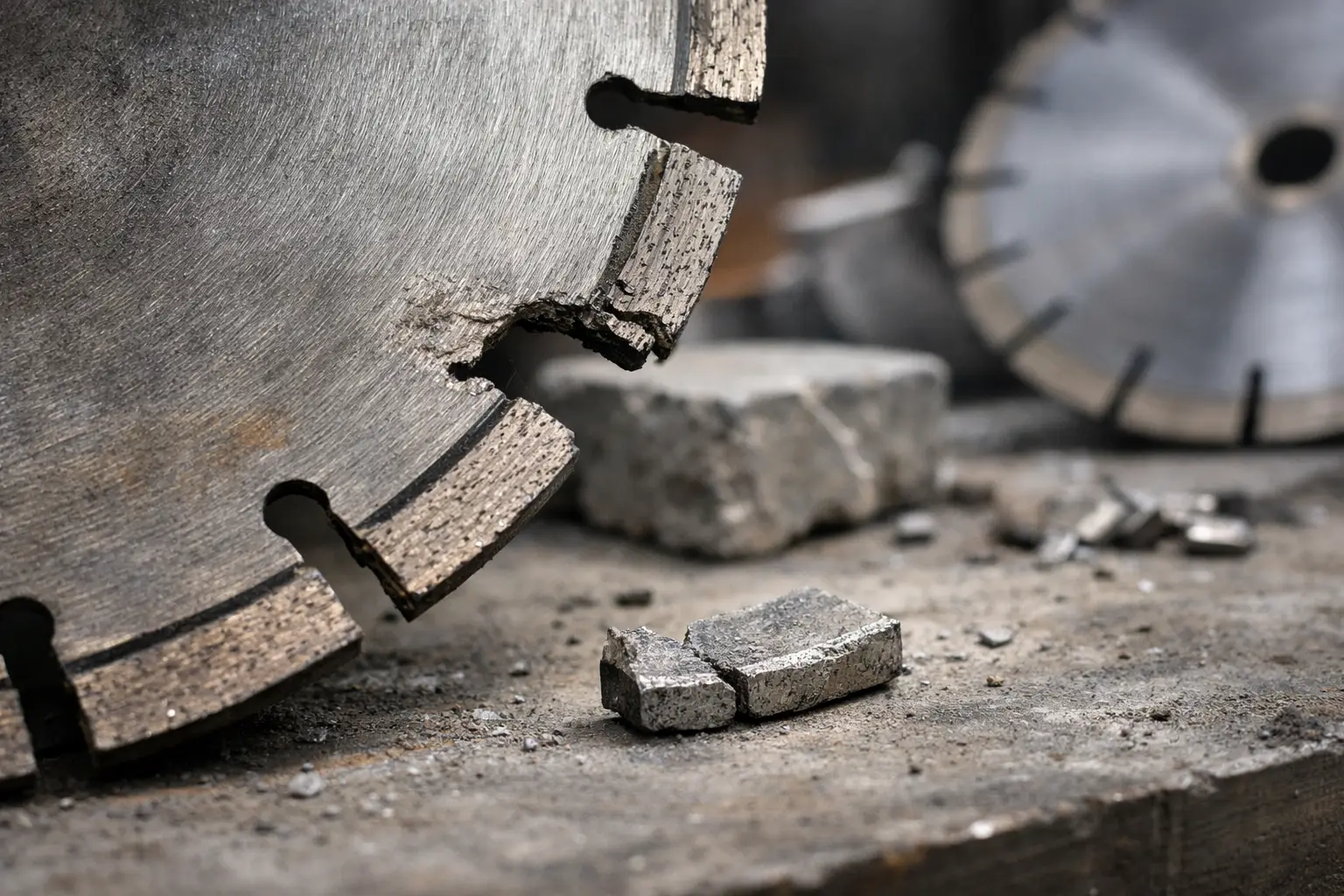
A soft bond used on abrasive material produces the opposite result. The segment wears quickly, often with a rough and open appearance. Cutting may initially feel aggressive, but blade life will be poor because the matrix releases diamonds before their usable cutting life is complete.
A suitable bond keeps the rim active. The segment should show controlled wear, consistent exposure of diamond particles, and a stable cutting rate. Some variation is normal, especially in mixed materials, but the blade should not require repeated dressing or abnormal operator pressure to stay productive.
Measure speed and segment wear together
Cutting speed alone can be misleading. A very soft bond may cut fast at the beginning of a test but lose segment height too quickly. A very hard bond may retain segment height but cut too slowly, increasing labor time, machine load, and fuel or power consumption.
Track both production and wear. Measure total linear feet cut, cutting time, remaining segment height, power draw where available, and any evidence of glazing, chipping, cracking, or segment loss. From this information, compare the blade's cost per foot or cost per cut instead of comparing purchase price only.
For a fair comparison, test blades of similar diameter, segment height, diamond concentration, and application category. Comparing a premium 15 mm segment blade against a standard 10 mm blade does not isolate bond performance.
Check machine and operating variables before changing the bond
Many apparent bond problems are actually operating problems. An incorrect machine setup can make a well-designed blade perform poorly. Excessive feed pressure may overheat and glaze a blade. Insufficient water can cause heat damage and accelerate wear. A worn spindle, poor belt tension, or unstable saw can produce uneven segment wear and misleading test results.
Blade speed is particularly important. If rim speed is too low, the blade may cut slowly and load up. If it is too high, heat generation can increase, diamond wear can accelerate, and the bond may behave differently than intended. Follow the diameter-specific RPM range and confirm that the saw is suitable for the blade's application.
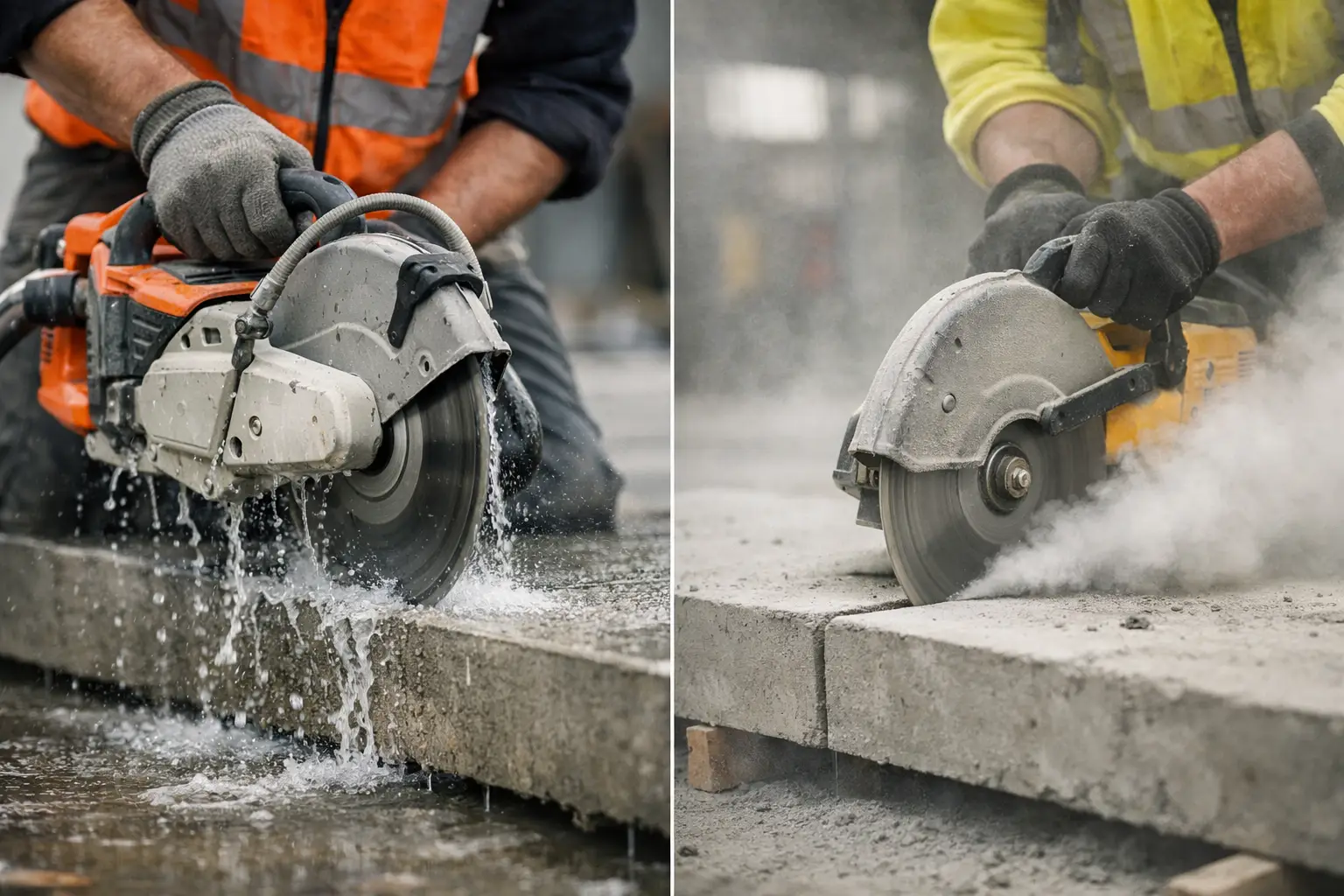
Dry cutting introduces another variable. Dry blades are designed with segment geometry and bond formulations that manage heat, but they still require intermittent cutting and adequate airflow. A wet-cut blade operated dry may show glazing, discoloration, or premature segment damage that should not be blamed on bond hardness.
Use supplier data correctly
A dependable supplier should be able to explain the intended material range, bond type, diamond concentration, segment height, welding method, and recommended operating conditions. For bulk buyers, this technical discussion is more useful than a broad claim that a blade is "premium" or "universal."
Ask whether the blade was developed for abrasive concrete, reinforced concrete, asphalt, hard stone, porcelain, or mixed construction materials. Also ask what trade-off the specification is designed to favor. Some blades are engineered for maximum cutting speed, while others prioritize long life, stable wear, or reduced chipping on finished surfaces.
When evaluating an OEM or private-label program, request samples from the proposed production specification and retain a control sample after approval. A consistent manufacturer should maintain the approved bond formulation, segment dimensions, diamond concentration, and welding process across future production batches.
Build bond hardness into your receiving inspection
Incoming inspection does not require a laboratory to catch most consistency issues. Compare every production batch against the approved sample and specification. Focus on factors that can affect cutting behavior:
- Segment height, width, and spacing should match the approved drawing.
- Segment color and surface finish should be consistent within the batch.
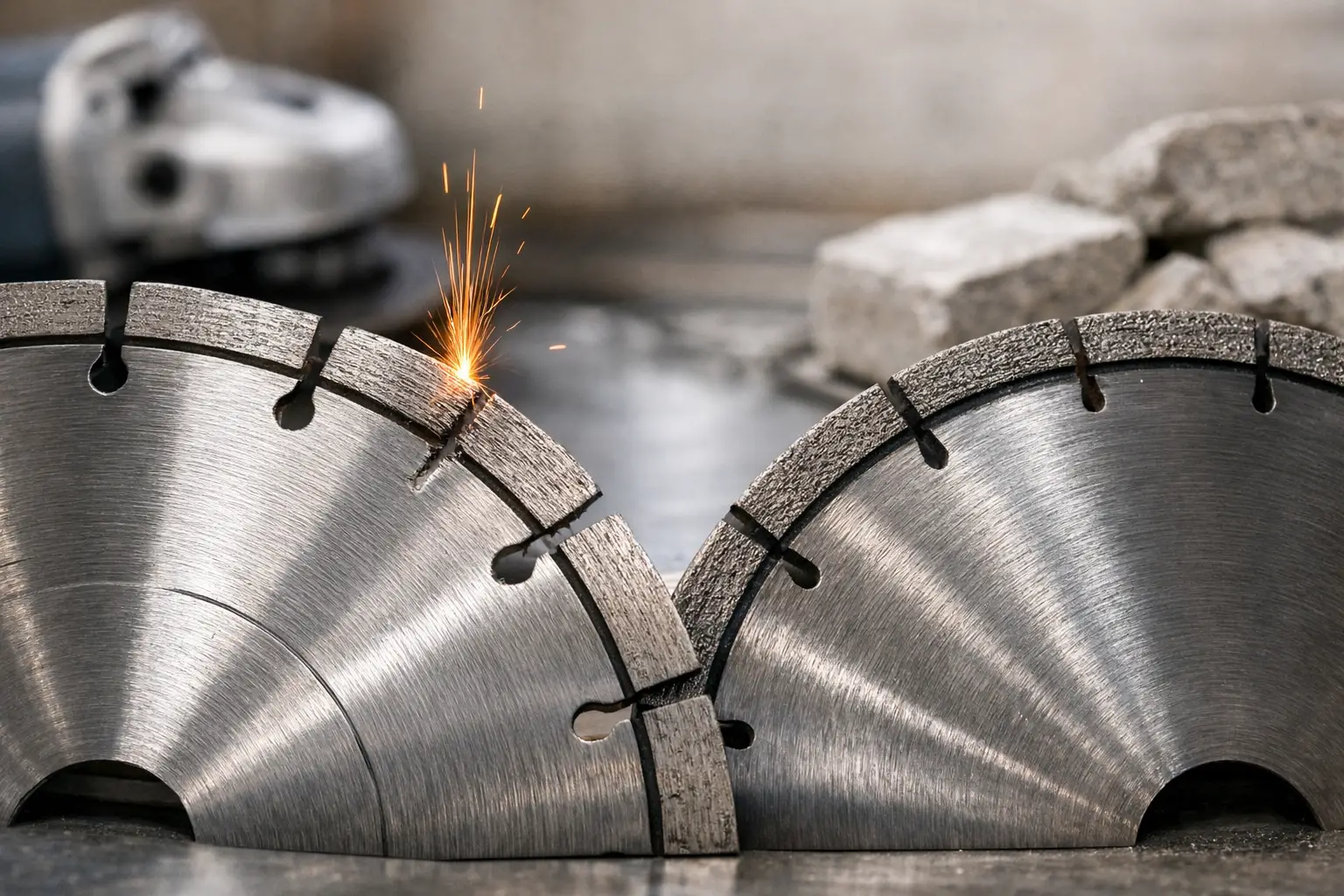
- Laser welds or other segment attachments should be clean, uniform, and free from visible defects.
- Blade core flatness, tension, bore size, and printed RPM markings should meet the agreed requirements.
These checks do not directly measure matrix hardness, but they help control the manufacturing variables that influence it. If a batch produces a noticeably different cutting rate or wear pattern under the same conditions, investigate the segment formulation and production records rather than accepting the variation as normal.
Match the specification to the commercial requirement
The best blade bond is not always the longest-lasting one. On a high-volume concrete cutting project, a slightly faster-wearing blade may be more profitable if it significantly reduces cutting time and operator fatigue. For a distributor selling to mixed users, a balanced bond may reduce complaints because it performs acceptably across a wider range of materials.
Specialized applications require tighter control. Hard granite, reinforced concrete, Dekton, ceramic tile, asphalt, and floor grinding each place different demands on diamond exposure and bond wear. A universal blade can be commercially useful, but it will not usually outperform an application-specific blade in every condition.
For buyers developing a private-label line, define the priority before requesting samples: speed, life, finish quality, low vibration, wet or dry operation, or broad material coverage. Ryhyoma can use this application information to align blade specifications with the conditions your customers actually face.
A productive blade should wear with purpose. Specify the material and operating conditions clearly, test against measurable cutting and wear targets, and treat the segment bond as a controlled performance component rather than a vague hardness claim.