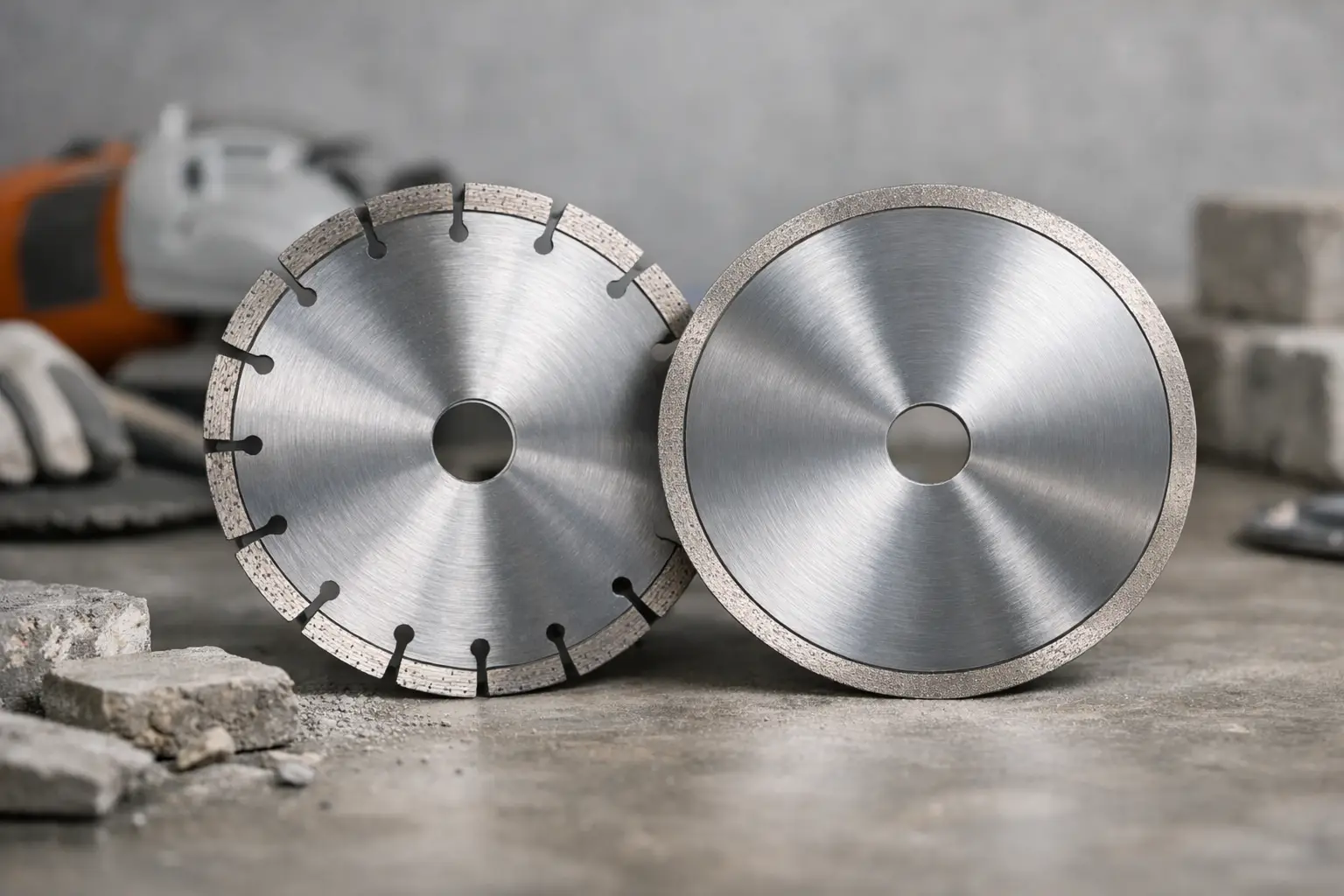

A blade that cuts well in one sample test but varies across the next container is not a sourcing success. For distributors, contractors, and procurement teams, the B2B diamond tool sourcing checklist must go beyond price and catalog appearance. It must confirm that the supplier can repeatedly produce the required tool specification, maintain quality under volume, and respond when an application changes.
Diamond tools are consumed under demanding conditions. Concrete, reinforced concrete, granite, ceramic tile, asphalt, Dekton, and floor coatings all place different loads on the bond, diamond concentration, segment design, core steel, and welding method. A reliable sourcing decision starts with the actual jobsite requirement, then works backward to the product and supplier controls needed to support it.
Start With the Material and Application
Do not source a diamond blade, core bit, grinding block, or segment based only on its general category. Ask what material will be processed, what equipment will be used, and what outcome the customer expects. A concrete saw blade used on green concrete has different requirements from one used on cured reinforced concrete. A ceramic cutting disc needs a clean edge and controlled feed performance, while an asphalt blade needs protection against undercutting and a bond designed for abrasive aggregate.
Define the operating conditions before requesting a quotation. This includes dry or wet cutting, handheld or walk-behind equipment, machine horsepower, RPM range, arbor size, cutting depth, feed pressure, and expected production volume. For floor grinding tools, identify the machine type, plate configuration, concrete hardness, coating removal requirements, and desired scratch pattern.
The same rule applies to specialty materials. Dekton, porcelain slab, and dense ceramic surfaces can chip or overheat when the rim design, diamond grit, or operating speed is wrong. Granite and engineered stone may require a different bond balance than softer natural stone. A supplier that asks these questions is more likely to recommend a usable specification instead of pushing a standard item that happens to be in stock.
B2B Diamond Tool Sourcing Checklist: Product Specification
A clear specification prevents confusion between the approved sample and the production order. Product naming alone is not enough. Terms such as “turbo blade,” “granite blade,” or “premium core bit” can cover very different constructions and performance levels.
Confirm these details in the quotation, technical drawing, sample approval record, or purchase order:
- Tool type, intended material, and operating method
- Diameter, thickness, segment height, rim width, arbor size, and usable cutting depth
- Steel core design, body thickness, cooling slots, and reinforcement features
- Segment shape, diamond grit range, concentration, bond type, and segment quantity
- Welding or bonding method, including laser-welded or vacuum-brazed construction where applicable
- Required RPM range, machine compatibility, and safety markings
- Packaging quantity, carton requirements, barcode needs, and private-label artwork
For diamond segments and abrasive blocks, specify the dimensions and mounting system precisely. A small variation in segment length, width, height, or hole spacing can cause installation problems or alter grinding behavior. For core bits, confirm the connection type, barrel length, wall thickness, segment layout, and whether the bit is intended for wet drilling, dry drilling, or both.
Performance targets should also be stated realistically. Buyers often request maximum cutting speed, maximum life, and minimum cost in one specification. In practice, these goals must be balanced. A softer bond may cut faster in hard material but wear sooner. A harder bond may extend life in abrasive material but can reduce cutting speed if it does not expose diamond properly. The correct choice depends on the end user’s labor cost, machine capacity, and material conditions.
Verify Manufacturing and Quality Control
A supplier’s brochure cannot prove process control. Ask how the tool is manufactured and where quality checks occur. Consistency depends on more than the final visual inspection. It begins with raw material selection, powder mixing, segment pressing, sintering, steel core preparation, welding, tensioning, balancing, finishing, and packaging.
For laser-welded blades, confirm that the weld strength is checked through defined testing procedures. Laser welding is widely used for demanding cutting applications because it creates a strong connection between the diamond segment and steel core. However, the result still depends on process discipline, segment quality, and correct blade design. For vacuum-brazed products, verify the diamond exposure pattern and bonding quality, particularly for applications requiring fast cutting or grinding on hard, difficult materials.
Ask for inspection standards covering dimensional tolerance, segment alignment, runout, core flatness, balance, weld integrity, appearance, and packaging. The useful question is not simply, “Do you inspect quality?” Ask what is measured, how often it is measured, and how nonconforming products are handled.
Pre-shipment inspection should be agreed upon for bulk orders. This may include random sampling by batch, carton checks, label verification, and photo or video records before loading. For high-volume programs, establish an approved reference sample and retain the specification record. This gives both parties a practical benchmark if performance questions arise later.
Test Samples Under Real Working Conditions
Samples are necessary, but sample testing should resemble the end user’s work as closely as possible. Testing one blade for a few minutes on an ideal material does not reveal how it performs during a full shift, across varying aggregate, or under normal operator behavior.
Set measurable test criteria. For cutting blades, record cutting speed, linear meters achieved, wear rate, edge quality, vibration, noise, segment loss, and operator feedback. For core bits, measure drilling speed, hole quality, segment wear, and performance through reinforcement if applicable. For grinding tools, track removal rate, tool life, glazing, scratch consistency, and the need for tool changes.
Compare tools at the same machine setting and material condition. A lower-priced blade may appear economical per unit but cost more per cut if it wears quickly or slows the crew. Conversely, an expensive specification is not automatically the best value if its added life does not improve the customer’s total operating cost.
When testing is successful, document the approved configuration. Do not assume that a later order will match unless the production specification, packaging, and quality requirements are recorded in writing.
Assess Supply Capacity and Commercial Reliability
A technically capable factory is only part of the decision. B2B buyers also need reliable lead times, stable output, export-ready packaging, and responsive order management. Ask about normal production capacity, peak-season capacity, minimum order quantities, sample lead time, bulk lead time, and the process for repeat orders.
Capacity should be evaluated by product family, not only by a broad factory claim. A supplier may have strong output for standard concrete blades but limited capacity for custom laser-welded blades, private-label packaging, or specialized floor grinding tools. If the order includes multiple categories, confirm that each line can be produced and packed within the planned shipment schedule.
For GCC and international import programs, clarify carton strength, palletization, container loading, product labeling, country-of-origin documentation, and commercial invoice requirements. Packaging is not a minor detail. Damaged cartons, mixed labels, or missing barcodes create receiving delays and distributor complaints even when the tools themselves are correct.
Price stability also matters. Raw materials, freight, and exchange conditions can affect costs, especially for diamond tools with steel and metal powder content. Request a clear quotation validity period and discuss how price adjustments will be handled for repeat container orders. The lowest initial price may carry more risk if the supplier cannot maintain the specification or commercial terms over time.
Confirm OEM and Technical Support Before Ordering
Private-label and OEM programs require more than placing a logo on a standard blade. Determine whether the supplier can support custom colors, printed cores, labels, cartons, inserts, barcode formats, and application-specific specifications. Confirm artwork approval steps and whether there are setup charges or minimum quantities for custom packaging.
Technical support should remain available after delivery. A dependable supplier can help investigate slow cutting, excessive wear, glazing, chipping, vibration, or unexpected segment loss by reviewing the material, machine, operating method, and batch information. This is especially valuable for distributors selling into varied applications where one specification may not suit every customer.
Ryhyoma approaches diamond tool supply as a manufacturing partnership: product selection, controlled production, OEM requirements, and bulk-order support should align before the order is released. That approach reduces avoidable claims and helps distributors build a more consistent product range.
Make the First Order a Controlled Trial
The first commercial order should be large enough to test real supply performance but controlled enough to limit exposure. Start with the highest-demand sizes and applications, then review sales feedback, return rates, cutting performance, packaging condition, and delivery accuracy before expanding the range.
Keep batch details and customer feedback organized. A sourcing program becomes stronger when procurement, sales, and technical teams can identify which specifications perform best for specific materials and equipment. The result is not just a better purchase order. It is a repeatable tool program that gives your customers predictable performance when the job cannot wait.