A ring saw can reach places that a larger track-mounted machine cannot, but that does not make it a substitute for a wall saw. In the ring saw vs wall saw decision, the correct choice comes down to cut geometry, required depth, site access, production volume, and the finish expected by the client. For contractors and equipment distributors, confusing the two can lead to slow production, excess blade wear, or a machine that simply cannot complete the cut.
Both machines are used in concrete cutting, remodeling, demolition, and structural opening work. Both depend on a matched diamond blade and controlled water supply for efficient cutting. Their operating principles, however, are different enough that they should be specified as separate solutions rather than interchangeable equipment.
Ring Saw vs Wall Saw: The Main Difference
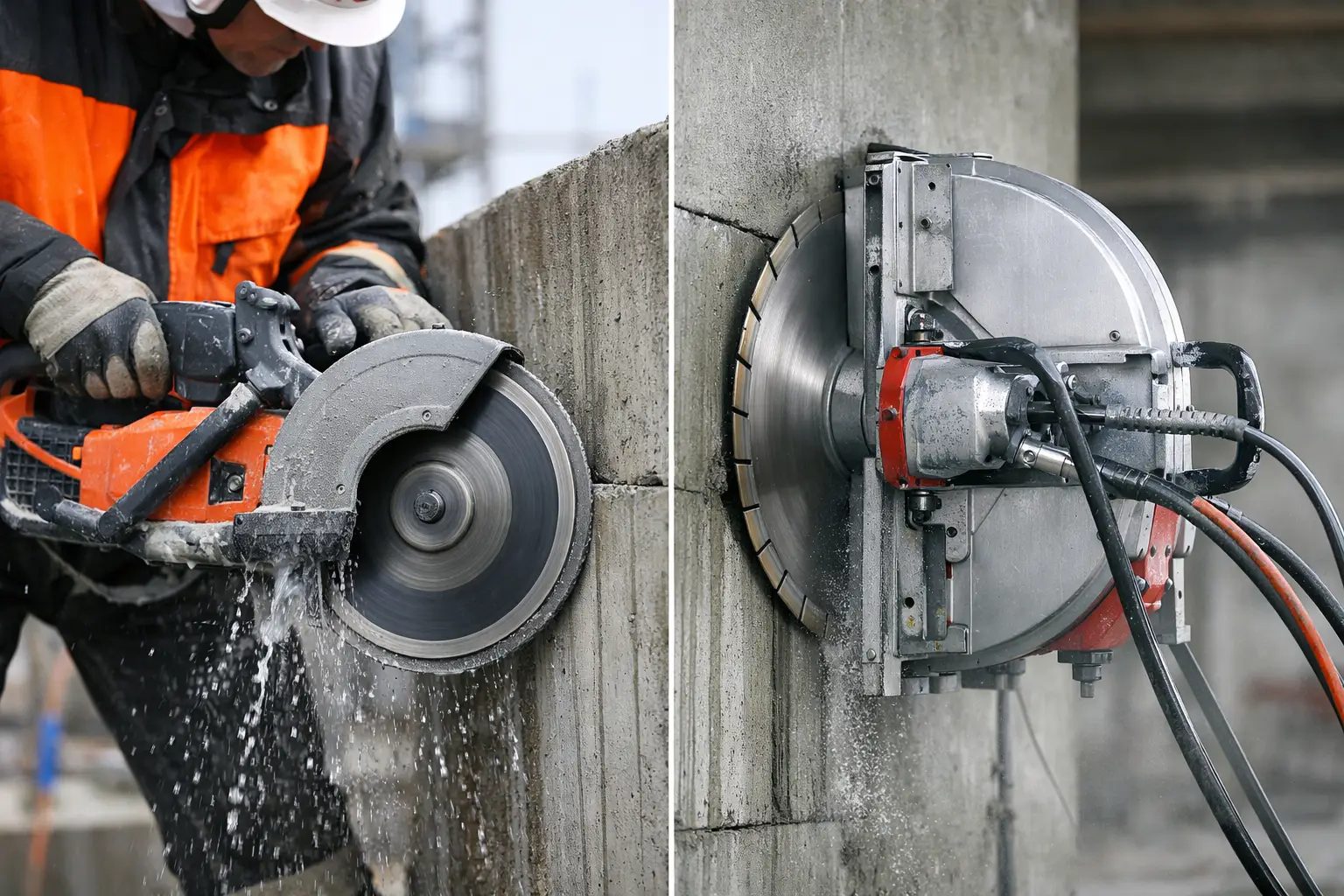
A ring saw is a handheld cutting machine with a drive wheel that engages the inner edge of a ring-shaped diamond blade. Because the blade does not have a central arbor hole, the saw can make a deeper cut than a conventional handheld cutoff saw using a blade of similar outside diameter. This makes it useful where access is limited and a deep, straight cut is needed from one side.
A wall saw is a guided system mounted on a rail or track fixed to a wall, floor, or other structure. The saw head travels along the track while a large diamond blade cuts at a controlled depth and feed rate. Depending on the system, wall saws are powered electrically, hydraulically, or by high-frequency motors. They are designed for planned openings and high-accuracy structural cutting.
The practical difference is simple. A ring saw offers mobility and access. A wall saw offers control, depth capacity, repeatability, and production efficiency on major cuts.
Where a Ring Saw Performs Best
Ring saws are frequently selected for confined areas where bringing in tracks, a power pack, or larger equipment would be difficult. Typical work includes cutting door openings in block or concrete walls, making corrections around existing structures, cutting pipe penetrations, and finishing corners that larger saws cannot reach.
Its key advantage is depth relative to its compact size. A quality ring saw can cut much deeper than a standard handheld saw without requiring the operator to cut from both sides of the wall. This can reduce alignment problems on thick concrete and save time where rear-side access is restricted.
A ring saw is also useful as a support machine on larger projects. For example, a wall saw may complete long, straight sections of an opening, while the ring saw handles localized deep cuts, tight approaches, or sections near obstructions. This combination is common when site conditions change after work has started.
There are limits. A ring saw is manually operated, so cut consistency depends heavily on operator control. Long cuts can be physically demanding, and pushing the machine too hard can cause blade glazing, uneven wear, vibration, or reduced cutting speed. It is not the preferred tool for repeated, large-format openings where precision and output must remain consistent across many jobs.
Blade selection for ring saws
Ring saw blades must match the machine's drive system and blade dimensions exactly. The blade must also be specified for the material. Reinforced concrete requires a segment bond and diamond concentration that can handle both abrasive concrete and steel reinforcement. Hard, dense concrete may need a more open cutting action, while abrasive block or masonry may require a different bond to avoid premature segment loss.
Water flow is equally important. Wet cutting controls dust, cools the blade, clears slurry from the kerf, and helps protect the blade body. A blade that is technically correct for the material can still fail early if water delivery is inadequate or inconsistent.
Where a Wall Saw Is the Better Investment
Wall saws are built for jobs where the opening must be accurately located, square, and repeatable. They are widely used for doors, windows, elevator openings, ventilation openings, floor cuts, bridge work, and removal of reinforced concrete sections. Once the rail is installed and aligned, the saw can make controlled horizontal, vertical, and angled cuts with much less dependence on manual handling.
For deep reinforced-concrete cuts, wall saws generally provide greater capacity than portable ring saws. They also maintain a more stable cutting path over long distances. This matters when cutting thick structural walls, heavily reinforced slabs, or large openings where a deviation of even a small amount can create rework and delay installation of frames, steel, or mechanical systems.
A wall saw can improve jobsite safety when used correctly because the operator controls the machine from a position away from the blade. It also supports staged cutting. The operator can set feed pressure and depth progressively rather than forcing a handheld machine through the full section at once.
The trade-off is setup. A wall saw requires proper anchoring, rail alignment, sufficient clearance, reliable power or hydraulic supply, water management, and a plan for supporting the concrete section before the final cut. On a small repair job, this preparation may take longer than the cut itself. That is why a wall saw is not automatically the economical choice for every opening.
Blade selection for wall saws
Wall saw blades are larger and must be selected for the saw's power range, flange configuration, speed, and target material. Blade diameter alone is not a complete specification. A blade that is too hard for an abrasive material may polish and slow down. A blade that is too soft for very hard aggregate can wear rapidly and increase cost per linear foot.
For reinforced concrete, segment design must provide stable cutting through alternating concrete and steel. Laser-welded segments are commonly preferred for demanding construction applications because the segment-to-core connection must withstand heat, load, and continuous wet cutting. Buyers should also verify blade core thickness, segment height, working diameter, and recommended operating parameters before placing a bulk order.
Compare Setup, Accuracy, and Production
A ring saw reaches operating readiness quickly. The contractor needs a suitable power source, water supply, blade inspection, and a safe working position. This speed makes it valuable for short cuts, repair work, and locations with restricted access.
A wall saw requires more preparation, but the setup delivers measurable benefits on larger work. Accurate rail installation establishes the cut line before cutting begins. This reduces the risk of wandering cuts and supports consistent dimensions across repeated openings. For contractors pricing commercial work, that predictability can be more valuable than the initial setup time.
Production volume is the dividing line. If the work involves occasional deep cuts in difficult locations, a ring saw is often the more practical machine. If the job involves long runs, thick reinforced concrete, strict tolerances, or multiple openings, the wall saw is normally the more efficient system.
Cost Should Be Measured Per Completed Cut
Purchase price is only one part of the equipment decision. Ring saws generally have lower machine and mobilization costs, but labor demand can be higher on long or repetitive cuts. Wall saw systems require a greater investment in equipment, trained operators, mounting hardware, and logistics. Yet their controlled feed and larger blade capacity can reduce labor time and improve finished-cut quality on major projects.
Blade cost should be evaluated the same way. The lowest-priced blade may create a higher total cost if it cuts slowly, wears unevenly, or requires frequent replacement. For distributors and procurement teams, consistent blade performance matters because contractors depend on predictable cutting speed and service life when quoting work.
A dependable diamond tool supplier should be able to discuss the application rather than only provide a diameter and price. Useful information includes the base material, aggregate hardness, reinforcement level, cut depth, machine power, operating speed, water availability, and expected monthly consumption. These details allow the blade specification to match the real job conditions.
Selecting the Right System for Your Market
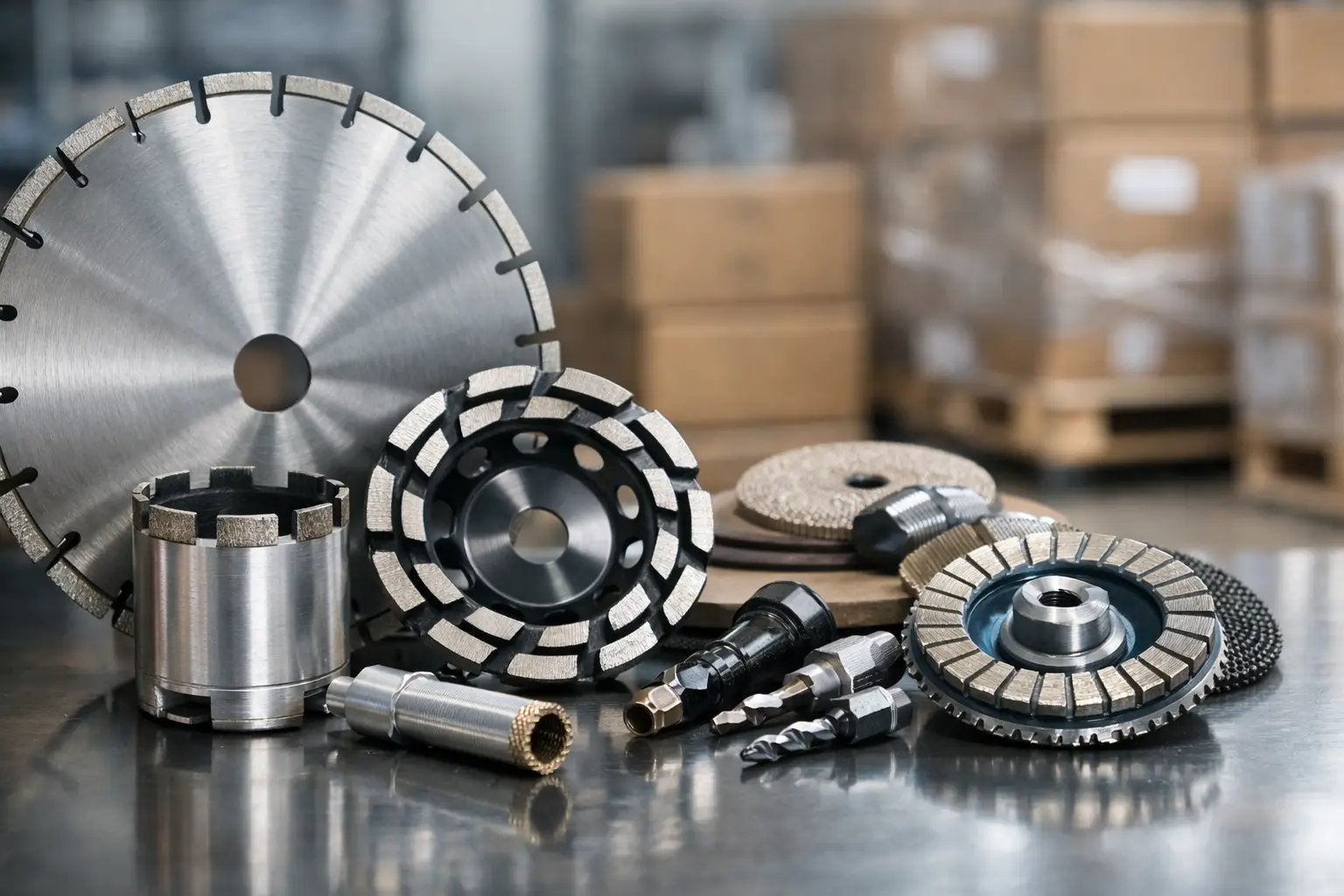
For a distributor building a concrete-cutting range, ring saws and wall saw blades serve different customer groups. Portable ring saw products suit rescue work, renovation contractors, utility crews, and smaller concrete-cutting teams that need depth and mobility. Wall saw equipment and large-diameter blades suit specialized cutting contractors, infrastructure firms, and projects with structural openings or high production requirements.
Stocking both categories can be commercially sensible, but quality control must remain consistent. Blade balance, segment attachment, core flatness, diamond concentration, and application-specific bond design all affect field performance. Ryhyoma supports industrial buyers with diamond tool specifications designed around stable cutting performance, bulk supply requirements, and OEM or private-label programs.
Before committing to a machine or blade range, test it against the materials and operating conditions your customers actually face. The right cutting solution is the one that completes the required opening accurately, safely, and at a predictable cost per job.