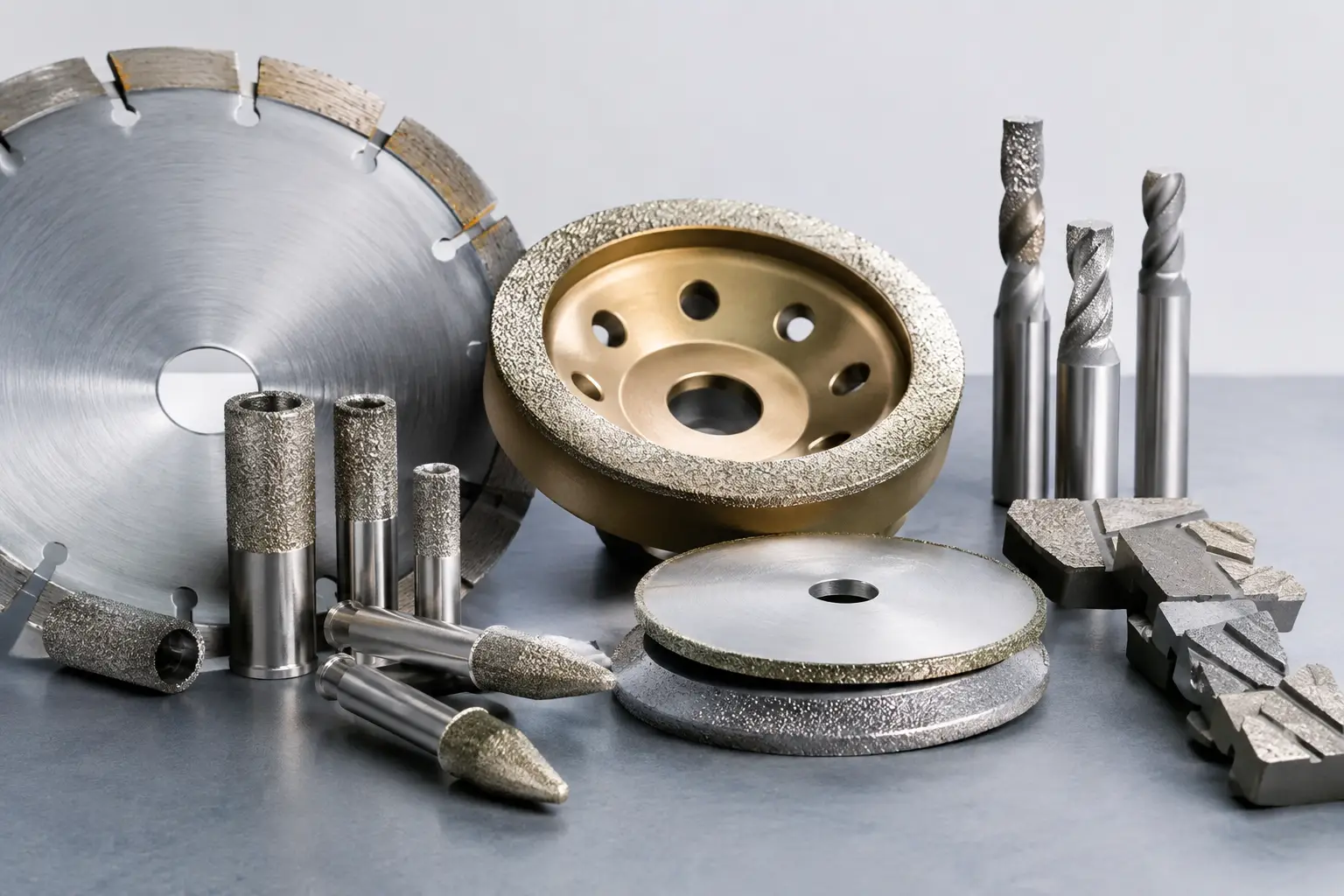
A diamond blade that performs well on cured concrete can fail prematurely on reinforced concrete. A core bit that drills quickly in soft block may glaze over in dense aggregate. For procurement teams, an industrial diamond tooling guide is not about choosing the lowest unit price. It is about specifying tools that deliver stable cutting, grinding, or drilling performance across real jobsite conditions.
For distributors, contractors, and fabrication businesses, the correct tooling decision affects labor time, equipment uptime, customer satisfaction, and warranty exposure. The right product starts with the material, but it also depends on the machine, operating method, required finish, and expected production volume.
Start With the Material, Not the Tool Category
Buyers often begin by requesting a blade diameter or a familiar product type. That is useful, but the base material should lead the specification. Concrete, asphalt, granite, ceramic tile, reinforced materials, and engineered stone all interact differently with diamond segments.
Concrete is not one material category. Green concrete is abrasive and generally needs a different bond balance than hard, fully cured concrete. Reinforced concrete introduces steel, requiring segments that can maintain cutting exposure while handling intermittent contact with rebar. Asphalt is softer but highly abrasive, so blades need segment designs and bond formulations that resist excessive wear and undercutting.
Stone and tile require equal attention. Granite is hard and dense, while ceramic and porcelain are brittle and prone to edge chipping. Dekton and other sintered surfaces place high demands on blade stability, kerf quality, and heat control. A general-purpose blade may produce an acceptable first cut, but repeated commercial use usually exposes its limits through slow cutting, inconsistent finish quality, or short service life.
A reliable supplier should ask what is being cut, how hard or abrasive it is, whether reinforcement is present, and what finish standard the operator expects. These details determine the diamond grit, bond hardness, segment shape, rim design, and welding method.
The Industrial Diamond Tooling Guide to Bond Selection
Diamond particles do the cutting, but the metal bond controls how those particles are exposed and retained. This is where many tooling problems begin.
A hard bond holds diamonds longer. It is commonly used for softer, more abrasive materials because the material itself wears the bond and reveals fresh diamond. A soft bond releases worn diamonds more quickly, exposing new cutting points for hard, dense materials such as granite or cured concrete.
The principle is straightforward: abrasive materials need a harder bond, while hard materials need a softer bond. However, actual performance depends on more than a single rule. Machine horsepower, feed pressure, wet or dry operation, and aggregate composition can change how a tool behaves. A blade specified for general concrete may perform differently between two regions because local aggregate varies in hardness and abrasiveness.
For volume purchasing, request consistent bond specifications and batch-level quality control rather than relying on product names alone. Terms such as premium, turbo, or heavy-duty do not define bond behavior. Product data, sample testing, and application feedback do.
Segment Design and Welding Method
Segment geometry affects debris removal, cooling, cutting speed, and tool stability. Segmented blades clear slurry and dust effectively in concrete and masonry applications. Turbo segments can increase cutting speed and support smoother cutting in many materials. Continuous rims are commonly selected where chip reduction is more important than aggressive cutting, particularly on ceramic, porcelain, and delicate surfaces.
The attachment method matters just as much. Laser-welded blades provide strong segment retention for demanding dry cutting conditions, including construction and roadwork applications. This reduces the risk of segment loss when blades are exposed to heat, vibration, and sustained production use. Vacuum-brazed tools are valuable for specialized grinding, shaping, and cutting applications because they can provide highly exposed diamond for aggressive material removal.
The correct choice depends on the job. High removal rate is not always the priority. On a visible porcelain installation, a cleaner edge may be more valuable than maximum speed. On a demolition or concrete-cutting project, durability and safe segment retention usually take priority.
Match the Tool to the Machine and Operating Method
A correctly specified blade can still underperform when it is installed on unsuitable equipment. Buyers should verify arbor size, maximum RPM, power rating, cooling method, and intended machine type before finalizing an order.
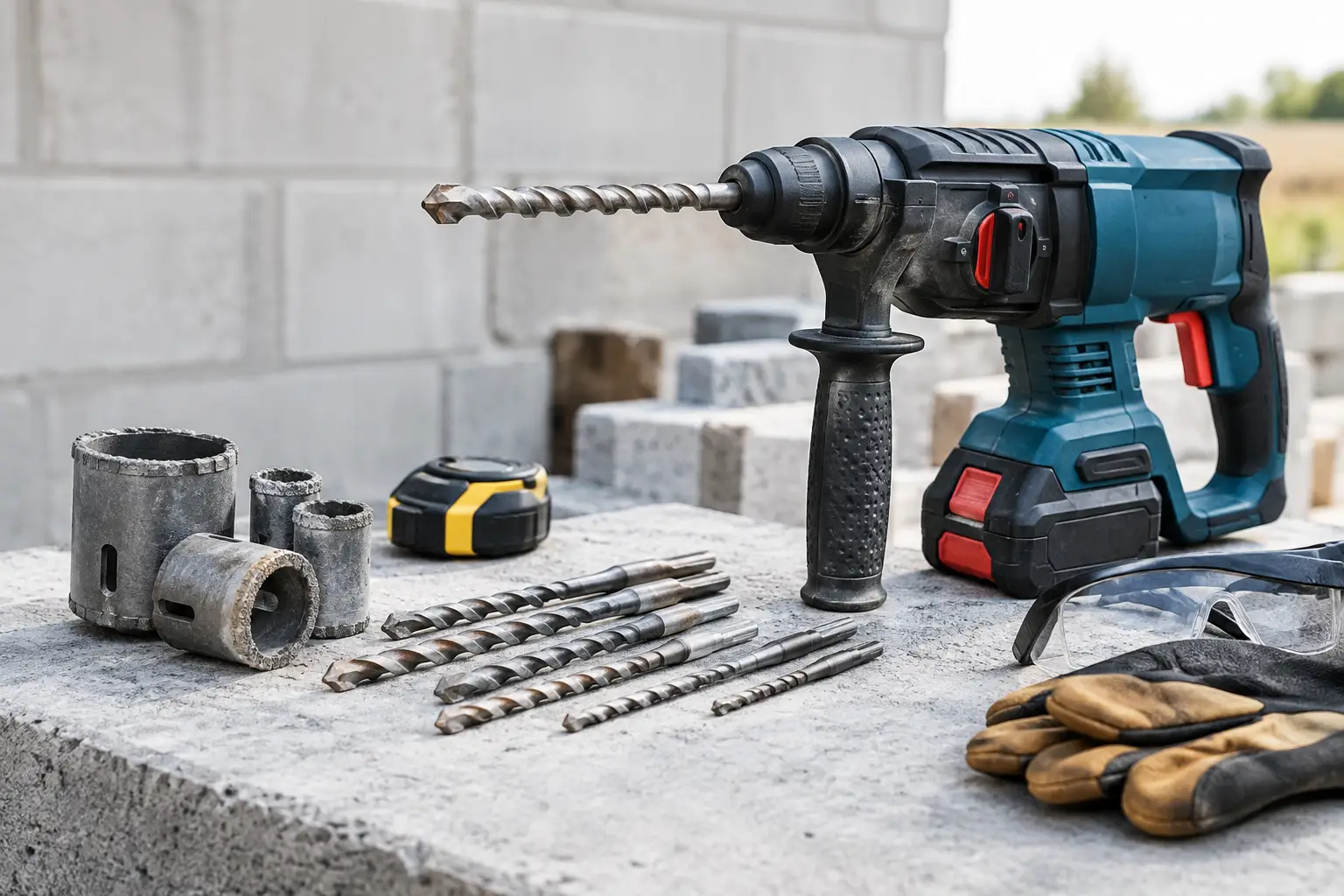
A handheld angle grinder operates differently from a walk-behind floor saw. A bridge saw used in stone fabrication has different stability, water delivery, and feed characteristics than a portable masonry saw. Core bits must also be matched to the drill motor, spindle connection, drilling depth, and whether the operation is wet or dry.
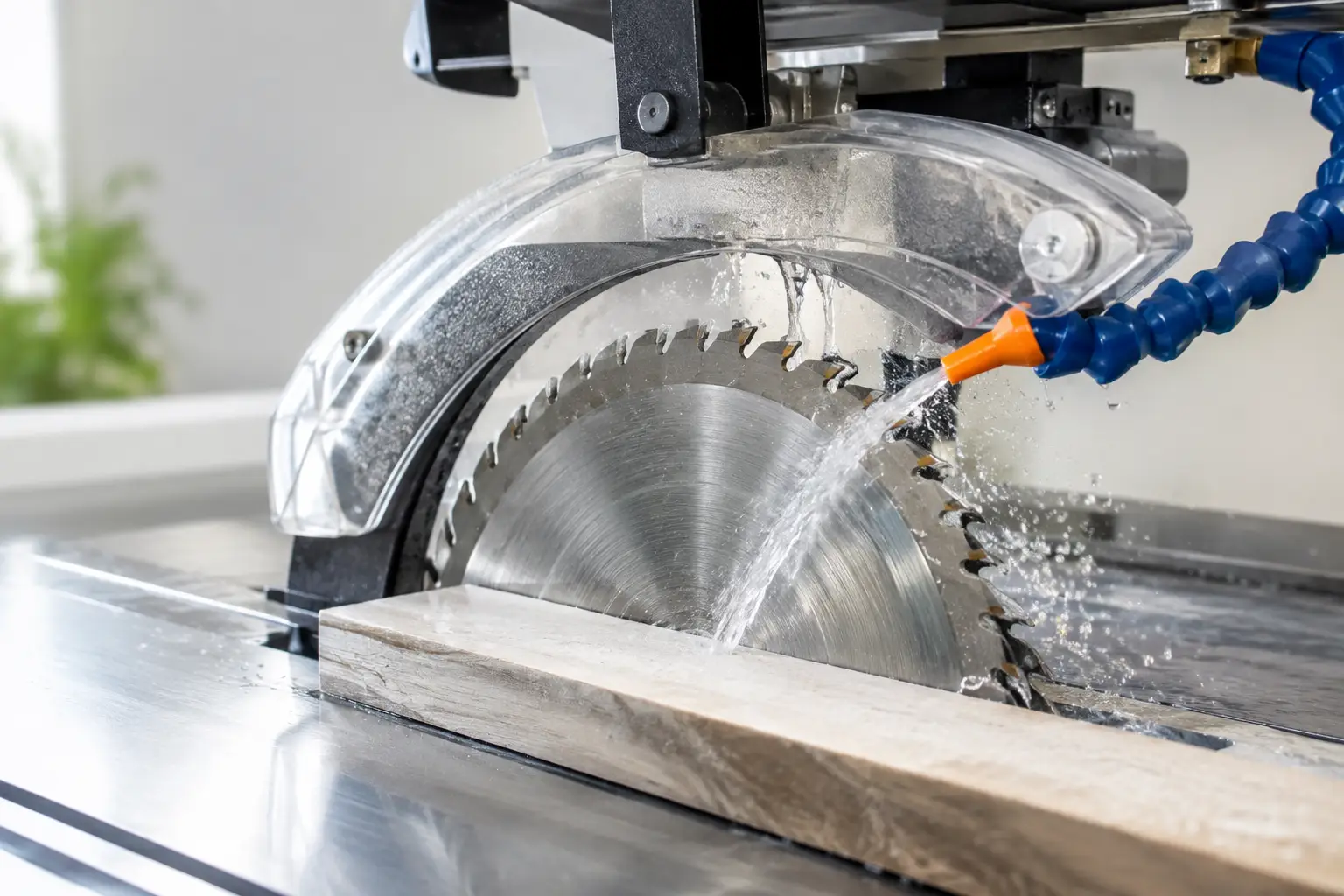
Wet cutting generally improves cooling, reduces dust, and supports longer tool life in dense materials. It is particularly valuable for stone, ceramic, and core drilling. Dry cutting provides portability and jobsite convenience, but it requires a blade designed to manage heat. Operators should use intermittent cutting where recommended, allowing air to cool the rim rather than forcing a hot blade through continuous deep cuts.
Grinding tools require the same discipline. Floor grinding blocks, cup wheels, and abrasive blocks should be selected according to coating removal needs, concrete hardness, machine weight, and desired scratch pattern. An aggressive segment can remove thick epoxy quickly but may leave a surface profile that requires additional refinement. A finer tool may produce a better finish but reduce removal speed. Production planning should account for the full grinding sequence, not just the first pass.
Evaluate Performance by Cost per Cut or Square Foot
Unit price is easy to compare. Operating cost is what determines value.
A lower-priced diamond blade may appear competitive, but it can become costly if it cuts slowly, wears unevenly, requires frequent replacement, or creates excessive chipping. The same applies to core bits that lose drilling speed after a few holes or grinding blocks that wear before the planned floor area is complete.
For repeat commercial work, measure performance using the result that matters to the application. This may be linear feet cut, number of holes drilled, square feet ground, average cutting speed, or finished-edge quality. Track how many tools are consumed per project and how much downtime is caused by tool changes.
A practical trial should compare tools under the same conditions: same material source, machine, operator method, cutting depth, and water supply. One test cut is rarely enough. Stable performance over a meaningful production run gives procurement teams better information than a short demonstration.
Build a Specification for Bulk Purchasing
Distributors and importers need more than a sample that performs well. They need product consistency across future orders. A usable purchasing specification should identify the application, material range, diameter or dimensions, arbor or connection type, segment or rim design, bond requirement, operating conditions, packaging, labeling, and acceptable performance targets.
For private-label programs, confirm artwork requirements, carton quantities, barcode placement, and product identification before production begins. For OEM or ODM projects, the supplier should be able to adjust the tool design based on target material, regional market needs, and preferred price-performance position.
Quality control should cover more than appearance. Buyers should expect checks for segment attachment, dimensional accuracy, blade flatness, balance, welding integrity, diamond concentration consistency, and packaging condition. For laser-welded blades, weld quality is a safety and reliability issue, not a cosmetic feature.
Supply planning also matters. Fast-moving construction tools may require stock programs, while specialized Dekton blades, large-diameter saw blades, or custom core bits may need longer production lead times. Communicating forecast volume and reorder patterns helps a manufacturer plan materials and production capacity more effectively.
Common Causes of Premature Tool Failure
Premature wear is not always a manufacturing defect. Incorrect application is a frequent cause. A blade may glaze when a hard bond is used on hard material, leaving the diamonds polished and unable to cut effectively. Dressing the blade in an abrasive material can expose fresh diamond, but repeated glazing usually indicates that the bond selection is wrong.
Segment loss can result from overheating, side pressure, improper flange support, damaged equipment, or using a blade beyond its intended application. Excessive vibration may indicate a warped blade, worn bearings, incorrect mounting, or machine instability. For core bits, slow drilling can be caused by insufficient water flow, poor alignment, inadequate motor power, or failure to clear slurry from deep holes.
Technical support should address these operating conditions before assigning blame. A supplier that understands the application can help identify whether the correction is a different bond, a different segment design, a machine adjustment, or better operating practice.
Choose a Supplier That Can Support Repeatable Results
The most useful diamond tooling supplier is not simply the one with the widest catalog. It is the one that can translate application requirements into stable production specifications, maintain quality from batch to batch, and respond when field conditions change.
For buyers serving construction, stone, flooring, and materials-processing markets, that means looking at manufacturing capability, welding technology, inspection procedures, export packaging, and communication quality alongside price. Ryhyoma supports bulk buyers with industrial diamond tools designed around application needs, including laser-welded and vacuum-brazed options for demanding work.
Start each purchase with a clear material profile and a measurable performance target. That gives your team a better basis for selecting tools, evaluating samples, and building a supply program that holds up when the order volume increases.