
A distributor can lose a contractor account over one failed blade. The problem is rarely the blade alone. It is often an incorrect bond specification, inconsistent segment height, poor welding quality, or a supplier that cannot repeat the same performance on the next shipment. This diamond tooling distributor guide is designed for buyers who need to build a dependable commercial range, not simply purchase the lowest-priced products available.
Diamond tooling is a performance category. Concrete saw blades, core bits, floor grinding blocks, ceramic cutting discs, and stone blades must match the material, machine, operator expectations, and local jobsite conditions. A distributor that selects tools only by diameter and unit price will eventually face returns, slow-moving inventory, and damaged margins.
Start With the Markets You Actually Serve
A strong product range begins with the work customers perform every week. Construction distributors may need laser-welded blades for reinforced concrete, asphalt, cured concrete, and pavers. Stone fabricators may require quiet-core granite blades, bridge saw blades, finger bits, and profile tools. Tile and building-material suppliers may need thin-kerf discs for porcelain, ceramic, marble, and dense sintered surfaces such as Dekton.
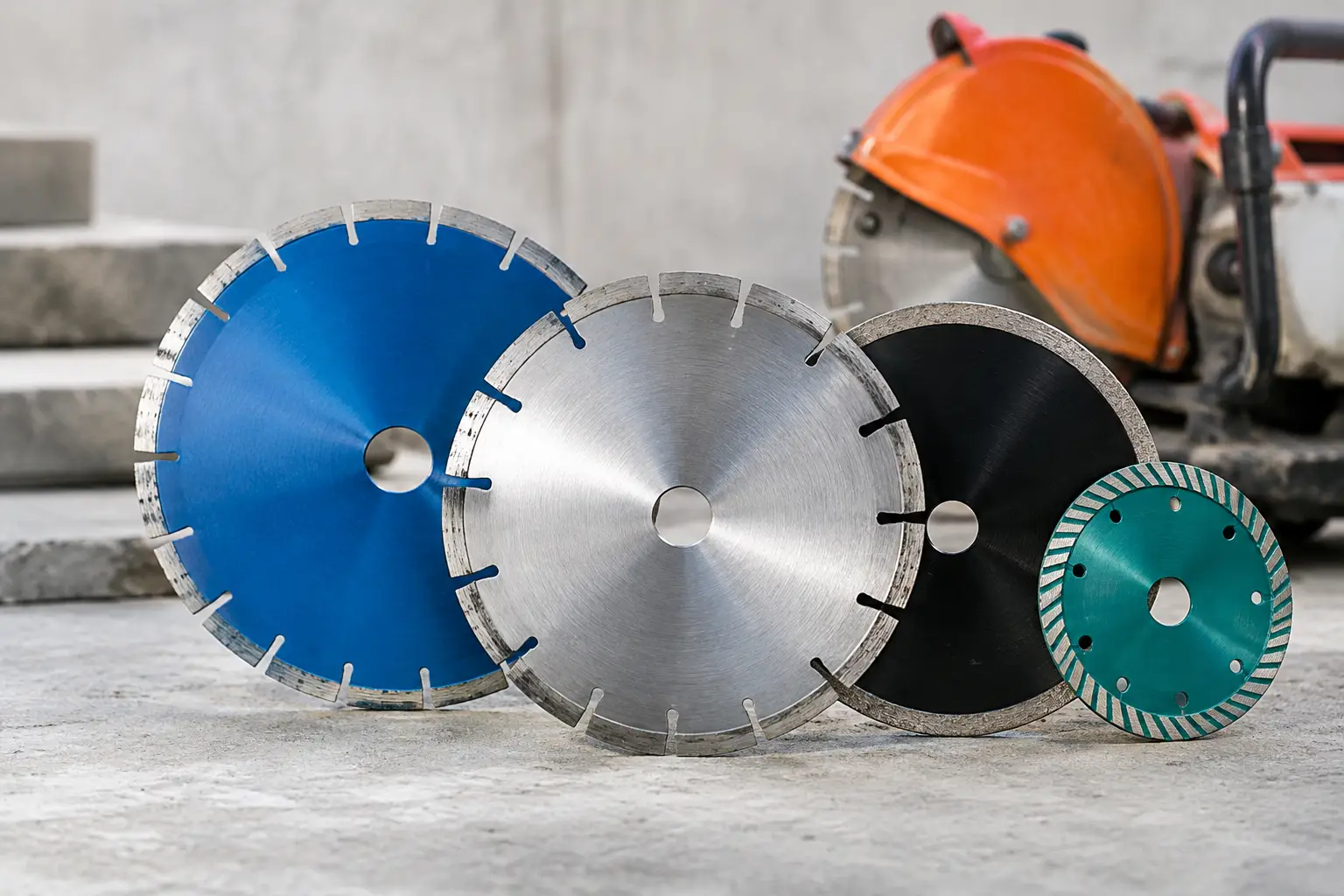
Do not assume one general-purpose blade can cover every application. A hard concrete blade requires a different bond strategy from a blade intended for abrasive asphalt. A fast-cutting porcelain disc may need a continuous rim and a thin kerf, while a demolition contractor may prioritize segment retention and safety over a polished edge finish.
Before approaching suppliers, define the materials, machine types, common diameters, arbor sizes, and expected monthly demand in your territory. This creates a buying specification rather than a broad product request. It also helps identify which items should be stock products and which should be available only on order.
Diamond Tooling Distributor Guide to Product Evaluation
The correct evaluation process looks beyond appearance. Two blades can have the same diameter, segment count, and printed application label while delivering very different cutting speed, life, and safety margins. Ask suppliers to explain how each product is built and what conditions it is designed to handle.
Assess the diamond segment, bond, and weld
Diamond concentration, grit size, bond hardness, segment shape, and segment height all affect performance. For hard materials, the bond generally needs to release worn diamond at a controlled rate so fresh diamond is exposed. For highly abrasive materials, the tool needs a formulation that resists excessive wear. There is no universal best specification because material hardness and abrasiveness work differently.
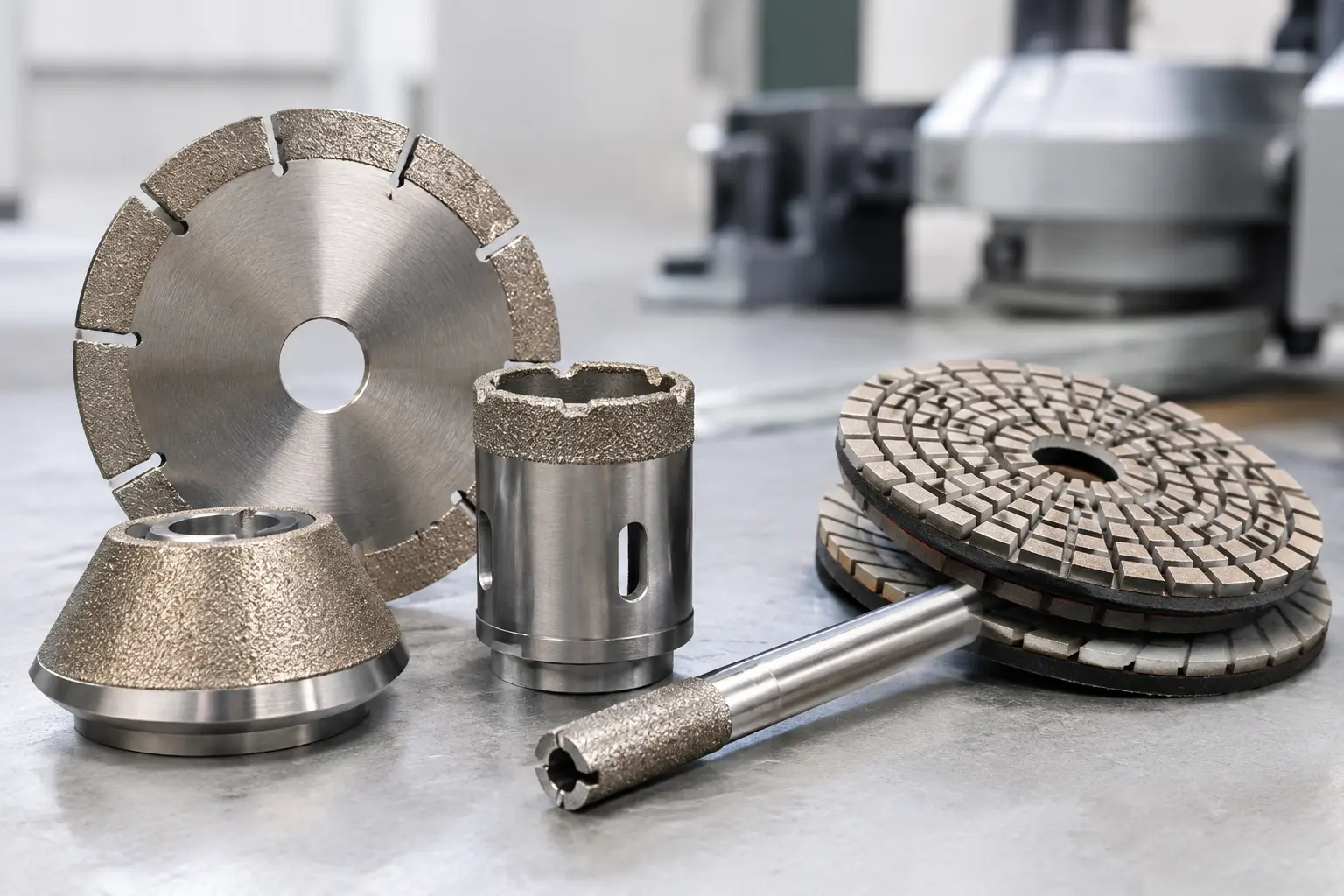
For saw blades, welding quality deserves special attention. Laser-welded segments are commonly preferred for heavy-duty dry cutting and demanding construction work because of their heat resistance and segment retention. Vacuum-brazed tools can provide aggressive cutting or grinding performance in specialized applications, but the product must be matched to its intended operating conditions.
Ask for clear details on segment dimensions, core thickness, steel core treatment, weld method, recommended RPM, and wet or dry cutting suitability. If a supplier cannot provide this information, it will be difficult to support your customers when an application issue occurs.
Test against representative materials
Catalog claims are not enough for a new supplier relationship. Request samples and test them against the material grades your customers use most often. A blade that performs well on standard concrete may behave differently on heavily reinforced concrete, high-strength precast material, or locally sourced aggregates.
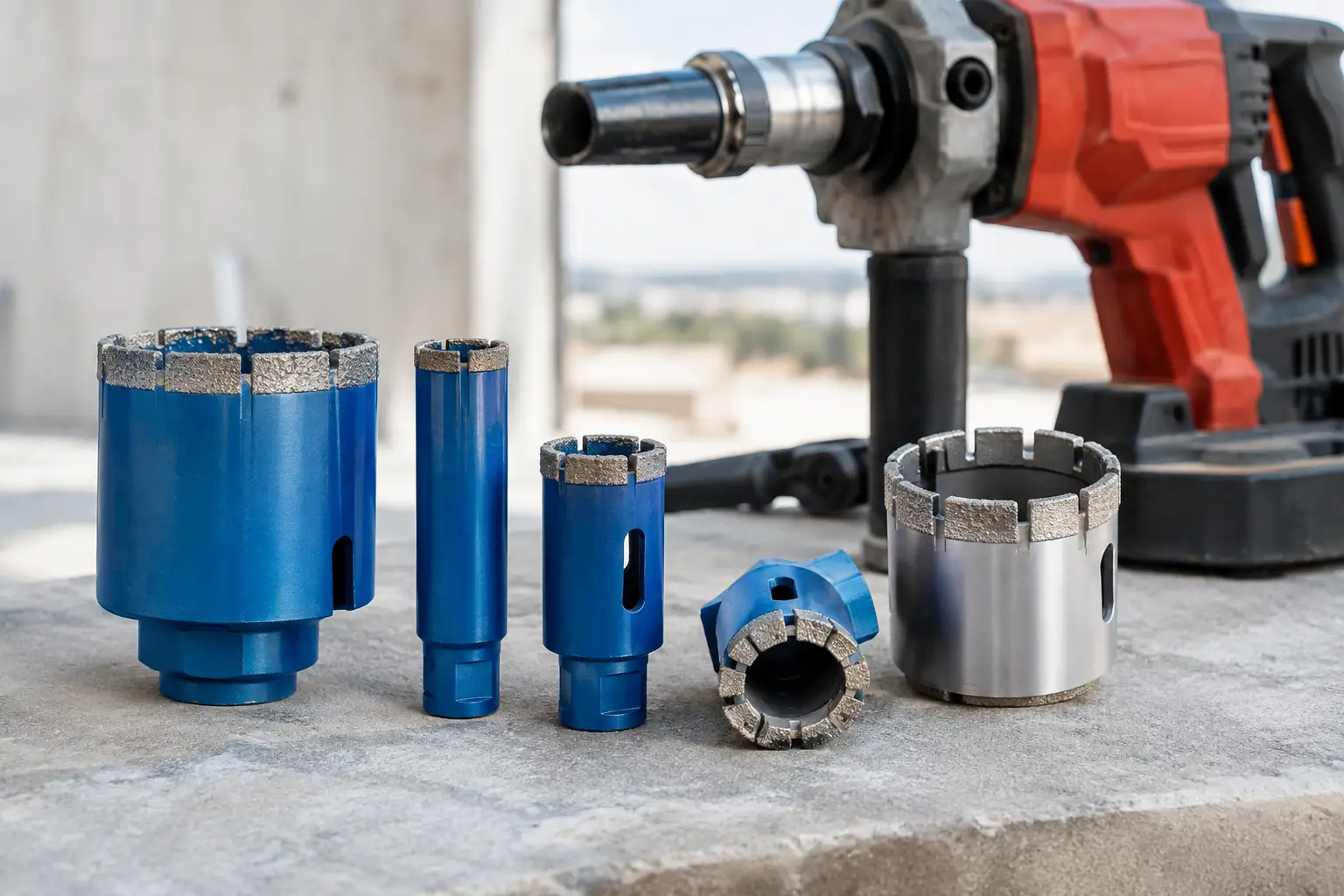
Measure cutting speed, blade wear, segment condition, vibration, edge quality, and operator feedback. For core bits, consider drilling speed, barrel life, segment wear, and how well the bit clears slurry. For floor grinding blocks, assess stock removal, scratch pattern, glazing resistance, and fitment accuracy.
Testing should compare tools in similar conditions. Use the same machine class, operator approach, material thickness, and cutting depth where possible. Otherwise, the results will not tell you whether performance differences come from the tool or the test conditions.
Review consistency, not one sample
A favorable first sample is useful, but a distributor sells repeated shipments. Ask how the manufacturer controls incoming steel cores, diamond powder, segment pressing, welding, balancing, inspection, and final packaging. Production discipline is what protects your reputation when the initial order becomes a recurring container program.
Request batch traceability where appropriate, especially for professional-grade blades, core bits, and safety-sensitive cutting products. Confirm whether product specifications remain stable after approval and whether the factory will notify you before changing a bond, segment design, packaging component, or production source.
Build a Range That Protects Margin
The lowest purchase price does not always produce the strongest resale margin. A cheap blade that cuts slowly or wears out early can create warranty claims and prevent repeat business. At the same time, not every customer needs premium tooling. The practical approach is to create clear performance tiers.
A basic range can serve occasional users and price-sensitive trade buyers. A professional range should focus on consistent cutting speed, service life, and dependable safety for regular commercial work. A premium range may be justified for high-volume contractors, stone fabrication shops, or rental fleets where downtime has a measurable cost.
The key is honest positioning. Avoid selling an entry-level blade as a reinforced-concrete solution or a general stone blade as the answer for dense porcelain. Clear product labels, application guidance, and sales training reduce misuse before it becomes a return.
Inventory planning should also reflect velocity. Fast-moving diameters and common applications deserve deeper stock. Specialized ring saw blades, large-diameter wall saw blades, uncommon core bit sizes, and niche profiles may be better handled through scheduled replenishment. A wide catalog is valuable only when it can be supplied reliably.
Evaluate the Manufacturer as a Long-Term Partner
A distributor relationship is operational, not transactional. The manufacturer must be able to maintain specifications, provide realistic lead times, resolve technical questions, and support scale as your business grows.
During supplier qualification, examine these commercial controls:
- Minimum order quantities by product, diameter, and packaging format.
- Production lead times for standard items and customized orders.
- Inspection procedures and how nonconforming products are handled.
- Export packaging strength, labeling accuracy, and pallet or carton configuration.
- Response time for technical claims, replacement requests, and new product development.
For export buyers, logistics detail matters as much as product quality. Tools can be damaged by weak cartons, poor internal separation, moisture exposure, or inadequate palletization. Confirm the gross weight, carton dimensions, packing quantity, labeling requirements, and shipping documents before placing a large order. These details affect freight cost, warehouse handling, and customs processing.
A capable manufacturing partner should also be direct about limitations. If a requested blade specification is not suitable for the stated material or machine, the supplier should say so before production. That is more valuable than agreeing to every request and creating a predictable failure later.
Use OEM and ODM Carefully
Private-label tooling can strengthen distributor loyalty and reduce direct price comparison. It can also create unnecessary complexity if launched too early. Begin with proven, fast-moving products where you already understand demand and application requirements. Once those products are validated, expand into custom colors, printed labels, packaging, segment designs, or application-specific bonds.
OEM work should preserve technical control. Maintain written approval for the product specification, artwork, packaging, and inspection standard. A private label is not simply a logo on a blade. It is a promise that every repeat order will meet the approved performance level.
Ryhyoma supports this type of manufacturer-distributor model through quality-controlled diamond tooling, laser-welded and vacuum-brazed product options, and custom supply programs for bulk buyers. The best OEM relationship remains practical: start with a focused range, verify performance, then scale production around verified demand.
Prepare Your Sales Team for Application Questions
Even a well-selected range will underperform if sales staff cannot ask basic qualifying questions. When a customer asks for a concrete blade, the next questions should concern material type, reinforcement, wet or dry cutting, machine horsepower, blade diameter, and desired balance between speed and life.
For tile and stone products, ask about material density, thickness, required edge finish, and whether the customer is using a bridge saw, handheld saw, angle grinder, or tile saw. For drilling, establish hole diameter, depth, reinforcement, machine type, and water availability. These questions turn a product conversation into an application recommendation.
Provide concise product data sheets and application charts, but do not rely on documents alone. Technical support should be available when a contractor encounters glazing, excessive wear, slow cutting, vibration, chipped edges, or segment loss. Many field problems can be solved by correcting operating technique, machine condition, or tool selection before a replacement is issued.
Make Supplier Review a Scheduled Process
Supplier performance should be reviewed after the first order and at regular intervals thereafter. Track delivery accuracy, defect rates, claim frequency, product feedback, stock availability, response times, and margin by product group. Review slow-moving items before they become dead stock, and use customer complaints to identify application gaps in your range.
A dependable diamond tooling program is built through evidence: product tests, repeat-order consistency, accurate specifications, and disciplined communication. Choose a supplier that can support those controls, and your customers will have fewer reasons to look elsewhere.