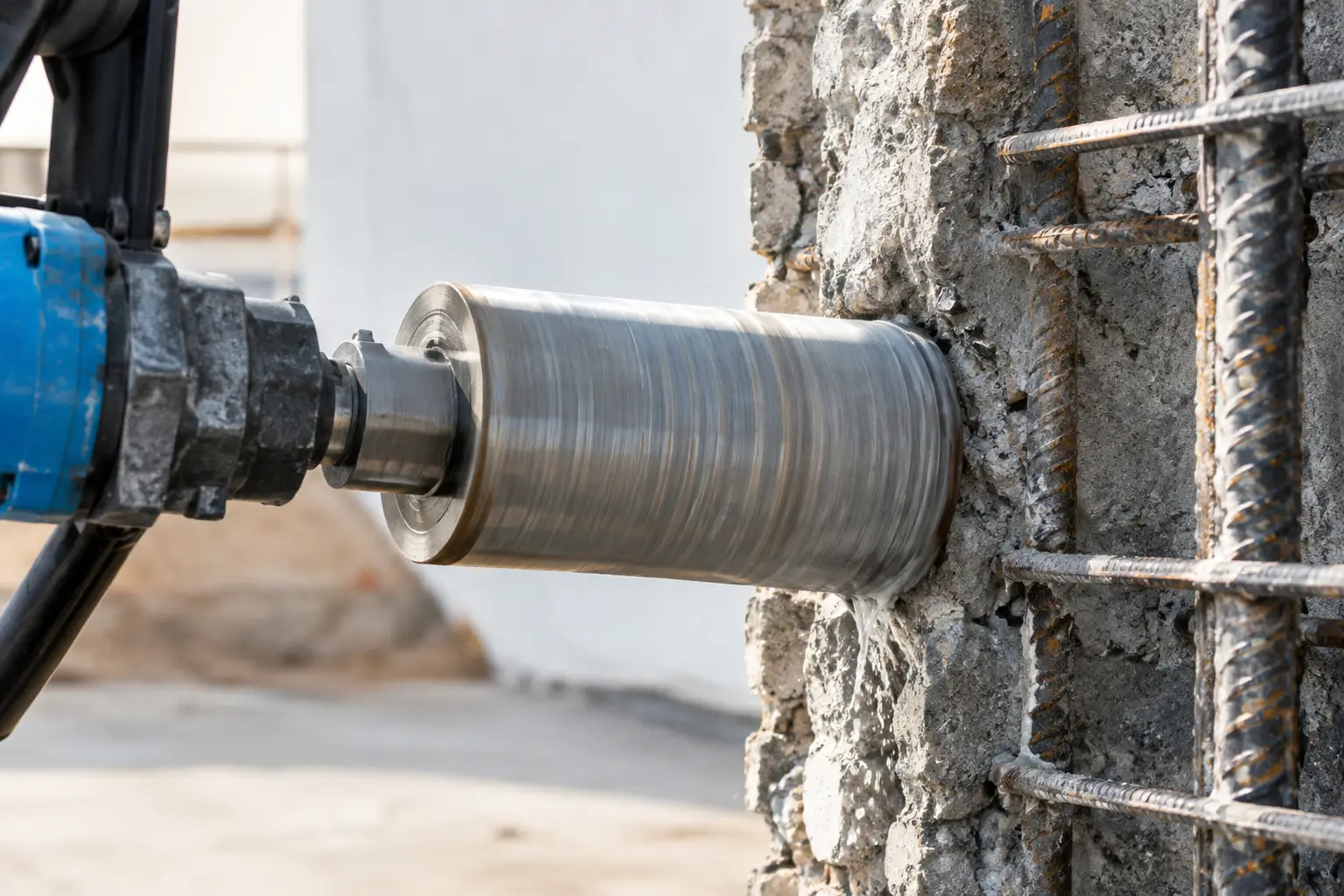
A core drill operator feels the change immediately. The bit advances steadily through concrete, then the feed pressure rises, the drilling sound becomes sharper, and gray slurry may show metallic particles. That is usually the point where the question becomes practical: can core bits cut rebar without damaging the tool or delaying the job?
Yes, a properly specified diamond core bit can drill through reinforcing steel embedded in concrete. But not every core bit is designed for this work, and success depends on the segment bond, diamond concentration, drilling method, machine stability, and operator control. For contractors and tool distributors, the distinction matters. A bit that performs well in plain concrete may glaze, overheat, or lose segments when it encounters frequent rebar.
Can Core Bits Cut Rebar Reliably?
Diamond core bits do not cut steel in the same way as a metal-cutting saw blade. Their exposed synthetic diamonds grind through the concrete, aggregate, and reinforcing bar while the metal bond gradually wears away to reveal fresh diamonds. This process allows a quality reinforced-concrete core bit to pass through rebar, but it is slower and creates higher load on both the bit and drilling machine.
The answer depends on the application. A small number of light reinforcement bars in standard concrete is a normal condition for a reinforced-concrete core bit. Dense reinforcement, large-diameter bar, post-tension cable, or structural steel plate is a more demanding application that may require a specialized bit specification, lower drilling speed, and stricter feed control.
A general-purpose core bit may eventually penetrate rebar, but that does not make it the right commercial choice. Repeated contact with steel can expose weaknesses in segment welding, bond formulation, and diamond quality. For fleet users, the correct bit reduces downtime, protects drilling equipment, and gives a more predictable cost per hole.
Why Rebar Changes Core Drilling Performance
Concrete is abrasive. Reinforcing steel is comparatively tough and less abrasive, so it changes how the diamond segments wear. When drilling concrete, the matrix bond must release worn diamonds at a controlled rate. When drilling steel, the segment needs enough diamond exposure and cutting action to keep from polishing over.
If the bond is too hard for the material, diamonds remain trapped in the matrix after they become dull. The segment face becomes smooth, often called glazing. The operator may respond by forcing the drill, which raises heat and increases the risk of segment damage.
If the bond is too soft, the bit may cut aggressively at first but wear too quickly in abrasive aggregate. The right specification balances these conditions: concrete strength, aggregate hardness, rebar frequency, drilling diameter, and expected hole depth all affect the result.
Rebar also increases torsional load. Poor machine anchoring or an unstable rig can make the bit vibrate as it contacts steel. Vibration reduces drilling efficiency and can cause uneven segment wear, barrel damage, or a rough hole finish. The bit is only one part of the system.
Choose a Core Bit for Reinforced Concrete, Not Plain Concrete
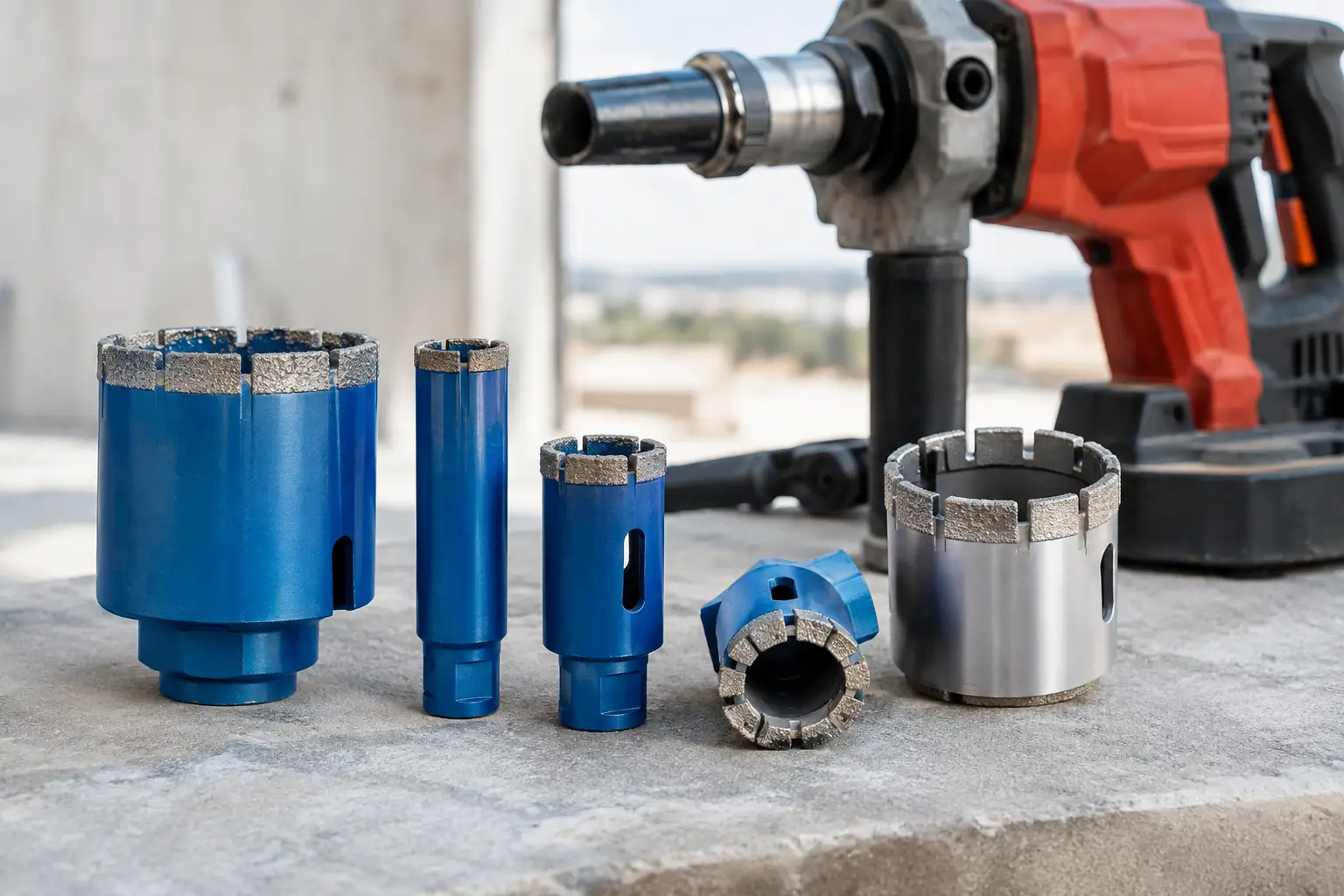
For drilling reinforced slabs, beams, walls, and foundations, buyers should specify a core bit engineered for reinforced concrete. The product description should clearly identify rebar capability rather than only listing concrete as an application.
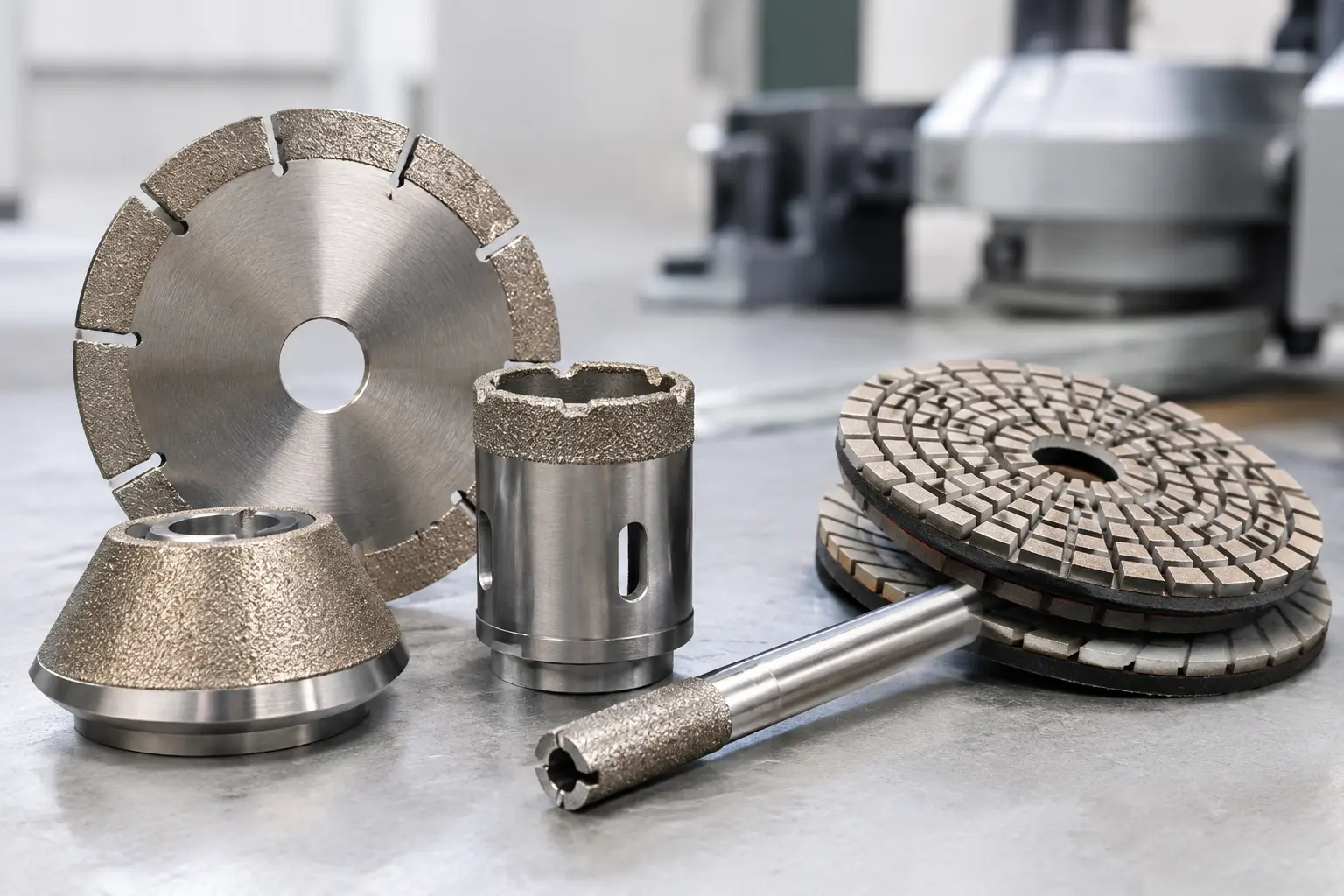
The key design factors are the segment bond, diamond grade, diamond concentration, segment geometry, and welding method. A reinforced-concrete bit typically uses a bond designed to maintain diamond exposure through mixed materials. Quality synthetic diamonds must resist impact and heat while retaining sufficient cutting points at the segment face.
Laser-welded segments are especially relevant for demanding wet drilling because the weld offers high resistance to heat and mechanical stress. This matters when the bit reaches rebar or when operators work under production pressure. A secure segment-to-barrel connection helps prevent segment loss, but it does not compensate for incorrect drilling technique or a severely overheated bit.
For distributors building an assortment, diameter range matters as well. Small holes for anchors and utilities may encounter rebar differently than larger openings for plumbing, HVAC, electrical sleeves, and structural services. Larger diameters create more contact area, require more machine torque, and benefit from stable, high-output drilling equipment.
Wet Drilling Is the Preferred Method
Wet core drilling is generally the best method for reinforced concrete. Water cools the diamonds and metal bond, flushes concrete slurry and steel particles from the cutting face, and reduces friction. It also supports a cleaner hole and longer bit life.
Dry core bits are useful in specific masonry and light-duty applications, but dry drilling through significant rebar is more difficult. Heat builds quickly, and the operator has less margin for error. If dry drilling is unavoidable, the bit must be explicitly designed for that use, and work should be performed with careful intermittent drilling rather than continuous heavy pressure.
Water flow must be sufficient, not merely present. Restricted water supply can cause the barrel and segments to overheat even when the operator believes the job is wet drilled. On long holes, confirm that slurry is clearing efficiently from the kerf.
Match Speed and Feed to the Hole Diameter
A core bit should not be pushed harder when it reaches steel. Reduce feed pressure slightly and allow the diamonds to work. Excess force creates heat, slows segment exposure, and can stall the drill or distort the barrel.
Correct RPM depends on bit diameter, machine power, and material conditions. Smaller diameters generally run at higher speed than large-diameter bits. If the drill is operating too fast, friction and heat increase. If it is too slow, cutting efficiency can fall and the bit may grab as it transitions between concrete and steel.
A stable rig is essential. Secure the stand correctly, keep the spindle aligned, and avoid side loading the barrel. Hand-held drilling may be suitable for certain smaller applications, but a drill rig offers better control when holes are large, deep, or likely to contain heavy reinforcement.
Common Problems When Drilling Through Rebar
The most common failure is glazing. The bit stops cutting efficiently, the segment face appears polished, and drilling pressure climbs. In many cases, the bit needs dressing on an appropriate abrasive material to expose fresh diamond before drilling resumes. Continuing with a glazed bit usually makes the problem worse.
Segment loss is more serious. It can result from overheating, poor welding quality, excessive vibration, side pressure, or striking steel with an unsuitable bit. A missing segment makes the tool unsafe for continued use and can damage the workpiece. Remove the bit from service rather than attempting to finish the hole.
Slow drilling is not always a sign of poor diamond quality. It may indicate insufficient water, incorrect RPM, worn segments, low machine power, a loose drill stand, or unusually hard aggregate. Product evaluation should consider the complete drilling setup, not only the bit’s final footage.
Avoid using a conventional concrete bit on known heavy reinforcement simply because it is available on site. The apparent savings can disappear after one overheated barrel, failed segment, or delayed installation crew.
What Procurement Teams Should Specify
For bulk purchasing or private-label programs, a request for “concrete core bits” is usually too broad. A supplier needs operating details to recommend a consistent product. At minimum, specify the drilling method, target diameters, concrete grade, aggregate type where known, expected rebar density, machine type, and typical hole depth.
Also identify whether the application involves vertical walls, floors, overhead drilling, bridge work, precast concrete, or utility installation. These conditions influence barrel length, connection type, segment height, and preferred performance balance. Some users prioritize maximum cutting speed. Others need a bit that tolerates frequent rebar contact and delivers stable life across varied job sites.
For distributors, field testing should compare footage, drilling speed, segment retention, and consistency across several jobs. A low initial unit price is not a reliable measure of value if operators need to replace bits early or lose time dressing glazed segments. A dependable reinforced-concrete core bit should provide repeatable results under normal operating conditions, not only perform well in one controlled test.
Ryhyoma supports OEM and bulk supply programs where core bit specifications can be aligned with target materials, regional job conditions, and distributor requirements.
A core bit can cut rebar when it is built for reinforced concrete and used as part of a controlled drilling system. Specify the tool for the material actually being drilled, maintain water flow and machine stability, and let the diamonds cut rather than forcing the barrel through the steel.