
When a blade starts glazing halfway through a reinforced slab or wears out too fast on abrasive aggregate, the problem usually goes back further than the jobsite. In many cases, it starts with the concrete saw blade supplier. For distributors, contractors, and procurement teams, supplier choice affects cutting speed, blade life, operator confidence, warranty risk, and repeat purchasing.
A concrete saw blade is not a generic consumable in serious commercial work. Performance changes with aggregate hardness, reinforcement content, machine power, wet or dry use, cutting depth, and operator habits. That is why experienced buyers do not evaluate suppliers on price alone. They look at manufacturing discipline, segment consistency, welding quality, and the supplier's ability to match blade specifications to actual applications.
What a concrete saw blade supplier really provides
A dependable supplier is not just shipping steel cores with diamond segments attached. The supplier is making decisions that directly affect field performance. Segment formula, diamond concentration, bond hardness, segment height, rim design, and welding method all influence how the blade cuts and how long it lasts.
For B2B buyers, this matters because blade problems are rarely isolated. If one batch cuts slower than the last shipment, a distributor gets complaints. If a contractor loses production time because blades wander or overheat, procurement costs rise beyond the blade invoice. The supplier's role is to reduce those variables through controlled production and clear technical guidance.
That is also why a manufacturing partner is different from a trading company. A reseller may offer many models, but a true manufacturer has more control over process stability, customization, and batch-to-batch consistency. In industrial supply, that control is often the difference between a one-time order and a long-term account.
How to evaluate a concrete saw blade supplier
The first point to examine is quality control. A supplier should be able to explain how segment raw materials are managed, how welding quality is checked, and how finished blades are tested before shipment. This does not need to be presented as marketing language. Serious buyers want practical answers. They want to know whether segment attachment is stable, whether cores remain flat at working speed, and whether performance is monitored across production runs.
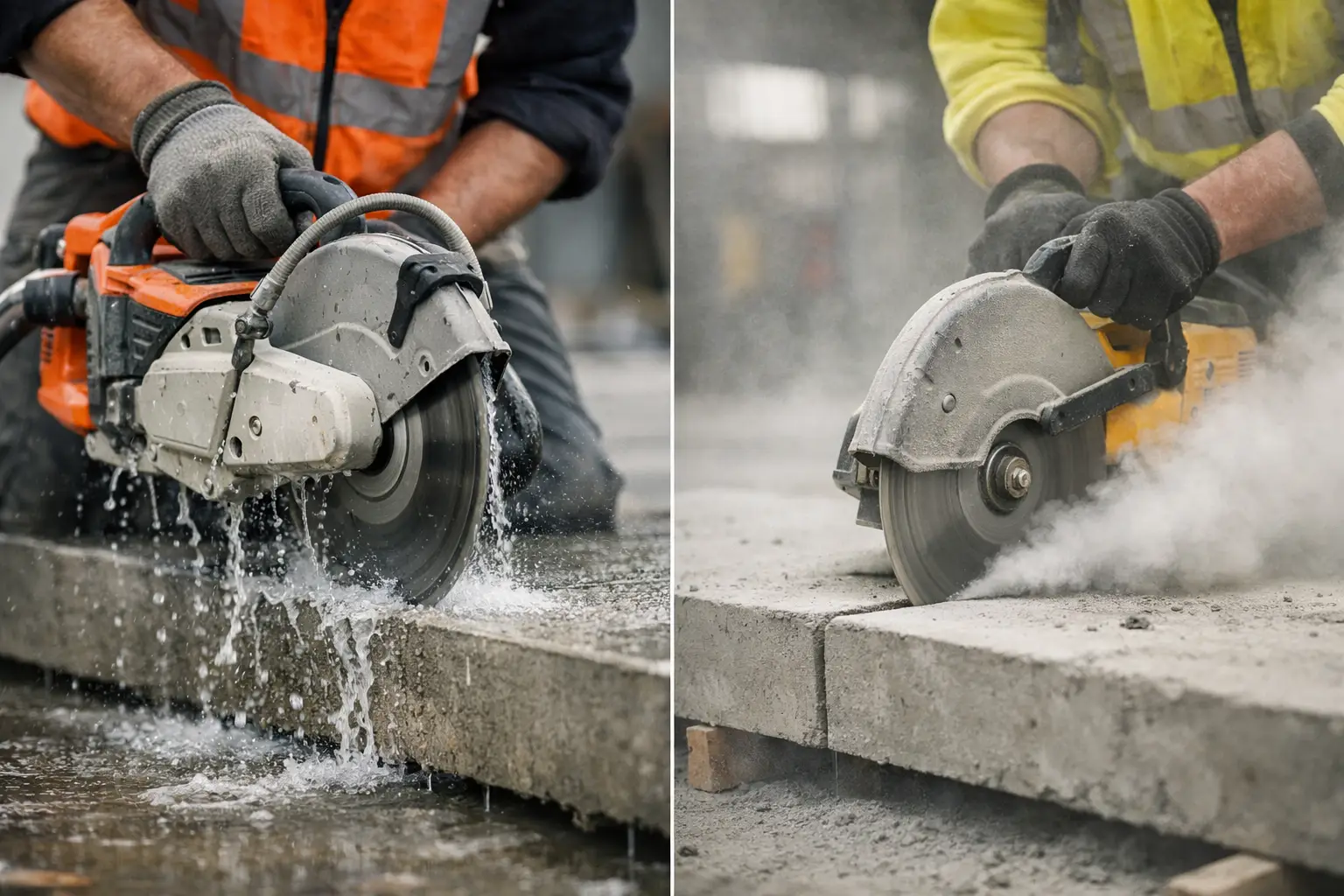
The second point is application matching. Concrete is not one material in practice. Green concrete, cured concrete, reinforced concrete, road surfaces, pavers, and precast elements all cut differently. A capable supplier should ask what machine is being used, whether cutting is wet or dry, the horsepower range, expected feed rate, and the type of material being cut. If the supplier offers the same blade for every scenario, that is usually a warning sign.
Supply consistency is equally important. Many buyers can source a low-cost blade once. Fewer can secure the same performance level across repeated bulk orders. For importers and distributors, consistency protects margin and reputation. For contractors, it protects scheduling. A supplier should be able to support stable production, clear lead times, and scalable volume without changing the product standard every time raw material prices move.
Technical support also matters more than some buyers admit. When blades underperform, the root cause may be bond mismatch, machine instability, incorrect RPM, insufficient water, or operator pressure. A good supplier does not default to blame. They work through the application details and help identify the failure mode. That support is especially valuable for private label programs and distributor accounts serving varied end users.
Manufacturing details that separate serious suppliers from resellers
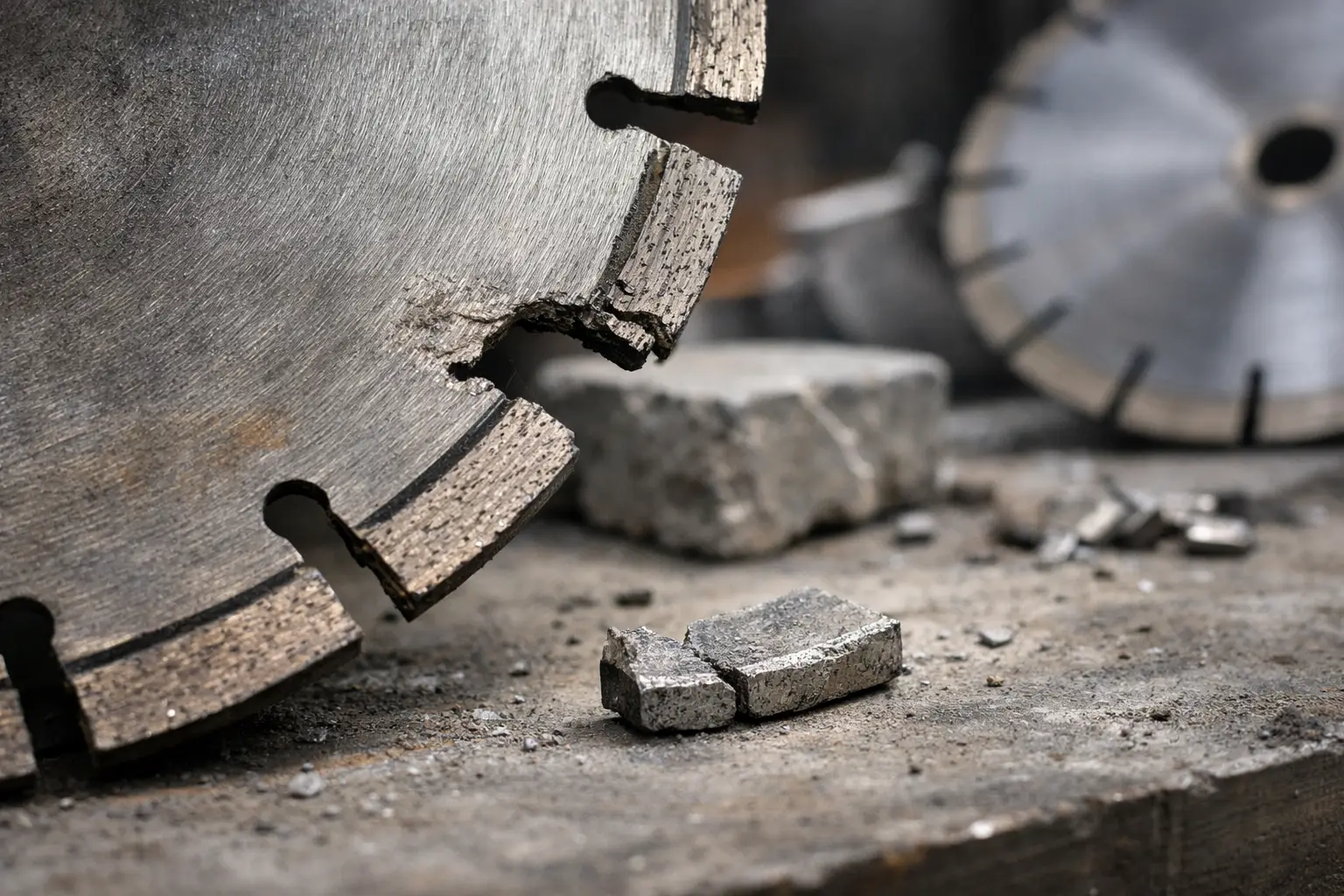
Welding method deserves attention. In concrete cutting, segment retention is a safety issue as much as a performance issue. Laser-welded blades are widely preferred for demanding work because they offer strong segment attachment and reliable stability under high heat and heavy load. For dry cutting, especially, welding quality is not a small specification. It directly affects operating confidence.
Bond design is another point many buyers review too late. A hard bond may hold diamonds too long in abrasive concrete and cut slowly. A soft bond may wear too fast in hard aggregate. There is no universal best bond. The correct choice depends on the material and the production target. A capable supplier should be able to recommend bond options based on field conditions instead of pushing one standard stock item into every market.
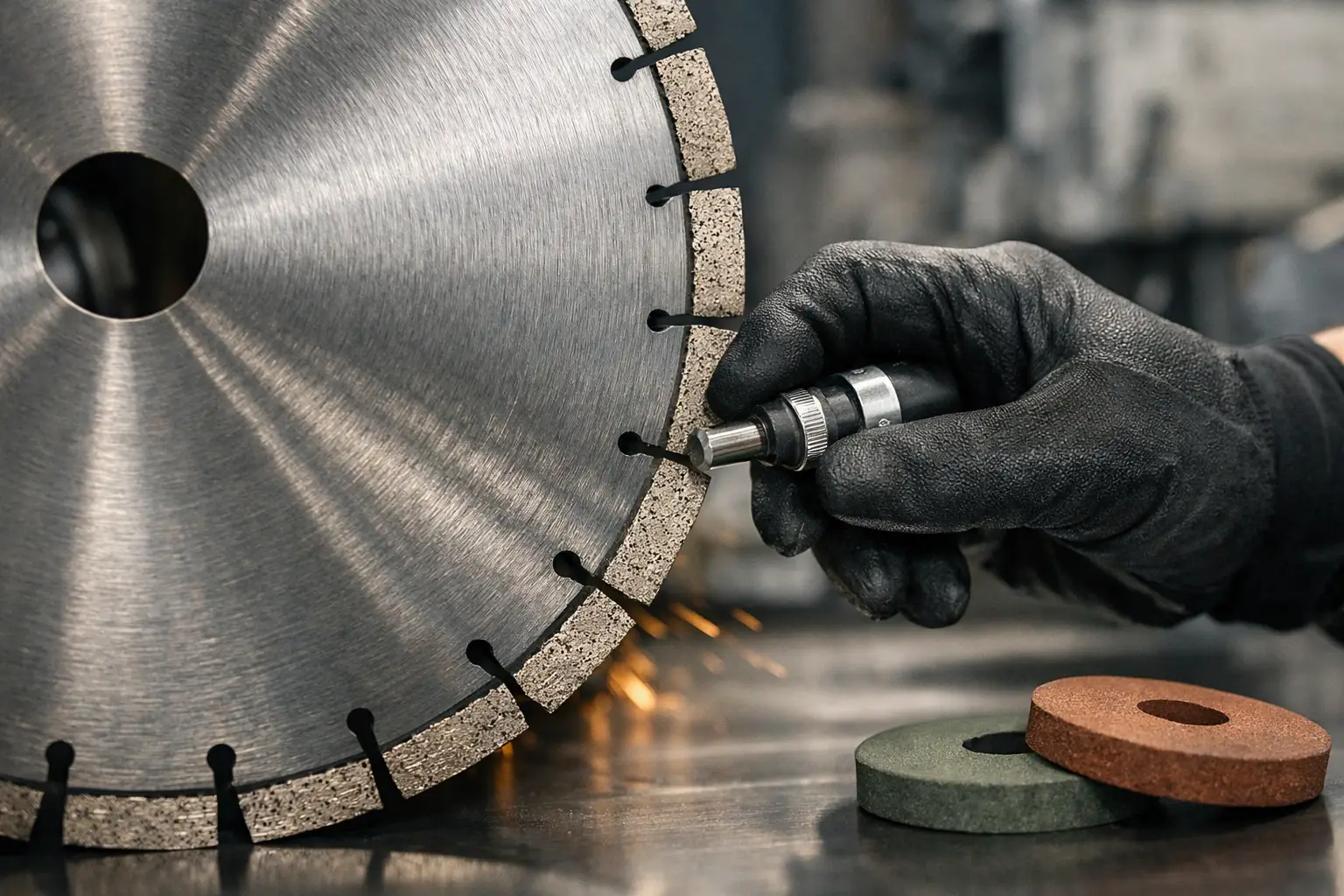
Core stability and tensioning are often overlooked in low-end supply. A blade that loses stability at speed will not deliver clean, efficient cuts. On large diameter blades, poor core preparation can create vibration, noise, and uneven wear. That impacts both productivity and machine stress. Buyers serving road cutting, floor sawing, and repeated industrial use should evaluate this carefully.
Diamond quality and concentration also affect value. A cheaper blade with inconsistent diamond distribution can cost more in total because cutting speed drops, dressing becomes frequent, and blade replacement accelerates. In wholesale purchasing, the real question is not price per blade. It is cost per meter of stable cutting under actual working conditions.
Why the lowest quote often becomes the highest cost
Procurement teams are under pressure to control unit price. That is reasonable. But with concrete saw blades, the cheapest quote can create hidden costs fast. Premature wear, segment loss, poor cutting speed, excessive heat, and inconsistent batch performance all reduce job efficiency. Distributors also face returns, complaint handling, and brand damage when low-grade blades fail in the field.
This is where trade-offs need to be assessed honestly. If the application is light-duty and intermittent, an economy blade may be acceptable. If the blade is being used in reinforced concrete, infrastructure work, road repair, or daily contractor operations, the margin for inconsistency is much smaller. Buyers should evaluate blade cost against labor time, machine utilization, downtime, and replacement frequency.
A reliable concrete saw blade supplier helps make that calculation clearer. Instead of selling only on invoice price, they support the buyer with performance-based recommendations. That approach tends to produce better long-term purchasing results, especially in wholesale and distributor models.
OEM and private label needs require supplier depth
Many importers and distributors are not just buying blades. They are building product lines. That changes the supplier requirements. Packaging consistency, label control, application-specific SKUs, and repeatable performance become part of the commercial offer.
OEM and ODM support only work when the supplier has real production control. A factory that understands segment formulation, welding processes, and application tuning can develop blades for local market conditions, including abrasive regional aggregates or contractor preferences in wet versus dry cutting. A supplier without that manufacturing depth usually offers customization at the packaging level only.
For buyers in GCC markets and other export-driven regions, this matters because local working conditions are not always the same as the assumptions behind standard catalog blades. Heat, dust, machine mix, operator style, and material composition all affect blade behavior. The supplier should be ready to adapt specifications where needed, not simply export the same blade into every market.
Questions worth asking before placing a bulk order
Before committing to volume, buyers should ask practical questions. What materials has this blade been tested on? What machine range is it designed for? Is it optimized for wet cutting, dry cutting, or both? What welding method is used? How stable is performance across batches? Can the supplier support custom bond adjustments or private label packaging? What is the lead time when demand increases suddenly?
The quality of the answers often tells you as much as the product sheet. A dependable supplier will answer directly, acknowledge application limits, and discuss trade-offs. That kind of transparency is more useful than broad claims about universal performance.
Ryhyoma operates in this space as a manufacturing-focused B2B supplier, where product stability, quality control, and OEM support are part of the commercial requirement rather than optional extras. That is the standard serious buyers should expect.
The best supplier fit depends on your business model
Not every buyer needs the same type of supplier. A contractor buying for internal use may prioritize immediate cutting performance and technical support. A distributor may care just as much about batch consistency, packaging, and complaint rates. An importer may focus on lead time discipline, export readiness, and the ability to build a repeatable private label line.
That is why choosing a supplier is not only a product decision. It is an operational one. The right partner should fit your sales model, your end-user expectations, and your tolerance for risk in the field.
If a supplier can consistently deliver the right blade for the right material, back it with technical clarity, and maintain that standard over time, you are not just buying inventory. You are protecting productivity, customer trust, and the stability of your own business.