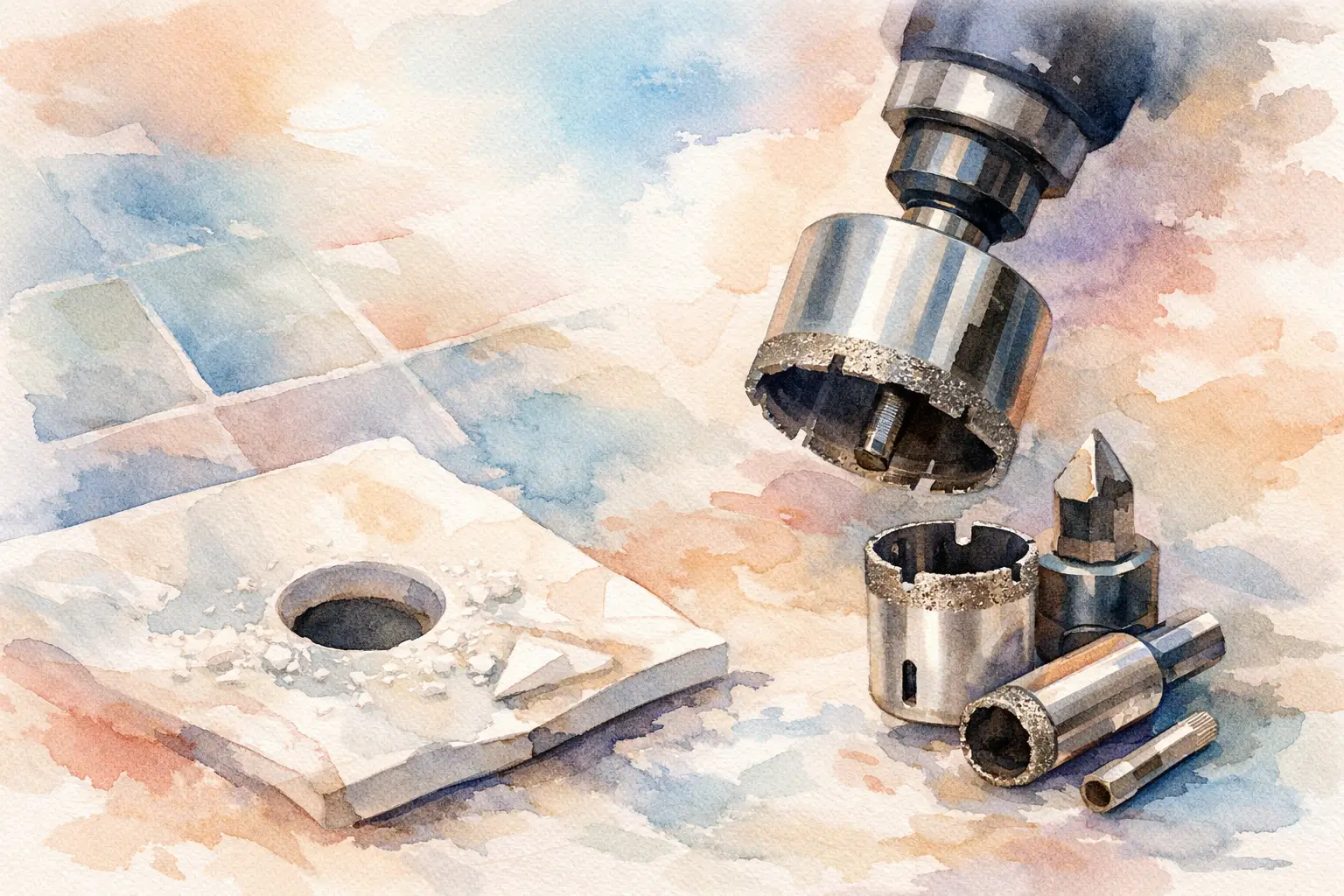
Porcelain does not give much warning before it chips. One second the surface looks clean, and the next the glaze is fractured around the cut line. That is why selecting the right hole opener for porcelain matters more than many buyers expect. In commercial installation and fabrication work, drill performance is not just about making a hole. It is about edge quality, predictable service life, and avoiding costly tile loss on the jobsite.
Why porcelain is hard on drilling tools
Porcelain is dense, hard, and often finished with a brittle glazed surface. Compared with standard ceramic tile, it resists penetration more aggressively and generates heat faster during drilling. That combination creates two common failure points. The first is edge chipping at entry. The second is rapid wear when the diamond exposure and bond are not matched to the material.
For B2B buyers, this has direct purchasing implications. A lower-cost bit that drills inconsistently can create more waste, more installer complaints, and more replacement orders than a higher-grade product with stable performance. When distributors and contractors evaluate a hole opener for porcelain, they should look beyond nominal diameter and focus on drilling behavior under repeated use.
What a hole opener for porcelain should deliver
A suitable tool must start accurately, cut with controlled pressure, and maintain diamond exposure through the working life of the bit. In practical terms, that means the tool should produce a clean opening, hold reasonable speed without overheating, and avoid early glazing.
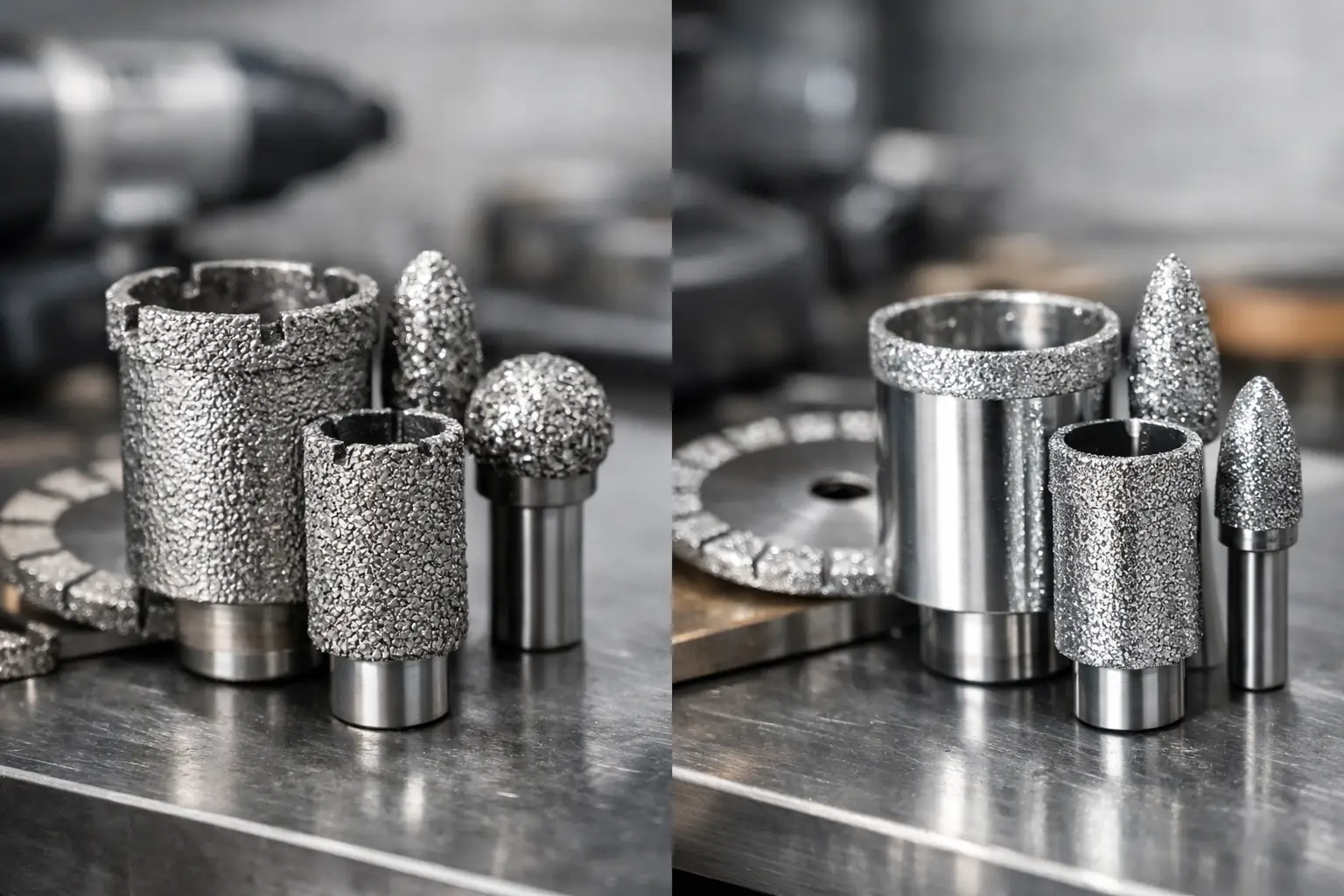
Vacuum brazed and electroplated products are both used in this category, but they do not perform the same way. Electroplated options can provide fast initial cutting and are often chosen for lighter duty or shorter runs. Vacuum brazed designs are commonly preferred where buyers want stronger diamond retention, more stable cutting, and better durability across multiple holes. The right choice depends on the application volume, porcelain hardness, operator habits, and price target.
If the end user is a tile contractor handling occasional bathroom fittings, one performance profile may be acceptable. If the buyer supplies crews drilling repetitive plumbing, anchoring, or fixture openings across large projects, consistency becomes more important than lowest unit cost.
Key specifications that affect results
Diamond quality and exposure
The cutting action depends on how the diamonds are distributed and how effectively fresh abrasive particles stay exposed. Poor diamond placement often leads to erratic drilling, especially at the start of the cut. Better manufacturing control improves contact stability and reduces the tendency to skid across the tile surface.
Diamond concentration should also match the intended duty cycle. Too aggressive, and the tool may cut fast initially but lose control or wear unevenly. Too conservative, and drilling speed becomes slow, increasing heat and operator pressure.
Bonding method
Bonding method is one of the biggest performance variables in a hole opener for porcelain. Vacuum brazed tools are often favored in professional applications because the bond can hold diamond particles more securely under high friction. This usually translates into better endurance and more reliable output in hard porcelain.
Electroplated products still have a place, particularly where buyers prioritize lower entry cost or where the expected number of holes per bit is limited. The trade-off is service life. For wholesale buyers building a repeat business, inconsistent life from batch to batch can create larger problems than the initial savings justify.
Rim design and wall thickness
Thin-wall construction can improve drilling speed and reduce drag, but it may also reduce stability if the tool body is not manufactured to tight tolerance. A well-balanced rim helps maintain roundness and reduces vibration. That matters when drilling visible surfaces where chip control is critical.
Some buyers focus only on outside diameter range, but body rigidity and rim uniformity also affect the finished hole. In porcelain, small deviations are easy to see.
Cooling requirement
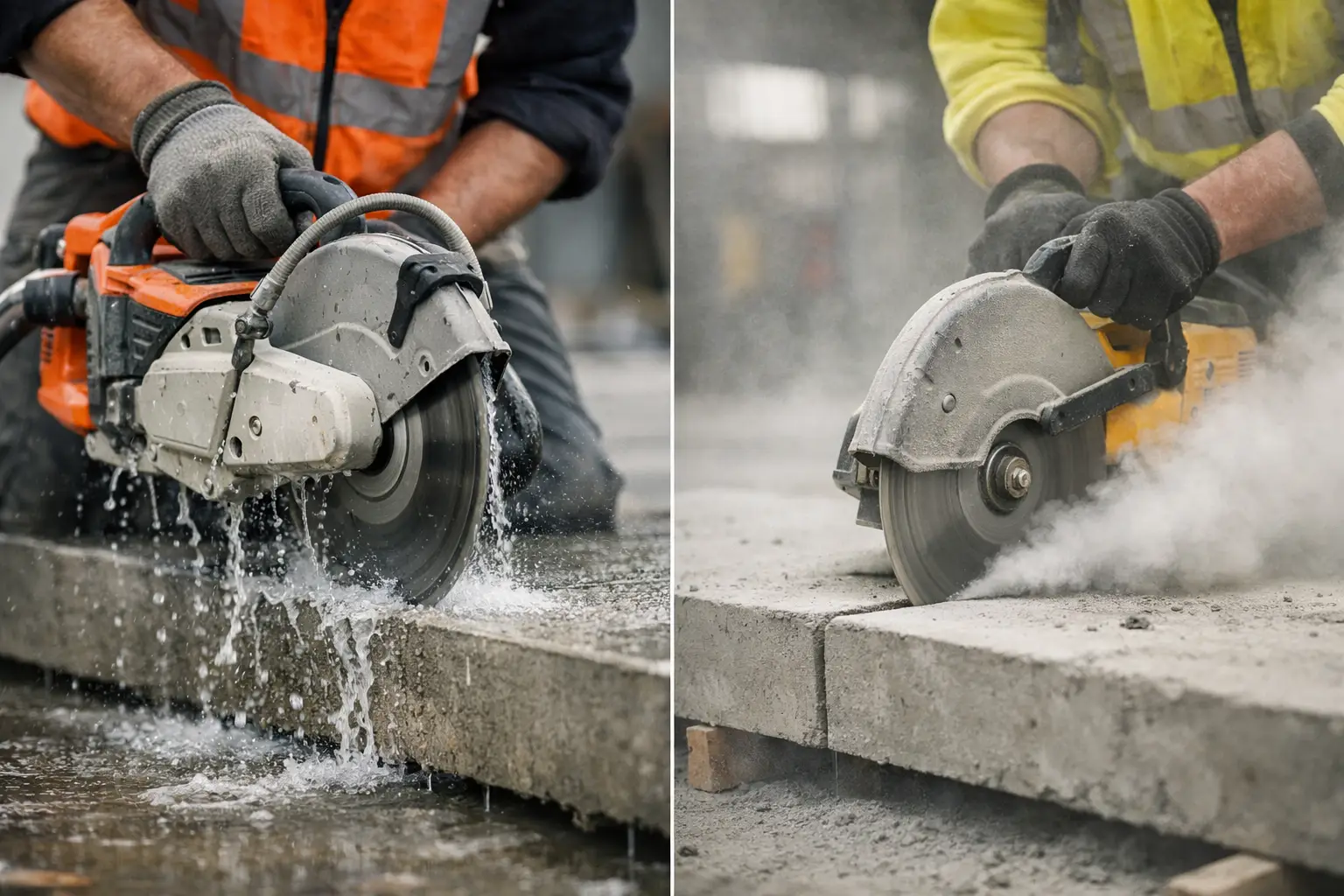
Dry drilling is possible with some hole openers, but it always requires better heat management from both tool and operator. Wet drilling generally extends tool life, improves cut quality, and reduces dust. For commercial users, the question is not whether water helps. It is whether the jobsite allows it.
If the buyer serves mixed markets, offering both dry-use and wet-use options is practical. What should be avoided is overpromising a dry bit in applications where sustained heat will shorten life quickly.
How buyers should match the tool to the job
Fixture and plumbing holes
For small to medium diameters used in plumbing penetrations, faucets, shower fittings, and accessories, fast starting and edge control are the main concerns. Installers need a bit that will not walk easily on glazed porcelain and that does not force excessive pressure. In this segment, stable cutting performance often matters more than maximum speed.
Electrical and anchor points
Smaller diameters for anchors and electrical fixings require precise entry and consistent hole geometry. If the bit wanders or chips the glaze, the finished installation suffers. Buyers supplying this segment should pay close attention to concentricity and manufacturing consistency across sizes.
Repetitive commercial drilling
High-volume use changes the buying criteria. Here, the best hole opener for porcelain is usually the one that provides predictable cost per hole, not just fast cutting on the first few pieces. Contractors and distributors benefit from a product with controlled wear, dependable brazing quality, and repeatable performance from batch to batch.
Common mistakes when sourcing hole openers
One common mistake is treating all porcelain as the same. Some tiles are harder, thicker, or more abrasive than others. Large-format porcelain panels and premium dense tile products may wear tools much faster than standard wall tile. A supplier should be able to discuss this difference clearly.
Another mistake is buying only on sample performance. A single test piece does not reveal manufacturing stability. B2B buyers need to know whether the supplier can keep the same diamond quality, bond integrity, and dimensional tolerance across production runs.
The third mistake is ignoring operator conditions. Even a high-quality bit will fail early if the RPM is too high, cooling is poor, or pressure is excessive. Good suppliers do not separate product quality from application guidance. They address both.
What distributors and importers should ask suppliers
A serious supplier should be prepared to answer practical questions, not just provide a catalog sheet. Ask how the product is manufactured, what porcelain grades it has been tested on, whether it is intended for dry or wet use, and what typical service-life range can be expected under normal conditions.
It is also worth asking about OEM and private-label capability, especially if the business model depends on branded distribution. Packaging, marking, diameter range, and connection type all matter in channel sales. For importers serving professional users, the ability to standardize these details is part of the value, not an extra.
Quality control is another area where buyers should be direct. Inspection discipline, batch traceability, and consistency in brazing or plating quality affect field results. Ryhyoma serves this market as a manufacturing partner, so the discussion should center on stable production, not one-off trading.
Performance is only part of the buying decision
For procurement teams, the best sourcing decision usually balances four factors: cutting quality, durability, supply reliability, and support. A hole opener that performs well but arrives late or changes quality after the first order is not a dependable commercial product.
This is especially relevant in export markets and contractor distribution. Reordering must be simple. Specifications must stay stable. Technical issues must get a timely response. In practice, many B2B buyers stay with a supplier not because every tool is the cheapest, but because the product behaves the same way from order to order.
The right approach to long-term supply
When buyers evaluate a hole opener for porcelain, they should think in terms of application fit and supply stability rather than generic category claims. Porcelain is unforgiving, and the tool either handles that reality or it does not. Good sourcing decisions come from matching bond type, diamond quality, cooling condition, and duty cycle to the actual work being done.
If the product is intended for serious trade use, ask for more than a price list. Ask how it performs after repeated holes, how the supplier controls production quality, and how the specification can be adjusted for your market. That is where real value starts, and it is usually where long-term supplier relationships are decided.