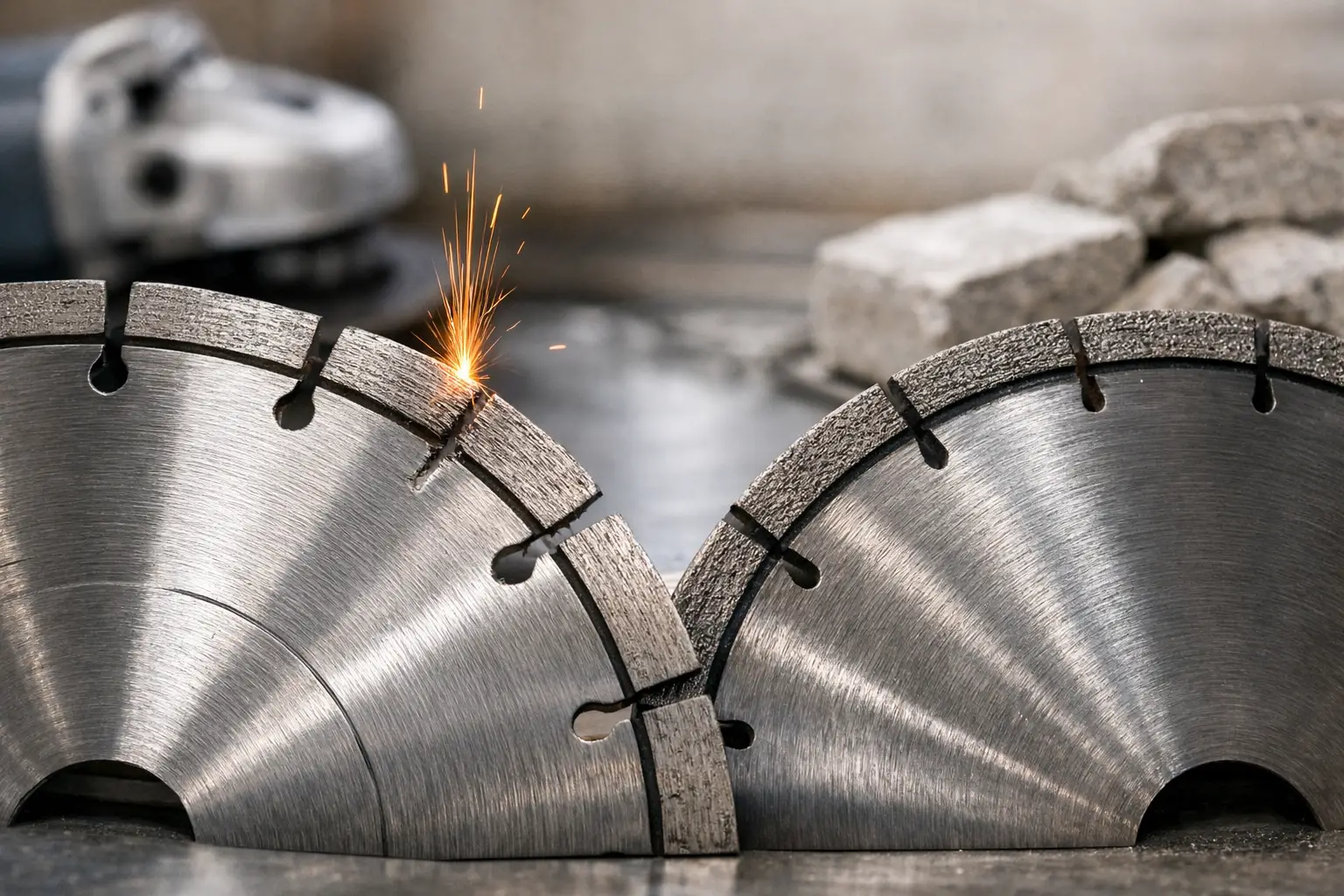
A blade segment separating from the steel core during a deep concrete cut is not a minor product issue. It stops production, creates a safety risk, and can damage a contractor’s confidence in the distributor that supplied it. That is why the choice between laser welded vs sintered blades matters beyond the catalog description. The segment attachment method affects where a blade can be used, how it handles heat, and how reliably it performs under commercial cutting conditions.
For procurement teams, the correct answer is rarely that one process is always better. Laser welding and sintering serve different applications, price levels, and operating demands. The key is matching the blade construction to the material, machine, cutting method, and expected duty cycle.
How Diamond Blade Segments Are Attached
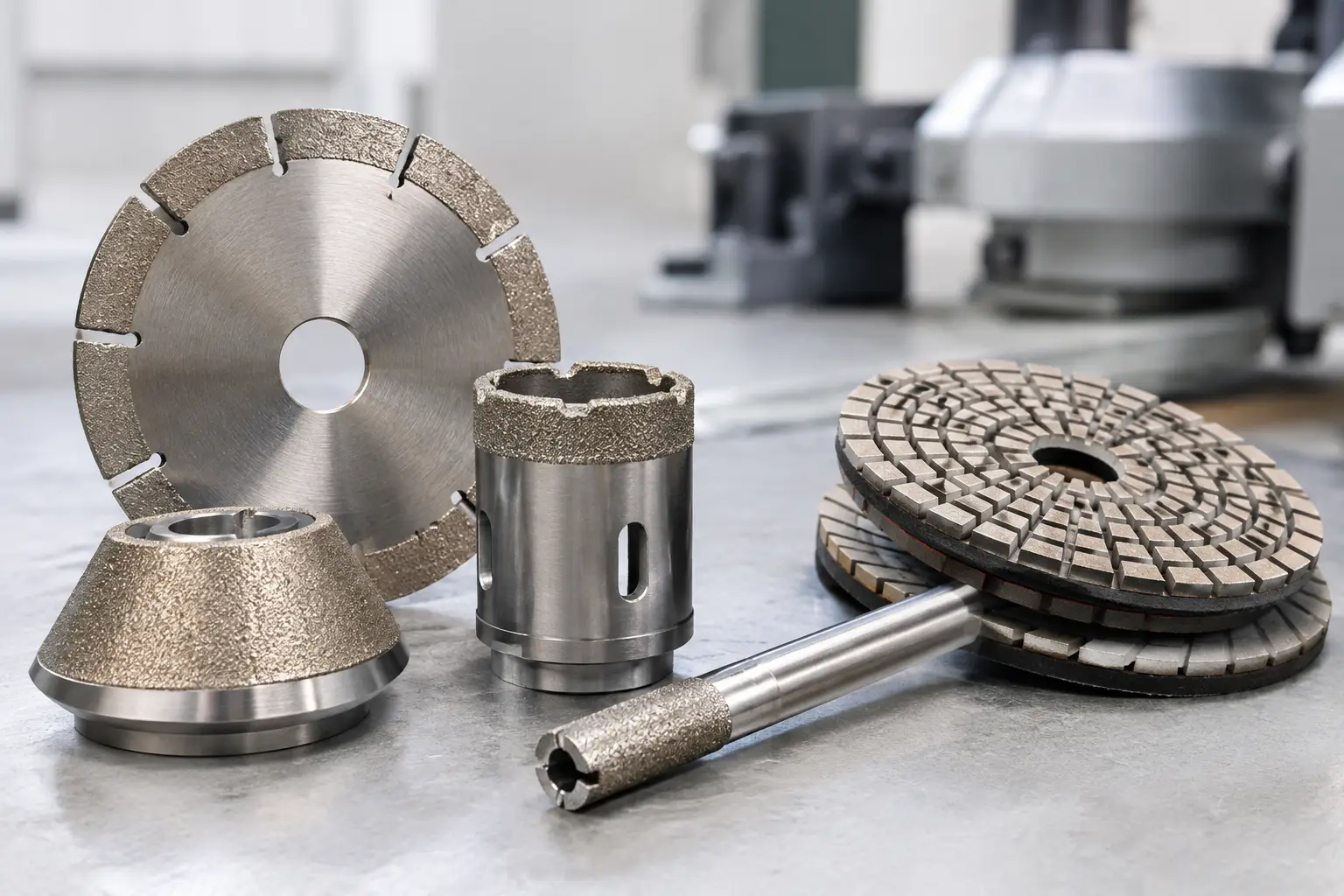
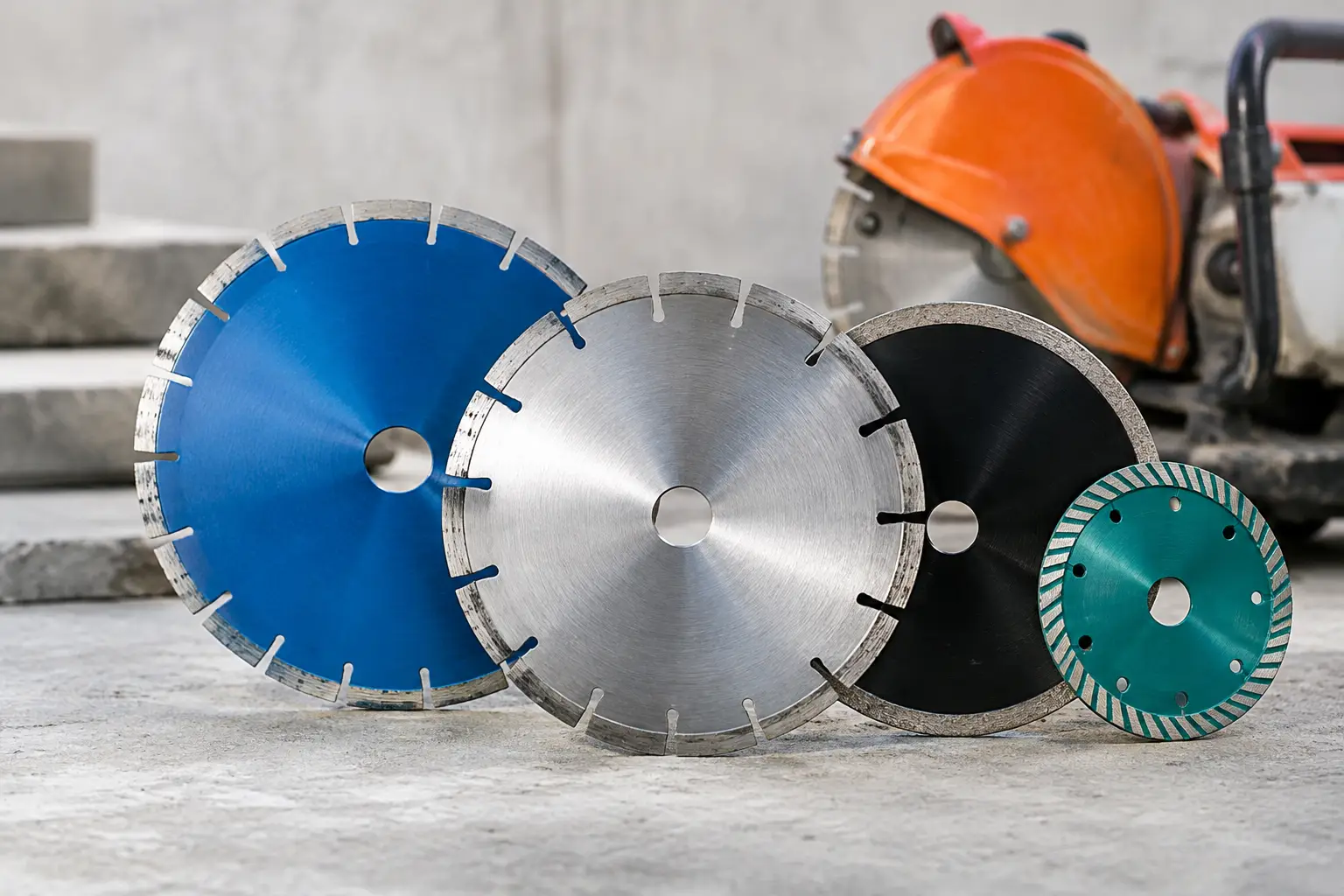
A diamond saw blade has two primary working parts: the steel core and the diamond-bearing segments. The segments contain industrial diamonds held in a metal bond. As the bond wears during cutting, fresh diamond particles become exposed to continue grinding the material.
The way those segments are secured to the core is critical. A weak or heat-sensitive connection may fail before the diamond segment is fully used. A properly selected connection keeps the segment attached while allowing the blade to cut at its intended speed and service life.
Laser-welded construction
Laser welding uses a concentrated laser beam to fuse each diamond segment to the blade core. The process creates a strong metallurgical bond at the segment base without relying on a separate silver solder layer. This attachment is designed to tolerate the high temperatures generated by dry cutting, especially when cutting dense concrete, reinforced concrete, masonry, pavers, and asphalt.
A quality laser-welded blade is commonly the preferred option for handheld power cutters, walk-behind saws, and other equipment where operators may alternate between wet and dry cutting. It is also a practical choice for jobs where water supply is limited or inconsistent.
The welding method alone does not determine blade quality. Segment formula, diamond concentration, bond hardness, core flatness, slot design, and manufacturing control still determine whether the blade cuts freely and maintains stable performance. However, laser welding provides a stronger foundation for demanding dry-cutting applications.
Sintered construction
Sintered blades generally use segments bonded to the steel core through a high-frequency welding or sintering process. In many product ranges, this construction is used for general-purpose cutting, light-to-medium duty applications, and operations where wet cutting is available.
A properly manufactured sintered blade can offer good cutting results and strong commercial value. It is not automatically a low-quality choice. For standard block, brick, tile, cured concrete, or other controlled cutting work, a sintered blade may provide the economical performance level a buyer needs.
Its limitation is heat tolerance under aggressive dry cutting. Prolonged dry operation, excessive feed pressure, insufficient cooling, or repeated cuts through hard aggregate and reinforcing steel can place greater stress on the segment joint. For severe site work, a laser-welded blade gives a larger operating margin.
Laser Welded vs Sintered Blades in Real Cutting Conditions
The practical difference becomes clear on the jobsite. A contractor cutting a few masonry units with an angle grinder has different needs than a road crew making long cuts through asphalt or a concrete cutting company operating high-horsepower saws all day.
Laser-welded blades are built for heavier thermal loads. Dry cutting creates heat at the segment edge and transfers that heat through the segment body toward the connection point. A laser weld is better suited to resist this stress, which helps reduce the risk of segment loss when the blade is used within its rated operating parameters.
Sintered blades are often best suited to moderate operating conditions. With adequate water flow, correct machine speed, and controlled feed pressure, they can provide clean, efficient cuts at a competitive purchase cost. For distributors serving mixed contractor markets, they can be a useful value-tier offering when their application limits are clearly communicated.
The decision should not be based on attachment method alone. A laser-welded blade with an unsuitable segment bond can still cut slowly or glaze in hard material. A sintered blade with the correct bond and consistent production quality may outperform an incorrectly specified premium blade. Material matching remains essential.
Where Laser-Welded Blades Deliver Better Value
Laser-welded blades normally justify their higher manufacturing cost in applications where downtime, operator safety, and blade failure are more expensive than the initial purchase price. They are particularly appropriate for reinforced concrete, hard concrete, abrasive concrete, asphalt, green concrete, and demanding masonry work.
For dry-cutting concrete, segment retention is a primary consideration. Contractors may not maintain perfect cutting technique under field conditions. They may push a blade too hard, make deeper cuts than recommended, or work in high ambient temperatures. Although no blade can compensate for every misuse condition, laser welding gives professional users a more suitable construction for these realities.
They also make commercial sense for buyers building a professional-grade private-label range. A distributor that sells to concrete cutters, rental fleets, civil contractors, and road maintenance teams needs products that support repeat orders rather than avoidable claims. Consistent laser welding, controlled segment placement, and inspected core quality support that objective.
Where Sintered Blades Are the Better Commercial Choice
Sintered blades remain relevant because many cutting jobs do not require the added cost of laser welding. A customer cutting standard masonry products, performing occasional wet cuts, or working on lower-intensity construction tasks may prioritize price efficiency over extreme heat resistance.
For wholesalers, this creates an opportunity to organize product lines by duty level rather than presenting every blade as a premium solution. An entry or general-purpose sintered blade can serve cost-sensitive applications, while a laser-welded blade covers professional dry-cutting and high-demand work. Clear positioning helps prevent customers from buying more blade than needed or less blade than the job requires.
The important point is not to sell a sintered blade as if it were designed for continuous high-stress dry cutting. Product claims should reflect the segment attachment, recommended material, blade diameter, arbor configuration, and wet or dry operating guidance. Accurate specifications reduce field complaints and strengthen distributor credibility.
Factors That Should Drive Blade Selection
When comparing laser welded vs sintered blades for a purchase order, evaluate the full cutting system. The following factors should be confirmed before selecting a blade specification:
- Material and aggregate type: Hard concrete, soft abrasive concrete, asphalt, brick, granite, and ceramic materials require different diamond bonds and segment designs.
- Cutting method: Dry cutting requires greater heat resistance. Wet cutting improves cooling, dust control, and blade life when used correctly.
- Machine power and RPM: The blade must match the equipment’s approved diameter, arbor size, and operating speed. An incorrect match can cause poor cutting and unsafe operation.
- Expected duty cycle: Occasional maintenance cuts and continuous production cutting should not use the same blade standard or price target.
- Operator conditions: Remote sites, hot climates, limited water access, and inconsistent operator technique favor blades with greater tolerance for demanding use.
For GCC buyers, ambient temperature and dry working conditions deserve particular attention. Construction projects in the UAE, Saudi Arabia, Qatar, Oman, Kuwait, and Bahrain often involve heat, dust, and high production pressure. In these environments, a laser-welded blade is often a more dependable choice for dry concrete and asphalt cutting, provided the segment formula is also designed for the material.
Quality Control Matters More Than the Label
A blade labeled laser welded is not necessarily equal to every other laser-welded blade. Buyers should assess the supplier’s control over segment production, welding consistency, core tensioning, runout, painting or coating, labeling, and final inspection. Uneven segment placement or a poorly tensioned core can lead to vibration, wandering cuts, excessive noise, and early wear even if the weld itself is strong.
The same principle applies to sintered products. Consistency between production batches matters to distributors and contractors. A blade that performs well on the first order but varies on the next container creates warranty exposure and damages customer relationships.
Ryhyoma approaches blade supply as a specification and quality-control process, not simply a choice between two attachment methods. For OEM and bulk orders, buyers should define the target material, cutting condition, performance tier, packaging requirement, and expected market position before production begins.
A reliable blade program starts with honest application matching. Specify laser-welded blades where heat, dry cutting, and heavy use demand stronger segment retention. Use sintered blades where controlled conditions and purchase efficiency make them the sensible fit. The best result is a product range that gives end users the performance they expect and gives distributors fewer reasons to manage avoidable claims.