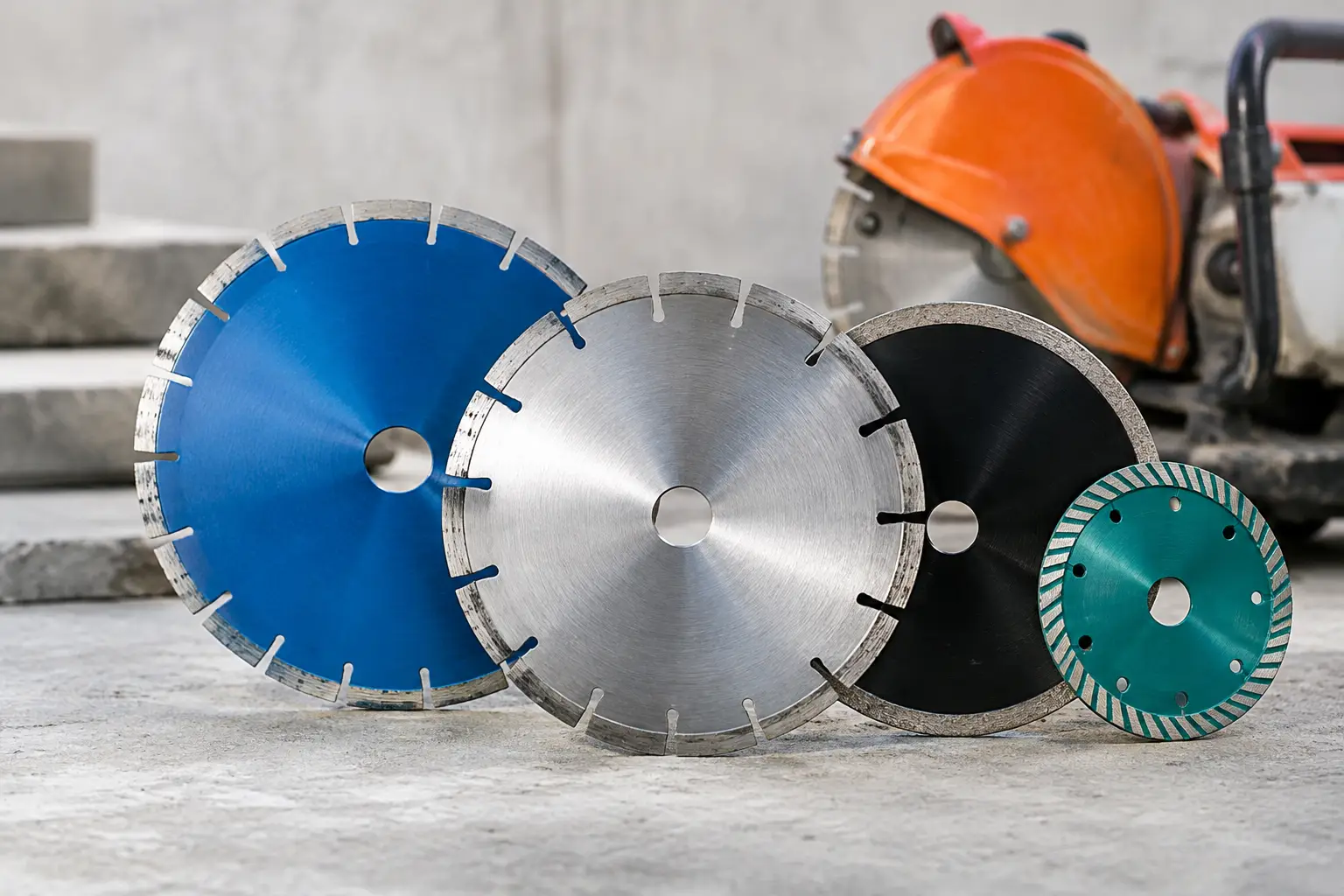
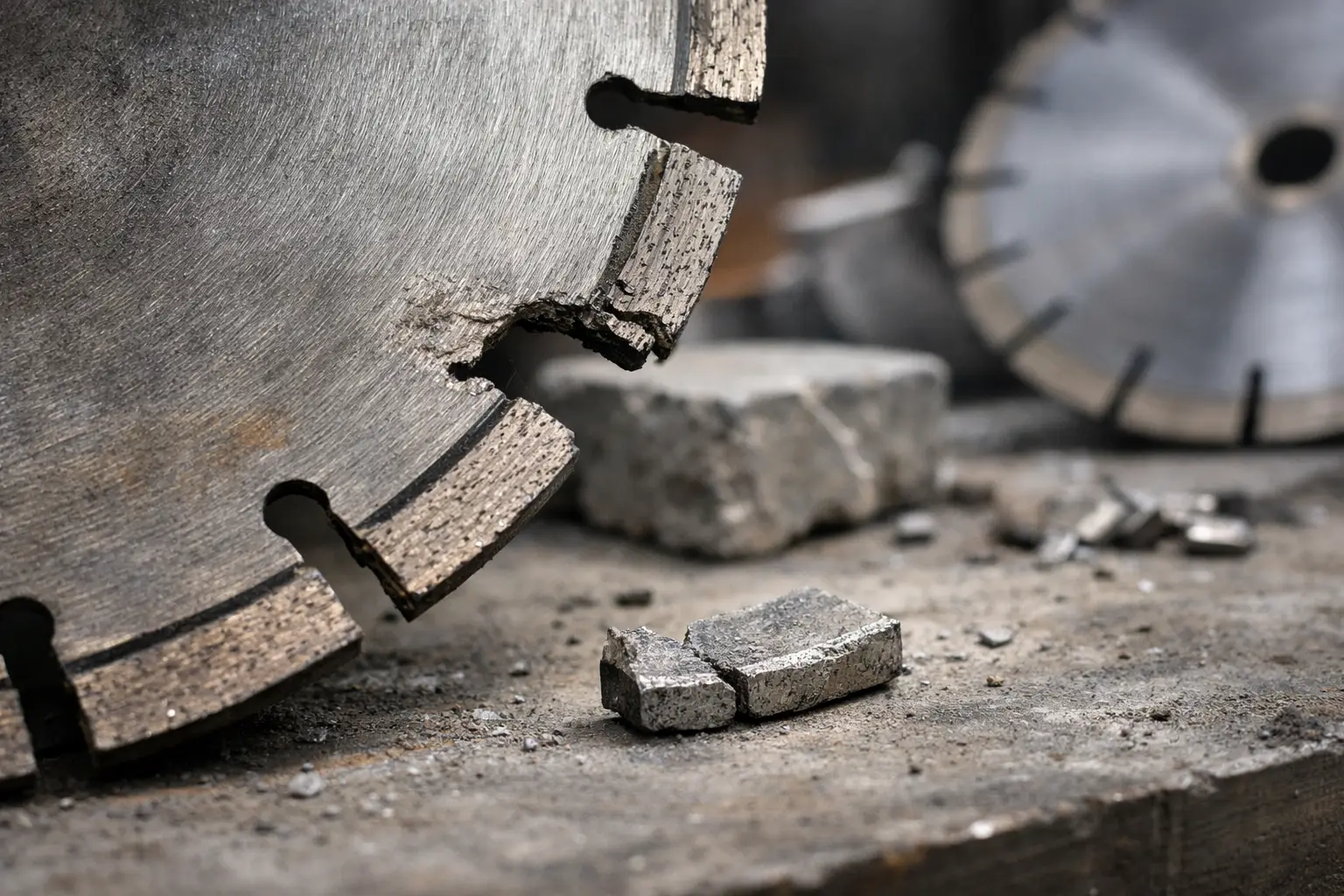
A diamond blade that loses one or more segments is not simply worn out. It is a field failure that can stop a cutting crew, damage equipment, create a safety risk, and raise questions about tool quality. For contractors, distributors, and purchasing teams, understanding what causes segment loss is necessary before changing suppliers, specifications, or operating practices.
Segment loss occurs when the diamond-bearing cutting segment separates from the steel core. On a properly manufactured blade, the joint between the segment and core is engineered to withstand heat, vibration, impact, and cutting load. When that connection fails, the cause may be application-related, machine-related, or manufacturing-related. The visible failure tells part of the story, but the operating conditions usually identify the real cause.
What Causes Segment Loss in Diamond Blades?
The most common causes are overheating, using a blade outside its intended application, excessive side pressure, unstable machinery, and damage to the blade core or segment joint. In some cases, inadequate welding or inconsistent manufacturing control is the underlying issue. In others, even a high-quality laser-welded blade can fail when it is forced through material under the wrong conditions.
The correct diagnosis matters because the remedy is not always a stronger segment bond. A harder bond may resist abrasion, for example, but it can also reduce cutting speed or make the blade glaze in a hard material. Blade design must match the material, saw type, power output, cutting method, and expected duty cycle.
Overheating and loss of segment bond
Heat is one of the leading causes of segment separation. Diamond segments expand under high temperature, while the steel core also changes dimension as it heats. If the blade is operated beyond its temperature limit, repeated thermal cycling can weaken the joint between the segment and core.
Dry-cut blades are designed to work with airflow and intermittent cutting. Problems begin when an operator makes long, continuous cuts without allowing the blade to cool. Wet-cut blades require adequate water delivery. A blocked water line, poorly positioned nozzle, or insufficient water flow allows heat to build rapidly at the rim.
Signs of overheating include discolored steel near the rim, a blue or darkened core, cracking around segment locations, warped blade plates, and several segments loosening in the same area. When these signs are present, the issue is usually operational heat management rather than normal abrasion.
Blade specification does not match the material
A diamond blade is not a universal cutting tool. Concrete, reinforced concrete, asphalt, green concrete, cured concrete, granite, ceramic, and engineered stone each produce different cutting forces and wear patterns. A blade selected for one material can experience severe stress when used on another.
For example, a hard-bond blade intended for abrasive green concrete may cut poorly in dense, hard, fully cured concrete. The operator may respond by pushing harder, twisting the saw, or extending the cut without cooling pauses. Those actions increase heat and side load at the segment connection. Similarly, using a concrete blade on steel-heavy material without the appropriate design can create impact loading that the segment layout was not built to handle.
Distributors should collect application details before recommending a blade: material type, aggregate hardness, reinforcement level, cutting depth, wet or dry conditions, machine horsepower, and expected daily usage. This information is more useful than selecting a blade solely by diameter or price level.
Side pressure, twisting, and improper feed
Diamond blades are designed to cut at the rim, not at the side of the blade. Side pressure is common when the operator changes direction during a cut, forces the saw through a pinched kerf, or begins cutting before the blade reaches operating speed. These actions can bend the steel core and put localized stress on individual segments.
Excessive feed pressure also causes failures. A blade that is cutting slowly may need a different bond or segment configuration, not more force. Forcing it can create high friction and vibration, especially in reinforced concrete or dense stone. The result may be cracked segments, damaged weld areas, or segment loss near the point where the blade was being pushed sideways.
A straight, controlled feed rate protects the blade. On floor saws and wall saws, operators should allow the machine weight and blade design to do the work. Handheld saws require even more discipline because small changes in angle can create significant lateral loading.
Machine Condition Can Cause Segment Loss
A blade cannot run correctly on a damaged or poorly maintained saw. Worn bearings, bent shafts, loose arbors, incorrect flanges, and excessive spindle runout all create vibration. This vibration repeatedly loads the segments and may fatigue the weld area over time.
The flanges must be clean, flat, and correctly sized for the blade. Dirt, slurry buildup, damaged flange faces, or uneven tightening can prevent the blade from being clamped evenly. A blade installed off-center may appear acceptable at low speed but develop runout once it enters the material.
Before blaming the blade, inspect the saw and mounting system. Check that the arbor hole fits correctly, the flanges contact the core evenly, the blade rotates in the specified direction, and the shaft has no visible wobble. If multiple blades fail on the same machine, equipment condition should be investigated immediately.
Undercutting in abrasive environments
Undercutting happens when the steel core behind the segment wears away faster than the segment itself. It is particularly common in asphalt cutting, abrasive sand-laden concrete, and jobs where slurry or abrasive debris continuously contacts the blade sidewall.
As the core becomes thinner beneath the segment, the segment loses support. It can crack, bend, or detach even if the original weld was sound. Undercutting often appears as a deep groove or erosion line around the steel core just behind the segments.
The solution is a blade designed for abrasive material, often with protective features that reduce core erosion. Correct water use also matters. Water controls dust and temperature, but excessive slurry movement around the blade can increase abrasive wear in certain conditions. The appropriate setup depends on the material and saw application.
Damage from contact with rebar, steel, or obstructions
Hitting reinforcement is expected in many concrete cutting applications, but repeated heavy impacts can still damage a blade that is not designed for the task. The risk rises when embedded steel is encountered at an angle, when the cut is rushed, or when the blade is used on unknown material containing heavy reinforcement, wire mesh, or loose metal.
Unexpected obstructions present an even greater hazard. Embedded anchors, bolts, structural steel, and hard aggregate pockets can shock-load the rim. A single impact may not detach a segment, but it can create a crack that develops into failure during later cutting.
When a blade loses one segment after striking a localized obstruction, inspect the adjacent segments and steel core before returning the blade to service. Continuing to operate a damaged blade can lead to further segment loss and unsafe imbalance.
Manufacturing Quality and Segment Attachment
Manufacturing quality remains a central factor. The segment-to-core connection must be consistent around the entire blade circumference. Laser welding is widely used for professional concrete and construction blades because it creates a strong metallurgical bond suitable for demanding dry and wet applications. Vacuum brazed designs are used for specific products and materials where their cutting characteristics are appropriate.
A reliable manufacturer controls core steel quality, segment placement, weld parameters, welding penetration, balance, and final inspection. Poor alignment, contamination at the joint, inconsistent weld energy, or weak core material can reduce attachment strength. These defects may lead to early segment loss even when the operator uses the blade correctly.
However, not every segment-loss claim is a manufacturing defect. A useful failure review examines the failed blade, remaining segments, core discoloration, flange marks, material being cut, saw model, water supply, and cutting method. This evidence helps separate a product issue from an application mismatch or equipment problem.
For OEM and private-label buyers, quality control should include sample validation under realistic field conditions. A blade that performs well in a short demonstration may behave differently during continuous production cutting. Stable bulk supply requires consistent raw materials, controlled welding processes, and repeatable segment formulations from batch to batch.
How to Reduce Segment Loss in the Field
Prevention starts before the blade is installed. Select the blade for the actual material and cutting method, not a general description of the job. Confirm whether the operation is wet or dry, check the saw's horsepower and rpm, and make sure the blade's maximum safe operating speed exceeds the machine speed.
During cutting, maintain adequate water where required, use a steady feed rate, avoid twisting in the kerf, and allow dry-cut blades cooling intervals. Operators should stop immediately if they see severe vibration, core discoloration, unusual noise, or reduced cutting stability. These are early warnings, not conditions to work through.
After use, clean slurry and debris from the blade, inspect the rim for cracks or missing segments, and store blades where they will not be bent or damaged. A blade with a missing segment, visible core crack, or distorted plate should be removed from service.
For procurement teams, the most practical approach is to evaluate blade performance by total cutting output, failure rate, and consistency across shipments. The lowest unit price does not reduce operating cost if segment loss creates downtime, replacement expenses, or safety exposure. A properly specified, quality-controlled blade protects both the job schedule and the distributor's reputation.
Segment loss is best treated as a technical signal. Review the blade, the material, the saw, and the cutting method together, then correct the condition that created the stress. That approach produces safer cutting and more dependable tool performance on the next job.