
A contractor needs to cut through concrete, rebar, tile adhesive, and a steel edge without stopping to change accessories. A fabricator needs a clean profile on stainless steel without burning the workpiece. These are the situations where the question of when to use vacuum brazed tools becomes commercially relevant. The right tool can reduce changeover time, maintain jobsite productivity, and prevent the inconsistent finish that leads to rework.
Vacuum brazed diamond tools are not a replacement for every bonded diamond blade, core bit, or grinding cup. They are a specialized solution for applications involving mixed materials, difficult surfaces, and fast stock removal. Buyers should select them based on the material, tool type, required finish, equipment speed, and expected service life rather than on diamond exposure alone.
What Makes a Vacuum Brazed Tool Different?
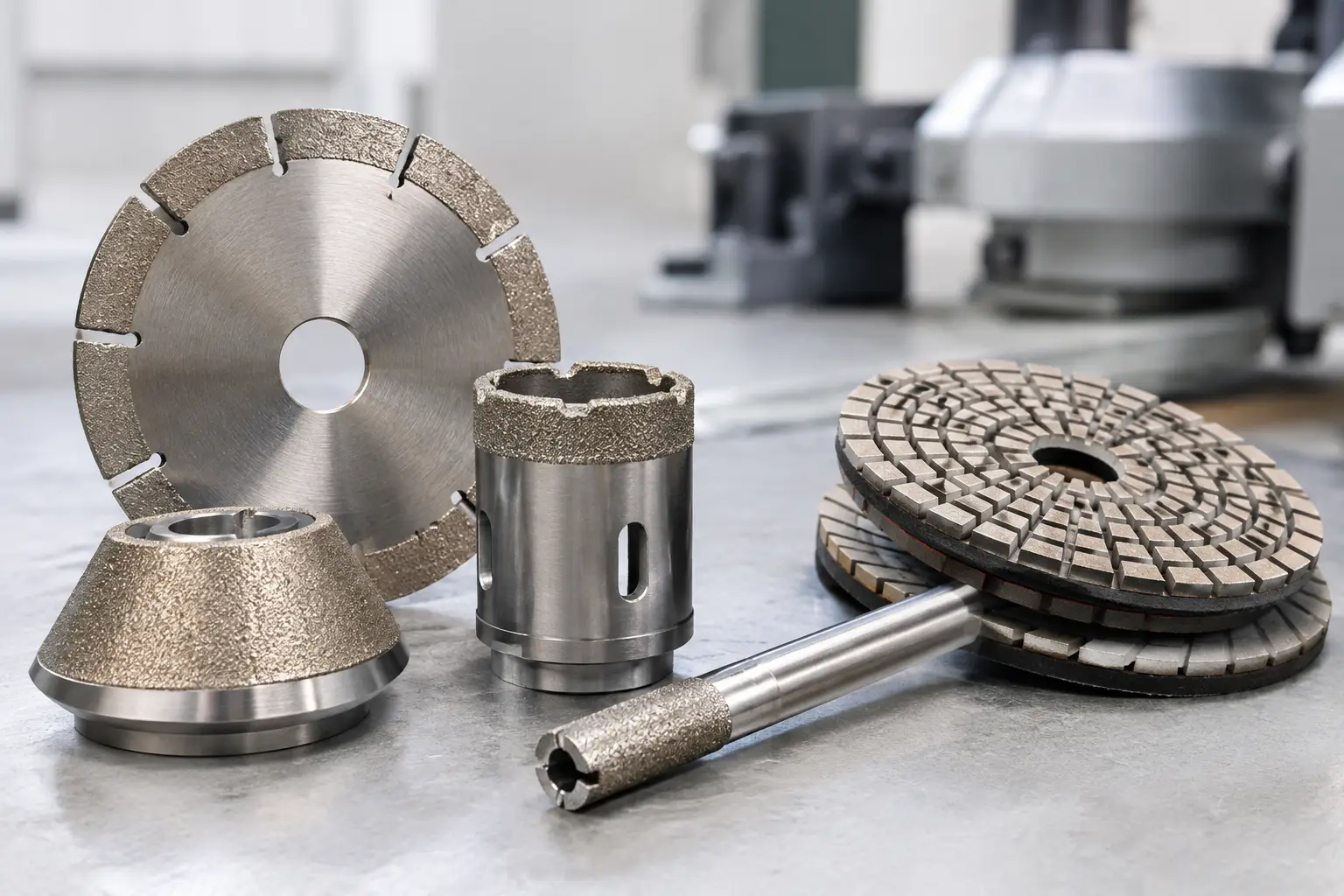
In vacuum brazing, diamond particles are bonded to the steel tool body with a high-strength brazing alloy under controlled vacuum conditions. Unlike a conventional sintered segment, the diamonds remain highly exposed on the working surface. This gives the tool an aggressive cutting or grinding action from the first contact.
That exposed diamond structure is particularly effective on hard, abrasive, or nonuniform materials. It also allows a single tool to work across combinations that would normally require separate accessories, such as concrete with embedded reinforcement, stone with metal fixtures, or ceramic surfaces with adhesive residue.
The trade-off is service life. A vacuum brazed tool often delivers faster initial cutting and greater material versatility than a general-purpose bonded product, but it may not be the most economical choice for long, repetitive cuts in one homogeneous material. For high-volume concrete sawing, for example, a laser-welded blade with properly matched segments is usually the more appropriate production tool.
When to Use Vacuum Brazed Tools
Vacuum brazed tools are most effective when the job has uncertainty built into it. Demolition, renovation, repair, rescue cutting, and surface preparation frequently involve materials that are not fully known until the work begins. In these cases, the ability to cut multiple substrates with one accessory can be more valuable than achieving the lowest possible cost per linear foot.
Mixed-Material Cutting and Grinding
Use vacuum brazed blades, grinding discs, or hole saws when the tool may encounter both mineral and metallic materials. Common examples include reinforced concrete, brickwork with steel ties, cast iron pipe near masonry, stone with metal anchors, and tile installations containing thin steel components.
A conventional diamond blade designed only for concrete can lose efficiency or suffer segment damage when it repeatedly meets metal. An abrasive wheel may cut the metal but perform poorly in concrete or stone. Vacuum brazed diamond tools bridge this gap by maintaining effective cutting action across both types of material.
This capability is especially useful for maintenance contractors and distributors supplying general repair crews. Rather than carrying a separate tool for each likely material, crews can keep a vacuum brazed option available for unexpected obstacles. It should be positioned as a problem-solving tool, not as the default blade for every cut.
Surface Preparation and Coating Removal
Vacuum brazed grinding tools are also well suited to surface preparation where coatings, adhesives, mortar, paint, epoxy, and hard mineral substrates must be removed together. The open diamond structure cuts aggressively and is less likely to glaze over immediately when it contacts sticky or layered materials.
For flooring work, this can be valuable when removing thin-set, tile adhesive, epoxy residue, or localized coatings from concrete. For stone fabrication and construction repair, it can support edge cleanup, localized grinding, and removal of surface contamination before repair or finishing.
The operating condition matters. Coating removal generates heat and debris, so the tool should be used with appropriate dust control and with enough movement to avoid concentrating heat in one spot. A vacuum brazed wheel is designed for productive removal, not for holding a perfectly flat finish over a large floor area. For broad, controlled concrete grinding, purpose-built floor grinding blocks remain the better choice.
Cutting Hard, Brittle, or Abrasive Materials
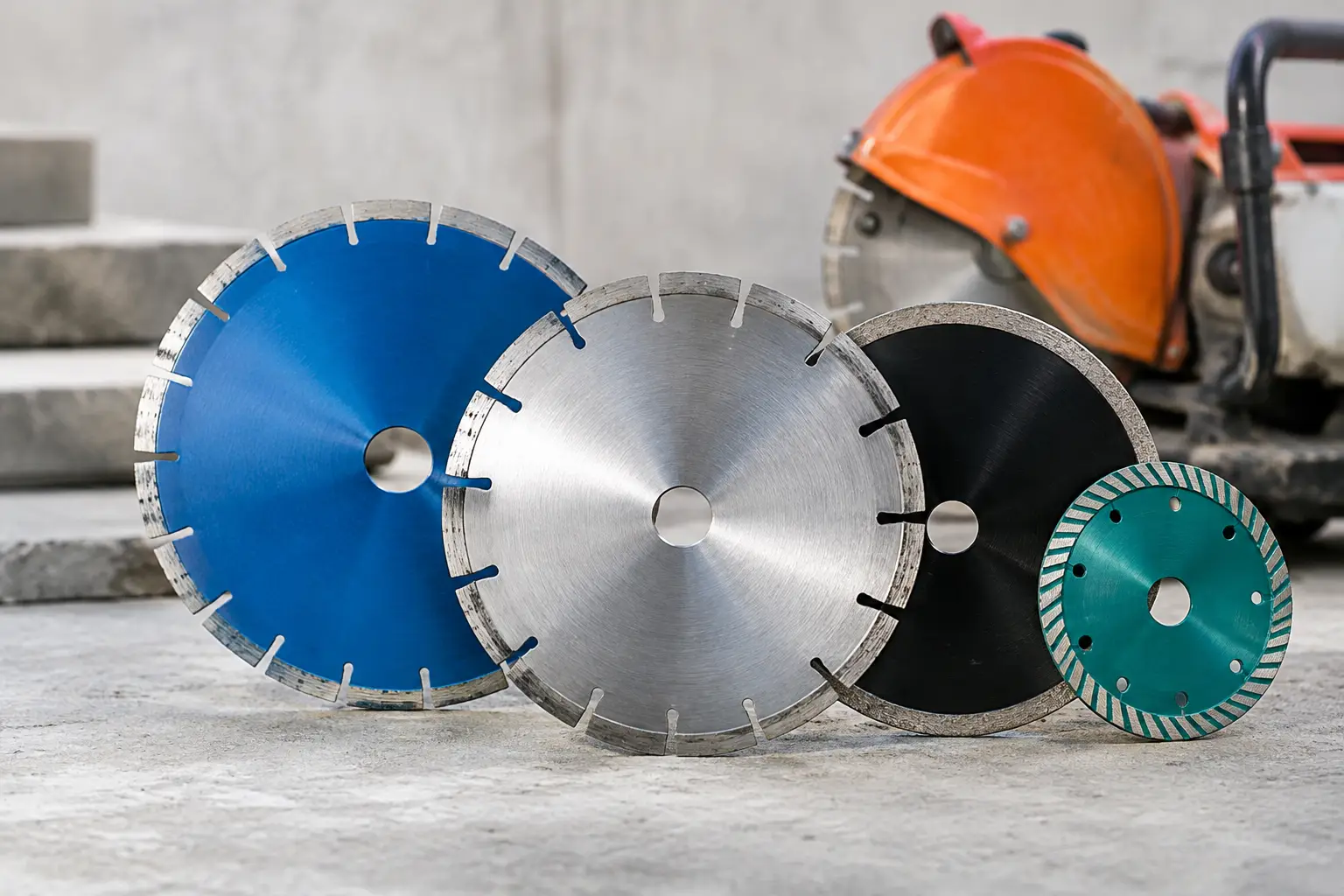
Vacuum brazed diamond blades perform well on materials that are difficult for standard abrasive accessories, including natural stone, marble, granite, ceramic tile, porcelain, fiber cement, and certain composite building materials. They can provide fast entry and good control in short cuts, trimming, notching, and repair work.
The application still needs to be matched to the tool specification. A thin vacuum brazed blade may be appropriate for tile, stone, or metal trimming, while a heavier blade body is needed for concrete repair and mixed-material construction work. Buyers should verify diameter, arbor size, maximum RPM, dry or wet operating recommendation, and intended machine type before placing a bulk order.
For highly chip-sensitive surfaces such as polished porcelain or premium sintered stone, speed is not the only requirement. A continuous-rim or fine diamond blade selected specifically for finish quality may produce a cleaner edge. Vacuum brazed tools are generally chosen when jobsite durability and material versatility matter more than a near-polished cut line.
Drilling Through Variable Substrates
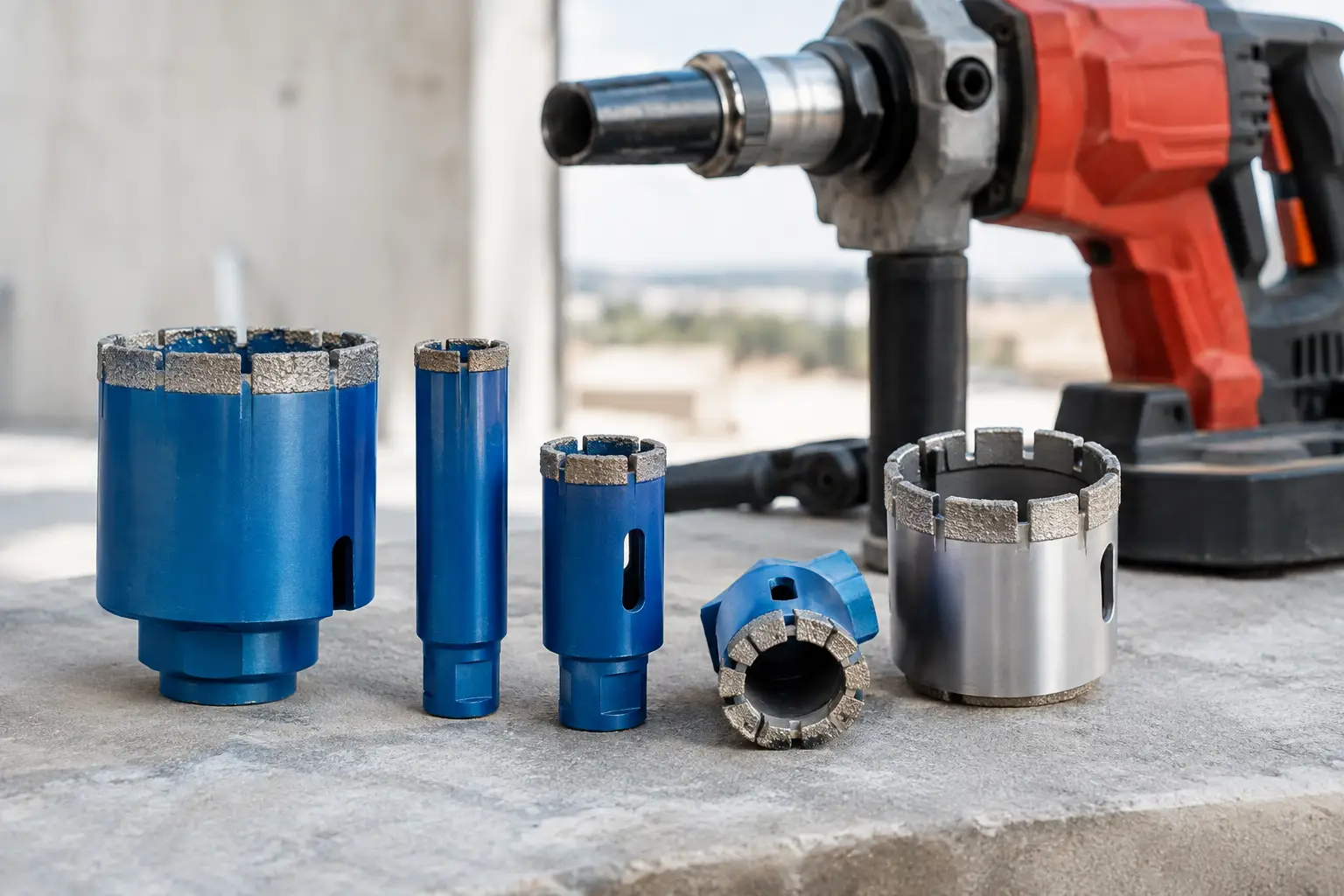
Vacuum brazed hole saws and core tools are practical for short, fast holes through tile, stone, glass, masonry, and similar materials, particularly when installers need reliable starting performance. The exposed diamonds bite quickly, helping reduce walking at the start of the hole when used correctly.
They are a good option for plumbing, electrical, HVAC, and finishing work where hole counts are moderate and substrates vary from site to site. For example, an installer may need to pass through porcelain tile, adhesive, backer board, and light masonry in one operation.
They are not the automatic choice for deep, large-diameter, or high-volume reinforced concrete coring. Those applications require core bits engineered for depth, water delivery, segment cooling, and sustained drilling loads. Selecting a vacuum brazed hole saw for a heavy coring program can create unnecessary wear and inconsistent productivity.
When a Different Diamond Tool Is the Better Choice
A disciplined tool program avoids using a versatile product where a dedicated product will perform better. Vacuum brazed tools are not ideal for every material or operating method.
For long, repetitive cuts in cured concrete, asphalt, granite slabs, or masonry blocks, use a blade with segments designed for that material and machine horsepower. Laser-welded concrete blades are preferred where safety, segment retention, and sustained cutting performance are critical. Sintered segments and purpose-built saw blades often provide better value over a high footage production run.
For precision fabrication of Dekton, porcelain slabs, or polished stone, select a blade developed for the required edge quality and cooling method. A vacuum brazed blade may cut the material, but it may not produce the finish expected by a premium countertop customer.
For heavy floor preparation, choose metal-bond grinding blocks or PCD tooling based on the coating and floor condition. Vacuum brazed cups are effective for localized removal and difficult transitions, but they are not a substitute for a complete planetary grinder tooling system.
Selection Factors for Procurement Teams
For distributors and wholesale buyers, vacuum brazed tools should be specified by application rather than sold as a broad "multi-purpose" category. This improves customer satisfaction and reduces returns caused by incorrect use.
Start with the expected material mix. A blade intended for rebar-containing concrete needs a different balance of body strength and diamond pattern than a thin disc intended for stainless steel and ceramic trimming. Then consider the machine: handheld grinders, cut-off saws, tile saws, and drill motors impose different RPM, load, and cooling conditions.
The required finish and job duration should also guide the selection. If the user needs a fast intervention tool for repair work, high diamond exposure is an advantage. If the user needs hundreds of identical cuts per day, a dedicated laser-welded or sintered product is usually more economical.
Quality control is particularly important with vacuum brazed products. Uneven diamond distribution, weak brazing, poor body flatness, or incorrect balance can reduce cutting stability and create safety risks. For bulk supply programs, buyers should confirm consistent dimensions, bonding quality, maximum RPM markings, packaging standards, and lot-to-lot performance. OEM or private-label orders should also include clear application labeling so end users understand the tool's intended limits.
Operating Practices That Protect Tool Life
Vacuum brazed tools should be run at the recommended speed and applied with controlled pressure. Forcing the tool does not improve cutting performance. It raises heat, accelerates diamond loss, and can distort thinner tool bodies.
Use the cooling method specified for the product. Some tools are designed for dry use with intermittent cutting, while others benefit from water to control heat and dust. Dry cutting should include periodic relief from the cut so air can cool the working edge. Operators should also inspect the tool before use and remove it from service if the body is cracked, warped, or excessively worn.
Storage matters for distributors and contractors as well. Keep tools dry, protected from impact, and separated from loose metal parts that can damage the working edge. A tool that arrives in good condition but is mishandled in the warehouse will not deliver the stable performance expected on site.
For commercial buyers, the best use of vacuum brazed tooling is strategic: keep it available for the jobs where material changes, unknown reinforcement, and urgent surface work can disrupt production. Selecting the right specification for those demanding tasks turns a versatile accessory into a reliable part of the tool program.