A clean cut can be lost in the final few millimeters. Edge breakout on porcelain, granite, concrete pavers, or engineered stone creates reject material, rework, and customer complaints. Knowing how to reduce blade chipping starts with separating two different problems: chipping on the workpiece edge and damage to the diamond blade rim, segments, or core. Both usually point to a mismatch between the blade, material, machine, and cutting process.
For contractors, fabricators, and distributors, the practical goal is not simply to cut slower. It is to produce a stable cutting system that maintains material quality and protects tool life across repeated commercial work.
Why Blade Chipping Happens
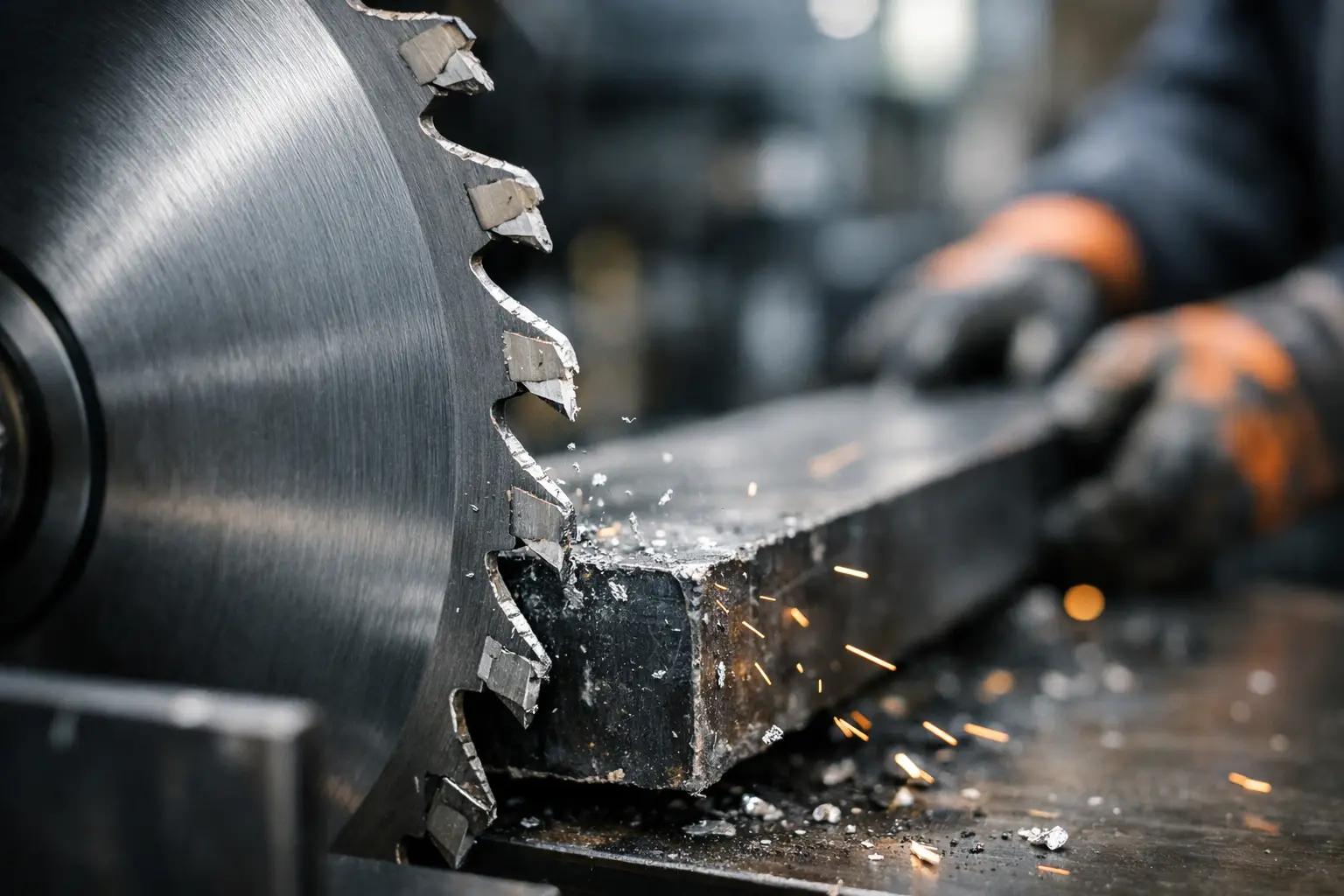
Workpiece chipping occurs when the blade removes material too aggressively, vibrates during the cut, or exits the material without sufficient support. Brittle materials such as ceramic, porcelain, Dekton, glass-like engineered surfaces, and natural stone are particularly sensitive. A hard bond, wide diamond exposure, unsuitable rim design, worn bearings, or excessive feed pressure can all leave a rough, broken edge.
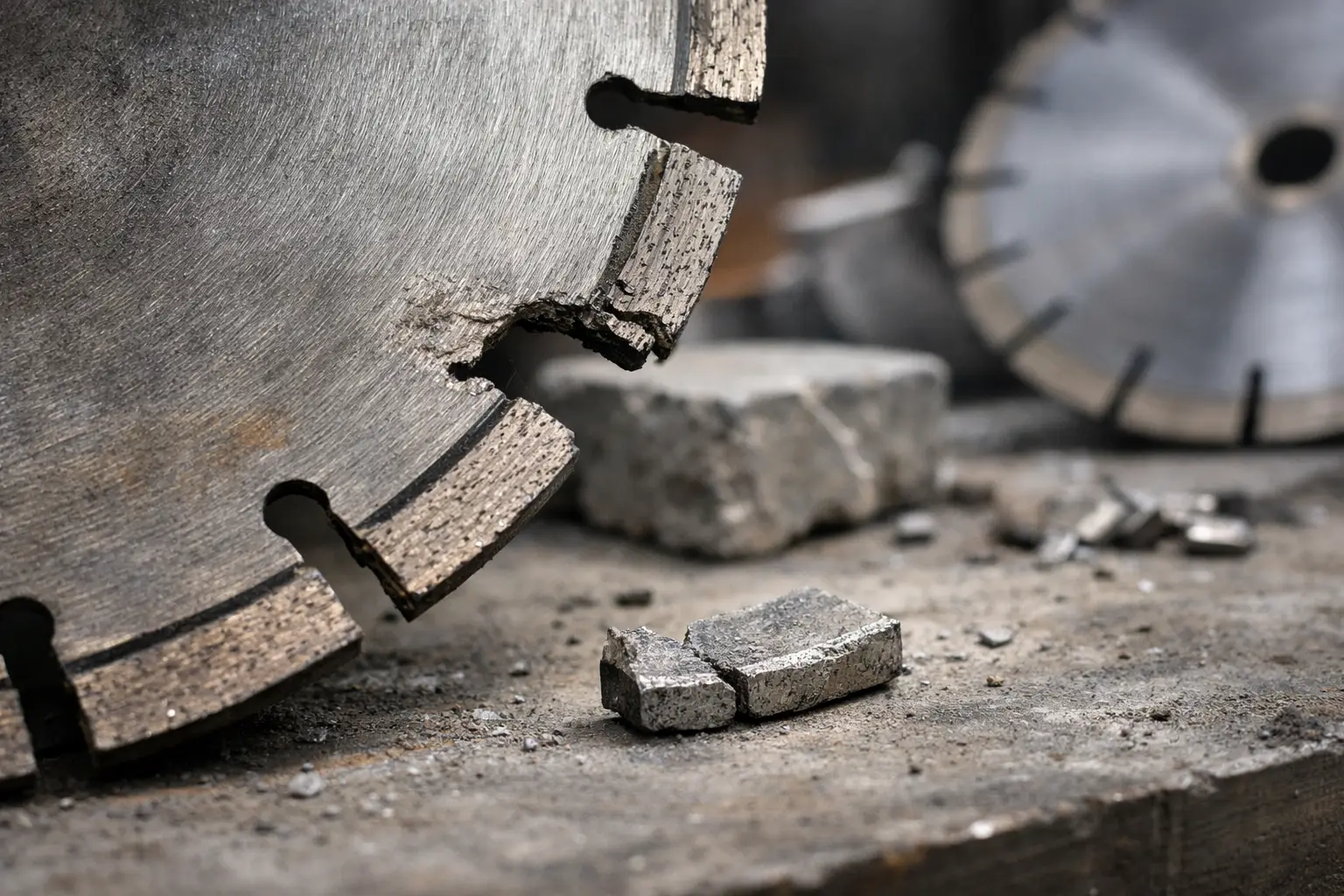
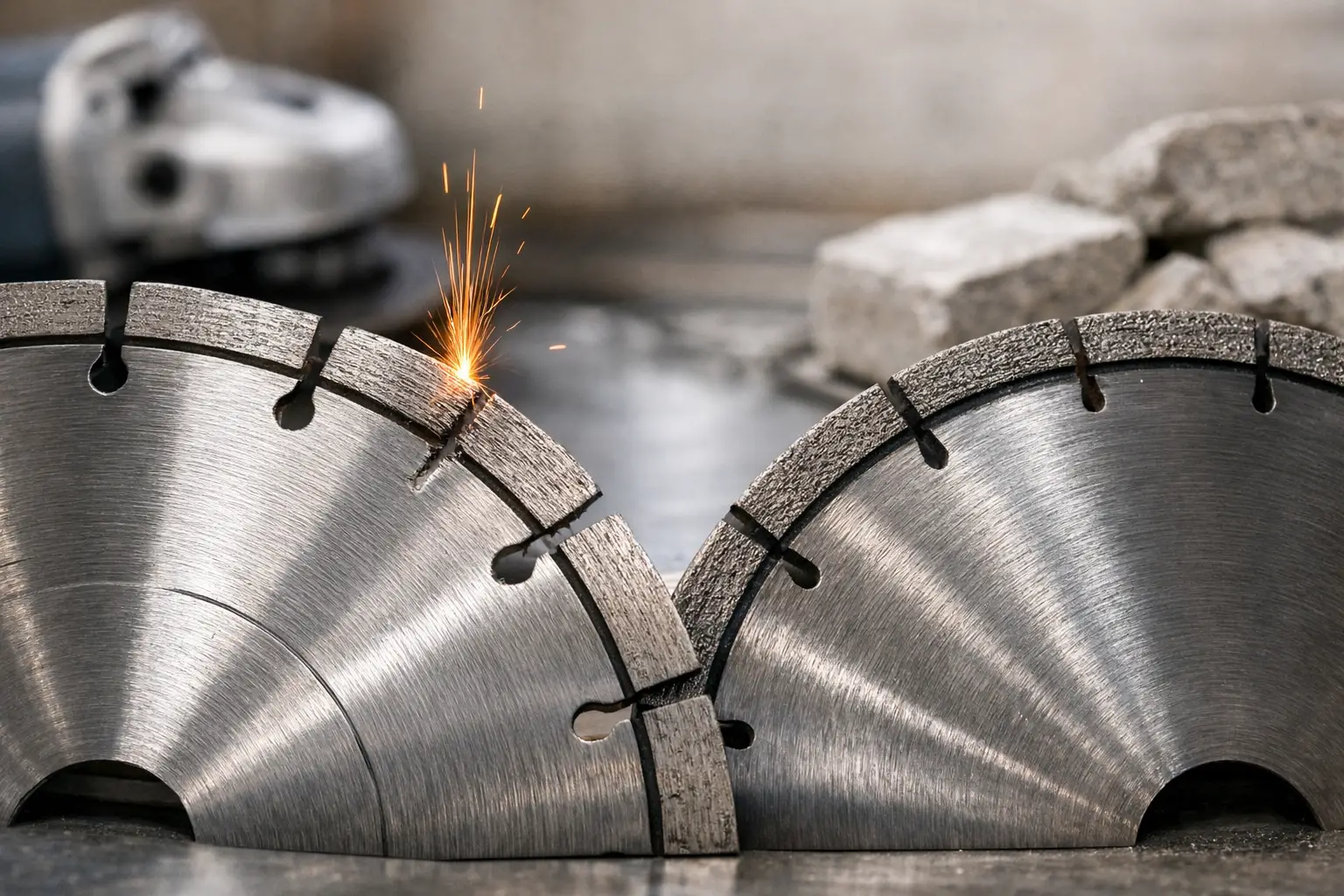
Blade damage is a different issue. Segment loss, rim cracking, steel-core distortion, or uneven diamond wear may result from overheating, improper cutting speed, side pressure, dry cutting with a wet-only blade, or using the blade on a material outside its intended application. A cracked or damaged blade should be removed from service immediately. Continuing to use it can compromise cut quality and operator safety.
The root cause is often cumulative. A slightly warped saw shaft, insufficient water flow, and an operator pushing a dull blade can create a level of vibration that none of those factors would cause alone. That is why a reliable diagnosis must examine the whole cutting setup rather than blaming the blade alone.
How to Reduce Blade Chipping Through Blade Selection
Blade selection has the greatest influence on edge quality. A general-purpose diamond blade may be acceptable for occasional mixed-material work, but it is rarely the best choice where finish quality matters. The matrix bond, diamond concentration, rim configuration, kerf width, and core design should match the material being cut and the machine being used.
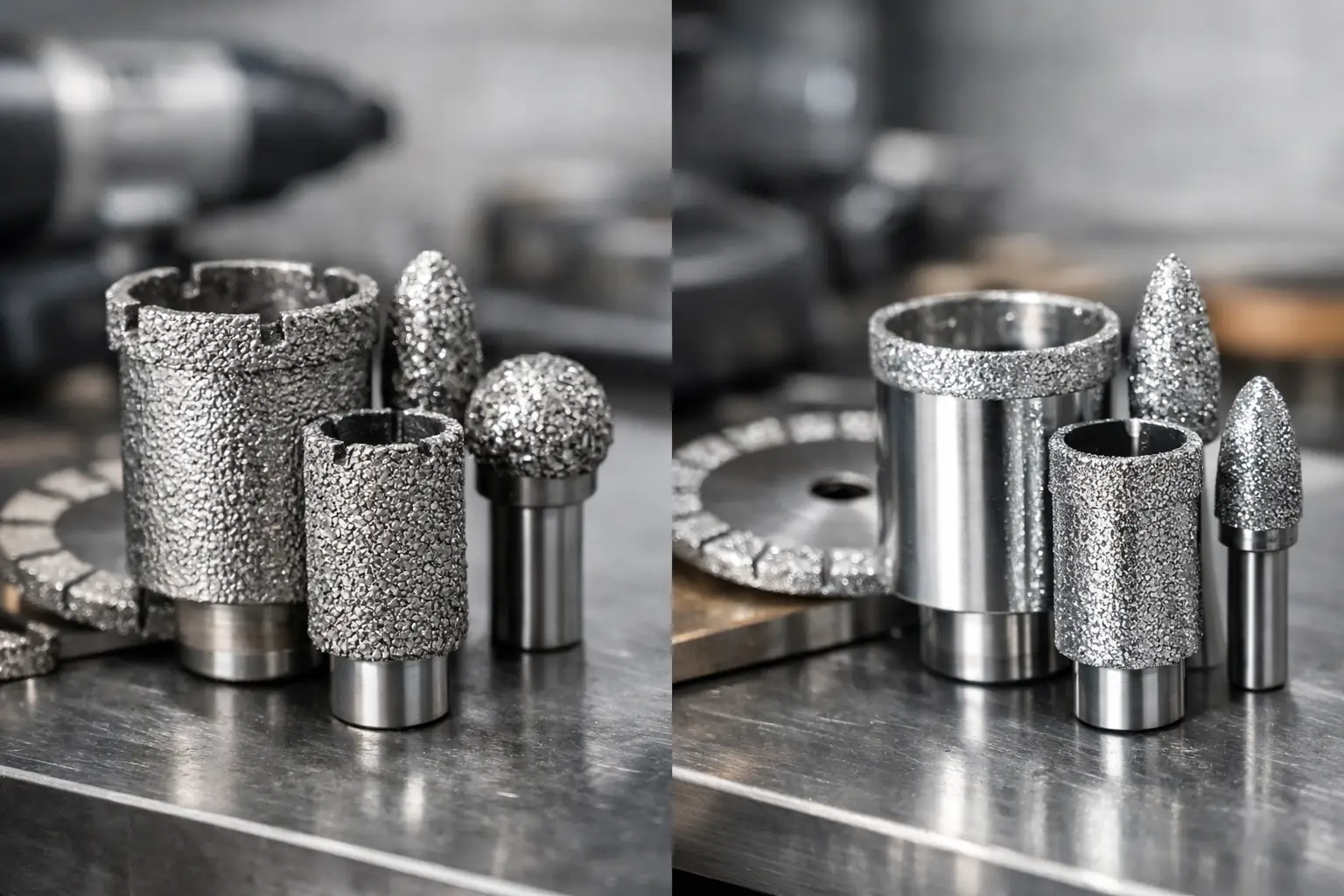
For porcelain tile, ceramic slabs, and other brittle finishes, use a continuous-rim or fine turbo-rim blade designed for clean cutting. These blades provide more consistent contact with the material and reduce the impact that causes edge breakout. A segmented blade is normally more productive in concrete or masonry, but its interrupted cutting action is more likely to chip delicate surfaces.
For granite, hard engineered stone, and dense sintered slabs, the blade needs the correct bond balance. If the bond is too hard, diamonds remain trapped and the blade rubs rather than cuts. Heat rises, feed pressure increases, and chipping follows. If the bond is too soft, diamond particles release too quickly, reducing blade life and potentially making the cut unstable. The correct specification exposes fresh diamond at a controlled rate.
Kerf width also involves a trade-off. A thinner blade reduces material waste and cutting resistance, but it can deflect more easily if the saw, flange, or operator setup is not stable. A slightly thicker, reinforced-core blade may deliver a cleaner result in demanding production work, even though it removes more material per cut.
For bulk buyers and private-label programs, material samples and target machine specifications should be reviewed before setting a blade specification. A blade that performs well on one porcelain body, aggregate mix, or granite grade may not perform identically on another.
Check the Saw Before Changing the Blade
An excellent blade cannot compensate for a poorly maintained machine. Spindle runout, damaged flanges, worn guide rails, loose arbor fittings, and bearing wear create lateral movement at the cutting edge. Even small movement is enough to chip polished stone, crack a thin rim, or produce a wandering cut.
Start by confirming that the arbor diameter matches the blade bore correctly. Do not force a blade onto an arbor or use improvised reducers. Flanges should be clean, flat, and equal in diameter where the saw design requires it. Dust, slurry buildup, or a damaged flange face can prevent the blade from seating properly and create runout.
Inspect the blade before installation. Check for cracks, missing segments, uneven wear, overheating discoloration, and a bent core. Confirm the rotational direction marked on the blade. After mounting, run the saw briefly without load and observe whether the blade tracks smoothly. Any visible wobble should be corrected before cutting material.
Portable saws introduce another variable: handling. A blade can be technically correct but still chip the material if the operator twists the saw, starts the cut at an angle, or lets the blade contact the workpiece before reaching operating speed. Stable material support and a controlled cutting path matter as much as the blade specification.
Control Feed Rate, Cutting Speed, and Entry
Excessive feed pressure is one of the most common causes of chipping. When a blade loses cutting efficiency, operators often push harder to maintain production speed. This increases friction, raises heat, and forces diamonds through the material instead of allowing them to abrade it progressively.
Use firm, even feed pressure. The blade should cut under its own designed action, with the operator guiding rather than forcing it. If the cut slows noticeably, stop and investigate the cause. The blade may need dressing, cooling may be inadequate, or the blade may be unsuitable for the material.
Entry and exit technique are especially important for brittle materials. Begin with a shallow, controlled score cut when the application allows, then complete the cut in a second pass. This reduces breakout at the surface. On a bridge saw or tile saw, supporting both sides of the cut line prevents the offcut from dropping and tearing away the final edge.
Blade speed must remain within the manufacturer’s rated operating range. Running below the effective peripheral speed can make cutting inefficient, while excessive speed can generate heat and accelerate wear. The correct RPM depends on blade diameter, so procurement teams should verify that each blade size is compatible with the intended saw.
Use Cooling and Dust Control Correctly
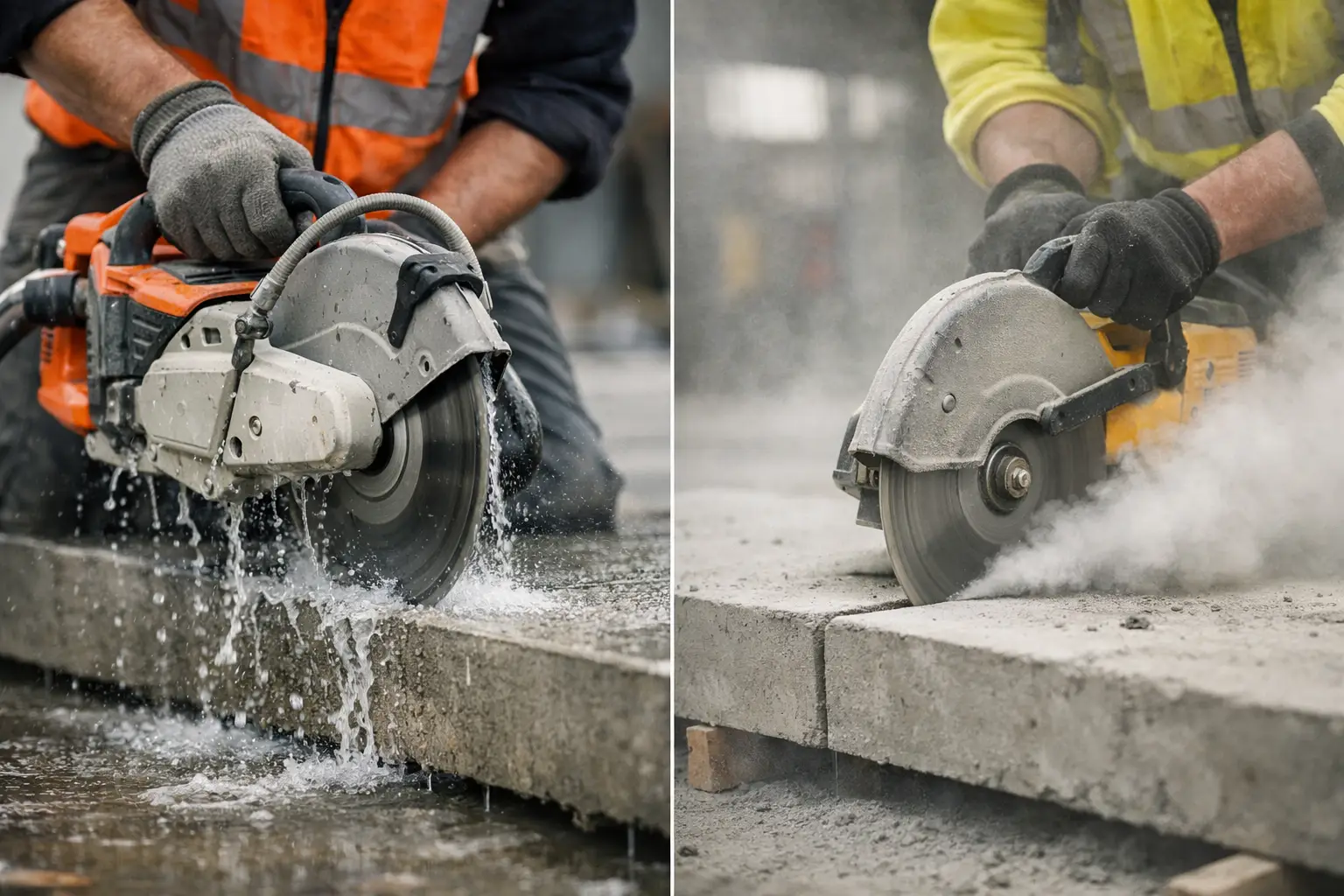
Water is not only for dust suppression. In wet cutting, it removes slurry, carries heat away from the diamond rim, and helps preserve a clean cutting action. Insufficient water can glaze the blade, discolor the core, reduce segment retention, and damage heat-sensitive materials.
Direct water at both sides of the blade where possible, with enough flow to reach the cutting zone rather than simply wetting the surface. Check nozzles regularly because slurry can block them. For high-value slab materials, clean water also reduces the risk of abrasive debris scratching the finished face during cutting.
Dry cutting requires a blade specifically designed for dry use and a disciplined cutting cycle. Avoid long, uninterrupted cuts that overheat the rim. Periodic shallow passes or brief pauses can allow the blade to cool, but they are not a substitute for using the correct blade and machine for the application.
Dress Dull Blades Before They Damage the Work
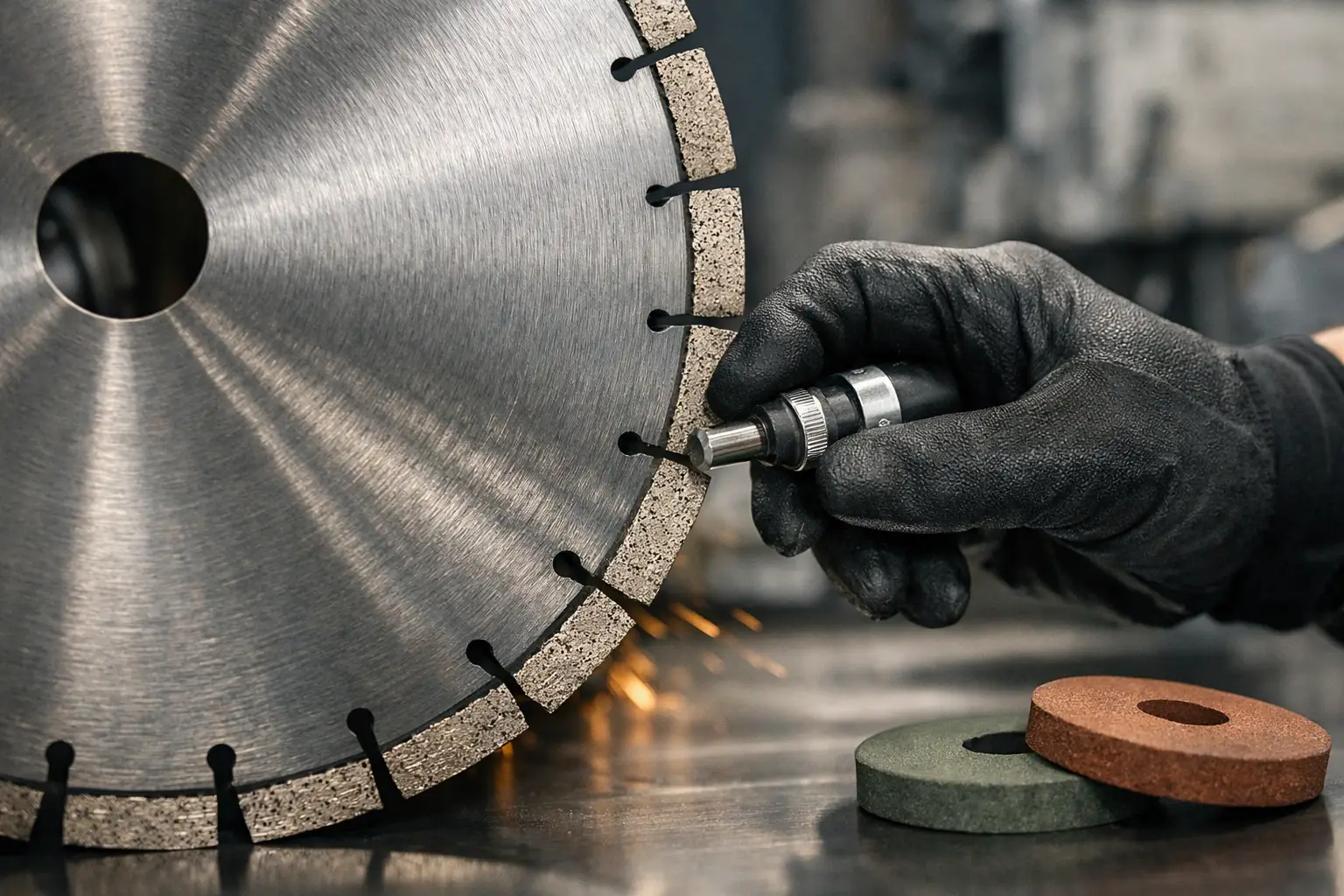
A glazed blade has diamonds that are no longer exposed effectively. Instead of cutting, the rim polishes the material surface and generates heat. The operator then applies more pressure, which often produces edge chipping and can damage the blade core.
Dressing restores cutting action by wearing away enough bond material to expose fresh diamond. The correct dressing method depends on the blade type and application, but it should be controlled and performed using an appropriate abrasive dressing material. Do not attempt to sharpen a blade by forcing it through unsuitable scrap material. That can create uneven wear or segment damage.
Track blade performance by material, linear feet cut, cutting speed, and visible wear pattern. This information helps identify whether a blade needs dressing, whether machine conditions are changing, or whether the bond specification should be adjusted for the next order.
Build Quality Control Into the Supply Plan
For distributors and contractors managing multiple crews, chipping problems are often made worse by inconsistent tool supply. Two blades with the same label can perform differently if diamond grade, bond formulation, core tensioning, or welding quality changes between batches.
Specify the application clearly when sourcing: material type, thickness, wet or dry operation, machine model, blade diameter, required finish, and expected production volume. Request consistent manufacturing controls for the diamond segment, steel core, and welding process. Laser-welded construction is particularly relevant for demanding masonry and concrete applications where segment security and heat resistance are critical.
Ryhyoma supports OEM and bulk tool programs by aligning blade specifications with the buyer’s material and operating conditions. This approach helps distributors avoid the costly pattern of selling a single general-purpose blade into applications that require a more precise solution.
A cleaner cut is usually the result of disciplined choices made before the saw starts: a matched blade, a stable machine, correct cooling, and controlled feed pressure. When chipping appears, treat it as a process signal. Correcting the underlying cause protects both the finished material and the blade investment.