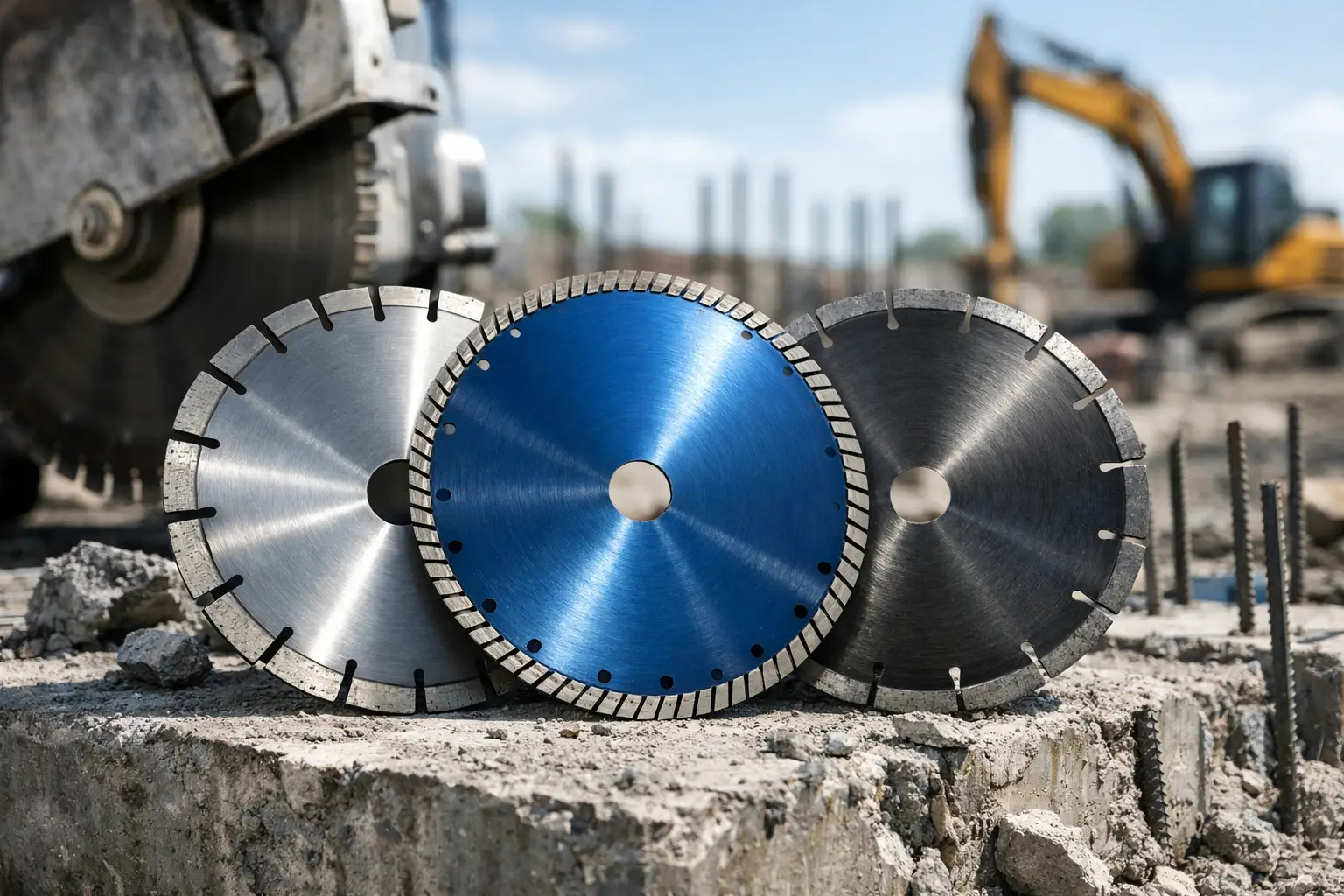
Reinforced concrete does not fail blades slowly or politely. A blade may cut cleanly through the concrete matrix, then lose speed, glaze, wander, or shed segments when it reaches dense rebar. For contractors, distributors, and purchasing teams, selecting the best blades for reinforced concrete is therefore not about choosing the hardest-looking blade. It is about matching segment design, bond formula, core construction, and cutting method to a demanding mixed-material application.
A properly specified diamond blade delivers predictable cutting speed through both cured concrete and steel reinforcement, while maintaining segment retention and a straight cut. That consistency affects labor time, equipment uptime, and the number of blades required per job. For commercial buyers, it also determines whether a product line can earn repeat business in the field.
What Makes Reinforced Concrete Difficult to Cut
Reinforced concrete combines materials with very different cutting behavior. Concrete is abrasive, especially when it contains hard aggregate such as quartz, granite, or basalt. Rebar is tougher and less abrasive, but it generates heat and can polish the diamond edge instead of exposing fresh diamond grit.
The blade must handle alternating conditions. It needs a bond that releases worn diamond at the right rate when cutting abrasive concrete, yet holds the segment together when it contacts steel. If the bond is too hard, the blade can glaze over and slow down. If it is too soft, segment wear accelerates and the cutting edge may be consumed before the job is complete.
The concrete itself also varies. Green concrete generally cuts more easily but can be abrasive. Fully cured structural concrete is harder and often contains high-strength aggregate. Precast elements, bridge decks, foundations, and heavily reinforced slabs can each require different blade specifications even when all are described simply as reinforced concrete.
Best Blades for Reinforced Concrete: Core Specifications
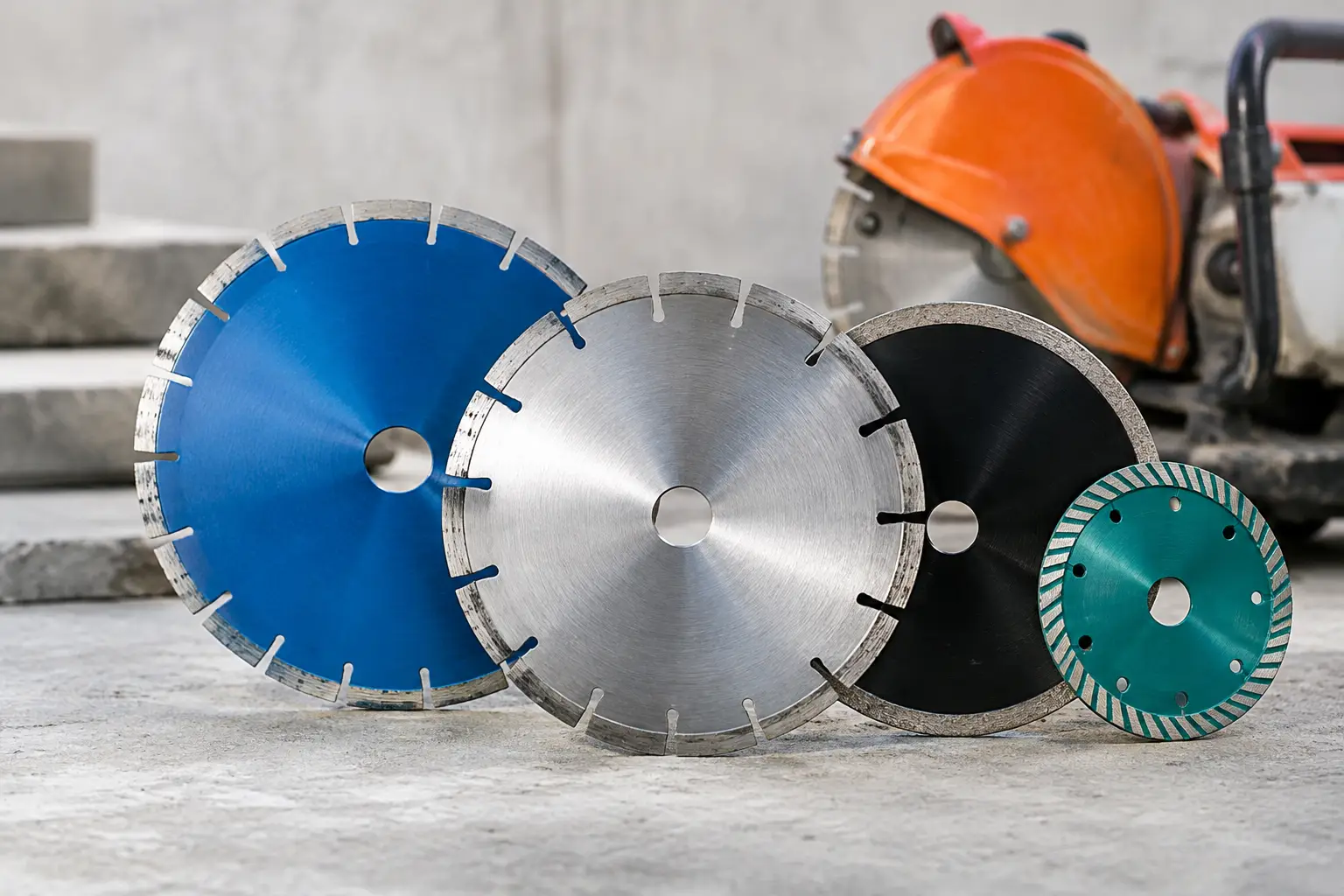
For most professional saw cutting, a laser-welded segmented diamond blade is the correct starting point. Laser welding creates a strong connection between the diamond segment and steel core, making it suitable for high-load cutting where heat, vibration, and repeated rebar contact are expected. This construction is preferable to lower-duty alternatives for industrial reinforced-concrete work.
Segment geometry matters as much as the weld. Wide, deep segments provide usable diamond depth and support longer service life. Slots between segments remove cutting debris, help cool the blade, and reduce stress during operation. Protected or reinforced segment designs can add support near the steel core, which is valuable when the blade repeatedly meets reinforcement.
A high-quality steel core is equally necessary. The core must remain flat under operating temperature and resist vibration. A thin core can improve cutting speed, but it may be less tolerant of demanding equipment, long continuous cuts, or heavy rebar. A thicker core offers greater stability and durability, although it increases kerf width and requires more saw power. There is no universal “best” thickness. The right choice depends on the saw type and the priority between speed, cut quality, and blade life.
Diamond concentration and grit selection should be balanced for mixed cutting. A blade designed only for abrasive concrete may wear too quickly on frequent steel contact. A blade designed mainly for metal may cut concrete inefficiently. Reinforced-concrete blades need a formula intended to maintain exposure of sharp diamonds while tolerating intermittent steel cutting.
Match the Blade to the Saw and Cut Depth
Blade performance is limited by the machine that drives it. A high-performance blade on an underpowered saw will cut slowly and may be overheated by excessive operator pressure. Conversely, a blade with an unsuitable core for a high-horsepower walk-behind saw can become unstable or suffer premature failure.
Handheld cut-off saws commonly use 12-inch, 14-inch, or 16-inch blades for wall openings, slab repairs, pipe penetrations, and demolition work. These applications benefit from a blade that starts quickly and handles interrupted cuts, but operators must avoid twisting the blade in the kerf.
Walk-behind floor saws are used for longer, straighter slab cuts. Here, blade diameter, arbor size, maximum RPM, and machine horsepower must be checked together. A 20-inch or larger blade can produce a deeper cut, but only if the saw has adequate power and the blade is rated for the machine’s operating speed.
For wall sawing, ring saws, and specialized cutting equipment, use a blade or drive system designed specifically for that platform. Do not treat diameter as the only compatibility requirement. Incorrect arbor fitment, RPM rating, or flange support creates a safety risk and can damage a quality blade before its cutting potential is reached.
Wet Cutting Versus Dry Cutting
Water is one of the most effective controls for heat, dust, and blade wear in reinforced-concrete cutting. Wet cutting flushes abrasive slurry from the kerf, cools the diamonds and steel core, and can extend blade life substantially during deep or continuous cuts. For floor sawing, roadwork, structural modifications, and high-volume cutting, wet operation is usually the most efficient option.
Dry cutting is practical when water is restricted, when portability is required, or when making short intermittent cuts. However, the blade must be rated for dry use, and the operator should use a controlled cutting rhythm. Periodically easing the blade out of the cut allows air to cool the segments. Continuous full-depth dry cutting generates excessive heat and is a common cause of core discoloration, segment damage, and lost cutting speed.
Dust control remains a jobsite requirement, not an optional accessory. Concrete dust can contain respirable crystalline silica. Use the proper saw guard, vacuum system, water delivery method, and personal protective equipment required for the application and local regulations.
Common Blade Failures and What They Indicate
Slow cutting does not automatically mean the blade is worn out. A glazed blade often has diamonds trapped beneath a polished bond surface. This can happen after extended contact with steel or when a blade intended for abrasive material is used on harder, less abrasive concrete. A brief cut into a suitable abrasive dressing material may reopen the diamond edge, provided the blade is otherwise in sound condition.
Segment loss is more serious. It can result from overheating, side pressure, damaged flanges, excessive vibration, improper blade specification, or an interrupted weld. The cause should be identified before replacing the blade, because a new blade used under the same conditions can fail in the same way.
Uneven segment wear or a wandering cut usually points to equipment or operating issues. Check the saw spindle, bearings, flanges, arbor hole, belt tension, and water flow. For handheld work, ensure the operator is not forcing or twisting the saw. A diamond blade is designed to cut on its rim, not on its side.
Cracks in the steel core, unusual noise, or visible distortion require immediate removal from service. Purchasing lower-cost blades without consistent core and weld quality can create a false economy when downtime, rework, and safety exposure are considered.
How Procurement Teams Should Compare Blade Suppliers
Commercial buyers should compare more than listed diameter and segment height. Ask whether the blade is designed specifically for reinforced concrete, what saw horsepower range it supports, whether it is approved for wet, dry, or dual use, and how its maximum RPM compares with the intended equipment.
For distributors and private-label programs, sample testing should reflect actual field conditions. Test against representative cured concrete, aggregate, rebar density, cut depth, and water availability. Record cutting speed, blade wear, segment condition, and operator feedback. A controlled comparison gives more useful purchasing data than a short demonstration cut.
Supply consistency is also a technical issue. A blade that performs well in an initial batch but varies in later shipments creates warranty costs and damages distributor confidence. Manufacturers with defined quality-control processes, stable raw-material sourcing, and the ability to adjust bond, segment layout, packaging, and labeling offer greater value for scalable programs. Ryhyoma supports this type of OEM and bulk-supply requirement with laser-welded diamond tool solutions built around application specifications.
Select for the Job, Then Protect the Investment
The best selection starts with the material and equipment, not with price alone. Confirm concrete age and aggregate hardness, expected rebar exposure, cut depth, machine horsepower, operating RPM, and whether water will be available. Then choose a laser-welded reinforced-concrete blade with the segment design and bond balance suited to those conditions.
Once the blade is on site, correct setup matters just as much as specification. Use clean flanges, verify rotation direction, maintain water flow where required, let the blade cut at its own rate, and inspect it before every shift. A well-matched blade will not eliminate the challenge of reinforced concrete, but it will turn a high-risk consumable into a dependable production tool.