
A concrete saw that performs well for one shallow repair can be the wrong machine for a production joint-cutting crew. Concrete saws must be selected around material condition, required depth, jobsite access, water availability, and daily cutting volume. For contractors, distributors, and procurement teams, the goal is not simply to buy more cutting power. It is to build a dependable cutting system in which the machine, diamond blade, operator, and supply plan work together.
What Concrete Saws Are Built to Do
Concrete saws are purpose-built machines that use diamond blades to cut cured concrete, green concrete, reinforced slabs, asphalt, masonry, and pavers. They are used for expansion joints, demolition openings, utility trenches, road repairs, floor corrections, and wall penetrations.
The saw body provides power, stability, depth control, and water delivery. The blade does the actual material removal. This distinction matters because many cutting problems blamed on a saw are blade-selection problems: an overly hard bond, incorrect diamond specification, poor segment design, inadequate cooling, or a blade that does not match the aggregate and reinforcement in the slab.
Commercial buyers should evaluate a saw as part of a complete cutting package. A high-output engine or motor has limited value if the blade glazes, the arbor connection is inconsistent, or the equipment cannot maintain stable alignment through a long cut.
Main Types of Concrete Saws
Handheld cut-off saws
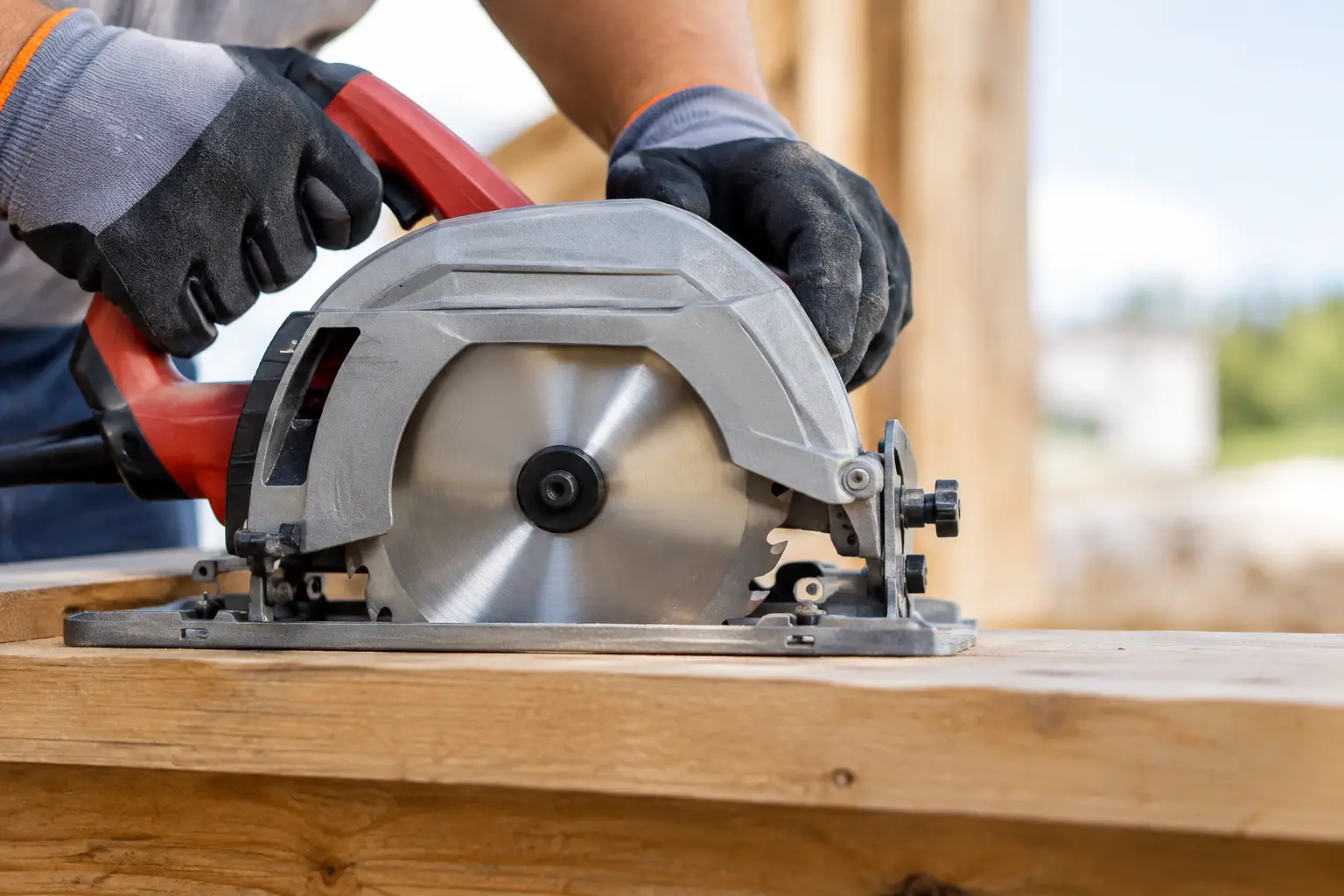
Handheld saws are used where mobility matters most. They are practical for small openings, curb work, edge cuts, block cutting, and repair jobs where a walk-behind unit cannot reach. Gas-powered models remain common for outdoor work, while electric and battery-powered equipment can be more suitable for enclosed areas with ventilation and noise restrictions.
Their trade-off is operator control. Handheld concrete saws are less suited to long, precision-critical cuts because vibration, operator fatigue, and inconsistent feed pressure can affect blade life and cut quality. They also require disciplined dust and kickback control.
Walk-behind floor saws
Walk-behind saws are the standard choice for slab joints, road repairs, warehouse floors, and other horizontal applications. Their wheelbase and guided feed provide a straighter line and more consistent cutting depth than handheld equipment. Depending on the model, they can use gasoline, diesel, electric, or hydraulic power.
For repeated commercial work, buyers should focus on maximum cutting depth, blade diameter range, engine power, frame rigidity, water-tank capacity, and adjustment accuracy. A lower purchase price can become expensive if the saw wanders in the cut or requires frequent service under daily use.
Ring saws and cut-off systems for deep access
Ring saws are valuable when operators need deeper cuts from one side than a conventional center-mounted blade allows. They are commonly used for door openings, window openings, pipe access, and confined demolition work. Their design can achieve substantial cutting depth relative to blade diameter, but they require compatible blades, proper drive-system maintenance, and skilled use.
Wall saws and track-mounted systems serve another category of work: controlled vertical or angled cuts in structural concrete. These systems are generally specified for specialized contractors because setup time and equipment cost are higher. Where accuracy, depth, and reduced vibration are critical, that investment may be justified.
Match the Saw to the Concrete Condition
“Concrete” is not one material from a cutting standpoint. Green concrete, fully cured concrete, high-strength structural concrete, abrasive concrete, and heavily reinforced concrete behave differently at the blade edge.
Green concrete is cut before full curing, often to control random cracking. It is relatively softer, but the cutting window is narrow. A blade designed for cured concrete may wear too quickly or load up when used in green concrete. Early-entry saws and purpose-designed blades help contractors create clean control joints with reduced spalling.
Cured concrete needs a blade bond that exposes diamonds at the correct rate. Softer, more abrasive concrete generally requires a harder bond to prevent premature segment wear. Hard, dense concrete often needs a softer bond that releases worn diamond particles and keeps the blade cutting. This is why a blade that performs well in one region can underperform in another with different sand and aggregate characteristics.
Reinforced concrete adds another variable. Rebar and wire mesh can slow cutting and increase heat. A blade for reinforced material must balance concrete-cutting speed with resistance to segment damage when it encounters steel. Buyers should not assume that a general-purpose blade will deliver the same life and speed across reinforced slabs, precast units, and bridge work.
Blade Specification Has More Impact Than Many Buyers Expect
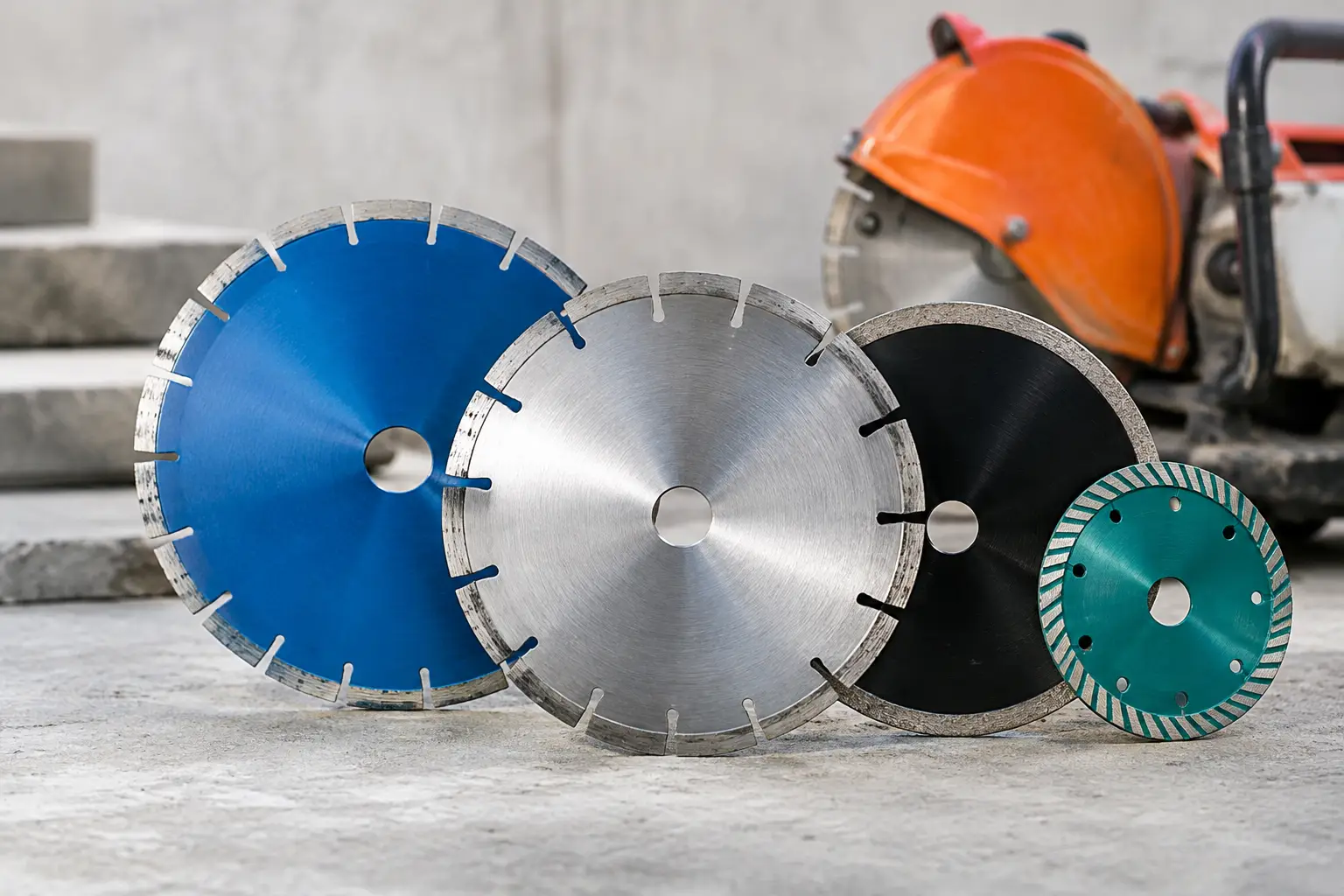
Diamond blade selection should be discussed alongside saw selection, not after the equipment order is complete. The key specifications include diameter, arbor size, segment height, segment width, bond hardness, diamond concentration, weld method, and intended application.
Blade diameter determines available cutting depth, while the saw's rated capacity determines whether that diameter can be used safely. Arbor size must match precisely. An incorrect fit can create runout, vibration, poor tracking, and unsafe operation. Procurement teams should standardize arbor requirements across their fleet where possible to reduce inventory complexity.
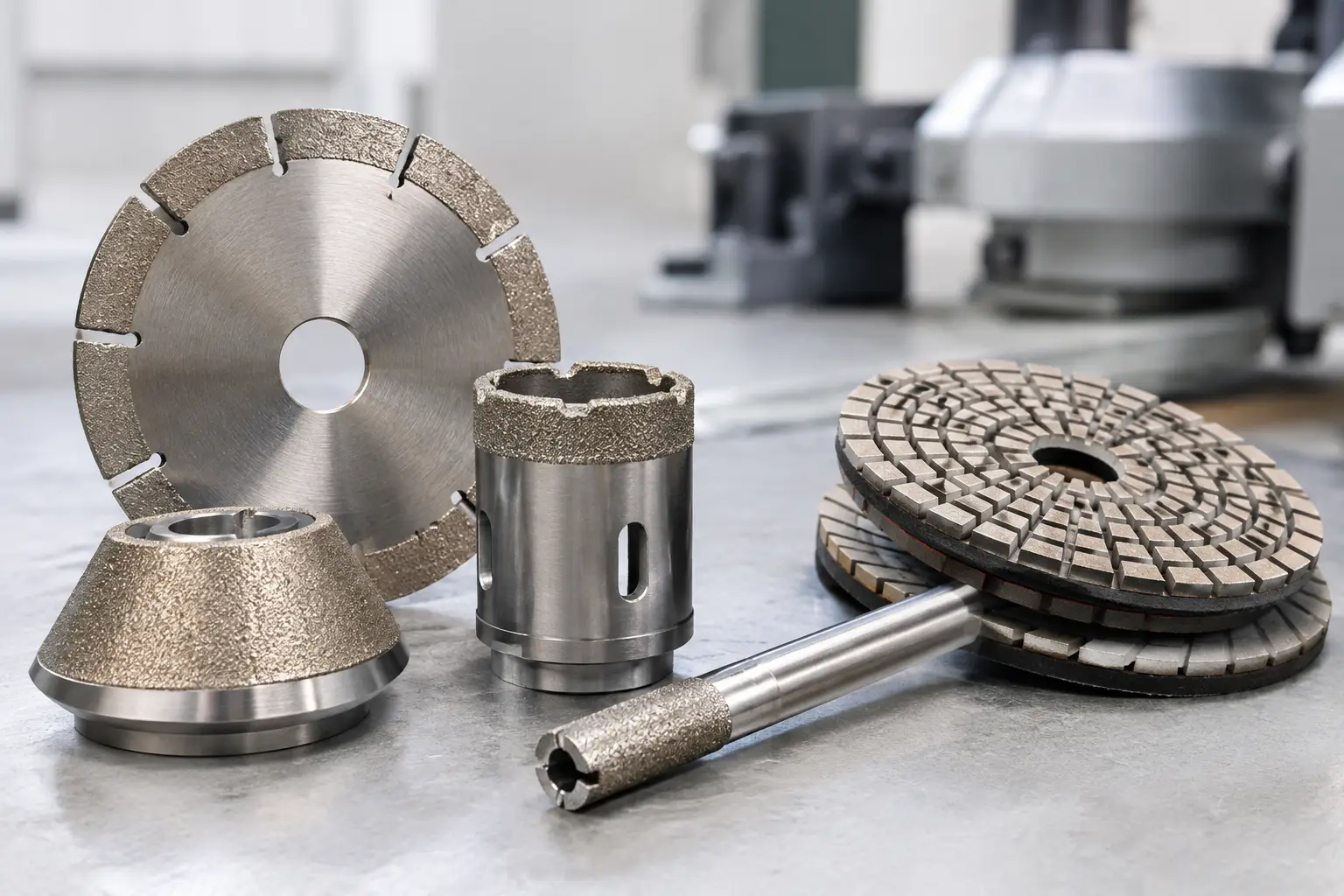
Segment construction also affects performance. Laser-welded blades are widely specified for demanding concrete and asphalt cutting because the bond between segment and steel core is designed to withstand high heat and heavy-duty use. For specialist applications, vacuum-brazed tools may offer strong cutting performance on selected materials, but the correct technology depends on the application rather than a general claim of superiority.
Wet cutting is normally preferred for concrete because water cools the blade, suppresses silica dust, flushes slurry from the kerf, and supports longer blade life. Dry cutting may be necessary for certain handheld tasks, but it requires blades rated for dry use and controlled intermittent cutting to prevent overheating. A wet-cutting blade should not be treated as a dry-cutting substitute simply because it fits the saw.
Production Factors That Affect Cost Per Cut
The purchase price of concrete saws is only one part of the operating cost. For a distributor or contractor, the more useful measure is cost per linear foot or cost per completed job. That figure is affected by cutting speed, blade life, fuel or power use, labor time, downtime, maintenance, and rejected work caused by inaccurate cuts.
A saw that cuts slowly may increase labor cost even if its blade appears to last longer. Conversely, an aggressive blade can reduce cutting time but wear rapidly in abrasive aggregate. The best choice depends on the balance between production speed and consumable cost for the specific job profile.
Water supply is another practical issue. An undersized tank or blocked water feed increases dust and heat, which can shorten blade life and create irregular cutting. On high-volume work, crews may need a reliable external water source rather than relying only on an onboard tank.
Equipment maintenance should be planned before failure occurs. Belt tension, bearings, blade flanges, arbor condition, wheel alignment, engine service, and water nozzles all influence cutting performance. A quality blade cannot compensate for damaged flanges or a saw that does not track straight.
Safety and Compliance Cannot Be Added Later
Concrete cutting exposes operators to silica dust, noise, rotating equipment, flying debris, hot surfaces, and potential blade failure. Proper guarding, water suppression, appropriate personal protective equipment, controlled work zones, and trained operators are operational requirements, not optional accessories.
Before use, operators should verify blade condition, correct rotation direction, flange cleanliness, blade mounting, water flow, guard position, and stable workpiece or saw positioning. Damaged, cracked, warped, or excessively worn blades must be removed from service. Forcing a blade through the cut increases heat and can cause segment loss or core damage.
For fleet buyers, standardized operating procedures are valuable because they reduce variation across crews. The same specification should define approved blade types, wet-cutting requirements, inspection intervals, and replacement criteria.
What Distributors Should Require From a Saw Supplier
Distributors need more than a machine specification sheet. They need consistent availability of blades, replacement parts, compatible accessories, accurate technical data, and clear packaging for their market. A saw range without dependable consumable supply creates a weak commercial offer because the customer will source blades elsewhere.
For export and private-label programs, confirm production consistency, quality-control procedures, OEM or ODM capability, minimum order requirements, labeling options, and lead-time stability. It is also useful to request application guidance for local aggregate conditions and common regional jobsite requirements. A supplier that understands both equipment and diamond tooling can help reduce mismatched inventory.
Ryhyoma supports industrial buyers with concrete-cutting diamond tools designed around stable performance, application fit, and scalable bulk supply. For procurement teams, the practical next step is to define the actual materials, depth range, saw fleet, and expected monthly blade consumption before approving a specification. That preparation leads to cleaner cuts, more predictable blade usage, and fewer jobsite interruptions.