
A core bit that drills quickly but chips expensive tile is not productive. Neither is a clean-cutting bit that overheats or stalls in reinforced concrete. The decision between segmented vs continuous core bits should start with the material, required hole quality, drilling method, and expected production volume - not simply the bit diameter or purchase price.
For distributors, contractors, and procurement teams, rim design affects more than drilling speed. It influences cooling, slurry removal, segment life, hole finish, machine load, and the consistency of results across a bulk order. Selecting the right design prevents avoidable breakage, rework, and site delays.
What Is the Difference Between Segmented and Continuous Core Bits?
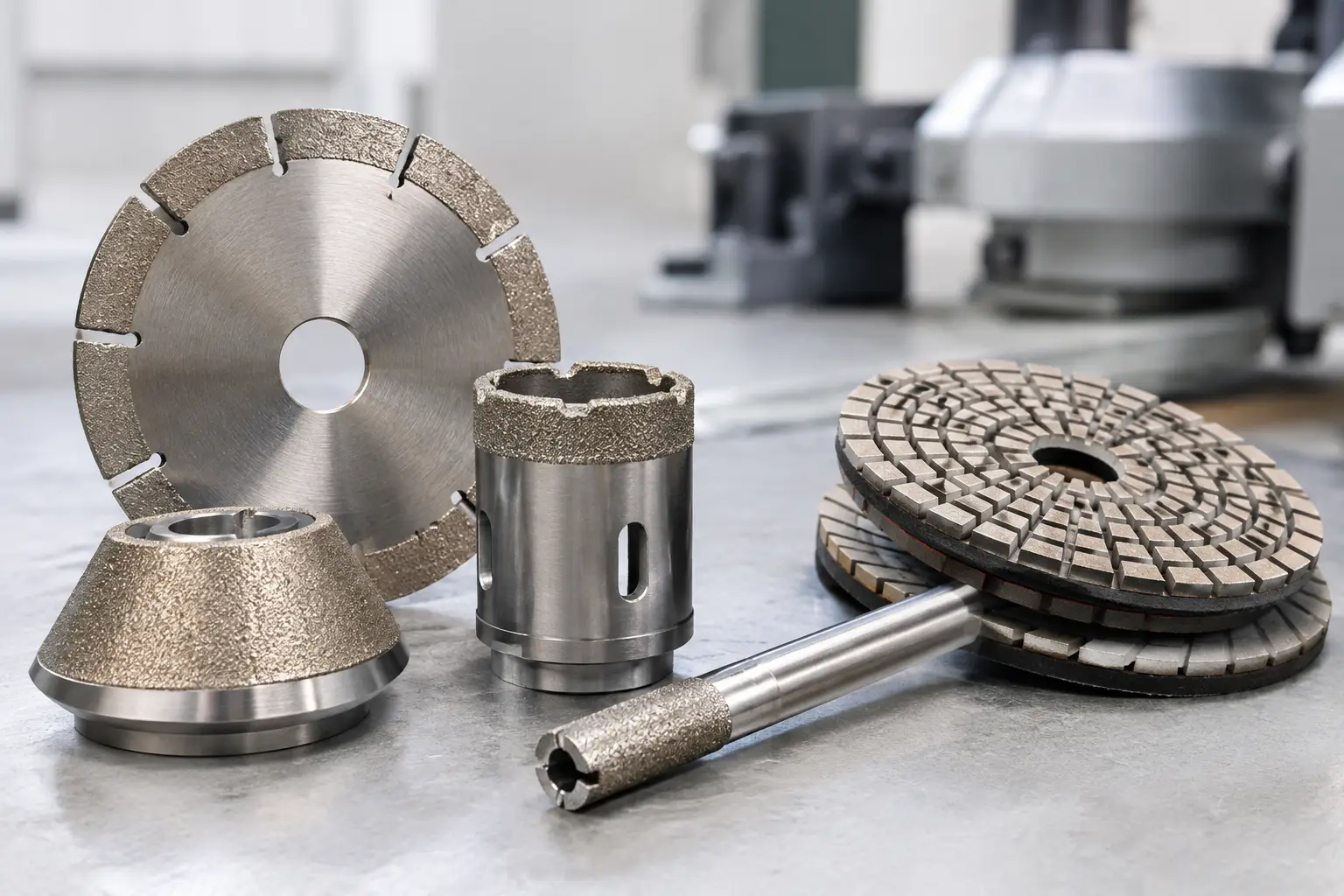
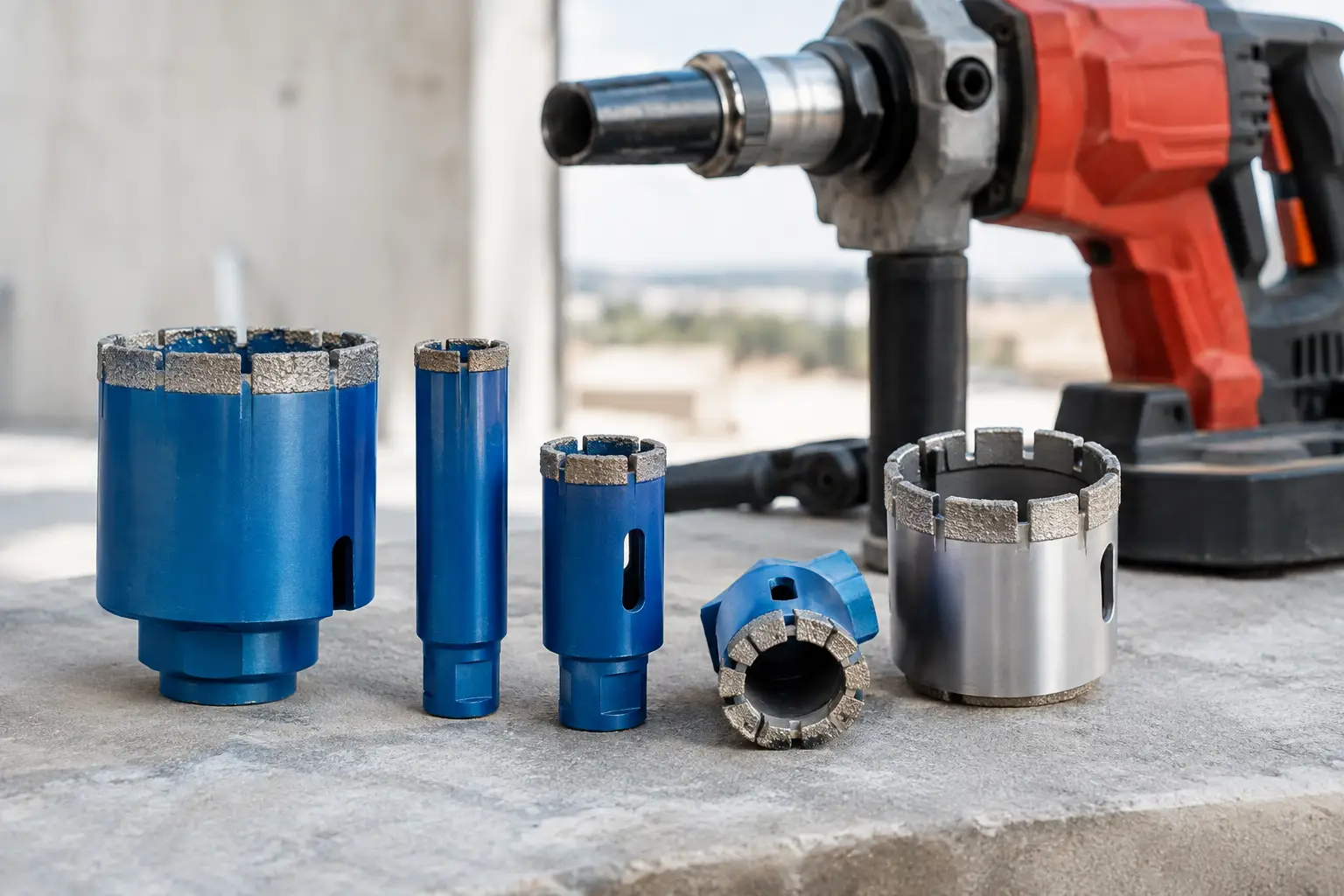
A segmented core bit has individual diamond-bearing segments separated by narrow gaps, often called gullets. These openings help move dust or slurry away from the cutting face, improve exposure to cooling water or air, and reduce heat buildup during demanding drilling.
A continuous core bit has an unbroken diamond cutting rim around the barrel. With no gaps in the rim, it maintains steady contact with the workpiece. That contact generally supports a smoother entry and cleaner edge, especially in brittle or finish-sensitive materials.
Neither design is automatically better. The right choice depends on whether the application places more value on aggressive material removal and heat control, or on edge quality and reduced chipping.
Segmented Core Bits for Concrete and Heavy-Duty Drilling
Segmented core bits are the standard choice for many concrete, masonry, and reinforced-concrete applications. Their separated cutting segments provide room for debris evacuation. In wet drilling, the gullets help carry slurry away from the cutting area. In dry drilling, they improve dust clearance and airflow.
This design is particularly useful when drilling deep holes, working with hard aggregate, or encountering reinforcing steel. The segments can maintain a more open, aggressive cutting action than a continuous rim. That helps reduce friction and lowers the risk of glazing when the bit is correctly matched to the material and machine.
Where segmented designs perform best
For commercial drilling work, segmented core bits are commonly specified for cured concrete, reinforced concrete, block, brick, pavers, and other abrasive building materials. They are also well suited to larger-diameter holes where heat management becomes more difficult.
A laser-welded segmented bit is generally preferred for demanding wet core drilling because the segment-to-barrel joint is built for high heat and sustained use. For dry drilling, the segment specification, barrel ventilation, and dust extraction method all need to match the application. A well-made bit can still fail early if drilling dust has nowhere to go.
The trade-off is edge finish. Segmented bits can leave a slightly rougher hole entrance or exit than continuous-rim options, especially when drilling through tile-faced surfaces or brittle stone. On rough construction work, this is usually acceptable. On visible finished surfaces, it may not be.
Continuous Core Bits for Clean, Controlled Holes
Continuous-rim core bits are designed for applications where clean drilling matters. The uninterrupted diamond rim distributes contact more evenly around the hole. This can reduce chipping at the entry point and produce a more refined edge in ceramic tile, porcelain, marble, granite, and similar materials.
For installers drilling holes for plumbing fixtures, electrical outlets, anchors, and pipe penetrations through finished surfaces, a continuous rim can reduce the need for repair or touch-up. It is also a practical choice when the first layer is fragile but the hole does not require the aggressive cutting action of a concrete core bit.
The limits of a continuous rim
The same continuous contact that supports a clean finish also generates more friction. Continuous-rim core bits usually require more careful cooling and a controlled feed rate. Pushing too hard can overheat the rim, damage the diamond bond, and increase the chance of cracking a brittle workpiece.
They are not normally the best choice for high-production reinforced concrete drilling. Slurry removal is more restricted, and the continuous rim may cut less aggressively in thick, abrasive material. A continuous-rim bit can work well on a short, clean hole in a non-reinforced substrate, but it should not be treated as a universal substitute for a segmented concrete core bit.
Segmented vs Continuous Core Bits by Material
Material selection is the most practical way to make this decision. For reinforced concrete, hard concrete, masonry, and thick structural materials, segmented core bits are usually the more reliable option. Their cooling and debris-removal advantages support longer drilling cycles and better performance under load.
For porcelain, ceramic tile, glass tile, marble, and finish-sensitive stone, continuous-rim bits are often the safer choice. They help reduce breakout and allow operators to start holes with greater control. Water cooling is especially valuable for porcelain and dense stone because it limits heat and helps protect the surface.
Granite and engineered stone require more judgment. A continuous rim may be preferred for a clean visible hole, while a segmented design can be more efficient for deeper holes or rougher fabrication work. The material thickness, aggregate composition, and finishing requirement should decide the specification.
Mixed assemblies are another common jobsite challenge. A contractor may need to drill through porcelain tile over a concrete wall or slab. In that case, using one bit for every layer can be a compromise. Many professionals begin the finished surface with a tile-specific continuous-rim bit, then switch to a concrete-rated segmented bit once the surface layer is clear. The best method depends on hole diameter, access, and whether a precise visible edge is required.
Cooling, RPM, and Feed Rate Matter as Much as Rim Style
Rim style alone does not determine performance. A core bit must be matched to the drilling machine, operating speed, cooling method, and operator technique. Even a premium diamond tool will wear poorly when used outside its intended parameters.
Wet drilling is generally preferred for concrete and hard stone because water removes slurry and controls heat. A segmented wet core bit should be supplied with adequate water flow throughout the cut, not only at the start of drilling. Insufficient water can polish the segments, slow the cut, and place unnecessary stress on the barrel and drill motor.
Continuous-rim bits also benefit from steady cooling, especially on porcelain and dense natural stone. Excessive RPM or force can create a polished, glazed rim that stops cutting effectively. Operators sometimes respond by applying more pressure, which makes the problem worse. The correct approach is to use appropriate speed, maintain cooling, and allow the diamond rim to cut rather than grind under excessive load.
What Buyers Should Specify When Ordering Core Bits
For bulk procurement or private-label programs, asking only for a segmented or continuous rim is not enough. Two bits with the same diameter and rim style can perform very differently because of their diamond matrix, segment height, wall thickness, connection type, weld quality, and barrel construction.
A useful core bit specification should define the target material, drilling method, diameter, working length, arbor or thread connection, wet or dry use, and expected operating conditions. For concrete drilling, buyers should also identify whether reinforced concrete and hard aggregate are expected. For tile and stone, surface finish expectations and the risk of chipping should be included.
Quality control is especially important for segmented bits. Segment alignment, weld integrity, diamond concentration, and consistent bond formulation directly affect safety and usable life. For continuous-rim bits, rim concentricity and even diamond distribution help maintain a smooth cut and reduce vibration.
Ryhyoma supports OEM and bulk-supply requirements by matching core bit construction to the buyer's application rather than treating all drilling jobs as the same. For distributors, that approach helps reduce product returns caused by incorrect tool selection.
Choose for the Hole, Not the Label
Choose a segmented core bit when production speed, cooling, debris removal, and structural-material performance are the priority. Choose a continuous-rim core bit when a clean hole edge, controlled entry, and reduced chipping are more important.
The strongest purchasing decision comes from testing the bit on the actual material, with the intended drill and cooling method. A core bit specification that reflects real job conditions will deliver more dependable drilling than a generic product choice made from rim style alone.