A countertop shop can lose more margin from one chipped mitre edge or a stopped bridge saw than from a small difference in tool price. The top tools for stone countertops are not simply the most aggressive diamond products. They are the tools matched to the material, machine, cut stage, and production volume, with consistent performance from one batch to the next.
For distributors, fabricators, and procurement teams, this changes how tools should be evaluated. A blade that cuts quickly but requires frequent dressing, causes edge breakout, or varies between shipments can increase total operating cost. The better purchasing decision considers tool life, cut quality, operator time, machine compatibility, and the supplier’s ability to maintain the same specification at scale.
Top Tools for Stone Countertops by Fabrication Stage
Stone countertop fabrication usually moves through slab cutting, sink and faucet openings, edge shaping, polishing, and installation adjustments. Each operation creates a different load on the diamond tool. Building a practical tool program around these stages helps prevent using one product where a more specialized option is required.
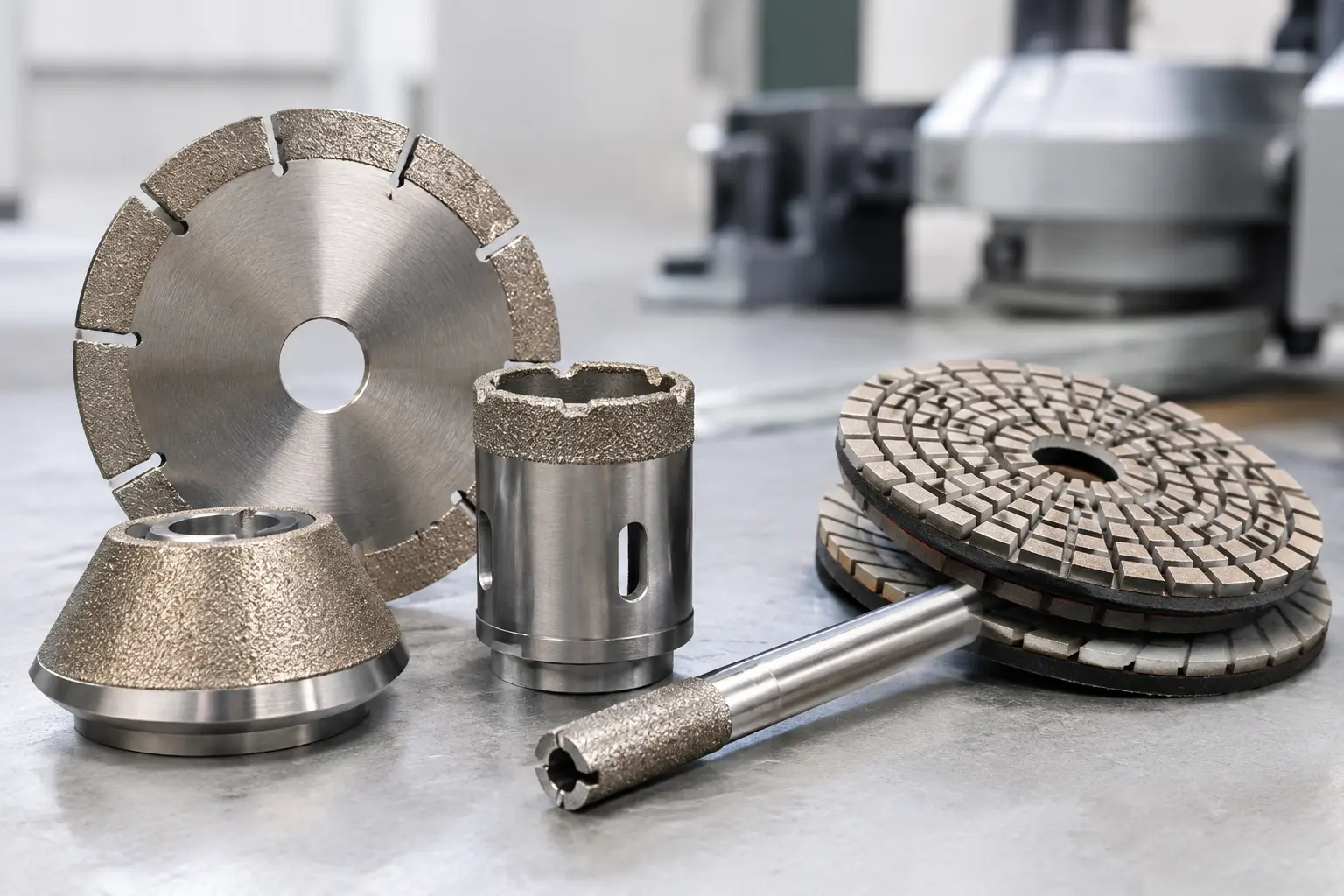
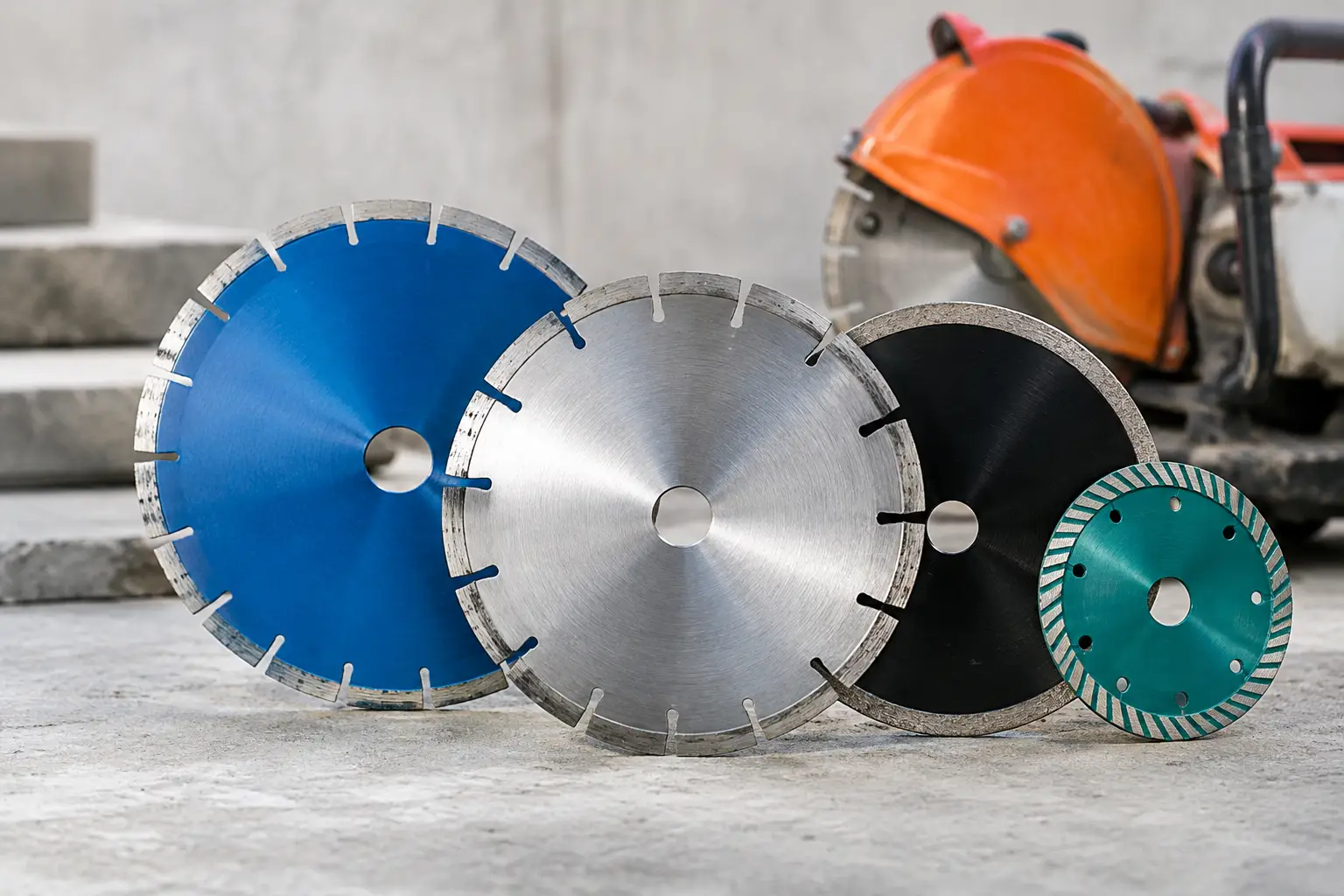
Bridge saw blades for slab cutting
A bridge saw blade is the primary production tool for cutting granite, engineered stone, quartz, marble, and porcelain slabs. For most countertop shops, it has the greatest effect on daily throughput.
Granite requires a blade with strong segment retention and a bond designed to expose diamond steadily in hard, abrasive material. A blade that is too hard may glaze and slow down. A blade that is too soft can wear rapidly and lose diameter before its expected service life.
Engineered quartz needs a different balance. Its resin content and hard aggregate can generate heat and cause loading if the blade specification is not suitable. A quality quartz blade should maintain a clean kerf, stable cutting speed, and low chipping at the surface. Water flow, feed rate, and saw alignment still matter. Even a well-made blade cannot compensate for a worn arbor flange or insufficient coolant.
For sintered stone and ultra-compact surfaces, including Dekton-type materials, use a blade developed specifically for these dense slabs. These materials are highly abrasive and prone to edge damage when cut with an unsuitable general-purpose blade. A dedicated continuous-rim or fine-segment design typically produces a cleaner finish, although the operator may need to reduce feed speed compared with granite cutting.
CNC finger bits and milling tools
CNC work centers use diamond finger bits and milling tools to shape sink cutouts, drain grooves, internal radii, and detailed profiles. These tools must remove material efficiently while holding dimensional accuracy across repeated programs.
For granite and quartz, segmented finger bits are commonly selected for faster stock removal and improved water access. Their open design helps clear slurry and reduce heat during deep passes. Continuous-rim finger bits can provide a smoother wall finish but may cut more slowly. The right choice depends on whether the shop prioritizes roughing speed or reduced finishing work.
Tool diameter, shank size, working length, and connection type must match the CNC spindle and intended cut depth. Buyers should also verify whether the tool is intended for through-cutting, pocketing, or sink-edge finishing. A finger bit that performs well on a shallow opening may not maintain cooling or stability in a thick, full-depth granite slab.
Core bits for faucet holes and anchors
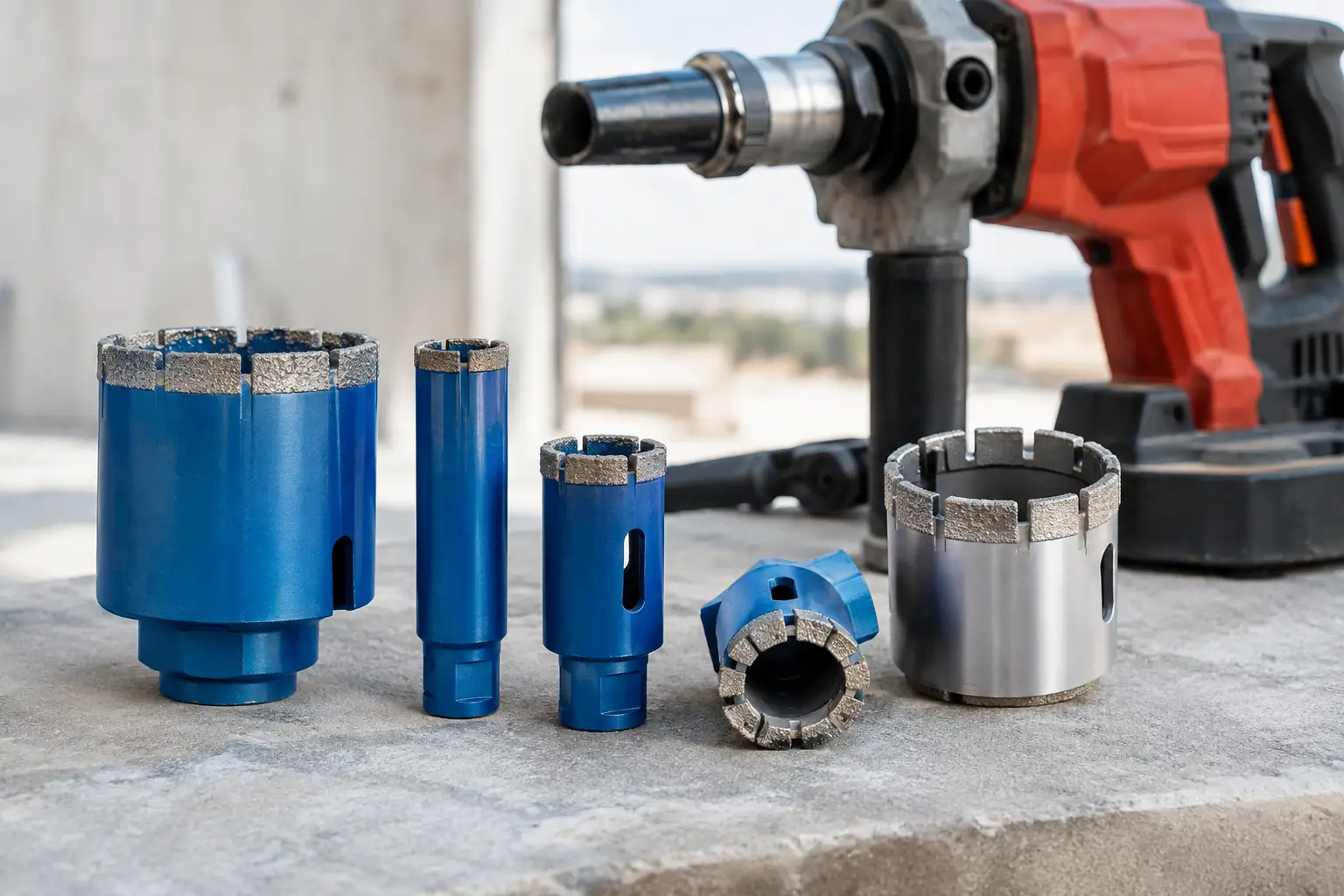
Diamond core bits are essential for faucet holes, soap dispensers, anchor points, and plumbing-related openings. Countertop work often requires clean holes near finished surfaces, so bit stability matters as much as drilling speed.
Vacuum-brazed core bits are useful for dry drilling and mobile installation work because the exposed diamond provides aggressive initial cutting. They are effective for porcelain, ceramic, stone, and some engineered surfaces when used within the recommended operating conditions. However, dry drilling generates heat quickly. Operators should use controlled pressure and intermittent drilling where appropriate rather than forcing the bit through the material.
For workshop production and repeated wet drilling, sintered or laser-welded core bits may offer better service life, depending on the material and equipment. Laser-welded construction is especially valuable where high drilling loads and heat resistance are required. The correct choice depends on hole diameter, slab composition, available water supply, and the expected number of holes per shift.
Profile wheels and edge-routing tools
A polished countertop edge begins with accurate shaping. Diamond profile wheels create eased, bevel, ogee, bullnose, and other edge forms before the polishing sequence begins. Inconsistent profile geometry can create visible variation from piece to piece, particularly on long island tops or matched mitred assemblies.
For high-volume shops, calibrated profile wheels reduce rework by producing a repeatable shape. The wheel must be selected for the stone type and required profile, then maintained correctly. Excessive vibration, worn bearings, or poor machine alignment can leave chatter marks that polishing pads cannot remove efficiently.
Mitre work requires particular attention. The tools used to prepare 45-degree edges must produce flat, straight mating surfaces with minimal chipping. A fast cut is not enough if the fabricator spends additional time filling gaps, reworking edges, or correcting a visible seam after installation.
Diamond polishing pads and abrasive blocks
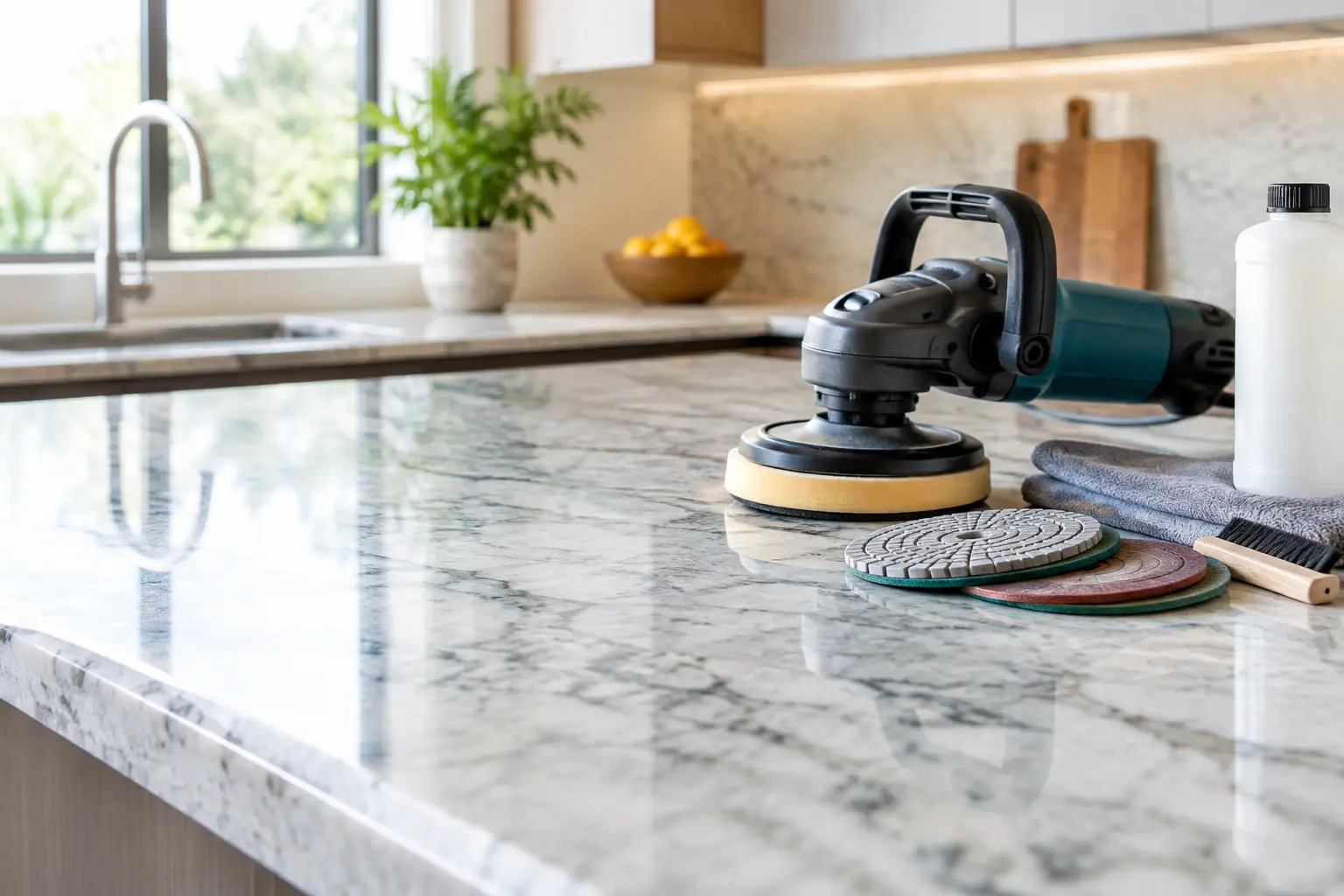
Polishing pads determine the final visual quality of exposed edges, cutouts, and repaired areas. A typical sequence moves from coarse grits for scratch removal through finer grits for surface refinement, followed by a finishing pad or polishing compound where needed.
Flexible wet polishing pads are widely used for granite, marble, quartz, and engineered stone edges. They should cut consistently without leaving deep random scratches that remain visible at later stages. A complete grit sequence from a single controlled product line is often more reliable than mixing pads with different cutting behavior.
Dry polishing pads are useful for installation adjustments and locations where water control is difficult, but they require disciplined operation. Heat can discolor resins, damage the stone surface, or shorten pad life. For this reason, dry systems are best treated as a specific application tool rather than a default replacement for wet polishing in the shop.
Abrasive blocks and hand pads also have a place in quality control. They allow technicians to refine small areas, soften sharp edges, and correct minor surface transitions that machinery cannot access easily. They are not a substitute for proper machine tooling, but they protect finish quality during final inspection.
How to Select Stone Countertop Tools for Commercial Supply
When comparing the top tools for stone countertops, do not purchase by diameter or price alone. The specification must account for material hardness, abrasiveness, thickness, machine power, coolant method, and expected production rate. Granite, quartz, marble, porcelain, and sintered stone may all appear in the same fabrication shop, but they do not place the same demand on the diamond bond.
A useful commercial evaluation starts with a controlled trial. Run the proposed tool on a representative material and record cutting speed, edge condition, amperage or spindle load, dressing frequency, and total linear footage or hole count. This provides a better basis for comparison than an operator’s first impression after a few cuts.
Consistency between shipments is equally important. For distributors and large fabricators, a supplier should be able to control diamond concentration, bond formulation, segment welding quality, balance, and dimensional tolerances. Stable production reduces the need to retest every incoming batch and gives end users confidence that replacement tools will behave like the samples they approved.
Common Purchasing Errors That Raise Tool Cost
The most common error is using a general-purpose blade across all slab materials. This may appear convenient, but it often results in slower production, poor edge quality, or shortened blade life on hard specialty surfaces. Another frequent issue is buying a premium cutting tool without confirming the machine parameters that support it. Incorrect RPM, inadequate water delivery, poor alignment, and excessive feed pressure can damage even a high-quality diamond tool.
Buyers should also avoid treating tool life as the only performance measure. A blade that lasts longer but cuts slowly may cost more in labor and machine time than a faster, appropriately specified alternative. Conversely, the fastest tool is not always the best choice for visible finished edges where chipping creates rework. The right target is predictable cost per finished countertop, not the lowest unit price.
For OEM and private-label programs, define the intended material range, machine type, package requirements, and performance target before finalizing the product. This allows the manufacturer to recommend a practical bond, segment design, and packaging format rather than applying a generic label to an unsuitable item.
Ryhyoma supports professional buyers with diamond tool options built around stable performance, controlled manufacturing, and commercial supply requirements. For countertop fabrication, that means selecting tools as a working system, then verifying them in the conditions where they will earn their cost back: at the saw, on the CNC, and at the finished edge.