
A diamond blade that performs well on a contractor's saw can still be the wrong product for a distributor or procurement program. Commercial buyers must consider more than whether a blade can cut the material. They need repeatable cutting speed, predictable working life, safe operation, stable batch quality, and specifications that fit the machines used by their customers.
For industrial supply, blade selection is a material-and-application decision. The wrong bond, rim, or segment configuration can cause slow cutting, excessive chipping, segment loss, overheating, or premature wear. The right specification reduces downtime at the jobsite and protects the buyer's reputation in the market.
What Determines Diamond Blade Performance
A diamond blade cuts through exposed diamond grit held in a metal matrix, commonly called the bond. During operation, the bond gradually wears away to expose fresh diamond. This controlled wear is what keeps the blade cutting.
The balance between diamond quality, diamond concentration, bond hardness, segment design, and manufacturing method determines performance. A blade is not automatically better because it has more diamond or a harder bond. Each element must match the material being cut and the equipment being used.
Hard materials such as porcelain, granite, and dense reinforced concrete generally require a bond that releases diamond efficiently. If the bond is too hard, the diamonds become polished and the blade begins to glaze. Softer, abrasive materials such as asphalt, green concrete, sandstone, and block wear the bond more aggressively. These applications usually need a harder bond to retain the diamonds long enough to deliver useful blade life.
This is why a general-purpose blade has limits. It may be commercially useful where contractors cut several common materials, but it rarely provides the best productivity in a dedicated cutting application.
Choose the Diamond Blade by Material
The material should be the first filter in any blade specification. Buyers should also identify whether the material contains reinforcement, aggregate, abrasive particles, or a finished surface that cannot chip.
Concrete and Reinforced Concrete
Concrete varies significantly by age, aggregate hardness, compressive strength, and steel content. A blade for cured concrete must withstand dense aggregate while maintaining exposure of the diamond. Reinforced concrete blades also need a segment design capable of working through rebar without stalling or excessive vibration.
Laser-welded segments are a common requirement for demanding concrete and construction cutting because they provide a strong attachment between the segment and steel core. For wet cutting, the correct water flow improves cutting speed, controls dust, and limits heat damage. Dry cutting requires proper cooling intervals, especially on handheld saws.
For distributors, it is useful to separate standard concrete blades from reinforced concrete and professional-grade curing concrete ranges. This gives contractors a clear choice between economy use and high-output applications.
Asphalt and Abrasive Materials
Asphalt is softer than concrete, but it is highly abrasive. A blade designed for dense concrete can wear too quickly in asphalt because its bond may release diamond too fast. Asphalt blades typically use a hard bond and may include undercut protection around the segment base.
Undercut protection matters when abrasive slurry and aggregate wear the steel body below the cutting segment. Without it, the core can erode before the diamond segment is fully used. For roadwork and utility contractors, this feature can make a measurable difference in working life.
Ceramic, Porcelain, and Tile
Finished tile demands clean edges. The main concern is not only whether the blade cuts quickly, but whether it avoids chipping on the face and corner of the material. Continuous-rim and fine turbo-rim blades are commonly used for ceramic and porcelain because they produce a more controlled cut.
Porcelain is especially dense and can glaze a blade if the bond is too hard. A blade that begins cutting cleanly but slows after several cuts may need a better bond formula rather than a higher rim height alone. For tile distributors, blade compatibility with wet tile saws, angle grinders, and rail saws should be stated clearly.
Granite, Engineered Stone, and Specialty Surfaces
Natural granite, quartz-based engineered stone, and sintered surfaces such as Dekton require purpose-built tools. Their density, hardness, and surface finish increase the risk of chipping, heat marks, or slow production rates when a general blade is used.
Stone fabricators often prioritize edge quality and consistency over maximum cutting speed. The correct blade should match the saw type, material thickness, and wet or dry cutting condition. In these applications, technical support from the supplier is valuable because a minor change in bond or rim design can affect finished quality across an entire production run.
Rim and Segment Design Affect the Result
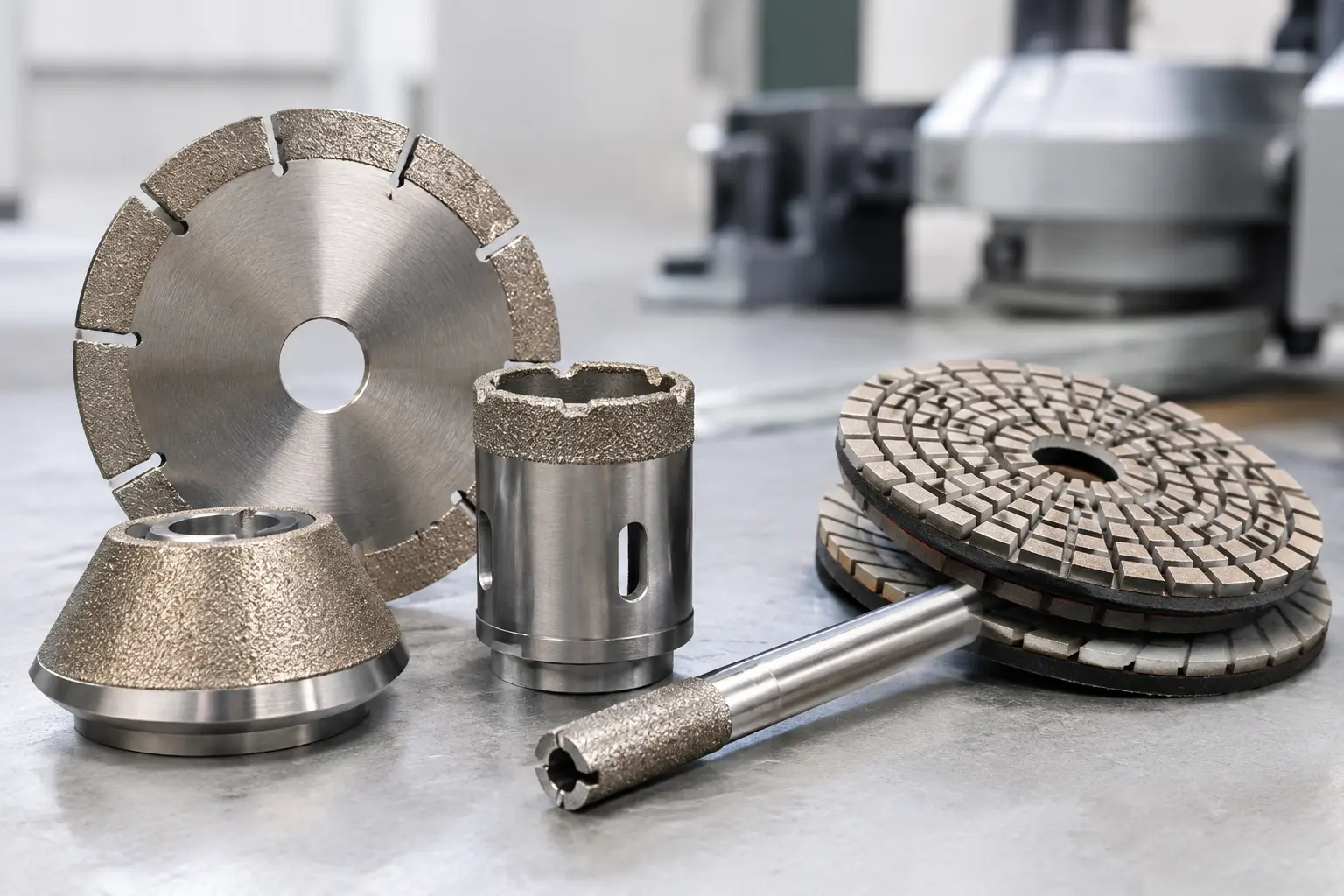
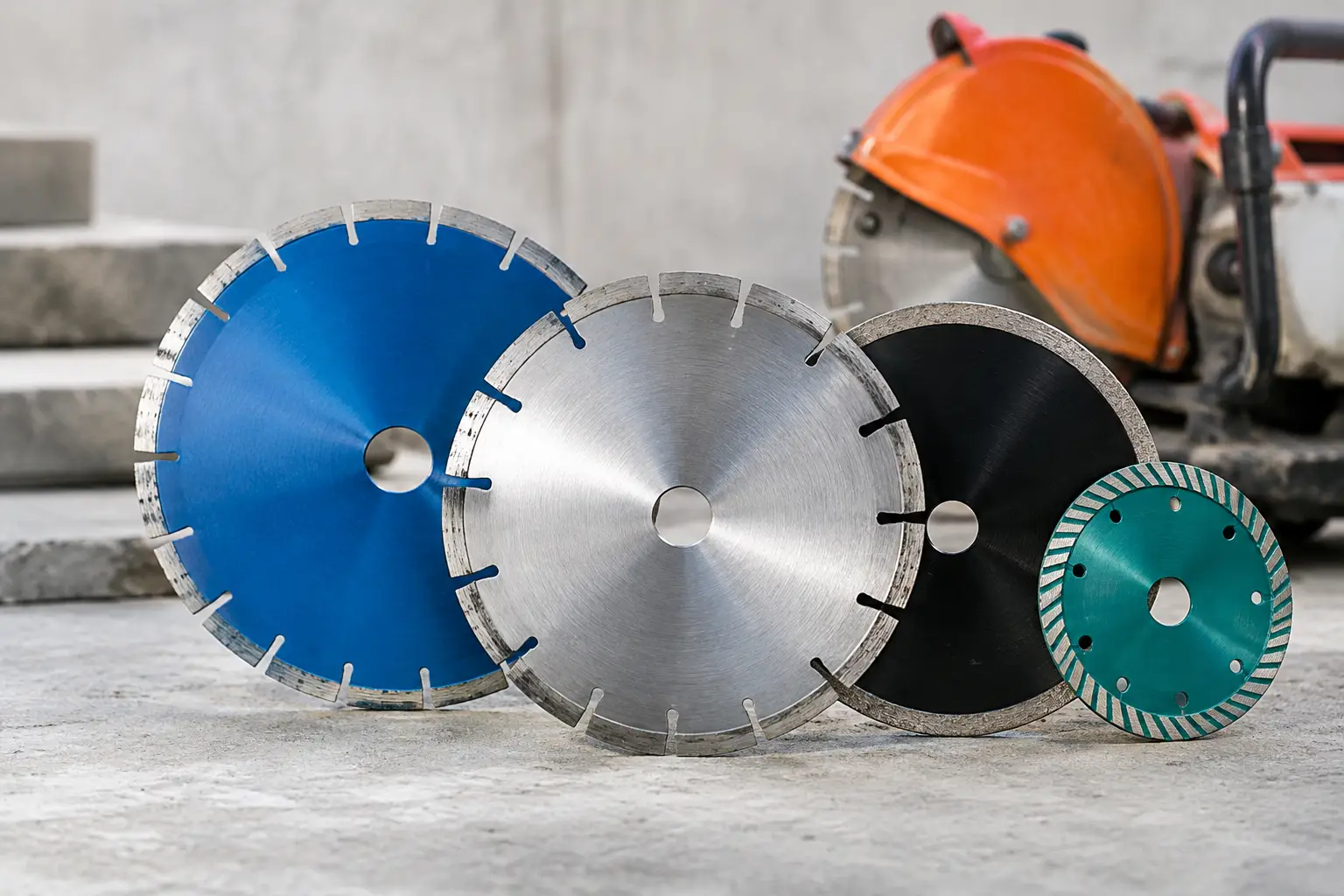
Blade rim design controls debris removal, cooling, cutting aggressiveness, and edge finish. Procurement teams should specify the rim type according to the intended application rather than treating it as a cosmetic product difference.
A continuous rim is generally selected for smoother cuts in tile, ceramic, and delicate stone. It minimizes chipping but may cut more slowly in thick or highly abrasive materials. Turbo rims have a serrated edge that improves airflow and material removal, making them useful for many dry-cutting applications. Segmented rims provide larger gullets for cooling and debris clearance and are commonly used for concrete, masonry, and other heavy-duty work.
Segment shape also matters. Narrow slots can support smoother cutting, while wider gullets improve cooling and slurry removal. Specialized segments may be designed for fast entry into reinforced concrete, reduced vibration, or better control in dense stone. The correct configuration depends on the saw horsepower and feed pressure as well as the material.
Match the Blade to the Saw
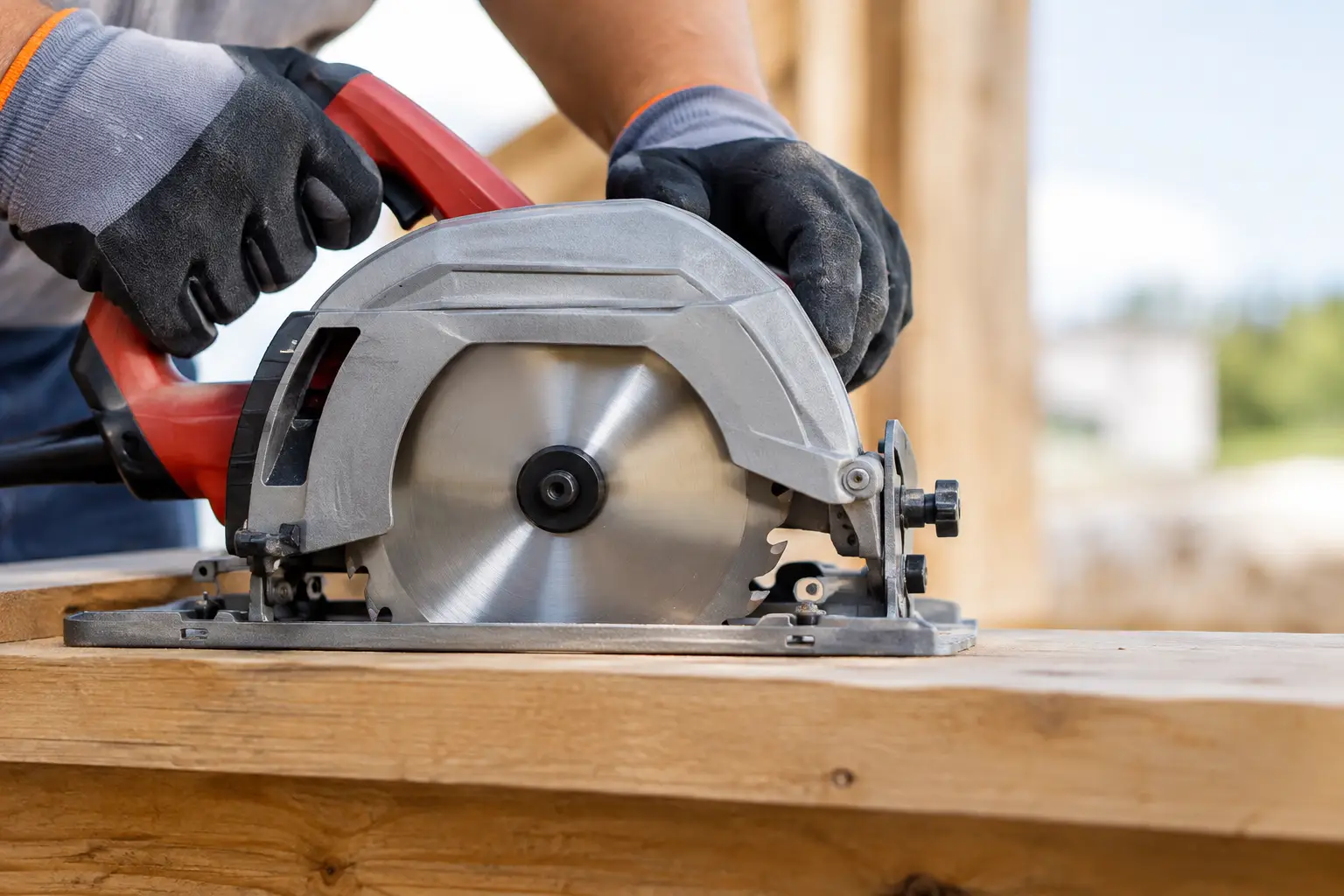
A technically suitable blade can still fail if it is used on the wrong machine. Diameter, arbor size, maximum RPM, cutting depth, and operating method must match the equipment.
Handheld cutoff saws place high thermal and mechanical stress on the blade because feed pressure can vary greatly between operators. Floor saws need stable high-speed performance and often work for extended periods in concrete or asphalt. Bridge saws and tile saws demand accuracy and clean edge quality. Ring saw applications require blades specifically engineered for their drive system and cutting geometry.
Never assume that a larger blade is automatically more productive. A larger diameter can provide greater cutting depth, but it also requires sufficient machine power and correct spindle speed. Running a blade above its rated RPM is a serious safety risk. Likewise, forcing a blade through the cut can overheat the bond, warp the core, and cause poor cutting behavior.
Evaluate Blades as a Supply Program, Not a Single Sample
For B2B buyers, a sample test is necessary but not sufficient. A single blade may perform well while later batches vary due to inconsistent diamond concentration, bond formulation, segment welding, or core tensioning. A dependable supplier should control these variables across production.
When qualifying a diamond blade supplier, assess material-specific performance, segment attachment method, core flatness, visual consistency, labeling accuracy, and packaging protection. For private-label programs, confirm that the supplier can maintain agreed specifications as volume increases rather than substituting components between orders.
A practical field evaluation should record cutting speed, total linear footage or number of cuts, edge quality, vibration, heat behavior, and wear pattern. Testing against the blade currently used by the customer gives more useful data than testing in isolation. The goal is not simply the lowest unit cost. It is the lowest practical cost per cut while maintaining safe, acceptable results.
Ryhyoma supports this approach through application-focused blade specifications, controlled manufacturing, and OEM/ODM options for distributors that need a stable product range rather than one-off purchases.
Common Causes of Poor Cutting Results
Slow cutting is often blamed on diamond quality, but glazing is a frequent cause. If the blade surface appears smooth and shiny, the diamonds may no longer be exposed. Dressing the blade in an appropriate abrasive material can restore cutting temporarily, but repeated glazing usually indicates an incorrect bond for the material.
Excessive chipping often comes from using an aggressive segmented blade on brittle finished surfaces, cutting too quickly, or operating without adequate water. Core wobble may result from overheating, forcing the cut, damaged flanges, or poor machine condition. Segment loss can be associated with overheating, improper use, impact, or inadequate welding quality.
These issues should be treated as application data, not only product complaints. Understanding the saw, operator method, material, and cutting condition helps identify whether the specification or operating practice needs to change.
A reliable blade program starts with honest application details: what is being cut, on which machine, under what conditions, and at what production rate. Buyers who define those conditions early can source a diamond blade range that earns repeat orders through performance, not price alone.