
A blade that cuts quickly for the first 20 feet but slows down, chips the edge, or loses segments before the shift ends is not delivering acceptable contractor cutting results. For commercial crews, performance is measured across the full job: production speed, cut quality, blade life, operator control, and predictable cost per foot.
The correct diamond tool is only one part of that equation. Material composition, equipment condition, cutting method, and supplier consistency all affect the final result. Contractors and distributors that treat blade selection as a technical decision rather than a simple price comparison reduce downtime and protect margins.
What Contractor Cutting Results Should Be Measured Against
Cutting results should be evaluated against the application, not against an isolated speed claim. A concrete blade used on cured reinforced concrete, for example, must balance penetration speed with segment retention and resistance to glazing. A fast-cutting blade that wears too quickly may create a higher total cost than a slightly slower blade with stable life.
For tile, granite, Dekton, and other finished materials, surface quality becomes equally important. Edge chipping, burn marks, excessive vibration, and inconsistent kerf width can lead to rejected workpieces and material waste. In fabrication applications, a clean and controlled cut is often worth more than a marginal gain in cutting speed.
A useful on-site assessment considers five operating outcomes: average cutting speed, total usable blade life, cut appearance, machine load, and interruption time. These factors show whether the tool is supporting production or creating hidden costs through replacement, rework, and operator delays.
Material Hardness Is Only Part of the Selection
Many purchasing decisions begin and end with the material name: concrete, asphalt, granite, ceramic, or brick. That is not enough. Two concrete slabs can behave very differently depending on aggregate hardness, steel content, curing age, moisture level, and compressive strength. The same applies to natural stone, where mineral composition can vary substantially between sources.
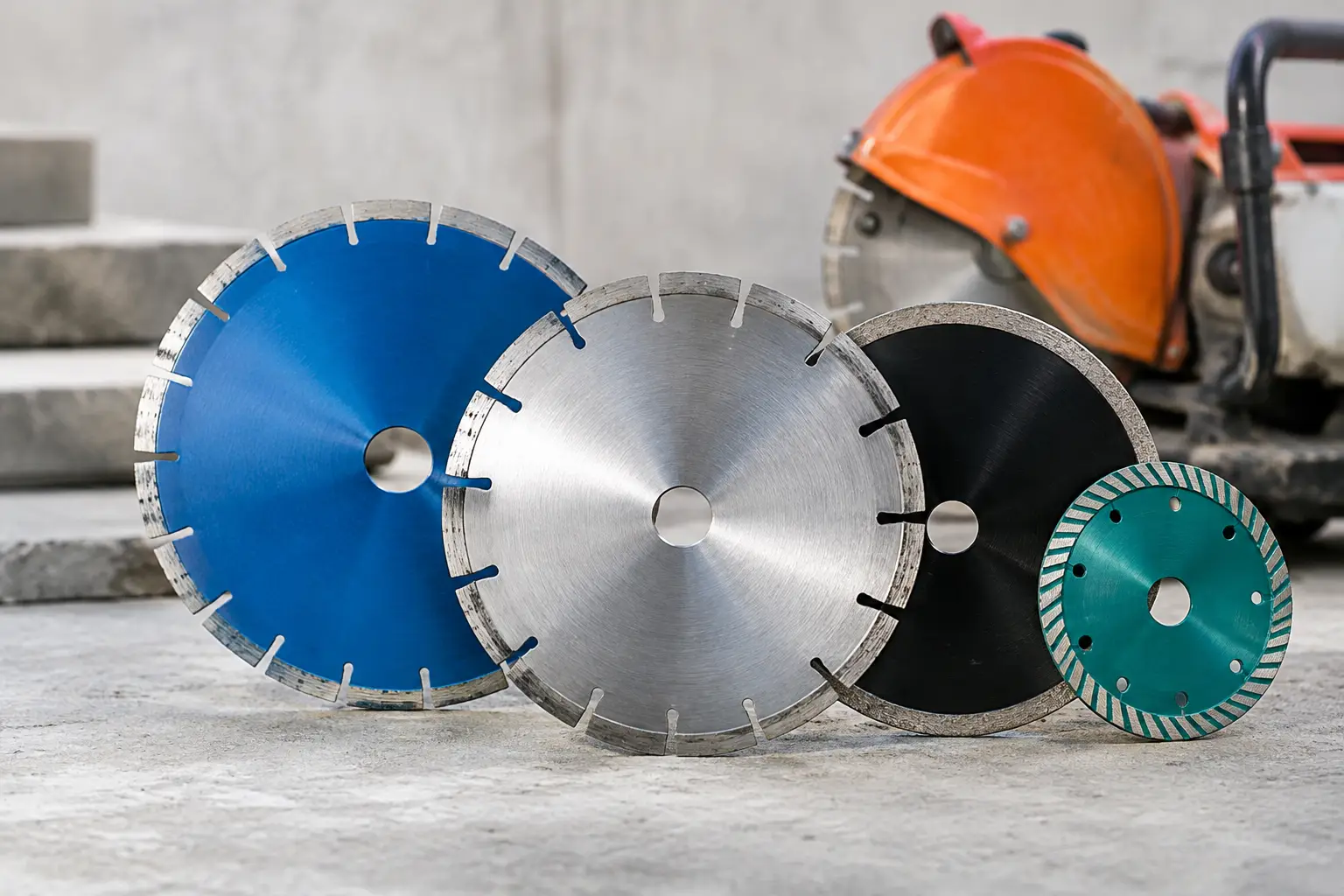
Diamond blade performance depends on the relationship between the diamond grit, metal bond, segment design, and the material being cut. Hard, abrasive materials generally require a bond that exposes fresh diamonds at the correct rate. Dense or less abrasive materials often need a different balance so the diamonds remain supported rather than being released too early.
This is why a general-purpose blade may be suitable for intermittent maintenance work but less suitable for repeated commercial cutting. A contractor cutting reinforced concrete daily needs a blade designed for that load. A fabricator processing porcelain slabs needs a continuous rim or application-specific configuration that prioritizes edge quality and thermal control.
Material testing is especially valuable when distributors are supplying projects with mixed or unfamiliar substrates. A small trial under normal machine conditions can reveal whether the selected bond and segment specification are producing the expected wear pattern.
Watch for Glazing, Segment Wear, and Uneven Cutting
A glazed blade has diamonds that are no longer cutting effectively because the bond has not worn away at the required rate. The operator may compensate by pushing harder, which increases heat, slows progress, and places more strain on the saw. Dressing the blade may restore performance temporarily, but repeated glazing usually indicates a mismatch between blade specification and material.
Excessive segment wear points to the opposite problem. The blade may cut aggressively at first, but the bond releases diamonds and matrix too rapidly. Segment loss, uneven wear, and premature core exposure can turn an apparently low-cost purchase into a job-site failure.
Uneven cutting can also come from machine vibration, a warped blade core, worn flanges, improper mounting, or side pressure during the cut. The blade should not be blamed until the operating system has been checked.
Machine Setup Controls Cutting Performance
Even a properly specified diamond blade cannot compensate for a poorly maintained saw. Spindle condition, flange alignment, drive-belt tension, water supply, and operating RPM all influence blade stability. A blade running below or above its intended speed can cut inefficiently and wear irregularly.
Before beginning production work, crews should verify that the blade is mounted in the correct direction, flanges are clean and equal in diameter, and the arbor hole fits securely. Any debris between the flange and blade core can create runout. That runout produces vibration, widens the cut, damages the work surface, and accelerates blade fatigue.
Wet cutting requires adequate water flow to cool the diamond edge, remove slurry, and reduce dust. Insufficient water increases heat and can cause discoloration, glazing, or cracking in sensitive materials. Dry cutting requires the correct dry-cut blade design and disciplined cutting intervals so the blade can release heat. Continuous deep dry cuts are a common cause of early tool failure.
For handheld equipment, machine power also matters. An underpowered saw may force the operator to push the blade into the material, while an oversized setup can make a light-duty blade unstable. The blade, machine, and application should be specified as one system.
Feed Pressure Separates Efficient Cutting From Blade Abuse
Operators need enough feed pressure to keep diamonds engaged, but not so much that the blade bends, overheats, or stalls. The correct pressure feels controlled: the saw advances steadily, motor load remains manageable, and the cut stays straight.
Pushing harder does not always increase output. In reinforced concrete, excessive force can cause the blade to bounce against rebar, damage segments, and create an irregular kerf. In porcelain or Dekton, too much pressure can chip the finished edge or crack the surface near the end of the cut.
The final inches of a cut deserve particular attention. Unsupported material can pinch the blade or break away unexpectedly. Proper workpiece support, a stable cutting path, and reduced pressure near the exit point improve both safety and finish quality.
Supplier Consistency Matters More Than a Single Good Sample
For procurement managers and distributors, the real question is not whether one blade performs well in a demonstration. It is whether the next shipment performs the same way. Stable contractor cutting results require controlled manufacturing of steel cores, diamond concentration, bond composition, segment geometry, welding strength, and final inspection.
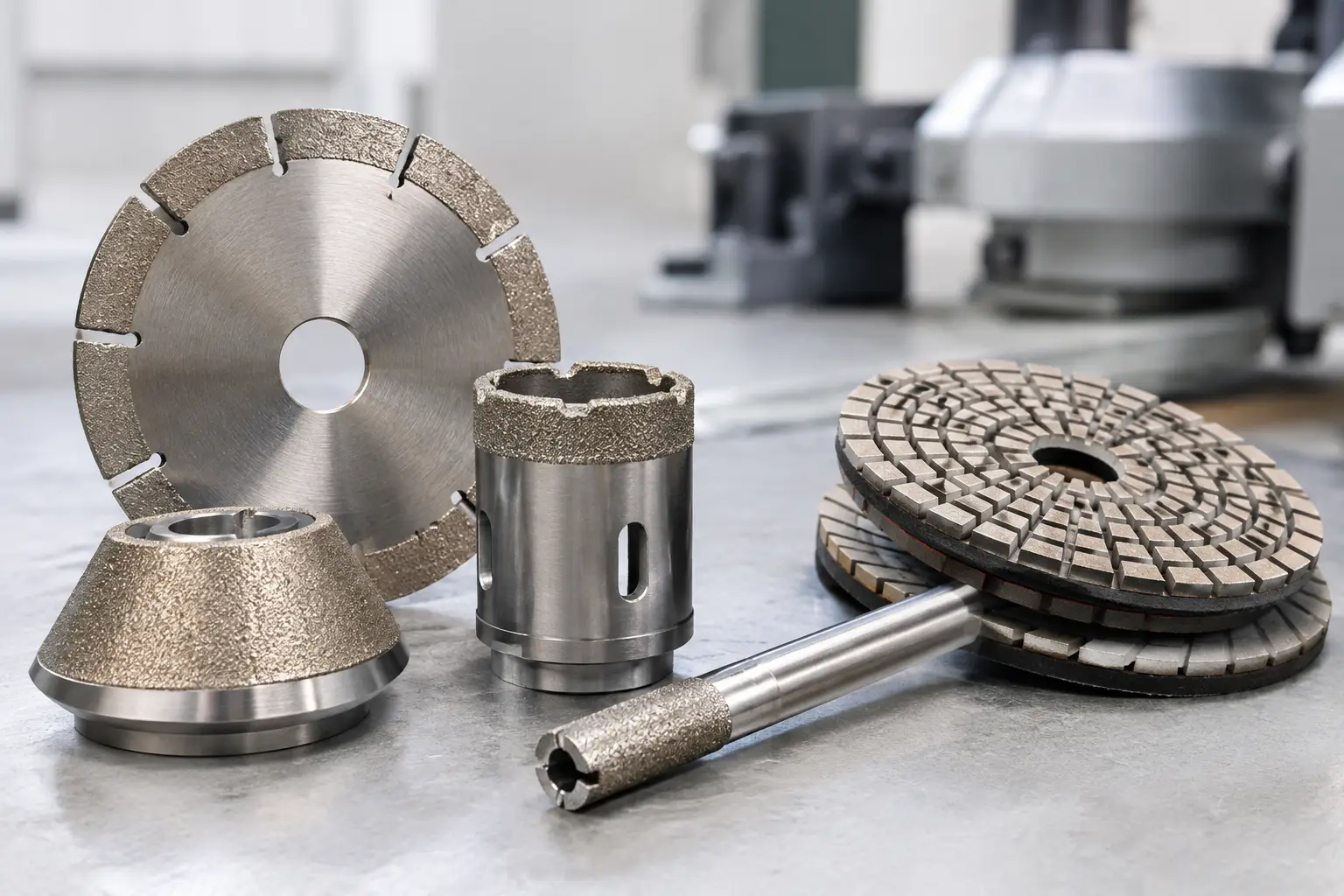
Laser-welded segments are widely used for demanding concrete, asphalt, and construction cutting because the segment-to-core connection must withstand heat, vibration, and repeated impact. Vacuum-brazed tools serve different applications where exposed diamond performance is required for materials such as stone, tile, composites, and coatings. The manufacturing method should match the intended cutting conditions rather than be treated as a generic quality label.
A qualified supplier should be able to discuss the blade application, machine type, diameter, arbor size, cutting method, and expected workload. For OEM and private-label programs, specification control is essential. Changing the bond, segment height, core thickness, or diamond grade without a controlled approval process can create inconsistent field performance between production batches.
Use Field Testing to Set a Reliable Standard
A structured field test is more useful than informal feedback. Run candidate blades on the same material, using the same machine and operator where possible. Record the start and finish time, cutting distance or number of cuts, visible wear, edge condition, water use, and any interruptions.
Avoid judging a blade after only a few short cuts unless it fails immediately. Some diamond tools need a short break-in period before the cutting edge stabilizes. However, a blade that vibrates, overheats, loses segments, or produces unacceptable chipping should be removed from service and investigated without delay.
For repeat purchasing, define an acceptable performance range rather than demanding identical results in every setting. Job-site materials vary. The objective is consistent performance within practical limits, supported by a specification that fits the primary application.
Ryhyoma supports this approach by focusing on controlled diamond tool production, application-specific specifications, and bulk supply requirements for professional buyers. The most dependable cutting program is built around verified field results, not assumptions based on price or appearance. When the blade, machine, material, and operating method are aligned, crews spend less time changing tools and more time completing profitable work.