
A diamond blade can have high-grade diamonds and still fail early if the diamond segment bonding is wrong for the material and machine. For contractors, distributors, and procurement teams, bonding is not a minor production detail. It determines whether a segment exposes new diamonds at the correct rate, holds its profile under load, and remains attached through demanding production cuts.
The right bond produces predictable cutting behavior. The wrong bond can cause glazing, rapid segment loss, slow cutting, excessive heat, or an uneconomical blade life. Understanding how segment bonding works makes it easier to specify diamond tools for concrete, asphalt, granite, ceramic, and other industrial materials.
What Diamond Segment Bonding Actually Does
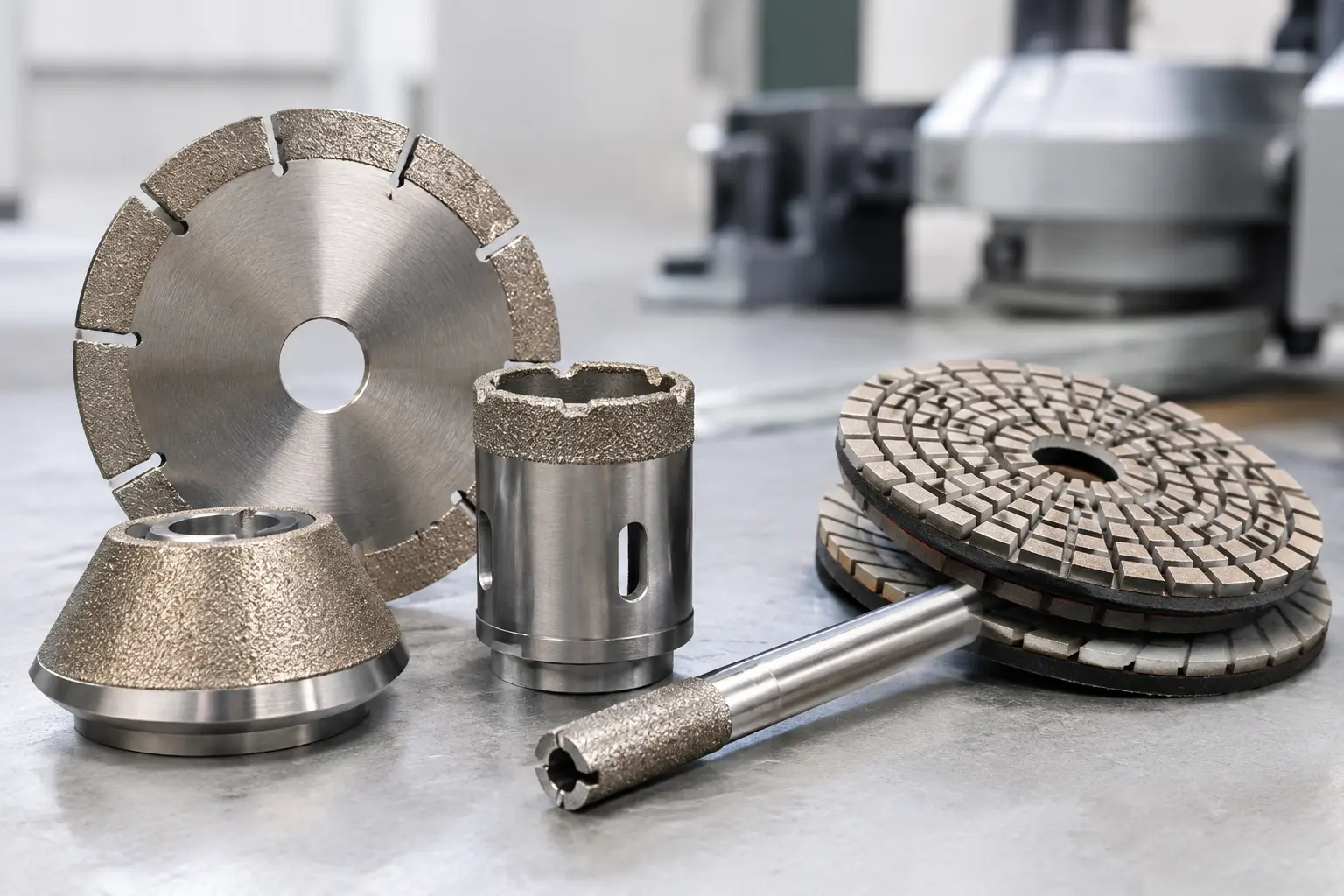
A diamond segment consists of synthetic diamond grit held within a metal matrix. During manufacturing, the metal powders and diamonds are pressed into segment form and sintered under controlled heat and pressure. The resulting bond matrix is engineered to retain the diamonds long enough to cut effectively, then wear away gradually to expose fresh cutting points.
This controlled wear is the central function of diamond segment bonding. A segment cannot simply hold diamonds as tightly as possible. If the bond is too hard for the material, worn diamonds stay trapped in the matrix and the segment surface becomes smooth. This condition is known as glazing. The blade loses cutting speed, builds heat, and may require dressing before it can work properly again.
If the bond is too soft, the matrix releases diamonds before they have completed useful work. The blade may cut aggressively at first, but segment height disappears quickly. In severe cases, the segment profile erodes unevenly and cutting stability declines.
A properly matched bond maintains a working balance: the matrix wears at approximately the same rate that diamond crystals dull or fracture. Fresh, sharp diamonds remain available at the cutting edge, while the segment retains enough strength to deliver acceptable service life.
Bond Hardness Must Match the Material
The most common misunderstanding in blade selection is that harder materials require a harder bond. In many cases, the opposite is true.
Hard, dense materials such as cured concrete, reinforced concrete, granite, porcelain, and some engineered stone do not abrade the segment matrix quickly. They generally require a softer bond that releases worn diamonds and exposes fresh grit. A softer matrix helps the blade keep cutting rather than polish itself against the workpiece.
Abrasive materials such as green concrete, asphalt, sandstone, block, and certain pavers naturally wear the matrix quickly. These applications usually need a harder bond to prevent the segment from wearing away too fast. The diamond grit still needs exposure, but the bond must resist the abrasive action of the aggregate, sand, and slurry.
This is why a single blade specification rarely performs equally well across every site condition. Concrete strength, aggregate type, steel content, moisture, age of the slab, and cutting method all affect the ideal segment formula. A blade designed for hard reinforced concrete may not provide acceptable life in highly abrasive asphalt. Likewise, an asphalt blade used on dense cured concrete may glaze and cut slowly.
Material Condition Changes the Requirement
Even within one material category, cutting conditions can change significantly. Green concrete is softer than fully cured concrete but can be highly abrasive due to exposed sand. A heavily reinforced slab increases impact loading on the segment. Hard river-rock aggregate can be more demanding than concrete with softer aggregate, even when both surfaces have similar compressive strength.
For B2B buyers, the practical requirement is to identify the dominant application rather than buy only by blade diameter. Material type, machine horsepower, wet or dry cutting method, and expected daily cutting volume should guide segment selection.
Diamond Grit, Concentration, and Bond Work Together
Bonding cannot be evaluated in isolation. Diamond size, quality, concentration, and coating must work with the matrix design.
Coarser diamond grit generally supports faster material removal and is common in applications where production speed matters. Finer grit can deliver a smoother cut and is often used for ceramic, tile, and other materials where edge quality is critical. However, grit size alone does not determine performance. A coarse diamond placed in an unsuitable bond may pull out prematurely, while fine grit in an overly hard matrix may never become fully exposed.
Diamond concentration also changes the cutting character of a segment. Higher concentration can improve cutting continuity and segment life in some applications, but it can reduce the pressure applied to each individual diamond. Lower concentration can create more aggressive cutting action, but it may increase diamond loading and reduce life if the formulation is not balanced.
Manufacturers also use diamond coatings and controlled powder compositions to improve diamond retention and heat resistance. These details affect how the metal matrix grips the diamond crystal during cutting. They are particularly relevant for high-load cutting of reinforced concrete, granite, and hard stone, where heat and impact can damage poorly retained diamonds.
Segment Bonding Is Different From Segment Attachment
Buyers should distinguish between the internal bond holding diamonds inside a segment and the attachment method fixing that segment to the steel core. Both affect reliability, but they solve different problems.
Diamond segment bonding controls cutting performance and segment wear. Segment attachment controls whether the completed segment remains securely connected to the blade body under heat, vibration, side load, and continuous operation.
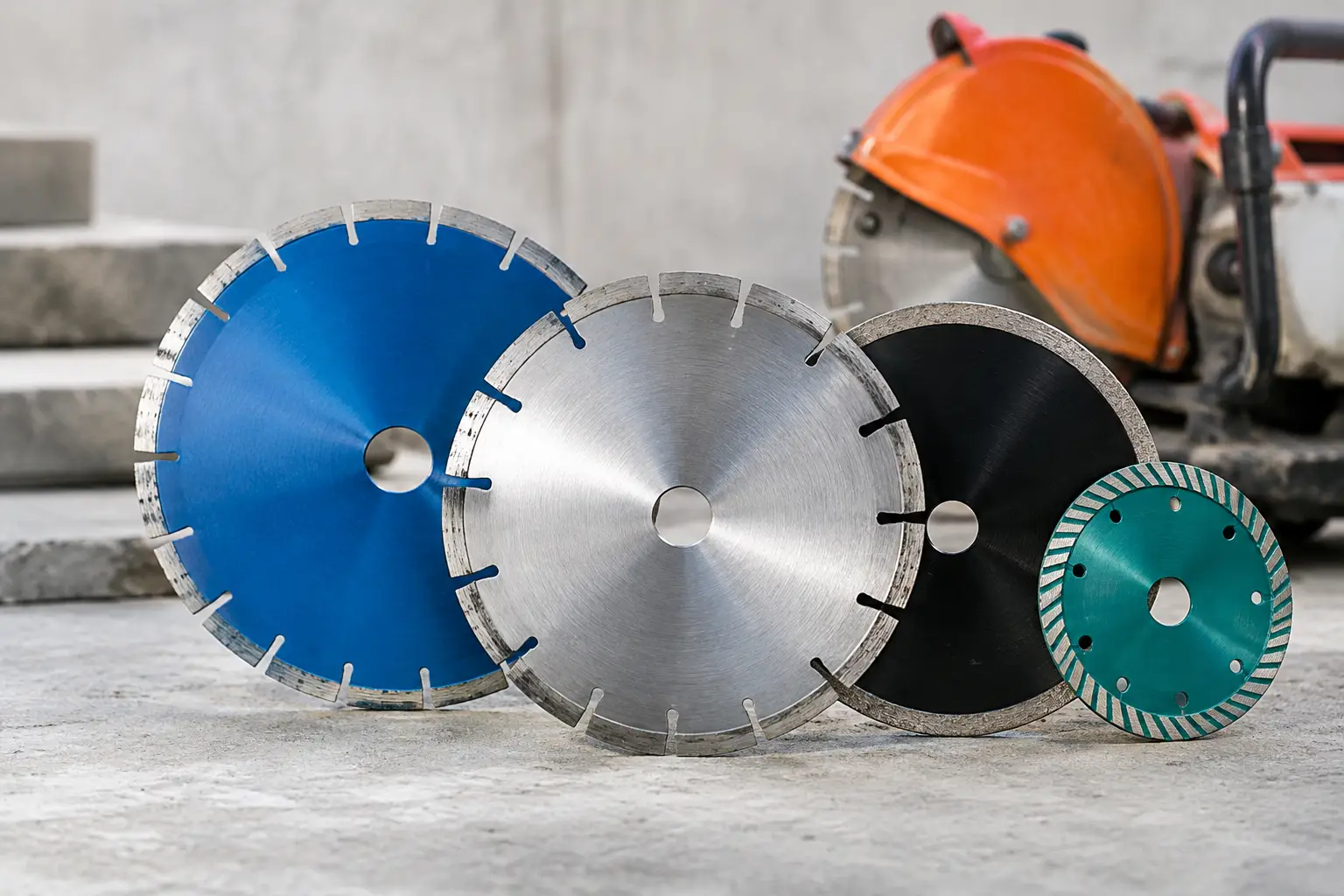
Laser welding is widely used for professional dry-cutting blades because it creates a strong connection between the segment and steel core. It is particularly suitable for demanding concrete and masonry work where temperatures can rise quickly. High-frequency welding and other attachment methods may be appropriate for specific wet-cutting or lower-load applications, depending on blade design and operating conditions.
A quality blade requires control over both systems. A well-formulated segment with poor attachment is a safety and productivity risk. A strongly welded segment with an incorrect internal bond will remain attached but cut poorly or wear too quickly.
How Operating Conditions Affect Bond Performance
The same blade can show different results when used on different machines or by different operators. Bond performance is influenced by peripheral speed, feed pressure, cooling, blade alignment, and cutting depth.
Insufficient feed pressure can cause a blade to rub rather than cut. This generates heat and can glaze the segment, especially on hard materials. Excessive feed pressure can overload the diamonds, bend the steel core, increase vibration, and accelerate segment wear. The objective is steady pressure that allows the blade to maintain an open cutting face without forcing the machine.
Cooling is equally important. Wet cutting removes slurry and controls heat, helping preserve the core, segment bond, and diamond crystals. Dry-cutting blades must have a segment design, weld strength, and cooling configuration suitable for intermittent operation. Operators should follow the blade's intended dry or wet cutting specification rather than assuming all diamond blades can perform the same way.
Machine condition also matters. Worn bearings, incorrect flanges, shaft runout, and unstable guide systems can create side loading. Side loading is especially damaging because diamond segments are designed primarily for forward cutting, not lateral grinding. It can crack segments, damage welds, and produce uneven wear that is incorrectly blamed on the bond formula.
Signs That the Bond Is Not Matched to the Job
Field feedback often reveals whether a segment bond is appropriate. A glazed, shiny segment face and noticeably slow cutting usually indicate a bond that is too hard for the material or an operating condition with too little cutting pressure. Very rapid segment height loss, excessive slurry, and an initially aggressive cut that fades quickly can indicate a bond that is too soft or a highly abrasive material outside the blade's intended range.
Uneven wear across the rim may point to alignment issues, inconsistent cooling, or operator technique. Segment cracking or separation requires immediate attention to blade specification, attachment quality, machine condition, and cutting practice. These issues should never be treated as normal wear.
For distributors and private-label buyers, collecting application details and returned-tool information is valuable. The most useful report includes the material being cut, machine model, blade diameter, cutting method, daily operating hours, visible wear pattern, and approximate linear footage achieved. This information allows the manufacturer to recommend a more suitable bond rather than making assumptions based on product category alone.
What to Specify When Sourcing Diamond Segments
Bulk buyers should request more than a general statement that a blade is suitable for concrete or stone. Consistent industrial supply depends on clear specifications and repeatable quality control.
A practical specification should define the target material, blade diameter, segment dimensions, segment count, cutting method, machine power range, intended cutting speed, and expected service life. For specialized projects, it should also address aggregate hardness, reinforcement level, noise requirements, core design, and private-label packaging.
Production control is essential because small variations in diamond concentration, powder blend, sintering temperature, segment density, or weld process can change field performance. Reliable manufacturers verify segment dimensions, bond consistency, weld integrity, blade runout, and balance before shipment. For repeat orders, sample approval and application testing help establish a stable specification that can be reproduced at volume.
Ryhyoma supports this process by matching segment and blade configurations to the material, equipment, and commercial requirements of wholesale buyers. The objective is not to offer one universal formula. It is to supply a controlled, repeatable tool specification that gives distributors and contractors predictable performance.
The best purchasing decision starts with the actual cut, not the product name. When the material profile and operating conditions are clear, diamond segment bonding can be engineered as a measurable performance advantage instead of a recurring source of blade complaints.