
A failed blade or bit does more than raise consumable cost. It delays crews, risks material damage, and creates avoidable replacement orders. In the diamond versus carbide decision, the correct choice depends less on which material is “better” and more on what is being cut, how abrasive it is, and whether the tool will face repeated commercial use.
For construction, stone fabrication, flooring, and building-material processing, diamond tools are usually specified for mineral-based materials such as concrete, masonry, ceramic, granite, porcelain, and engineered stone. Carbide tools remain highly effective for wood, many metals, plastics, and selected softer construction materials. Procurement teams should compare the full operating conditions, not just the purchase price.
Diamond Versus Carbide: The Core Difference
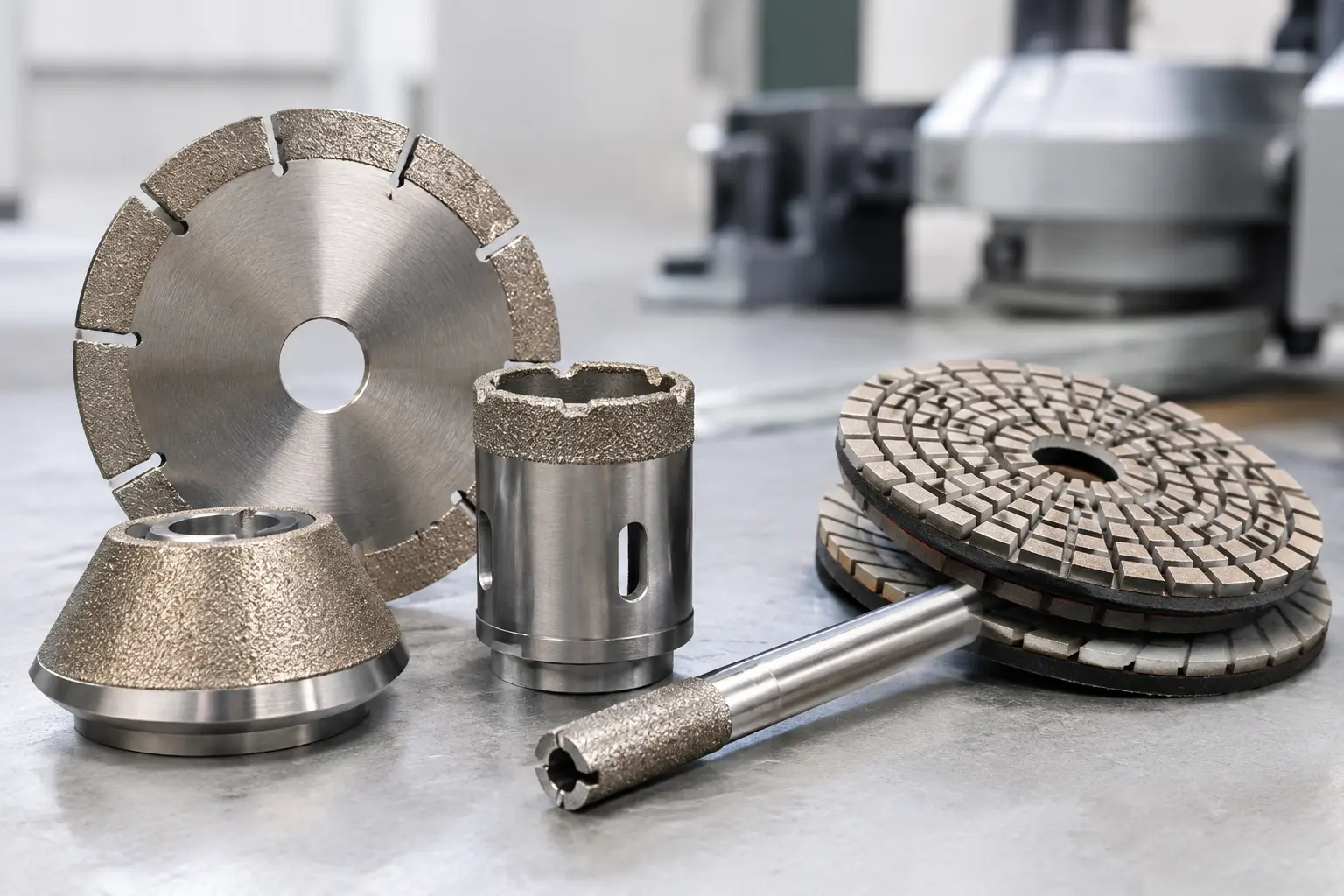
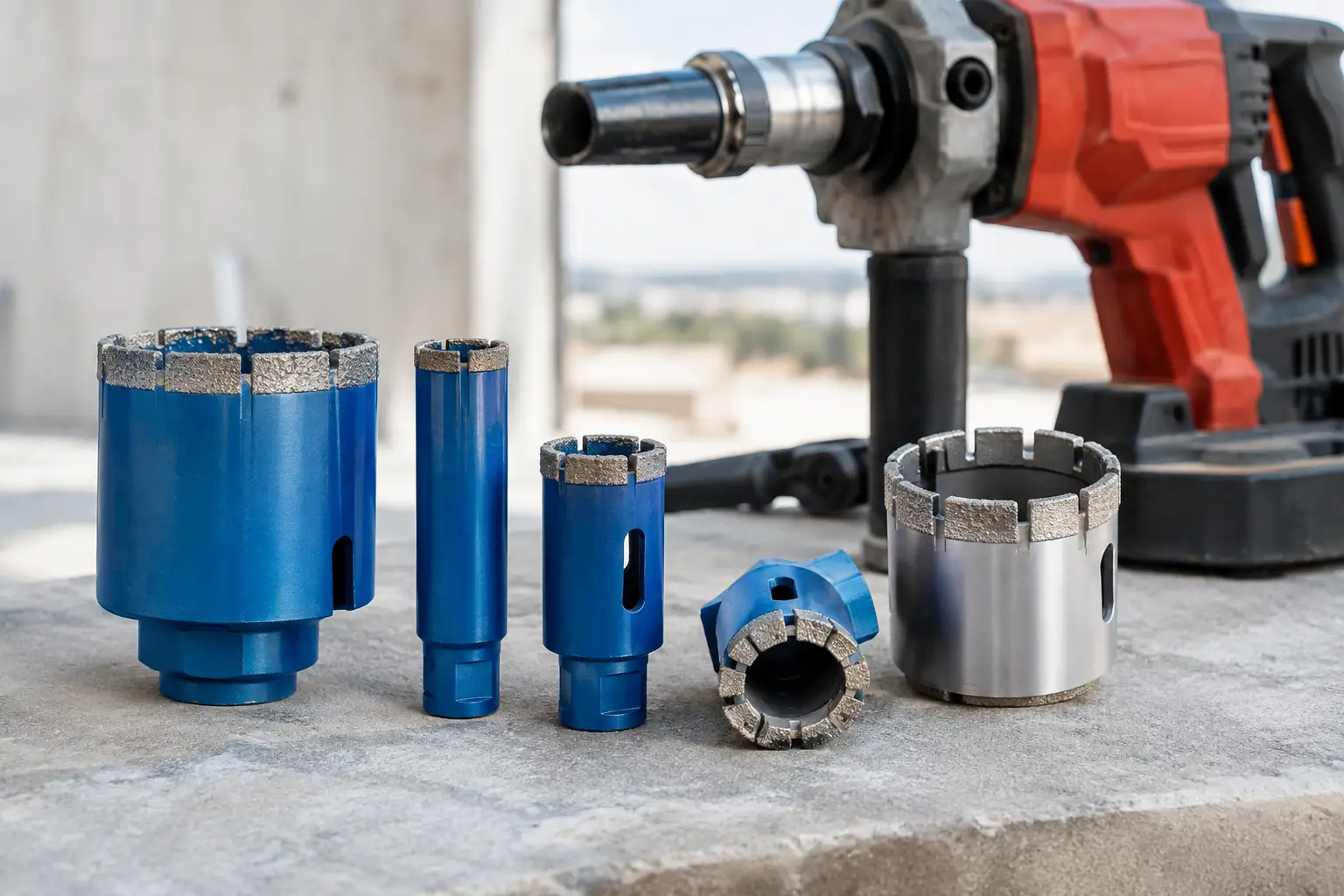
Diamond is the hardest known cutting material. In industrial tools, synthetic diamond particles are bonded to a metal matrix, electroplated surface, or brazed layer. As the bond wears in use, new diamond particles are exposed. This controlled wear is what allows a properly selected diamond blade, core bit, grinding block, or hole opener to continue cutting abrasive mineral materials.
Carbide, usually tungsten carbide, is a hard composite material made from tungsten carbide particles held together with a metallic binder such as cobalt. It is much harder than conventional steel and offers strong toughness, making it suitable for cutting teeth, drill bits, router tools, and wear components. Carbide is not as hard as diamond, but it can tolerate impact and intermittent contact better in many wood and metalworking applications.
The practical distinction is straightforward: diamond tools grind their way through hard, abrasive materials, while carbide tools cut, mill, or scrape materials where toughness and edge strength matter more than extreme hardness.
How the cutting action changes tool selection
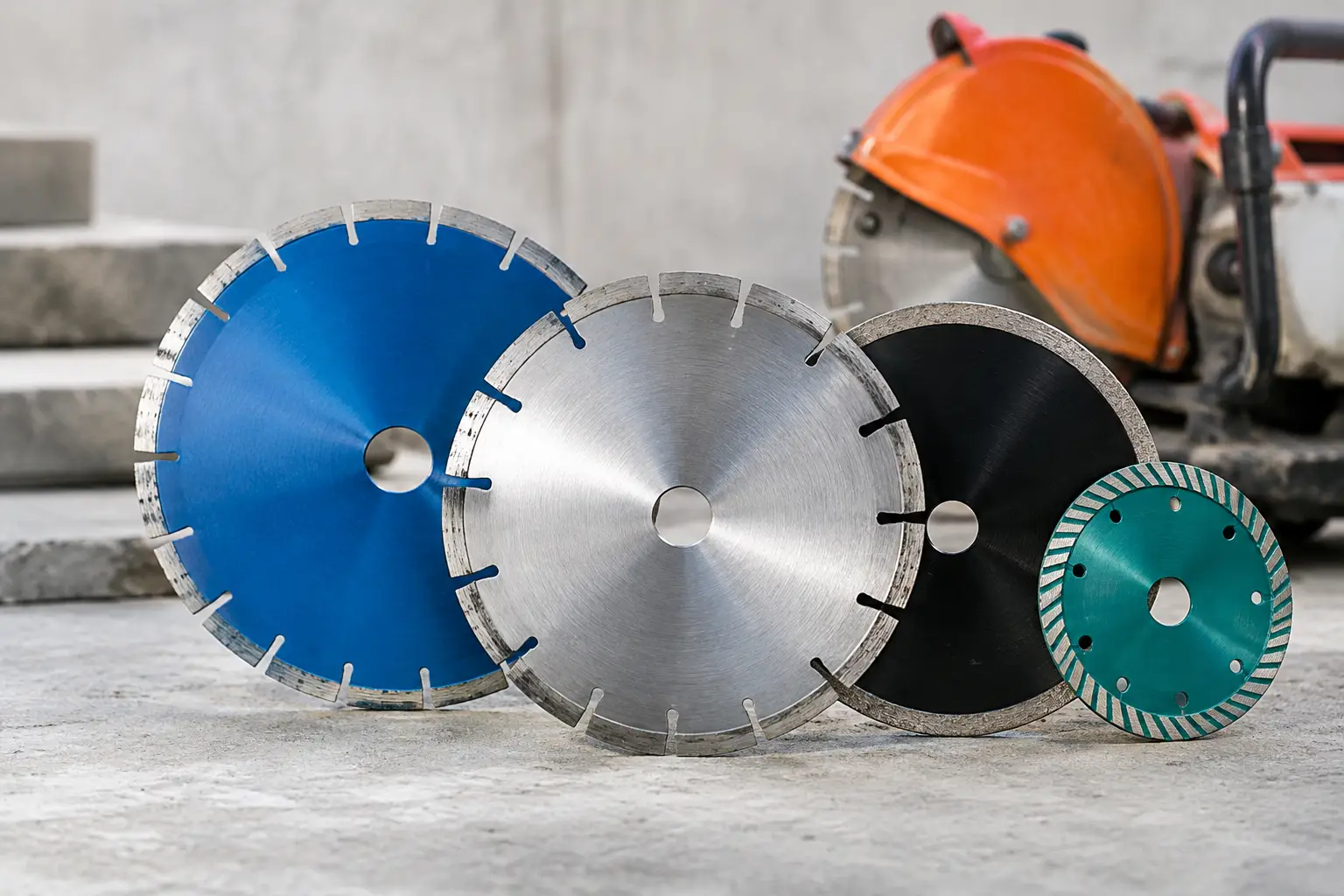
A diamond blade does not cut like a saw blade with sharp steel teeth. Its exposed diamond crystals abrade the material. This makes diamond particularly effective on cured concrete, reinforced concrete, asphalt, granite, ceramic tile, porcelain slabs, and Dekton-type sintered surfaces.
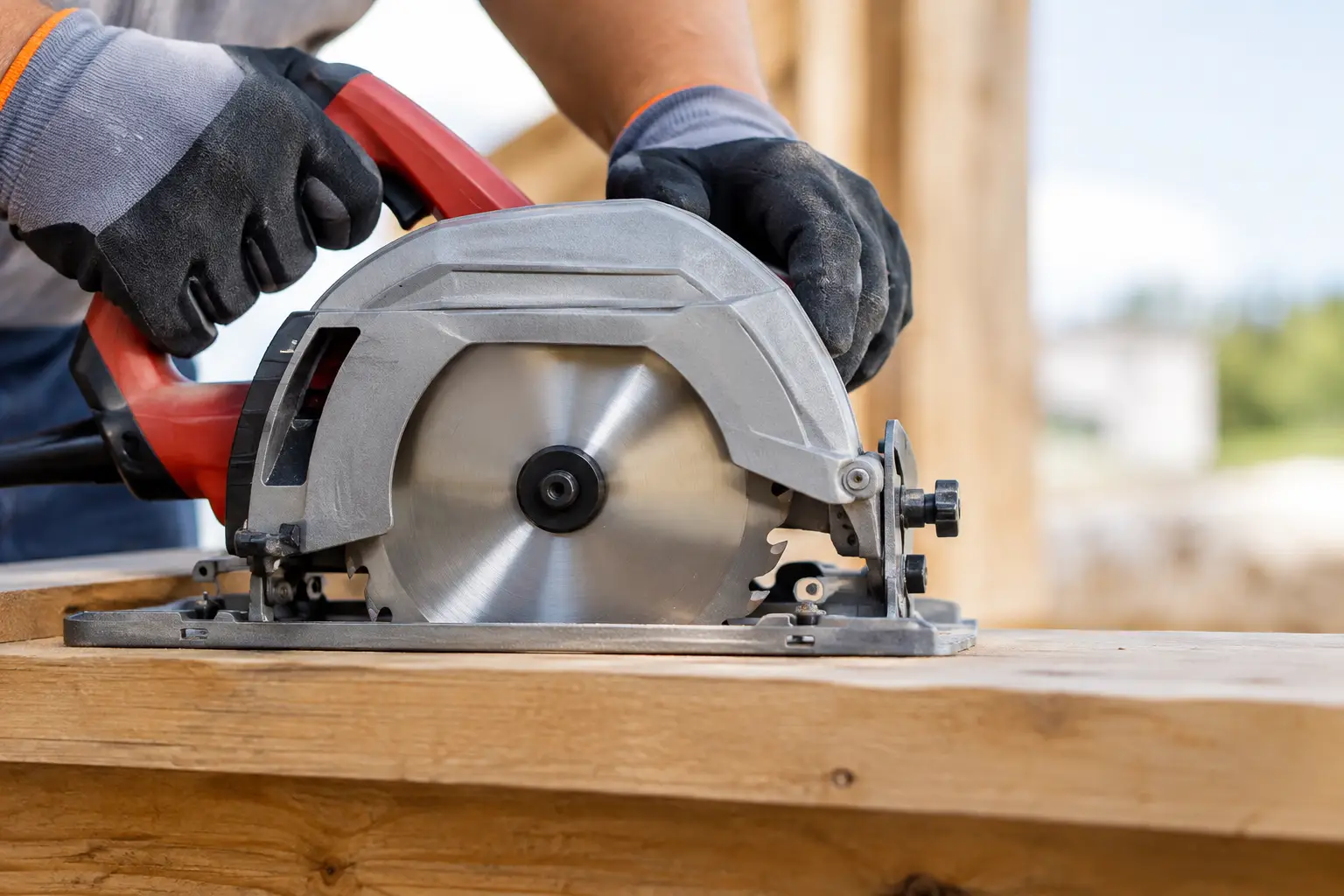
A carbide-tipped blade relies on defined cutting edges. Those edges remove chips efficiently from wood, plastics, aluminum, and certain nonferrous metals. When used against highly abrasive concrete, stone, or tile, carbide edges can round quickly, chip, overheat, or lose their tips. A carbide blade may appear less expensive at purchase, but it can become the more costly option if it requires frequent replacement or produces poor cut quality.
Material Compatibility Comes First
Material is the first filter for a professional buyer. Dense aggregates, hard minerals, and silica-rich materials require diamond exposure and an appropriate bond system. Softer materials or materials that produce chips rather than abrasive dust often favor carbide.
| Material or Application | Diamond Tool Performance | Carbide Tool Performance | | --- | --- | --- | | Cured concrete and reinforced concrete | Preferred for cutting, drilling, and grinding | Limited life and high wear risk | | Asphalt and green concrete | Effective with the correct soft bond | Can work in limited cases, but not ideal for production cutting | | Granite, marble, and natural stone | Preferred for controlled cutting and grinding | Generally unsuitable for clean, durable production work | | Ceramic, porcelain, and sintered slabs | Preferred with a fine, material-specific diamond rim | High chipping and rapid edge wear risk | | Wood and engineered wood | Not normally the first choice | Preferred for fast, clean cuts | | Plastics and composites | Application-dependent | Often preferred when a sharp tooth profile is needed | | Aluminum and nonferrous metals | Specialized diamond tools may be used in select applications | Common choice with correct tooth geometry | | Steel and ferrous metals | Specialized bonded abrasives or diamond systems only for certain processes | Carbide may work in controlled machining, but tool selection is specialized |
The table provides a starting point, not a substitute for jobsite conditions. A concrete slab with heavy reinforcement requires a different diamond specification from an unreinforced block. A porcelain tile blade must prioritize chip control, while a floor grinding segment must balance removal rate with segment life.
Cutting Speed, Tool Life, and Cost Per Cut
A common procurement error is comparing a diamond blade and a carbide tool only by unit price. Diamond tools often have a higher initial cost because of the diamond concentration, bond design, steel core quality, and welding process. However, their service life on hard mineral materials can be substantially longer.
Cost per cut, cost per drilled hole, or cost per square foot ground is the more useful calculation. It includes the tool price, number of completed cuts or holes, operator time, equipment downtime, and material rejection. A low-cost blade that slows down after a short production run can cost more than a stable, higher-grade blade that maintains cutting speed.
Diamond performance is strongly affected by bond selection. A hard bond holds diamonds longer and is often used for softer, more abrasive materials. A soft bond releases worn diamonds faster and is generally needed for hard materials that would otherwise glaze the tool. If the bond is too hard for the material, the blade can polish over and stop cutting efficiently. If it is too soft, the tool may wear away before delivering its expected life.
Carbide has its own trade-off. A tougher carbide grade can resist breakage, while a harder grade can improve wear resistance. Yet in abrasive masonry or aggregate-bearing material, even premium carbide may lose its edge faster than a properly matched diamond tool.
When Carbide Is the Better Commercial Choice
Diamond is not the default answer for every cutting operation. Carbide is the more practical option when the work involves wood framing, plywood, MDF, plastic pipe, aluminum profiles, or machining operations where a sharp, defined edge delivers cleaner and faster results.
Carbide is also widely used in drilling and wear applications where impact resistance is essential. In some field conditions, a carbide-tipped tool can tolerate interrupted cuts, embedded fasteners, or variable material better than a brittle cutting medium. The exact result depends on tool geometry and machine stability.
For distributors, carrying carbide products alongside diamond tools can make commercial sense when serving mixed trades. The key is not to position carbide as a replacement for diamond in concrete and stone applications. These products solve different problems and should be specified accordingly.
Where Diamond Tools Deliver the Strongest Return
Diamond tools are designed for contractors and fabricators who need consistent production on abrasive materials. Concrete saw blades, core bits, floor grinding blocks, diamond segments, tile discs, and stone-cutting blades all use diamond systems because conventional cutting edges cannot maintain performance against mineral hardness and abrasion.
In high-volume work, manufacturing quality matters as much as diamond grade. Segment alignment, diamond distribution, segment height, core tension, slot design, and welding method all affect cutting behavior. A poorly made diamond blade can wobble, crack, lose segments, or cut inconsistently even if its stated specification looks acceptable.
Laser-welded segments are commonly selected for demanding concrete and reinforced-concrete cutting because the joint provides strong segment retention under heat and load. Vacuum-brazed diamond tools are often used where aggressive surface exposure and multi-material cutting are required. The best production method depends on the product category and application, but quality control should be verified before a bulk purchase.
Machine Conditions Can Change the Result
The same tool can perform very differently on different machines. Blade diameter, arbor fit, RPM, horsepower, feed pressure, coolant use, and operator technique all influence wear and cutting speed. An undersized machine can force the operator to push too hard, causing overheating and reduced tool life. Excessive RPM can damage the tool or create unsafe operating conditions.
Wet cutting generally improves cooling and dust control for many diamond applications, particularly core drilling and stone cutting. Dry cutting blades are engineered to dissipate heat through the steel core and air flow, but they still require controlled feed pressure and appropriate intermittent cutting practices where specified.
For carbide tools, machine rigidity and chip evacuation are equally important. Vibration can chip carbide teeth, while poor clamping can create an uneven cut and increase breakage risk. Buyers should match the tool not only to the material, but also to the equipment fleet their customers operate.
Buying Diamond and Carbide Tools for Distribution
For wholesale buyers, the decision should include supply consistency. Tool specifications must remain stable from one production batch to the next. Changes in diamond concentration, bond formula, steel core thickness, carbide grade, or brazing quality can create customer complaints even when packaging and product names remain the same.
A dependable manufacturing partner should be able to discuss material applications, recommend suitable specifications, and support private-label or custom requirements for bulk orders. For diamond products, buyers should ask about welding technology, segment dimensions, application recommendations, and quality inspection. For carbide products, confirm carbide grade, tooth geometry, body material, and intended cutting range.
Ryhyoma supports industrial buyers with diamond tools built around stable cutting performance, controlled manufacturing processes, and application-specific specifications. For distributors serving concrete, stone, tile, flooring, and construction markets, that consistency is often more valuable than selecting the lowest quoted price.
The right choice is simple once the material and operating conditions are clear: use carbide where sharp, tough cutting edges are needed, and use diamond where abrasive mineral materials would rapidly destroy conventional teeth. A short review of the actual job before ordering will protect tool life, jobsite productivity, and your customer’s confidence in every shipment.