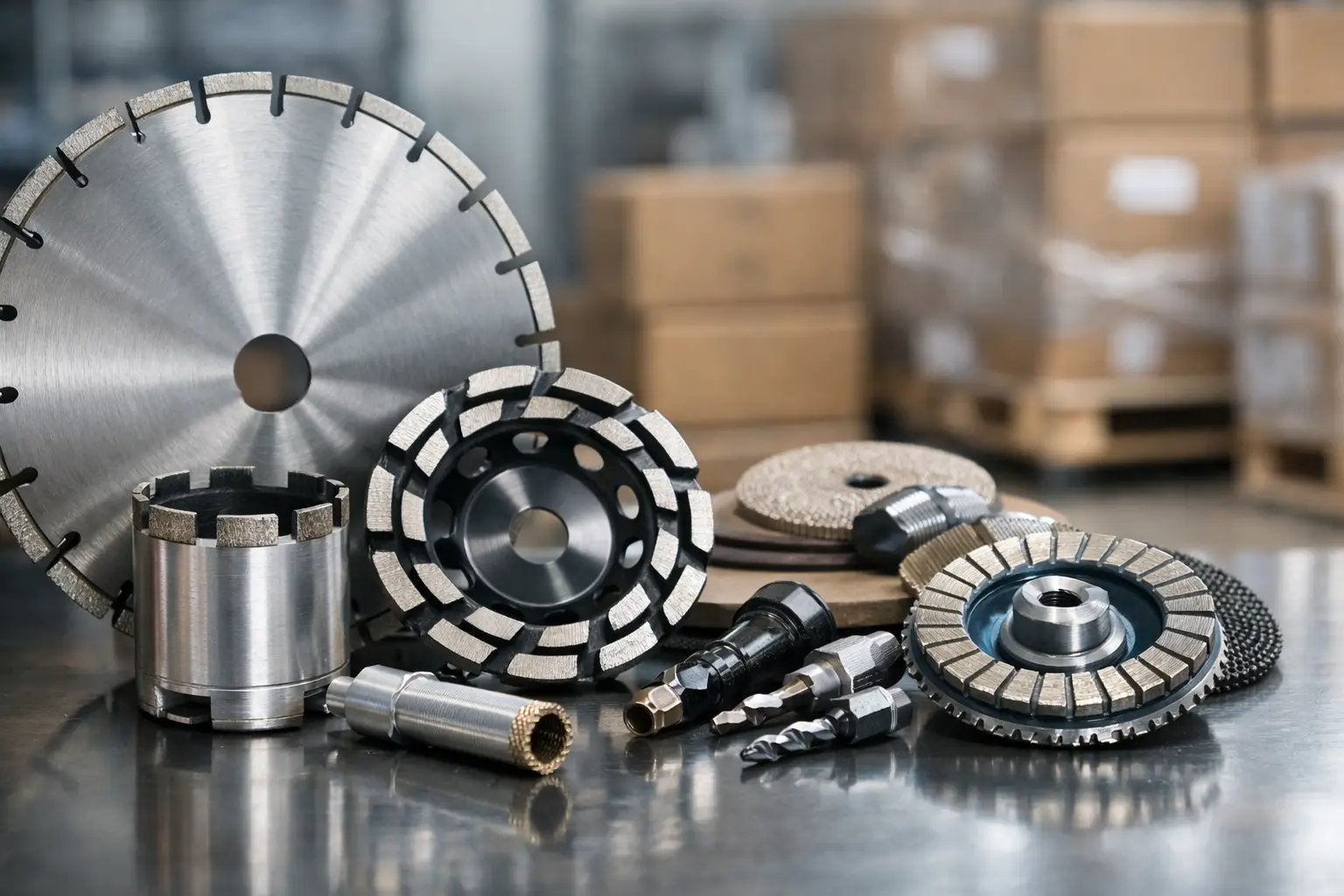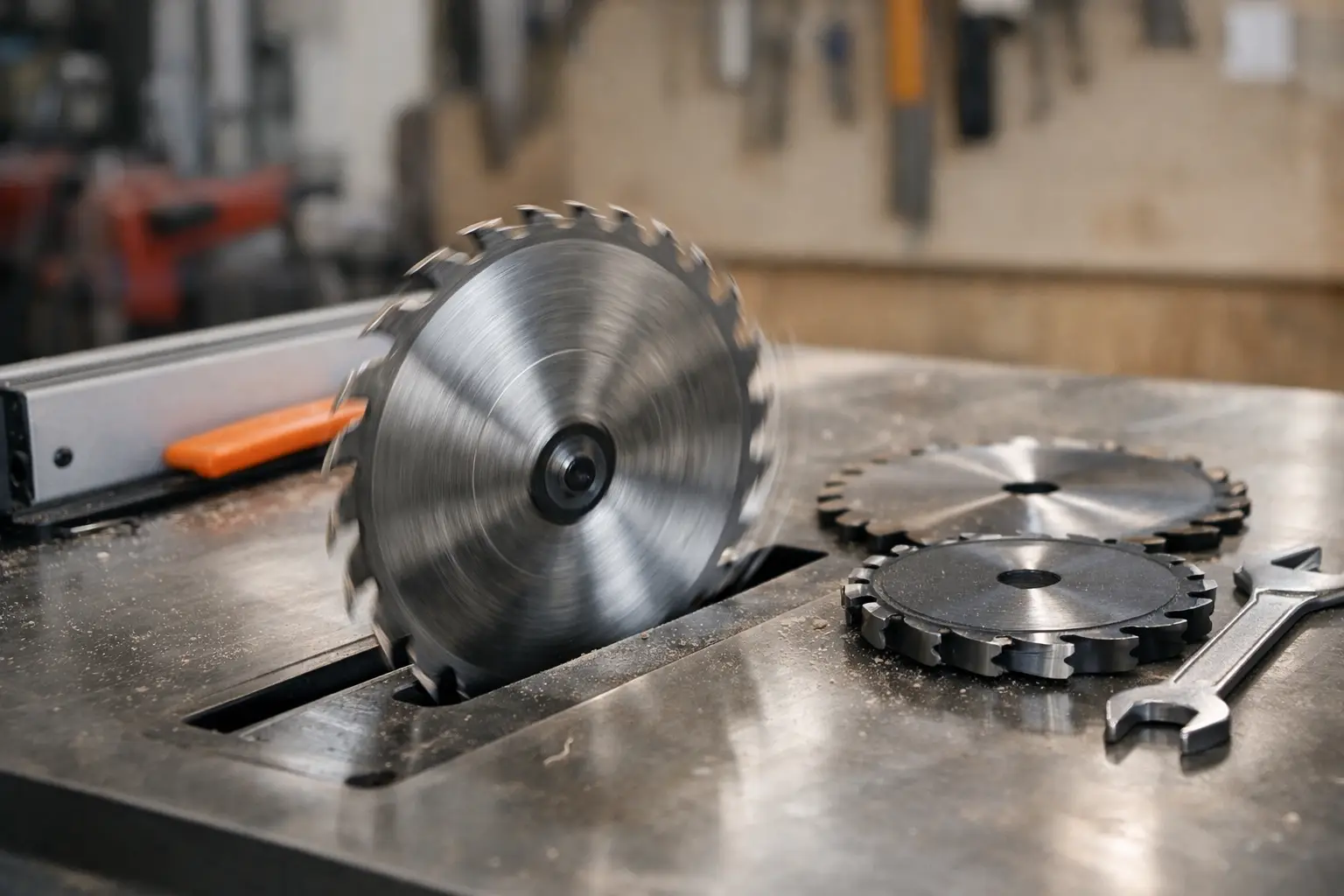

A container can arrive on schedule, clear customs without delay, and still create an expensive problem for the buyer. That is why bulk tool orders fail in industrial supply: the failure often begins long before the goods are packed. A blade that cuts well in a supplier sample may underperform in a contractor’s daily concrete work. A core bit may fit the stated application but not the drilling machine, operating pressure, or expected drilling depth.
For distributors, importers, and procurement managers, a bulk purchase is not simply a price decision. It is a commitment to stock, customer relationships, jobsite productivity, and future repeat orders. When the specification, production controls, and commercial process are not aligned, even a low unit price becomes costly.
Bulk Tool Orders Fail When the Specification Is Too General
Many purchase orders use broad descriptions such as “diamond saw blade for concrete,” “granite blade,” or “floor grinding segment.” These labels identify a category, not a complete industrial specification. Diamond tools are application-dependent products. The bond formula, diamond concentration, segment height, segment design, blade core, arbor size, welding method, and intended machine all affect actual performance.
A concrete blade intended for cured reinforced concrete may require a different bond balance from a blade used on green concrete, abrasive block, or asphalt. A ceramic cutting disc must prioritize clean edges and chip control, while a blade for hard porcelain or Dekton must manage heat and material hardness differently. Treating these as interchangeable products creates predictable field complaints.
The same issue applies to core bits and floor grinding tools. Buyers may specify diameter and working length but omit the substrate, aggregate hardness, reinforcement level, machine power, RPM range, coolant condition, and target life. The supplier then has to make assumptions. In a small trial order, those assumptions may go unnoticed. In a container order, they become a full inventory problem.
Samples Are Not Always Representative of Production
A sample can prove that a tool is possible to manufacture. It does not automatically prove that every tool in a bulk order will perform the same way. A serious evaluation must confirm that the approved sample, production standard, packaging, labeling, and inspection criteria are documented before mass production begins.
This is particularly important for laser-welded blades, vacuum brazed tools, diamond segments, and private-label products. Small changes in raw materials, segment formulation, welding parameters, blade steel, or curing conditions can affect cutting speed, service life, safety, and appearance. If the buyer approves only one sample without defining the production reference, the order remains open to variation.
Price-First Buying Creates a False Saving
The lowest quoted price is often based on a lighter specification, lower diamond content, a less suitable bond, reduced segment height, thinner steel core, simpler packaging, or minimal quality checks. None of these choices is automatically wrong. They may be appropriate for a defined budget market. The issue is buying a lower-grade construction while expecting premium jobsite performance.
Industrial buyers need to compare quotations on a like-for-like basis. If one supplier offers a 14-inch concrete blade at a much lower price, ask what is different. Is the segment height the same? Is the blade laser welded? What is the core thickness? What application was the bond designed for? Is the stated cutting life based on abrasive material, standard concrete, or reinforced concrete?
Price also needs to be measured against commercial consequences. A distributor may save a few dollars per blade but lose margin when customers return tools, request replacements, or stop buying the brand. Contractors face a different cost: slower cutting, frequent blade changes, machine downtime, and missed project schedules. The right purchasing question is not “What is the lowest factory price?” It is “What performance level can this specification deliver consistently at our target selling price?”
Quality Control Is Often Assumed, Not Defined
Buyers regularly ask whether a supplier has quality control. The more useful question is what the quality control process checks, when it checks it, and how nonconforming goods are handled.
For diamond tools, quality control should extend beyond visual inspection. A blade may look correct while having inconsistent segment welding, poor segment alignment, incorrect dimensions, excessive runout, or a bond that does not match the approved application. Core bits require checks on barrel geometry, segment attachment, thread or connection accuracy, and working length. Floor grinding blocks need consistent segment placement and fitment for the grinder system.
Bulk orders need agreed acceptance criteria. That does not require an overly complicated document, but it should identify the measurements and standards that matter. Buyers should establish whether the supplier will inspect 100 percent of critical dimensions, perform welding and runout checks, verify labeling, inspect packaging, and retain production records by batch.
A dependable manufacturer should be able to discuss these controls directly. Ryhyoma approaches bulk supply as a production and application process, not as a catalog transaction. That distinction matters when the order will be sold repeatedly through a distributor network or used across multiple active jobsites.
Packaging and Container Planning Can Damage Good Tools
A well-made tool can still reach the customer in poor condition. Bulk tool orders fail when packaging is treated as an afterthought, especially for export shipments where goods may be handled several times before delivery.
Diamond blades can be scratched, bent, or exposed to moisture if cartons are weak or internal protection is inadequate. Segments and abrasive blocks can chip if packed loosely. Incorrect carton quantities may complicate warehouse handling and customer resale. Private-label buyers also need to confirm artwork, barcodes, language requirements, country-of-origin markings, and carton labels before the goods are produced.
Container loading requires practical planning. Weight distribution, pallet requirements, carton strength, and available warehouse equipment all influence whether goods arrive in saleable condition. For GCC markets and other export destinations, buyers should also account for port handling, climate exposure, local labeling needs, and the time required for customs documentation.
The Supplier Does Not Understand the End User
A supplier can manufacture tools competently and still be the wrong partner if it does not understand the buyer’s customers. Distributors need products that can be explained, stocked, and reordered with confidence. Contractors need predictable tools that suit their machines and materials. Fabricators need clean cutting, stable performance, and fewer interruptions.
Problems arise when a supplier only asks for size and quantity. The right technical conversation should also cover the material being cut, the machine type, wet or dry use, expected production volume, current tool problems, and the market segment being served. A budget line for general trade distribution is different from a professional line for concrete cutting contractors. Both can be valid, but they should not be built to the same performance target.
Technical support also matters after delivery. If a customer reports glazing, excessive wear, segment loss, chipping, or slow cutting, the supplier should help determine whether the cause is the tool, material, machine condition, operator technique, or application mismatch. Without that support, every complaint becomes a commercial dispute instead of a solvable operating issue.
How Buyers Can Reduce Bulk Order Risk
Before placing a major order, align the commercial and technical requirements in one documented approval process. The following checks prevent many avoidable problems:
- Define the actual material, machine, operating conditions, and required performance level for each tool.
- Approve a production-reference sample with full dimensions, application details, packaging, and labeling.
- Compare supplier quotations by construction and performance criteria, not unit price alone.
- Agree on inspection points, tolerances, carton specifications, and procedures for nonconforming goods.
- Confirm production lead time, shipping plan, documentation, and reorder capability before committing inventory.
The depth of this process depends on the order value and product risk. A standard, proven blade with an established supplier needs less development than a private-label line of specialized Dekton blades or custom floor grinding blocks. But even standard products benefit from clear written specifications and batch consistency.
The strongest bulk orders are built on repeatable information: the same approved construction, the same application target, the same inspection standard, and the same packaging requirement from one production run to the next. When a supplier and buyer can control those details together, bulk purchasing becomes a reliable way to scale supply rather than a larger version of a small-order gamble.