
A diamond blade can leave the factory with correct segment bonding, tension, and runout, then arrive unusable because the shipment was packed as an afterthought. Export packaging for diamond tools is part of product quality control. For distributors, importers, and project suppliers, it protects the condition of each tool through loading, port handling, sea freight, customs inspection, warehousing, and final delivery.
The right packaging depends on the tool type, order quantity, transport route, and destination conditions. A thin ceramic blade and a heavy floor-grinding block should not be packed the same way. The objective is straightforward: deliver tools that are dry, correctly identified, free from impact damage, and ready to enter inventory or reach the jobsite.
Why Export Packaging for Diamond Tools Requires Planning
Diamond tools combine abrasive cutting edges with steel bodies, welded joints, and precision mounting features. Their working surfaces are designed for demanding contact with concrete, stone, ceramic, asphalt, or reinforced material. In transit, however, the main risks are often simpler: moisture, vibration, edge-to-edge contact, carton compression, and poor pallet restraint.
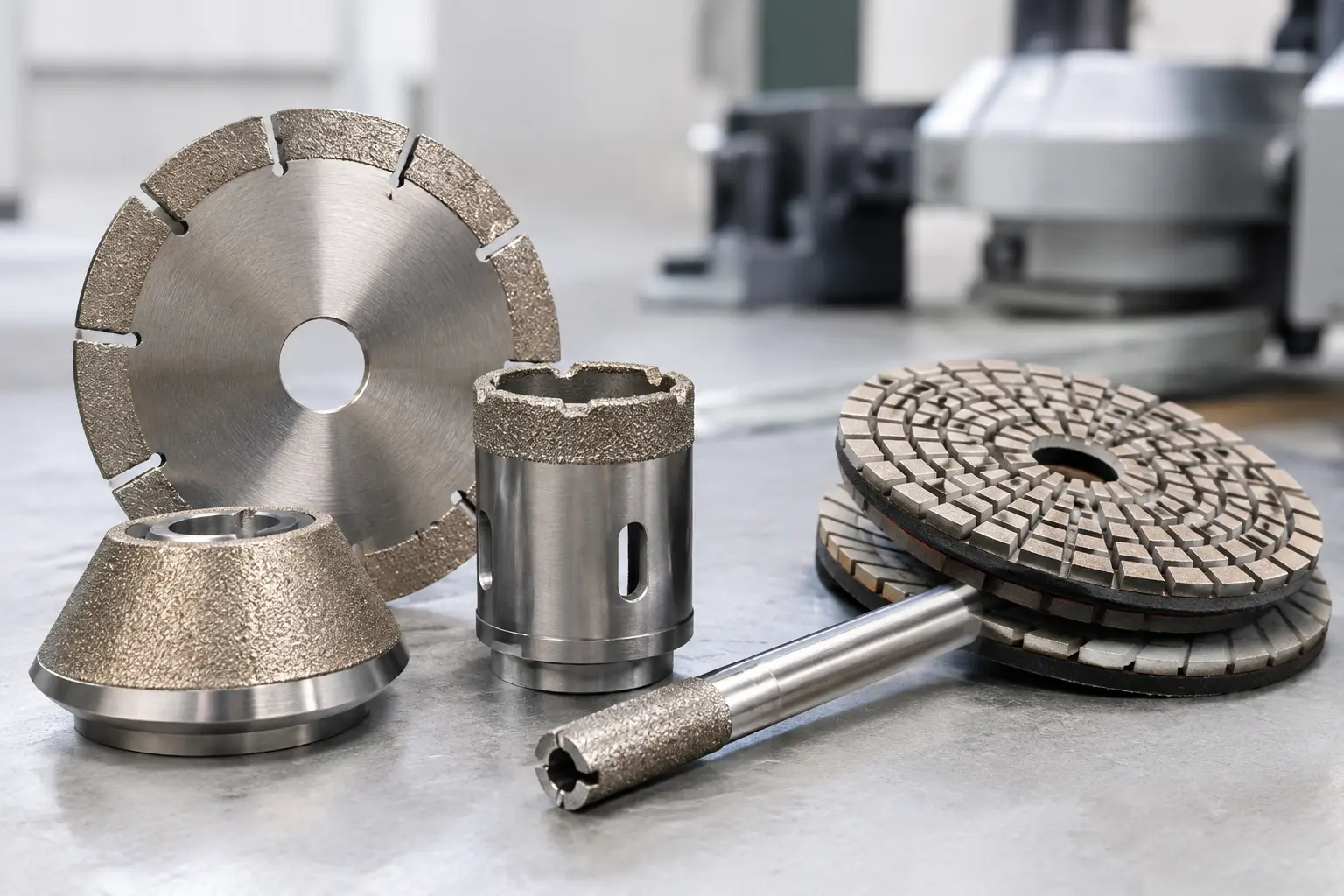
Saw blades may suffer body distortion or segment chipping when stacked without separation. Core bits and hole openers can be damaged if threads or barrel ends strike adjacent tools. Vacuum-brazed products need particular protection against abrasion of the exposed diamond coating. Floor grinding blocks, abrasive blocks, and diamond segments are dense and heavy, so weak cartons can fail even when the products themselves are compact.
Export routes add variables that domestic shipments may not face. A container can experience changes in temperature and humidity, repeated handling at terminals, and extended dwell time before clearance. For sea freight, moisture control is often as important as impact protection. For air freight, dimensional weight and carton efficiency may have a greater commercial effect.
Start With Tool-Specific Inner Protection
The first protective layer should prevent direct product-to-product contact. It is not simply a presentation feature. It controls movement inside the carton and protects the surfaces that determine cutting, grinding, or drilling performance.
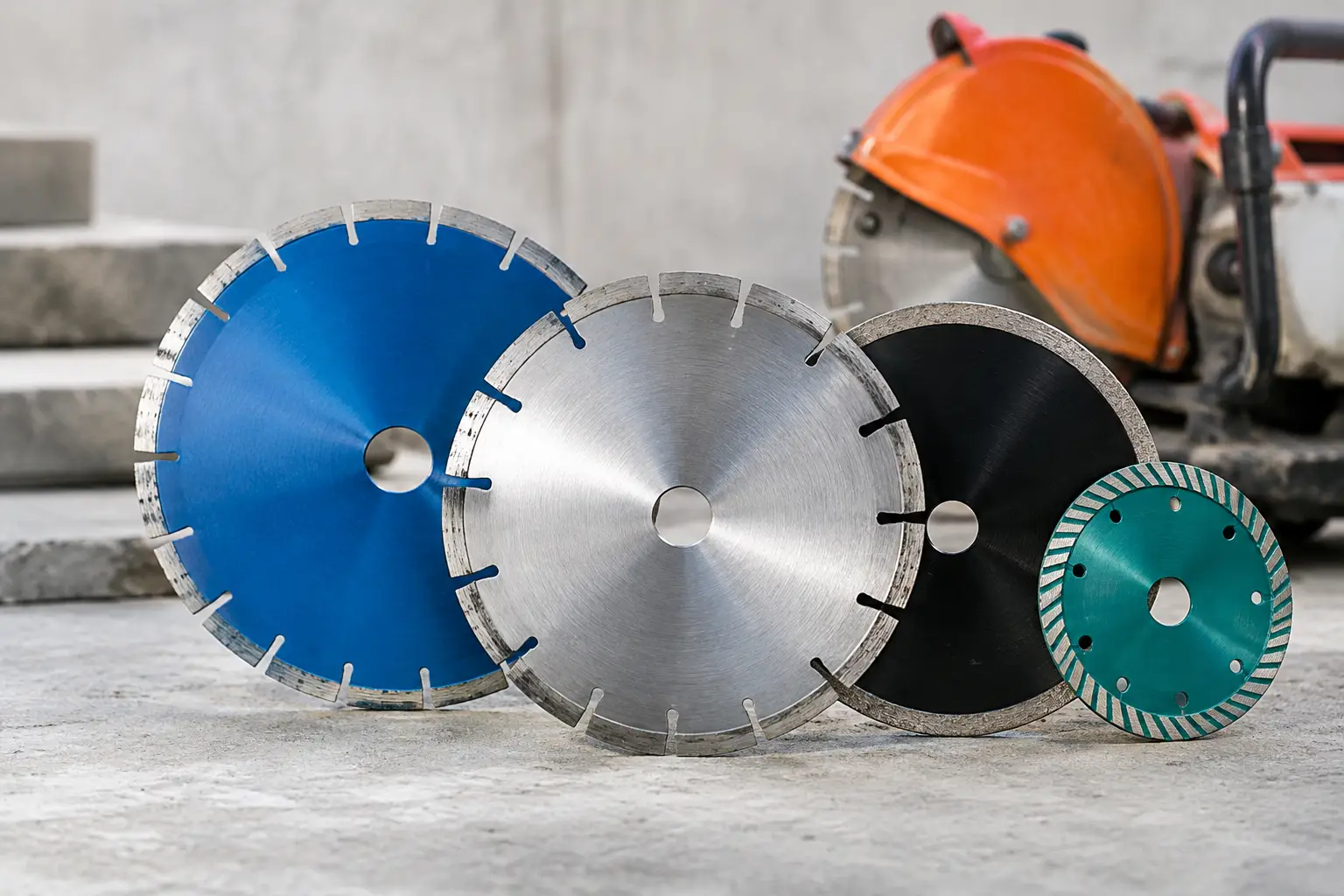
Circular diamond blades generally require individual sleeves, protective paper, foam separators, or formed inserts between each blade. The center bore should be supported where practical, especially for larger diameters or thin steel cores. Segment rims must not rest directly against another blade's rim. A stack that looks stable on the packing table can shift during a long container journey.
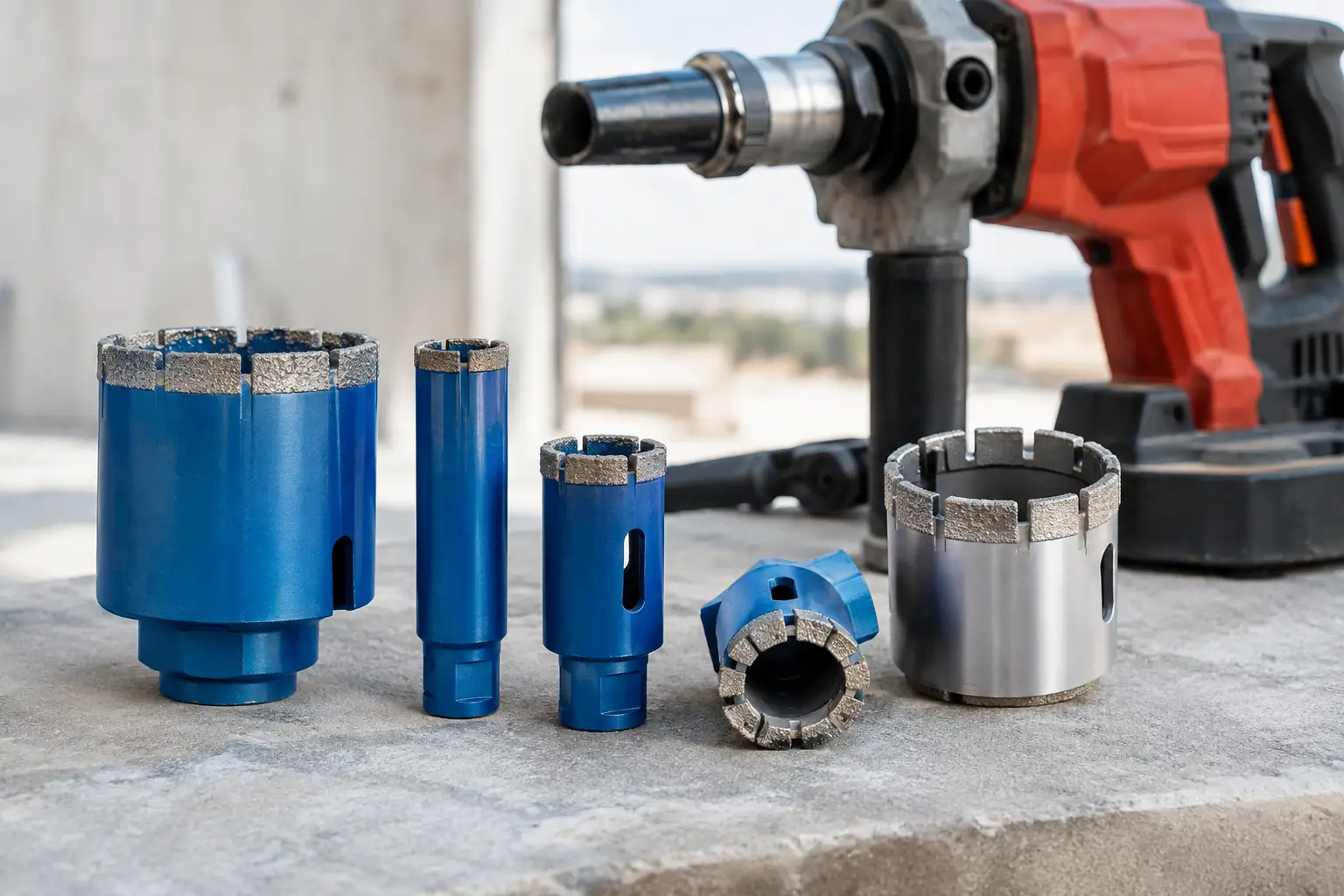
Core bits, dry drilling bits, and hole openers need protection around connection threads, pilot components, and cutting crowns. Plastic caps, molded guards, or partitioned boxes can reduce metal-to-metal contact. For long core bits, internal supports help prevent the product from moving end to end inside the package.
Grinding blocks and abrasive tools require a different approach. Because they are heavy relative to their size, individual wrapping alone is not enough. Dividers or fitted trays should distribute the load and stop the products from knocking together. Where a tool includes a mounting plate or specialized bond pattern, the package should keep that profile protected and clearly visible for inspection.
Moisture Control Is a Product Protection Measure
Steel cores, barrels, adapters, and mounting interfaces can corrode during export transit. Even minor surface corrosion creates unnecessary receiving issues for distributors and end users. It can also make a buyer question the condition of a shipment before the tools are put into service.
Packaging for humid or extended sea-freight routes should use dry, clean materials and appropriate moisture control. Depending on the shipment, this may include sealed polybags, vapor corrosion inhibitor paper, desiccant, or container-level moisture absorbers. The correct choice depends on the tool finish, storage period, carton design, and route.
Overpacking with fully sealed plastic is not automatically the answer. If products are packed while damp or moved from a humid production area without proper conditioning, trapped moisture can create the same problem the packaging was meant to prevent. A disciplined packing process starts with dry products, dry cartons, and clean packing areas.
Build the Outer Carton for Actual Handling Conditions
Outer cartons carry the stacking load and absorb much of the damage created by rough handling. Their board grade, dimensions, closure method, and internal fill must match the gross weight of the packed tools. A standard carton may be suitable for light blade packs but inadequate for dense grinding accessories or bulk diamond segments.
Carton dimensions should be efficient rather than oversized. Empty space allows products to gain momentum during movement, while excessive filler adds cost without necessarily adding protection. The practical target is a compact pack that keeps its shape, supports stacking, and fits pallet dimensions with minimal overhang.
For heavy products, reinforced cartons, double-wall board, internal pads, and strong sealing tape may be necessary. Strapping can support larger or heavier cases, but it should not be used to compensate for weak carton construction. If the carton cannot retain its form before strapping, it is likely to fail under compression or when exposed to humidity.
Clear external marks also reduce handling errors. Cartons should show the product description, size, quantity, gross and net weight, country-of-origin information where required, and relevant handling marks. Barcodes, batch identifiers, and private-label artwork can be added for OEM and distributor programs. Accurate labeling speeds receiving and makes stock control easier once the shipment reaches the buyer's warehouse.
Palletization and Container Loading Protect the Final Mile
A strong carton can still be damaged by poor palletization. Cartons should be arranged in stable layers, with heavier cases at the bottom and no unsupported overhang. Corner boards, stretch wrap, top sheets, and suitable strapping help maintain pallet integrity through forklift movement and terminal handling.
Wooden pallets and crates used in international freight may need to meet destination phytosanitary requirements, including ISPM 15 treatment and marking. Buyers should confirm the requirements for their market before production is packed. Plastic pallets can be an alternative where cleanliness, moisture resistance, or repeat handling is the priority, although they may increase material cost.
Container loading should leave no opportunity for pallets or cartons to shift. Dunnage, load bars, blocking, or bracing may be appropriate depending on the container fill and cargo weight. For mixed orders, do not place heavy diamond segments or grinding blocks above cartons of thin blades. The loading plan should reflect the actual load-bearing capacity of every package.
Balance Protection, Freight Cost, and Warehouse Efficiency
The most expensive packaging is not always the best export packaging. Excessive foam, oversized cartons, and unnecessarily heavy crates can increase freight charges and reduce the number of tools per container. At the same time, low-cost packaging that produces even a small rate of damaged tools can create claims, replacement costs, lost sales, and frustration for distributors.
The appropriate level of protection depends on the commercial use case. A small sample shipment by air may need premium individual protection and compact dimensions. A full-container order of standard blades may benefit from optimized master cartons and pallet patterns. High-value custom tools, thin-body blades, or products intended for retail display may justify more specialized packaging.
For private-label programs, packaging should also support the buyer's sales process. The product name, application, dimensions, arbor size, operating guidance, and brand artwork must be accurate and consistent. Packaging is often the first physical contact a distributor has with an OEM order. It should reinforce that the supplier controls details beyond the production line.
Packaging Checks Before Dispatch
A reliable export process includes verification before goods leave the factory. Packing teams should confirm product quantity, correct specifications, inner protection, carton strength, label accuracy, pallet stability, and shipping marks against the packing list. For customized orders, approved artwork and carton markings should be checked against the buyer's final confirmation.
Photo records of packed cartons, pallets, container loading, and seal numbers can support traceability if a freight claim or receiving question arises. This is especially useful for bulk orders moving through multiple logistics providers. Quality control does not end when a blade passes inspection. It continues until the shipment is packed in a condition that can withstand the route.
For buyers sourcing diamond tools internationally, packaging requirements should be discussed before the purchase order is finalized, not after production is complete. Ryhyoma can align product protection, carton configuration, labeling, and OEM presentation with the intended transport method and destination. A clear packaging specification gives both supplier and buyer a practical standard to inspect, protect, and deliver every order with confidence.