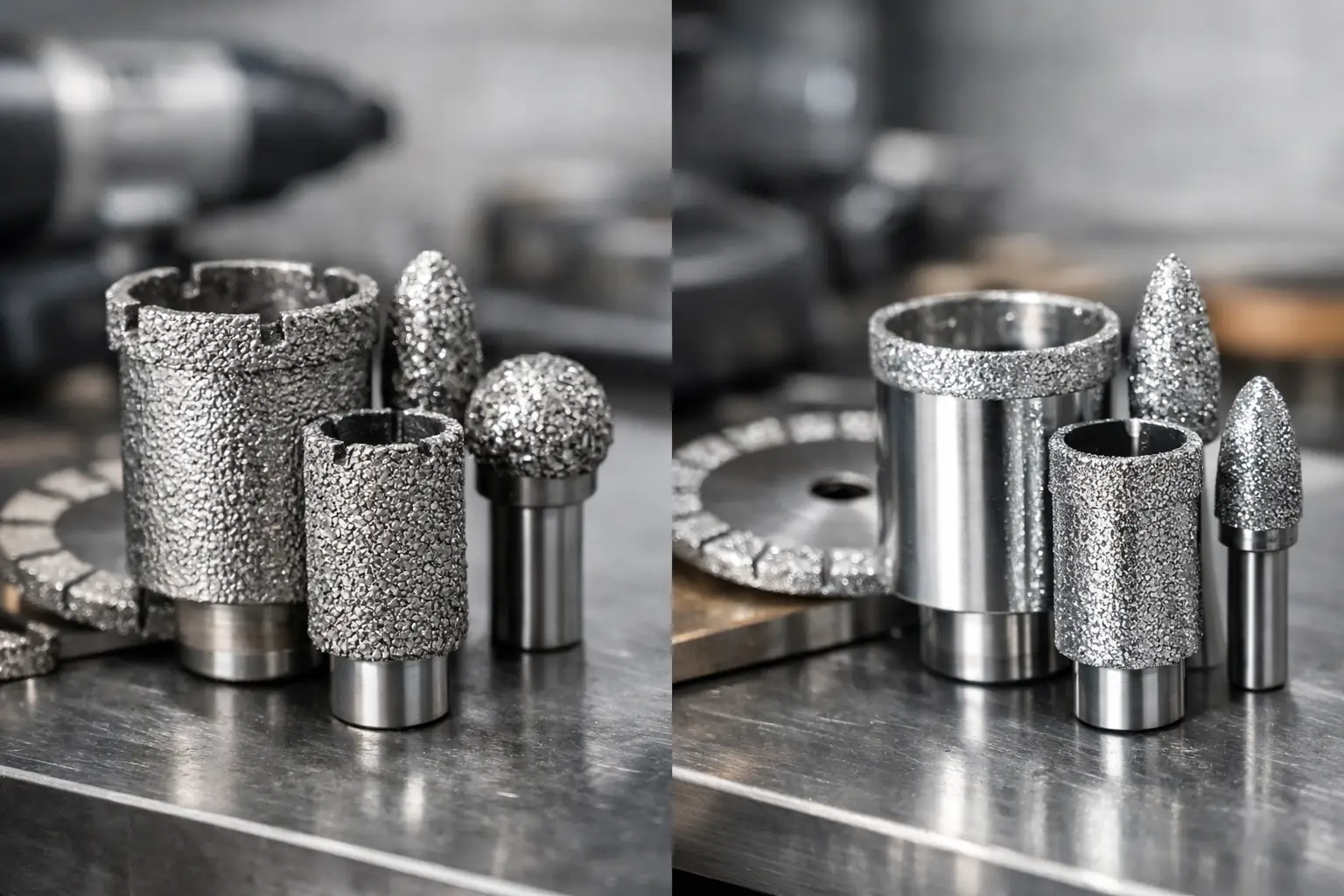
A diamond tool can look sharp on the shelf and still fail quickly on the job. For distributors, fabricators, and contractors, the real question is not whether a tool has diamond grit. It is how that grit is bonded, how long it stays exposed, and whether the tool holds its cutting performance under actual production conditions. That is the practical difference behind vacuum brazed vs electroplated tools.
Both technologies use a single layer of diamond abrasive attached to a steel body. Both can cut aggressively from the first use. But their bond systems, diamond retention, suitable materials, service life, and cost structure are different. Selecting the wrong type can mean premature wear, glazing, inconsistent finish quality, or unnecessary tool cost.
Vacuum Brazed vs Electroplated Tools: The Core Difference
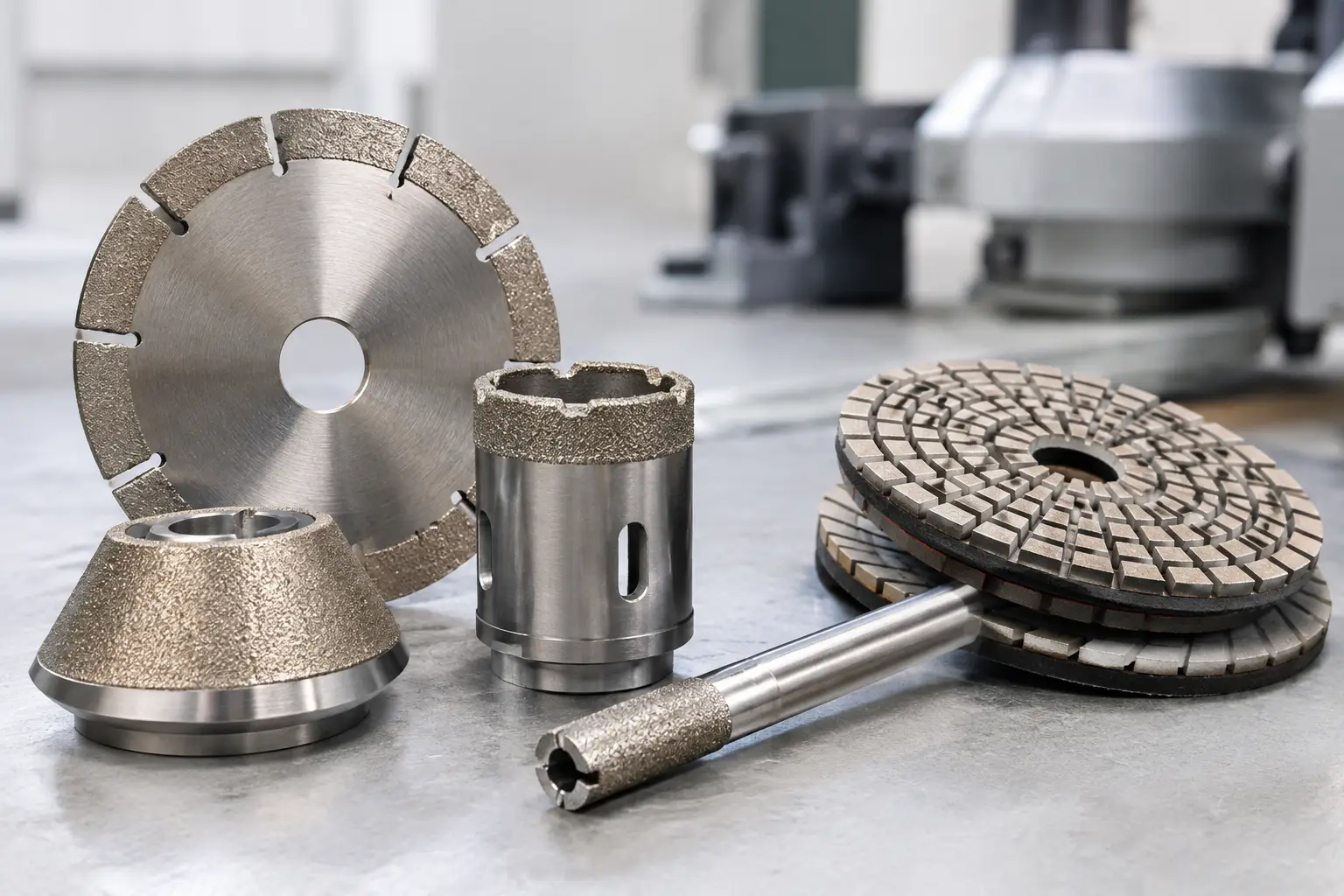
Vacuum-brazed tools secure diamond grit with a high-temperature braze alloy applied under vacuum conditions. During manufacturing, the brazing material forms a metallurgical bond between the diamonds and the steel substrate. This produces high diamond exposure and stronger grit retention than conventional plated tools.
Electroplated tools use an electrochemical process to deposit a nickel layer around the diamond particles. The nickel mechanically holds the abrasive in place on the tool body. Electroplating can produce precise grit placement and a consistent single-layer surface, but the diamond retention is generally lower when the tool is exposed to severe impact, heavy side loading, or high heat.
The distinction matters because neither tool is designed to work like a multi-layer sintered diamond segment. Once the surface diamonds are worn or pulled away, the tool does not continually expose new diamond layers. However, a vacuum-brazed bond usually allows more of each diamond crystal to remain active before it is lost, supporting a longer and more aggressive working life in demanding applications.
How Bond Technology Changes Field Performance
Diamond exposure and cutting speed
Vacuum-brazed tools typically have a high percentage of exposed diamond crystal. The open cutting surface creates more cutting points and allows debris to clear effectively. On abrasive and mixed materials, this can deliver fast material removal with less tendency to load up.
Electroplated tools also start sharp because their diamonds are exposed at the surface. They are often effective where controlled, clean cutting action is required, particularly on hard but relatively non-abrasive materials. Their performance can be very consistent at the beginning of the tool's life, especially when grit size and coating coverage are specified correctly.
For production buyers, initial speed should not be evaluated alone. A tool that cuts quickly for a short period may cost more per meter or per hole than a slower tool with longer usable life. The best choice depends on the material, machine power, operator pressure, and the expected number of working cycles.
Diamond retention and service life
This is where vacuum brazing commonly has the advantage. The metallurgical bond is better suited to aggressive grinding, cutting, shaping, and surface preparation where the tool encounters vibration, abrasive slurry, uneven surfaces, or intermittent impact.
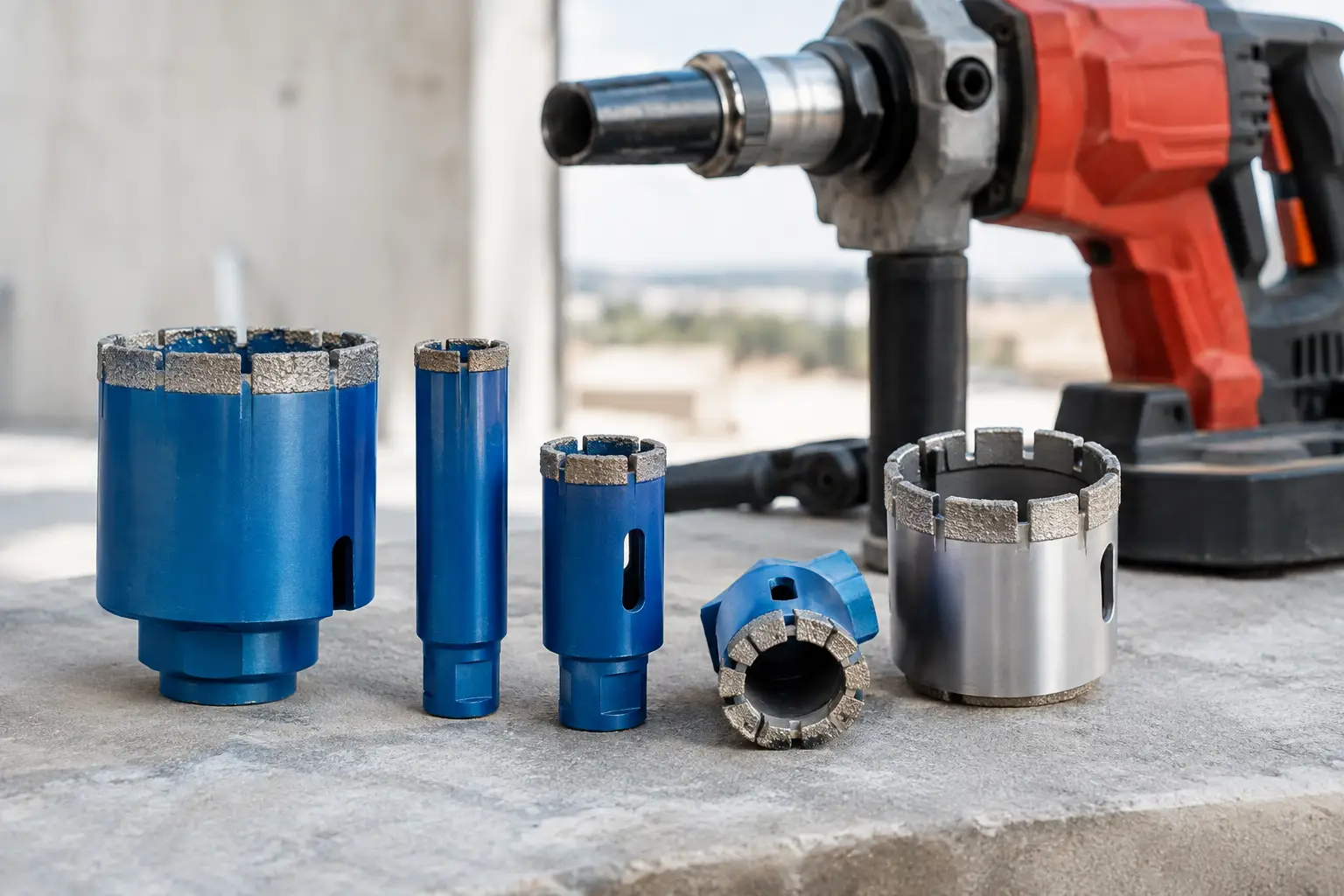
Vacuum-brazed diamond cup wheels, hand pads, grinding discs, hole saws, and profile tools are frequently selected for concrete, stone, ceramic, fiberglass, composites, cast iron, and similar difficult materials. Their open diamond structure can remain productive in applications that would rapidly strip or dull a lighter plated coating.
Electroplated tools can still be the correct commercial choice when the application is controlled and the required life is limited. For example, a fabricator may need an electroplated profile wheel or drill for a specialized shape, a fine surface finish, or a short production run. In these cases, lower unit cost and precise abrasive geometry may outweigh the need for maximum life.
Heat resistance and debris removal
Heat is a major cause of diamond tool failure. Excessive heat can damage the diamond, weaken the bond, discolor the workpiece, or cause the tool body to distort. Vacuum-brazed tools generally offer better performance in hot, dry, or intermittent-duty conditions because the brazed bond holds diamond more securely and the exposed structure provides room for cooling and chip removal.
That does not mean vacuum-brazed tools should be used without proper operating control. Excessive pressure, insufficient cooling during wet work, poor machine speed, or forcing a dull tool through reinforced material will reduce its life. A stronger bond is not a substitute for correct application parameters.
Electroplated tools are more sensitive to heat buildup because the nickel matrix is thinner and the diamond particles are held by a shallower coating. They should be matched carefully to recommended RPM, feed rate, coolant conditions, and workpiece material. A well-matched electroplated tool can perform efficiently. A poorly matched one can lose diamond rapidly.
Where Each Tool Type Fits Best
Vacuum-brazed tools are generally the stronger choice for demanding field work and high-removal applications. They are well suited to contractors removing coatings, opening holes in abrasive materials, grinding concrete edges, shaping stone, cutting rebar-contaminated surfaces, and processing materials that create heavy debris.
They are also valuable for distributors serving mixed jobsite conditions. A contractor may move between concrete, masonry, tile adhesive, stone, metal, and composite materials during the same project. A properly specified vacuum-brazed tool provides broad utility and reduces the risk of early failure caused by unexpected material variation.
Electroplated tools are commonly used when surface precision, fine grit control, intricate profiles, or lower purchase cost is the priority. They can be effective for glass, ceramic, stone finishing, composite trimming, and specialized contour work. The exact material matters. Some hard materials benefit from electroplated diamond because the exposed grit cuts cleanly without requiring a thick, aggressive bond.
The decision should not be reduced to “vacuum brazed is better.” It depends on the job. A premium vacuum-brazed tool may be unnecessary for light finishing work, while an electroplated tool may be a poor value in abrasive concrete grinding or heavy-duty drilling.
Cost Should Be Measured Per Job, Not Per Tool
Electroplated tools often have a lower initial purchase price. For procurement teams managing a wide catalog, that can make them attractive for applications with predictable, limited use. They also support efficient manufacturing of specialized shapes and small-diameter tools.
Vacuum-brazed products may cost more per unit due to the brazing process, diamond quality requirements, and bond material. Yet their higher retained cutting performance can reduce replacement frequency, operator downtime, and tool changes. On a high-volume construction site or fabrication line, those operational savings can outweigh the initial price difference.
A useful purchasing comparison includes more than tool price. Review average working life, cutting or grinding speed over the full life of the tool, failure rate, machine downtime, finish quality, and the consistency of each production batch. For distributors, repeatability is especially important. A tool that performs well in one shipment but varies in the next creates warranty exposure and weakens customer confidence.
What to Specify When Buying in Bulk
Bond technology is only one part of the specification. To obtain stable performance, buyers should define the material being processed, dry or wet operation, machine type, RPM range, desired finish, target life, and expected application pressure. Diamond grit size and concentration, body thickness, segment or coating layout, cooling slots, shank dimensions, and packaging requirements can all affect results.
For private-label and OEM programs, sample testing should be completed on the actual material mix before confirming a bulk order. A vacuum-brazed cup wheel designed for hard concrete may not be the correct specification for abrasive screed. Likewise, an electroplated core drill intended for ceramic tile may not deliver acceptable life in dense engineered stone.
Ryhyoma supports B2B buyers by matching tool construction to application conditions rather than treating every single-layer diamond product as interchangeable. Stable raw materials, controlled production parameters, and batch-level quality checks matter when a distributor needs consistent results across repeat orders.
Choose the Bond That Protects Your Operating Cost
Vacuum brazing is usually the practical choice when the job involves high stock removal, abrasive materials, heat, vibration, or uncertain field conditions. Electroplating is often the efficient option when fine control, specialized geometry, and a lower upfront cost matter more than extended life.
Before placing a bulk order, test the proposed tool against the actual material, machine, and operator method your customers use. The right bond is the one that delivers predictable output, acceptable finish quality, and a cost per job your market can support.